Note
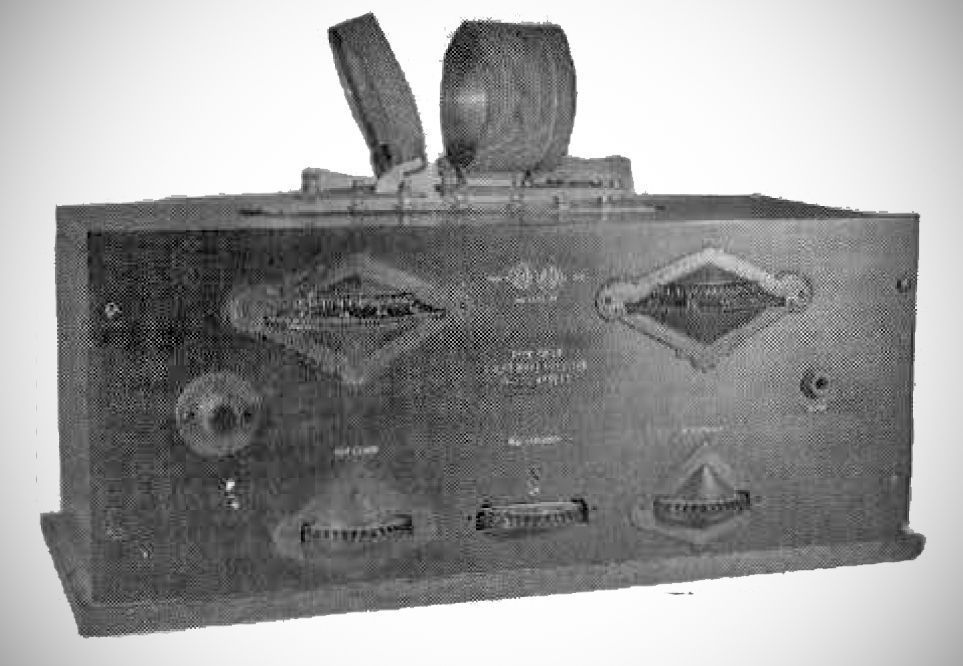
The Grebe CR-18 (frequently referred to as the Grebe 18) is a highly collectible, classic American shortwave receiver released by the A.H. Grebe Company in early 1926. It holds a notable place in amateur radio history as one of the first commercially available receivers to utilize plug-in coils.
Technical Overview & Design
It features a two-tube modern coupled regenerative circuit layout. The receiver covers a range of 8.5 to 216 meters (approximately 1380 kHz to 35 MHz) using a set of five interchangeable plug-in coils. The tuning condensers and dials are mounted vertically on the front panel, adopting a style similar to the contemporary Grebe Synchrophase broadcast receiver.
The designe includes a small variable "condenser" dedicated to fine-tuning/beat frequency control to handle tight adjustments.
The Grebe 18 uniquely includes variable electromagnetic antenna coupling, a desirable design feature not commonly found in traditional plug-in coil setups of that era.
Rather than using a standard RF choke, the CR-18 places a 25,000-ohm resistor in series with the detector plate lead to the audio frequency transformer. This design choice minimizes non-oscillating dead points during tuning.
The receiver performs reliably and well on the lower frequency bands, but performance drops off significantly at higher frequencies. This inefficiency is partly attributed to long, unshielded wiring leads running to the coil pins.
The Grebe CR-18 had a relatively short commercial lifespan due to the rapid introduction of the UX-222 screen-grid tube, which offered a much more stable, isolated stage of RF amplification.