Note
Allied Radio catalog 1965 (copyright 1964), p. 324.
QST, Jan 1965, p. 1.
QST, Dec 1965, p. 1. ("A" versions)
QST, Apr 1966, p. 1. Specs.
QST, Nov 1968, p. 176.
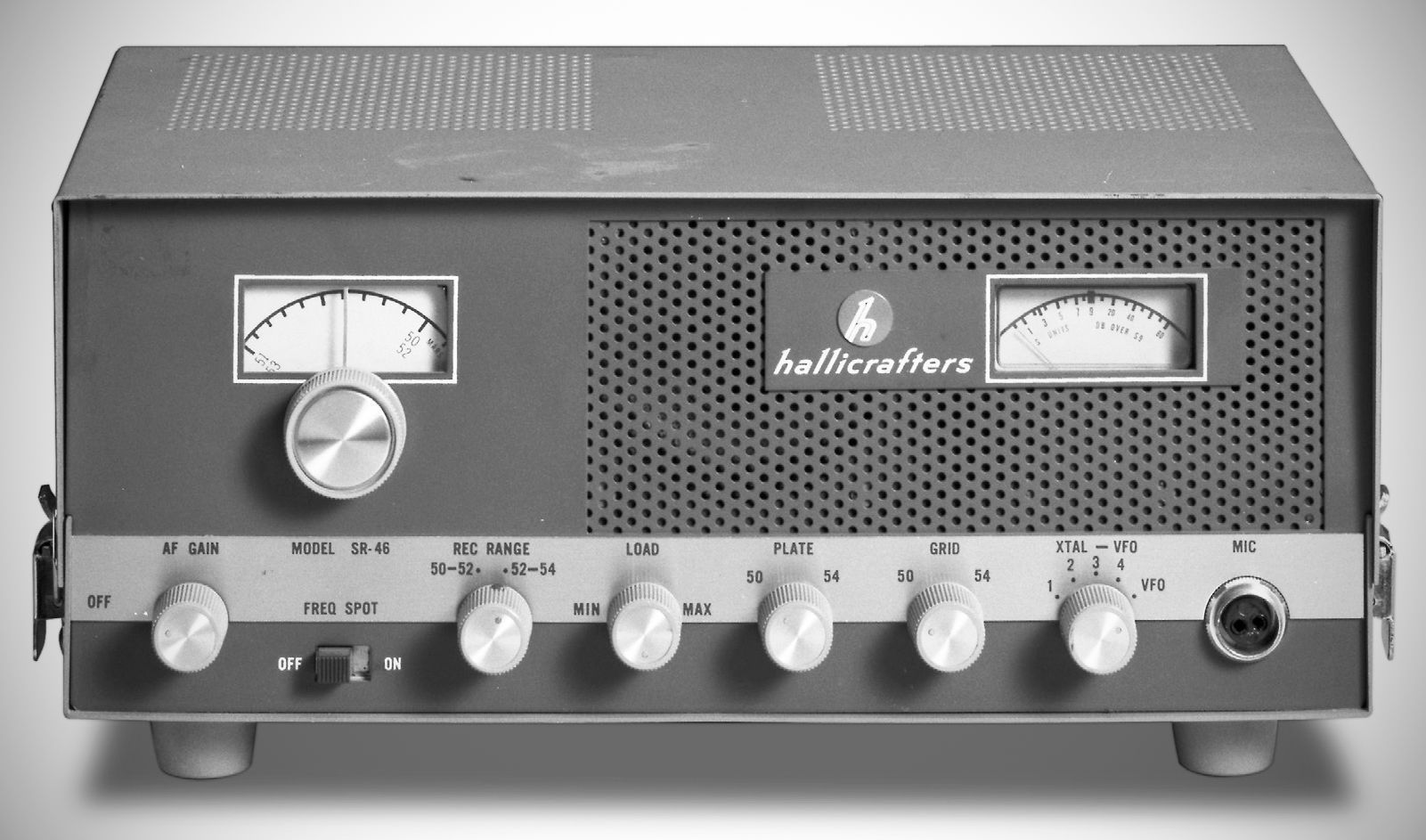
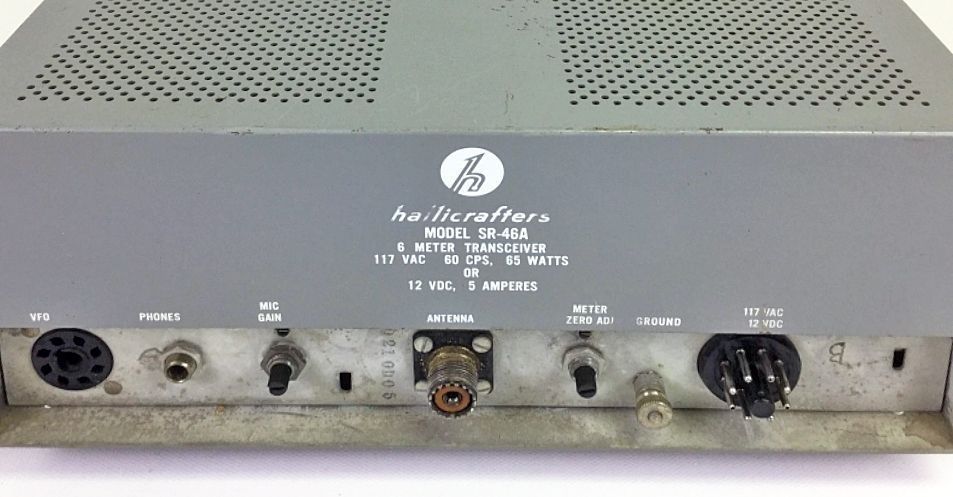
The SR-46 is a compact, self-contained six-meter transceiver engineered to operate as a complete 6-meter station.It was released late in 1964 along with its companion, the 2 meter SR-42. It uses a universal power supply allow it to function either as a 12-volt DC mobile unit or a 117-volt AC fixed station.
The radio includes four transmitter channels, coming factory-equipped with a crystal for 50.22 MC installed in position No. 1. Its receiver section provides continuous tuning coverage across the entire 50 to 54 MC band.
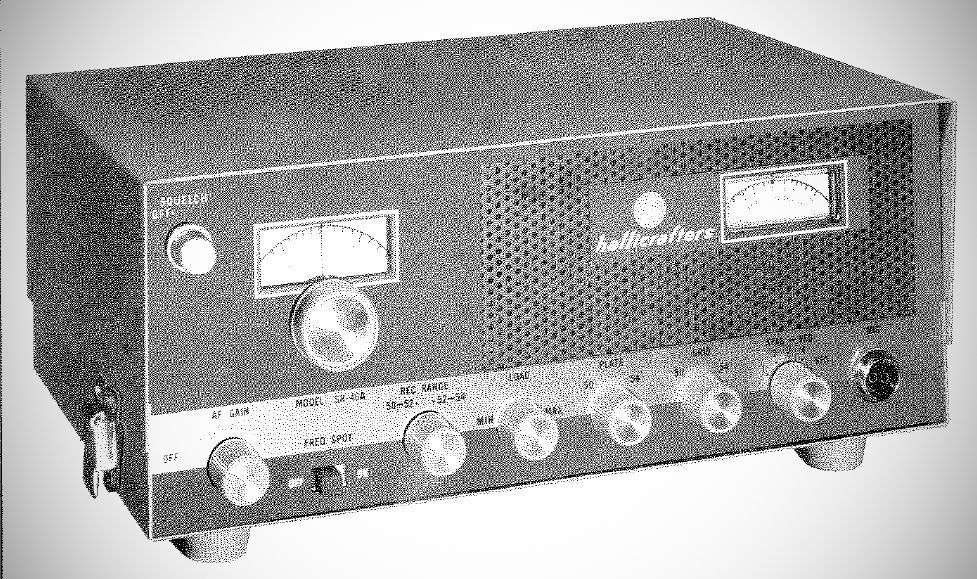
The only difference in the SR-46A is the addition of squelch. A front panel control was added at the upper left corner.
Features
– Double-conversion superheterodyne receiver design.
– Low-noise, neutralized-nuvistor RF stage.
– Low-noise triode first mixer.
– Low-pass input filter.
– Eleven tuned RF and IF circuits.
– Automatic full-time noise limiter.
– Zener-regulated variable oscillator.
– Crystal-controlled second oscillator.
– Double-spaced, copper-plate variable oscillator capacitor.
– Planetary drive for easier tuning.
– Dual tuning range for greater bandspread.
– Calibrated "S" meter.
– Heavy-duty speaker equipped with a 3/4-inch voice coil and a one-ounce Alnico V magnet.
– Frequency "SPOT" switch.
– Automatic RF output meter switching.
– Bridge neutralized final amplifier.
– Pi network output stage.
– Four panel-switch selected crystal sockets.
– Provisions for an external VFO.
Specifications
– Tuning Range: Minimum coverage from 49.75 to 54.0 MC.
– Crystal Type: CR-23/U.
– Crystal Frequency: 25 to 27 MC (output frequency divided by 2).
– Sensitivity: Less than 1 microvolt for a 10 dB signal-to-noise ratio at 30% modulation.
– Noise Figure: 4 to 6 dB.
– Power Gain: 0.5 watt output for a 1-microvolt, 30%-modulated input signal.
– AVC Figure of Merit: Better than 50 dB.
– Reception Mode: AM
– IF Rejection: 60 dB.
– Input Impedance: 50 ohms (unbalanced).
– Output Impedance: 3.2 ohms.
– Tuning Range: Minimum coverage from 49.9 to 54.0 MC.
– IF Frequencies: Dual conversion using 20.15 MC and 1650 KC.
– Power Input: 10 to 12 watts.
– Power output: ~ 5 watts
– Microphone Input: High impedance with push-to-talk capability.
– Frequency Response: -3 dB at 300 and 3800 CPS.
– Output Impedance: 50 ohms (unbalanced).
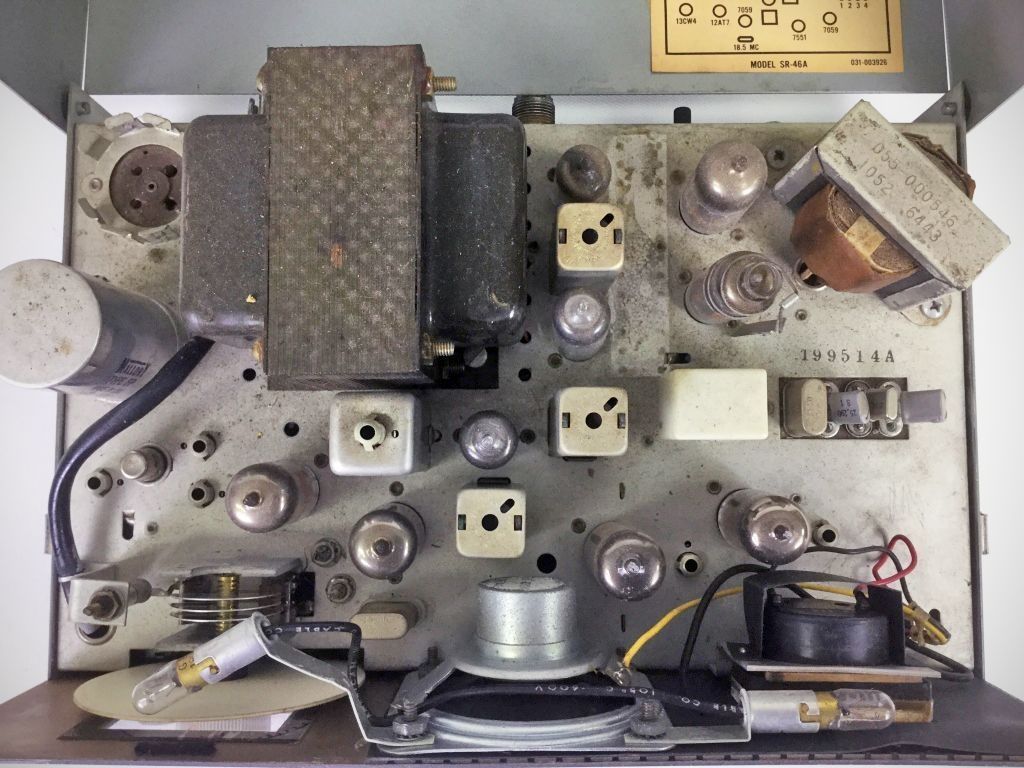
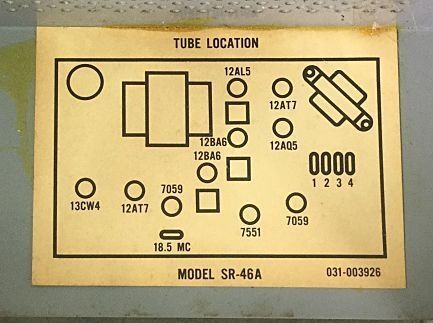
Tube Lineup (10 total)
– 13CW4 (Nuvistor, RF Amplifier)
– 12AT7 (First Mixer / Receiver VFO)
– 7059 (Second Mixer / Receiver Crystal Oscillator)
– 12BA6 (1650 KC IF Amplifier)
– 12BA6 (1650 KC IF Amplifier)
– 12AL5 (Detector / AVC / Automatic Noise Limiter)
– 7059 (Transmitter Oscillator / Doubler)
– 7551 (Transmitter Final Amplifier)
– 12AT7 (Microphone Amplifier / First Audio Amplifier)
– 12AQ5 (Audio Output / Modulator)
Power Requirements
– AC Operation: 105 to 125 volts, 60 cycles, 65 watts maximum.
– DC Operation: 11 to 16 volts (negative ground standard), 5 amperes maximum (requires Model MR-40 Mobile Kit).
References
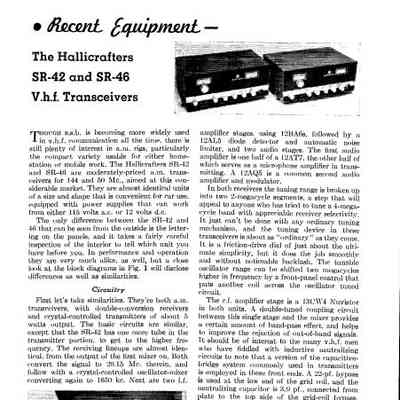
Review. QST, Jul 1965, p. 85.