Note
QST, Aug 1946, p. 145.
QST, Jul 1947, p. 4.
Concord catalog 9-47, p. 160.
Radio News, Jan 1949, p. 5.
Lafayette catalog number 89, p 178.
Lafayette-Concord (1949 #949), p. 142.
Allied Radio catalog 1951 (copyright 1950), p. 137.
The SX-43 was listed in an ad (without a photo) in the August 1946 issue of QST (page 145). The ad, for R.C. & L.F. Hall, Inc., may have been a mistake, but it was listed for three months, and the frequency coverage listed was correct. The SX-43's big reveal came nearly a year later, in the July 1947 issue. Oddly, the same ad also listed the SX-42 (with correct frequency coverage) nearly four months before its official release in December 1946.
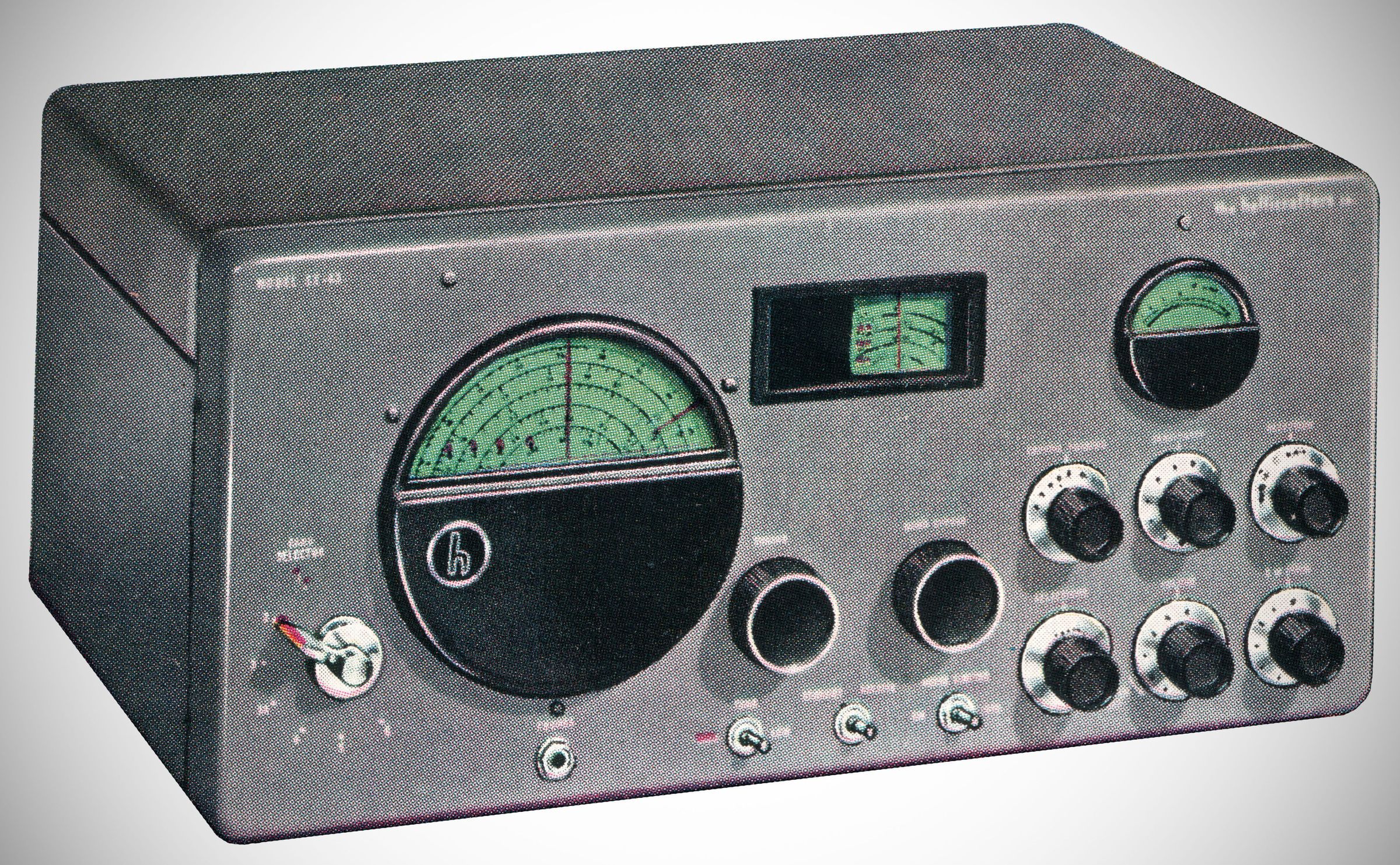
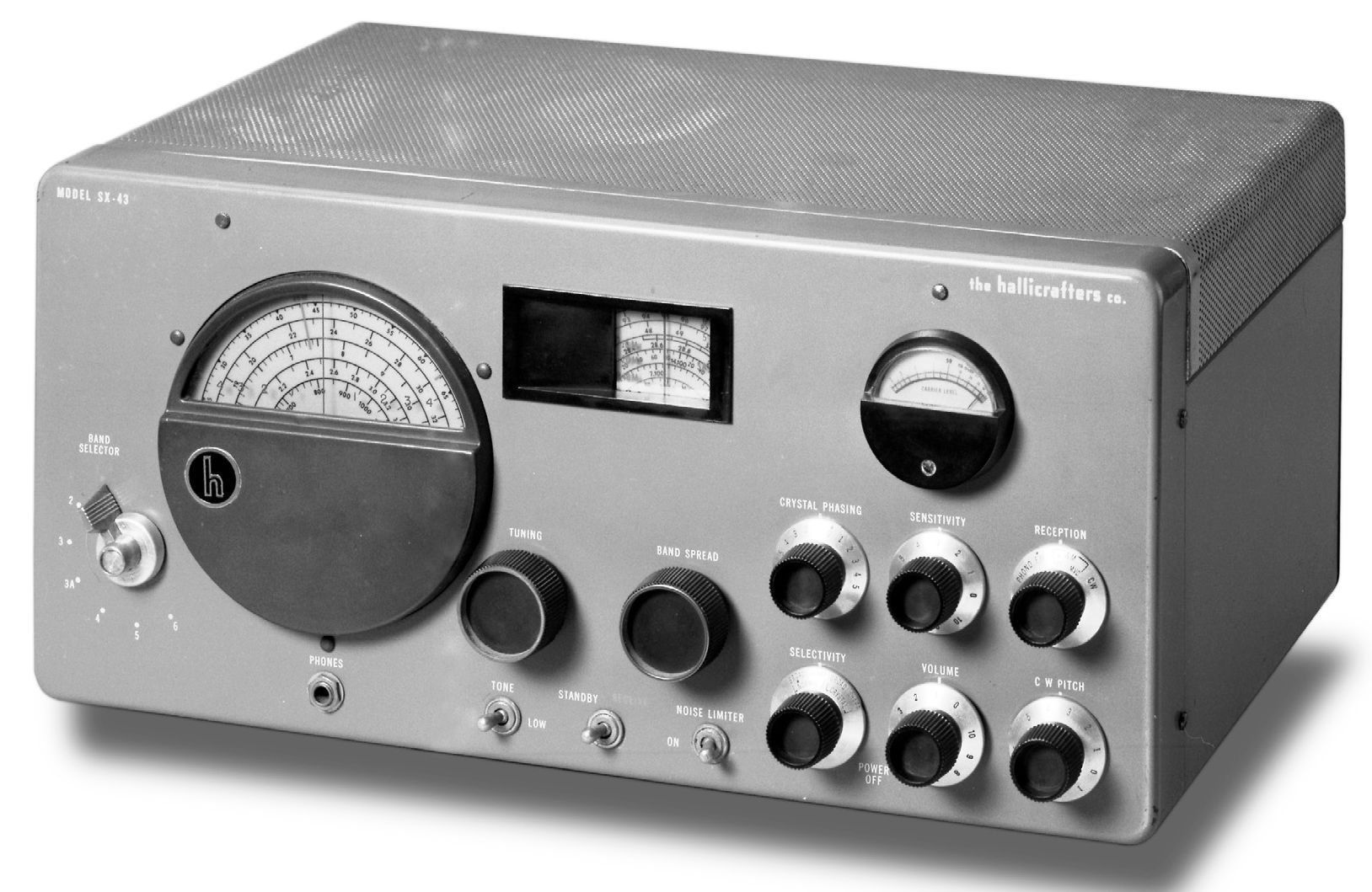
Introduce as a more affordable, downsized alternative to the premium SX-42, the Hallicrafters SX-43 was a communication receiver priced at $169.50. It was designed to compete with mid-range post-war receivers like the Hammarlund HQ-129X and the National NC-173.
The SX-43 provided continuous frequency coverage across multiple bands, notably incorporating early post-war FM capabilities:
– Continuous Coverage: 540 kc to 55 MHz and 86 to 110 MHz.
– AM/CW Reception: 540 kHz to 44 MHz.
– AM/FM Reception: 44 to 55 MHz (covering the amateur 6-meter band).
– FM-Only Reception: 86 to 110 MHz (covering the FM broadcast band).
Under the hood, the receiver featured a mix of traditional single-conversion engineering and innovative high-frequency circuitry borrowed from the SX-42:
Tube Lineup & Architecture
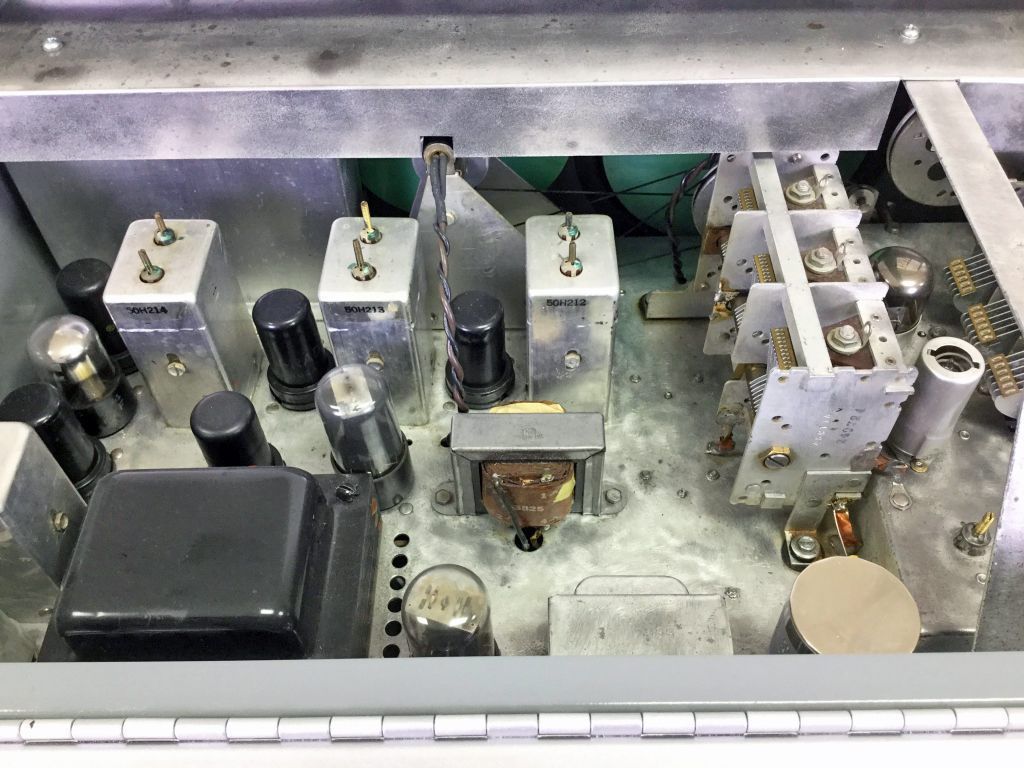
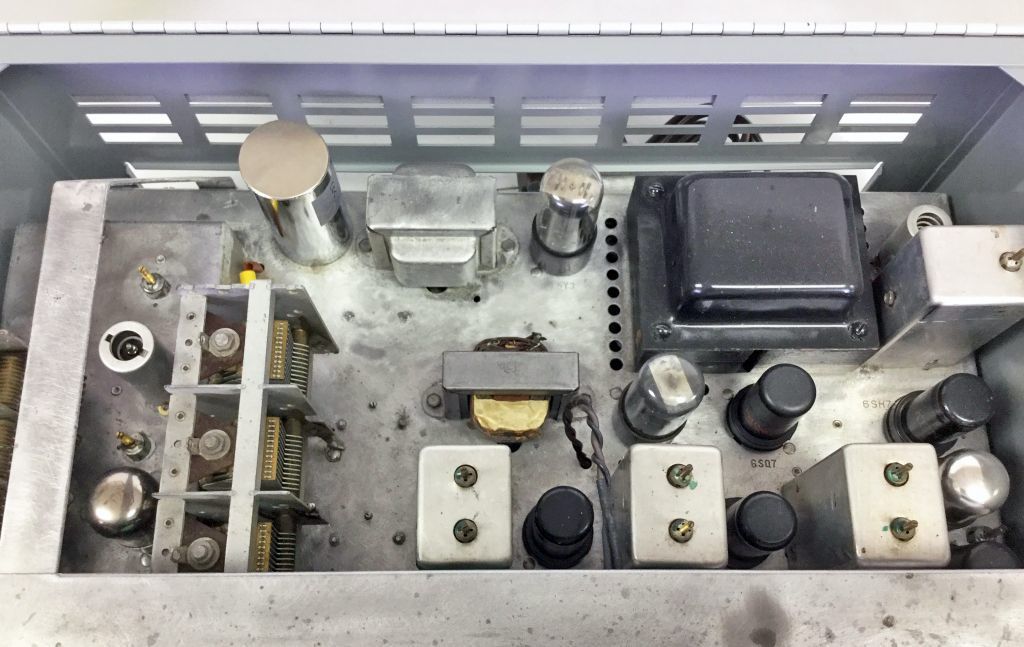
On the standard lower bands, it functioned as a single-conversion superheterodyne receiver with one RF stage and two IF stages. It utilized a modern 6BA6 miniature pentode as the RF amplifier and a low-loss 7F8 Loktal dual triode as a low-noise mixer/local oscillator.
The crystal filter was positioned between the two IF stages rather than immediately after the mixer, providing an effective phasing notch and sharp selectivity for CW.
On the two highest bands (above 44 MHz), the intermediate frequency (IF) shifted to 10.7 MHz using a second set of tuned circuits in series with the standard 455 kHz circuits. For AM reception on Band 5, the 455 kHz BFO (a 6J5 tube) was converted into an 11.115 MHz second-conversion local oscillator.
Features a 6SH7 third IF stage (acting as a limiter) and a double-diode ratio detector for FM. The audio output stage relied on a single 6V6 tube.
Family-Friendly Controls: Hallicrafters implemented a color-coding system on the front panel. Setting controls to the red dots configured the radio for standard AM broadcast listening, while switching the reception and band selectors to the green dots configured it for FM broadcast listening.
The SX-43 offered four positions: broad IF, sharp IF, broad crystal filter, and sharp crystal filter. It also retained a noise limiter and an S-meter (signal-strength meter).
Despite its advanced circuitry and appealing feature set, the SX-43 saw limited success among radio amateurs due to several design compromises:
– Mechanical Instability: The chassis and tuning capacitor mounts were notoriously flexible. The radio was highly prone to frequency drifting or jumping when subjected to physical vibrations, such as footsteps or a door slamming in a ham shack.
– Skimpy Bandspread: The bandspread mechanism offered very compressed tuning compared to its rivals. For example, the 40-meter band was covered in just 4.25 turns of the knob (about 20 inches of linear travel), whereas the competing HQ-129X offered over 44 inches.
– Dial Cord Drive: The tuning mechanism used a dial cord drive that was prone to slipping over time as the drive shaft became polished.
– Signal Overload: The receiver had a reputation for choking or blocking up when encountering strong CW signals or high local noise levels, causing the CW note to chirp or pull the BFO.
– No Antenna Trimmer: It lacked a front-panel antenna trimmer control to peak the RF amplifier stage to the operating frequency.
The SX-43 was phased out of production in 1949 and replaced by the dual-conversion SX-71, marking the end of Hallicrafters' inclusion of standard wideband FM broadcast coverage in its primary amateur receiver line.
Features include a BFO, AVC, a noise limited, mute, standby, two position tone control, and a calibrated bandspread for 80, 40, 20, 10, and 6 meters. Selectivity in four steps. One RF and two IF stages.
Audio output: 3 watts, 5000 Ω (for use with the R-42 and R-44 speakers)
Power: 120 VAC, 120 watts
Tubes (11 total): (1) 5Y3, (1) 6V6, (1) 6SQ7, (1) 6SG7, (2) 6SH7, (1) 6AL7, (1) 6H6, (1) 6J5, (1) 7F8, (1) 6BA6
References
Review: Electric Radio, Nov 1998