Note
QST, May 1952, p. 4.
Allied Radio catalog 1953 (copyright 1952), p. 34.
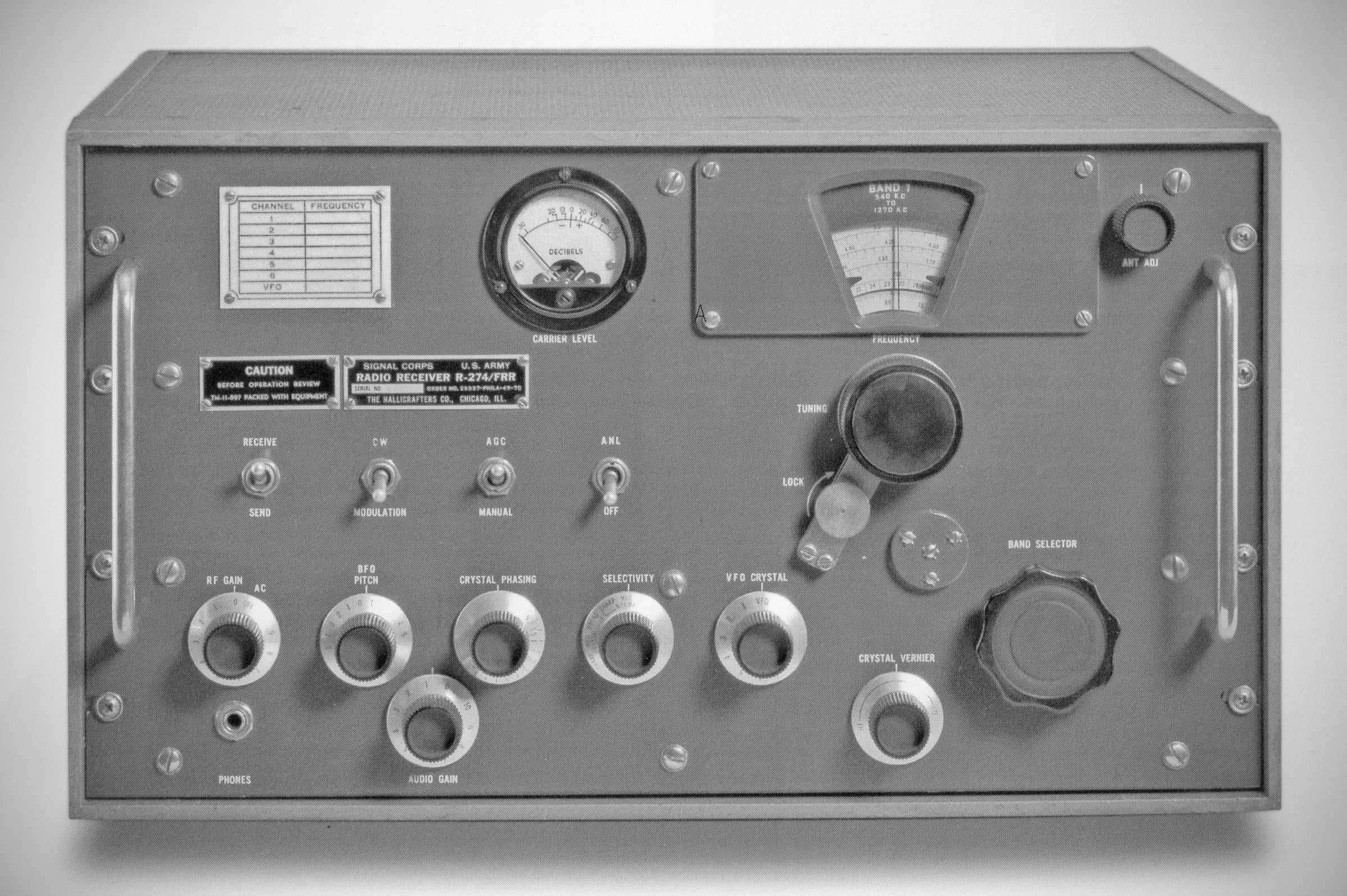
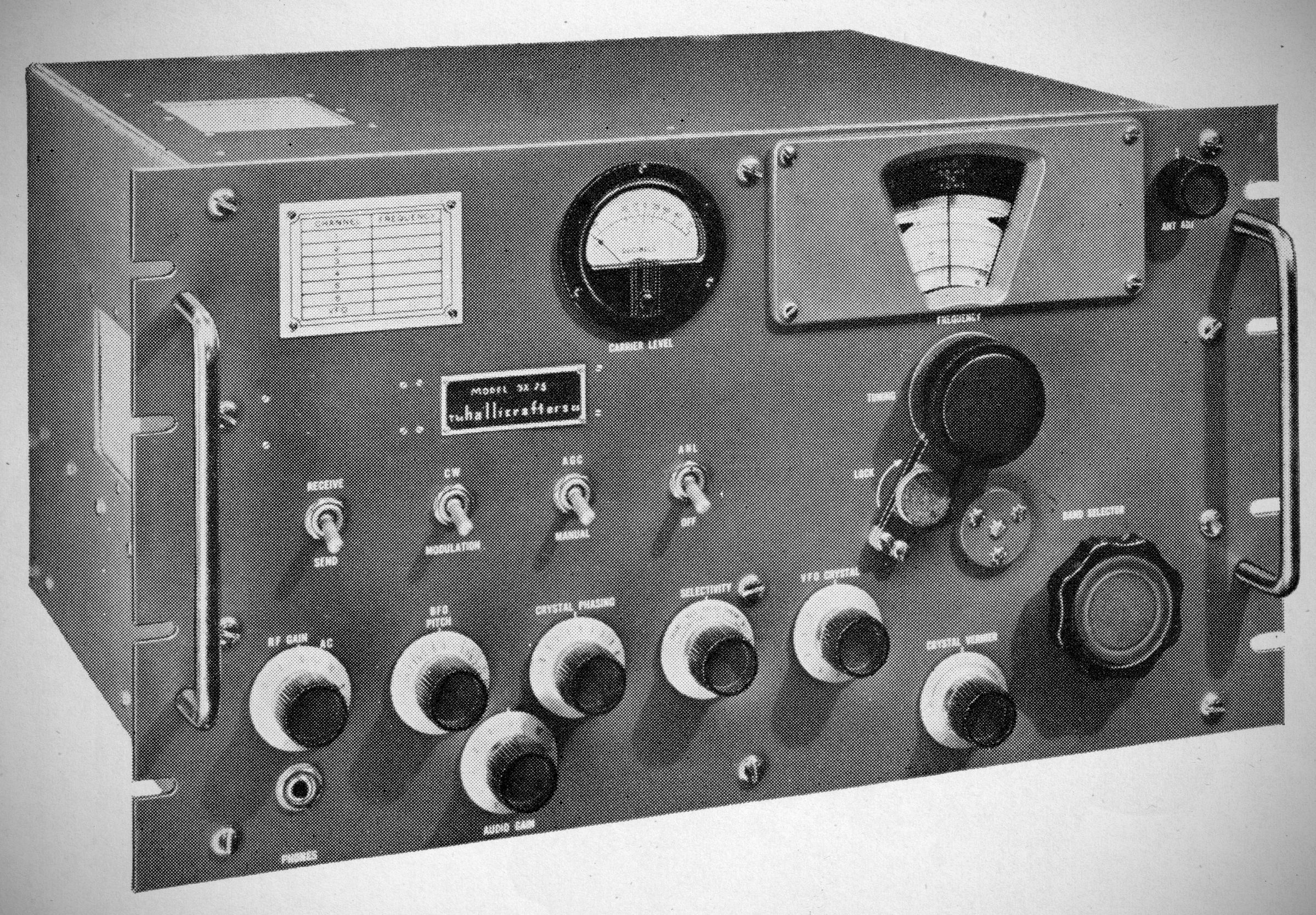
The SX-73 was known as the R-274/FRR when it was in military uniform. The 19-tube receiver tuned from 0.54 to 54 MHz and was double-conversion above 7 MHz. It also offered six crystal-controlled channels with vernier tuning. Its R-274 nomenclature was also used on the Hammarlund SP-600 (R-274C). Although the two receivers shared certain features, they were distinctly different design solutions to a common military specification.)
Double conversion superheterodyne, with single conversion below 7 MHz. Two RF stages and two IF stages.Turret mounted coils rotate into position to active circuit to reduce cross modulation.
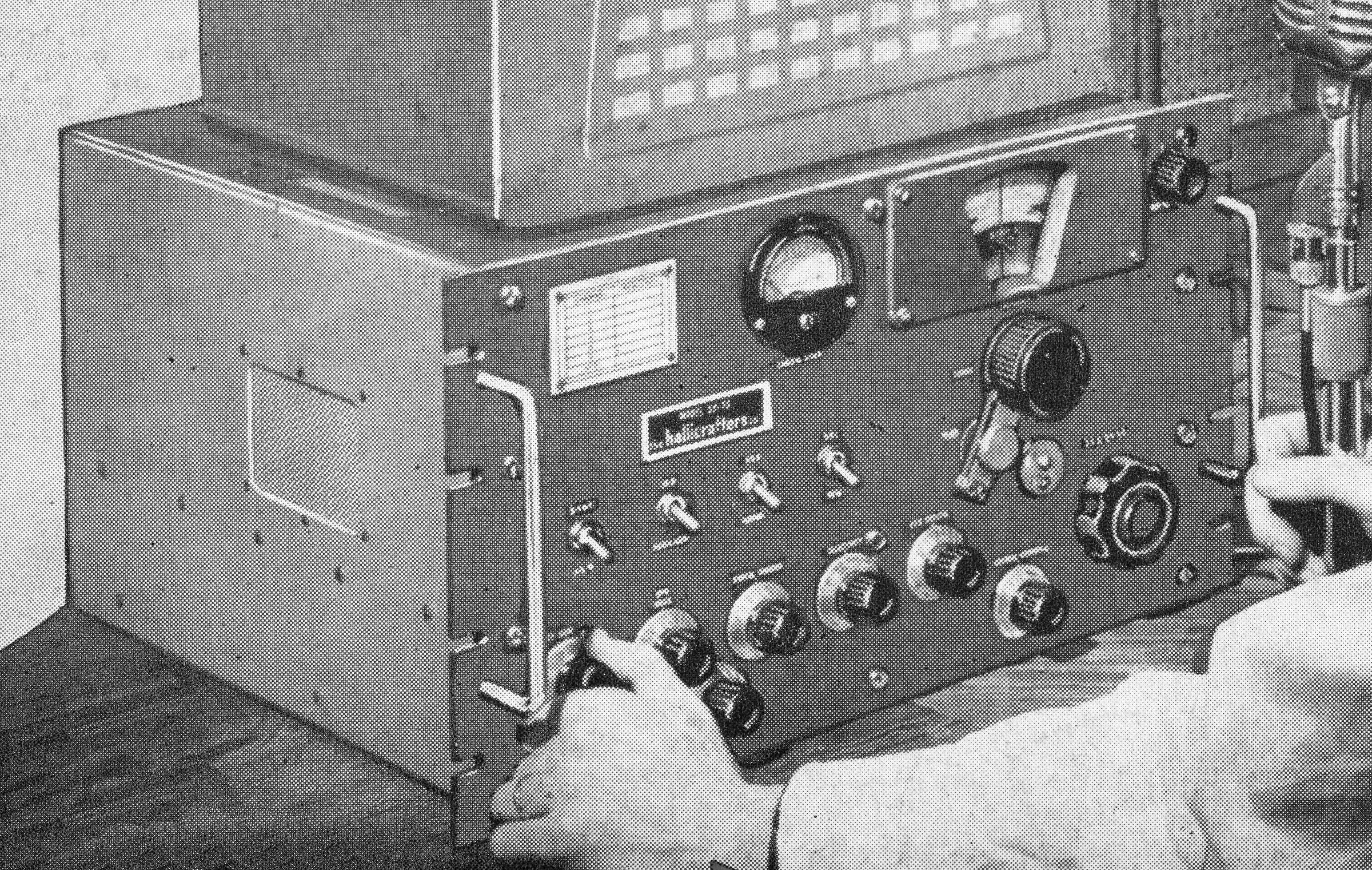
The SX-73 was Hallicrafters most advanced receiver up to that time, having just about all the features the technology of the period could provide, and was specifically designed for the military marked, and for rack mounting. It was worth more than $11,000 adjusted for inflation.
Features include BFO, ANL, AGC, an S-meter, dial lock, 6000º of tuning, RF and AF gain controls, antenna trimmer, mute, standby, IF output, and six crystal controlled channels with crystal vernier tuning.
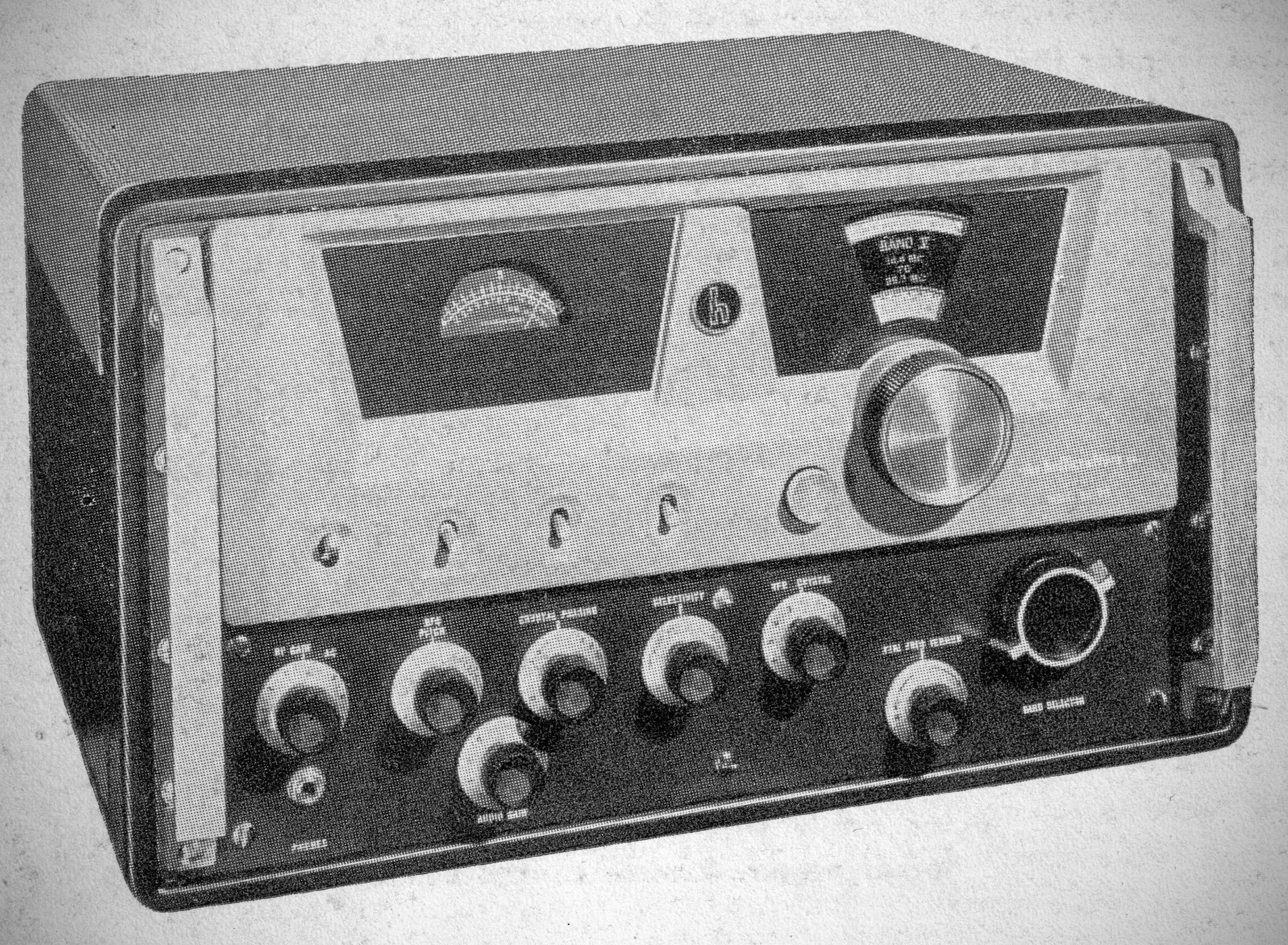
An SX-73 prototype appears in the 1951 ARRL Hanadbook, which was printed in 1950.
– Coverage: 540 kHz to 54 MHz
– IF: 455 kHz, 6 MHz
– Modes: AM, CW, MCW
– Sensitivity: 1 uV or less for 10 db signal-to-noise ratio.
– Image rejection: 80–120 db.
– Selectivity: six steps from 300 Hz to 14.5 kHz.
– Drift: never more than 0.01%.
– Calibration accuracy: within ±0.2 or less at all frequencies.
– Audio Output: 2 watts. Output impedance: 600 ohms.
Requires an external speaker.
Tubes: (19 total): (1) 6AG5, (8) 6BA6, (2) 6BE6, (1) 6C4, (2) 6AL5, (1) 6AT6, (1) 6Y6, (1) 6AG5, (1) 5U4, (1) VR-150
Power requirements: 75/105/117/130/190/210/234/260 VAC, 50/60 Hz
References
Review: Electric Radio, Mar 1999