Note
QST, Jun 1975, p. 138.
QST, Jan 1976, p. 87. (HK-2 is the same as HK-1 but without the base.)
QST, Apr 1976, p. 67.
QST, Feb 1977, p. 145.
QST, Mar 1980, p. 162.
QST, Feb 1981, p. 152.
QST, Feb 1982, p. 174. (HK-2 not seen in the ad)
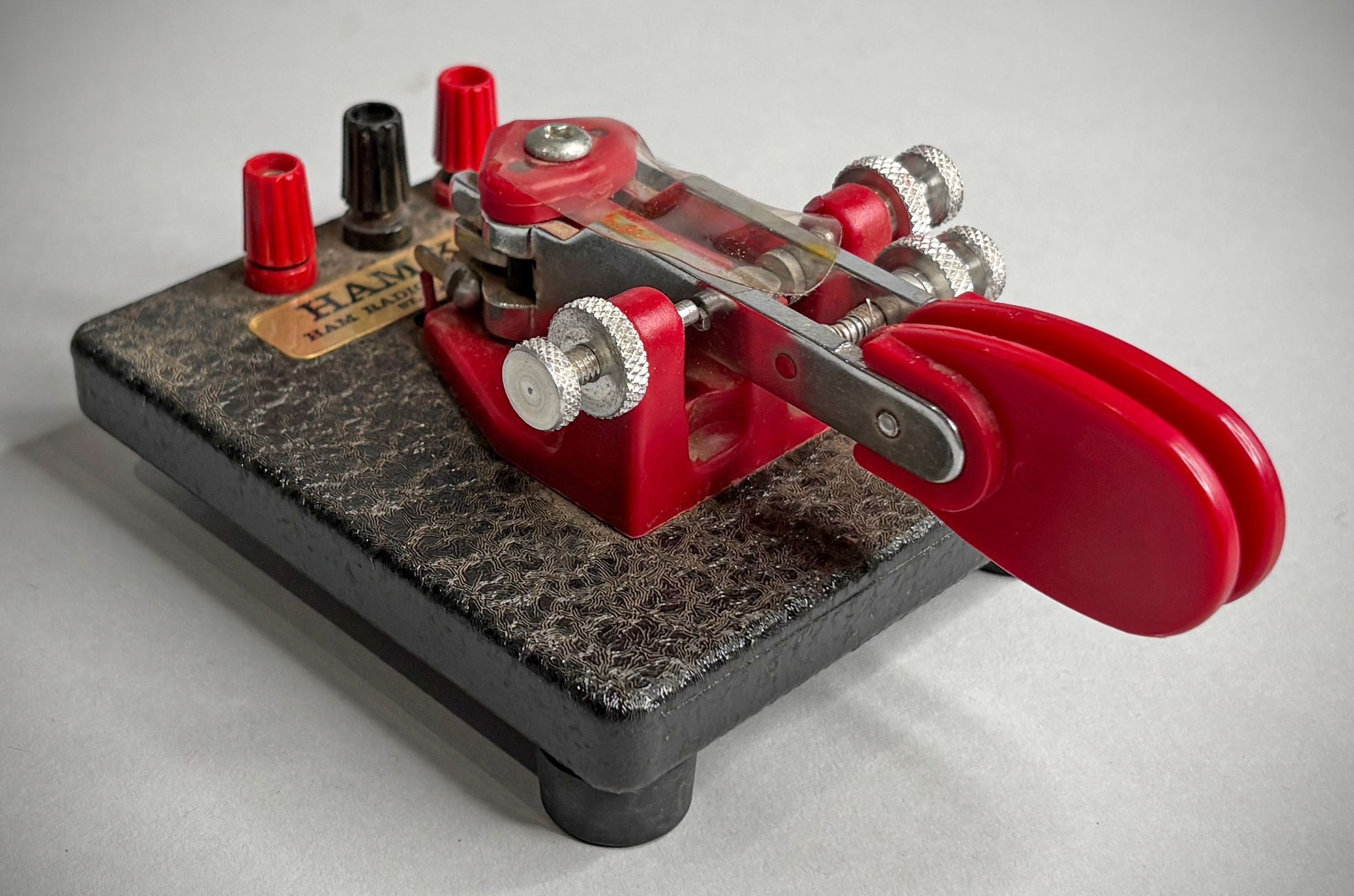
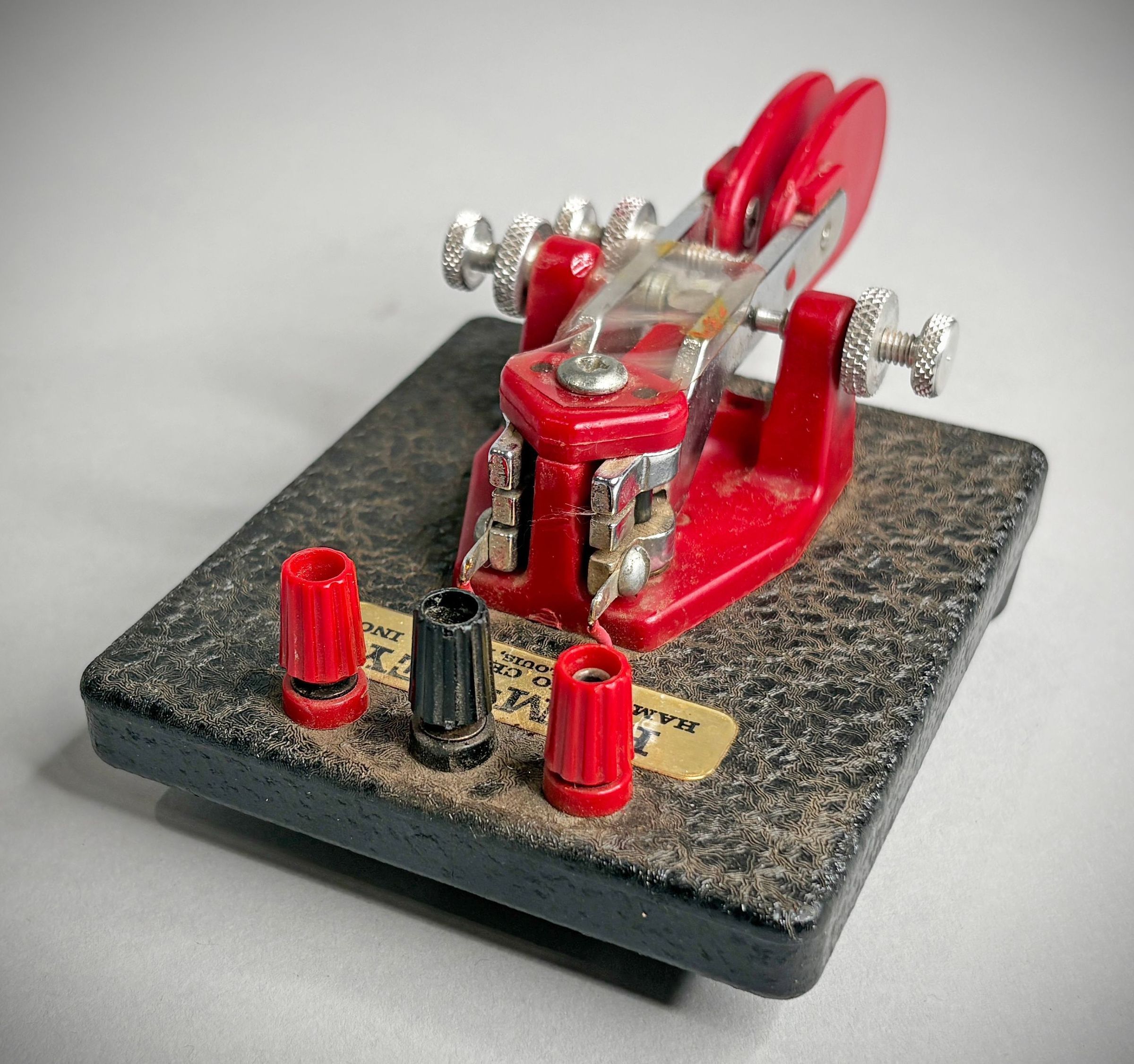
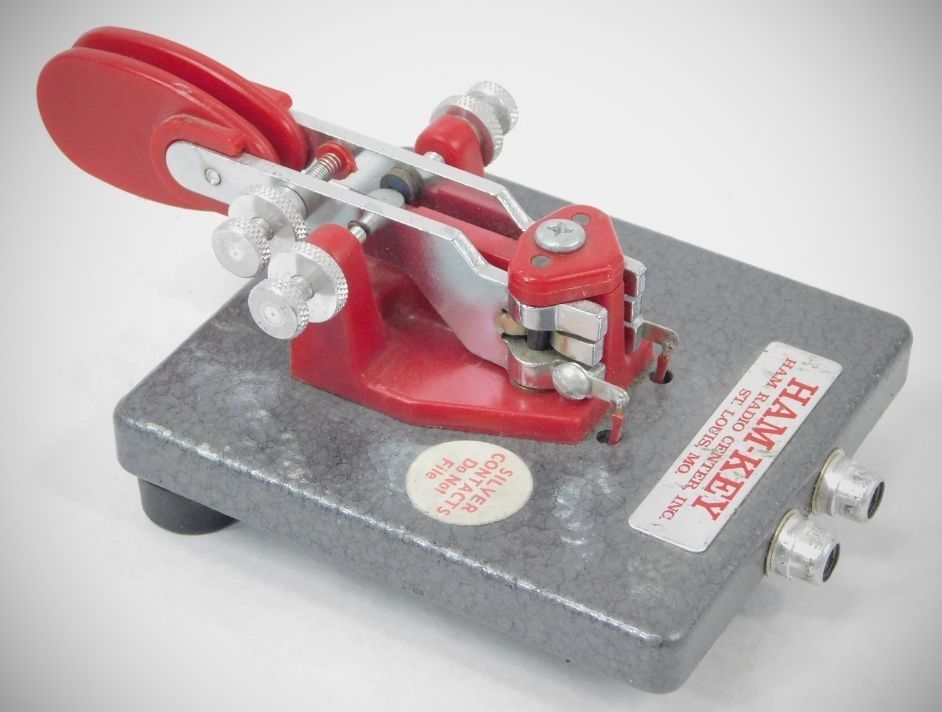
There are two versions of the HK-1. The first (from early production) uses three binding posts. The second (from later production) uses two RCA jacks.
The transition between those two versions actually marks a specific shift in how Ham-Key approached equipment compatibility during the late 1970s and early 1980s.
The Three-Post Version (Early Production, 1971 to about 1979)
This version was designed with a "universal" mindset. The three binding posts allowed for:
– Manual Wiring: You could easily secure bare wire or spade lugs.
– Flexibility: It provided a common ground and separate lines for the dit and dah contacts, making it easier to interface with older tube-type transmitters or homebrew keyers that used screw-terminal strips.
The Dual RCA Version (Later Production, from about 1979 to to the end)
As solid-state rigs and dedicated external keyers became the industry standard, Ham-Key updated the HK-1 to use RCA jacks. Using shielded RCA cables helped reduce the chance of stray RF getting into the keying line, which was a common headache in "shack-in-a-van" or high-power setups.
Beyond the connectors, the bases changed as well. The early units featured a heavy, wrinkle-finish cast iron base, while later units had a lighter steel base with rubber feet.
Both versions utilized the same plastic frame and adjustable tension springs, which made them a more affordable, lightweight alternative to the "heavy metal" feel of a Brown Brothers or a Vibroplex.