Note
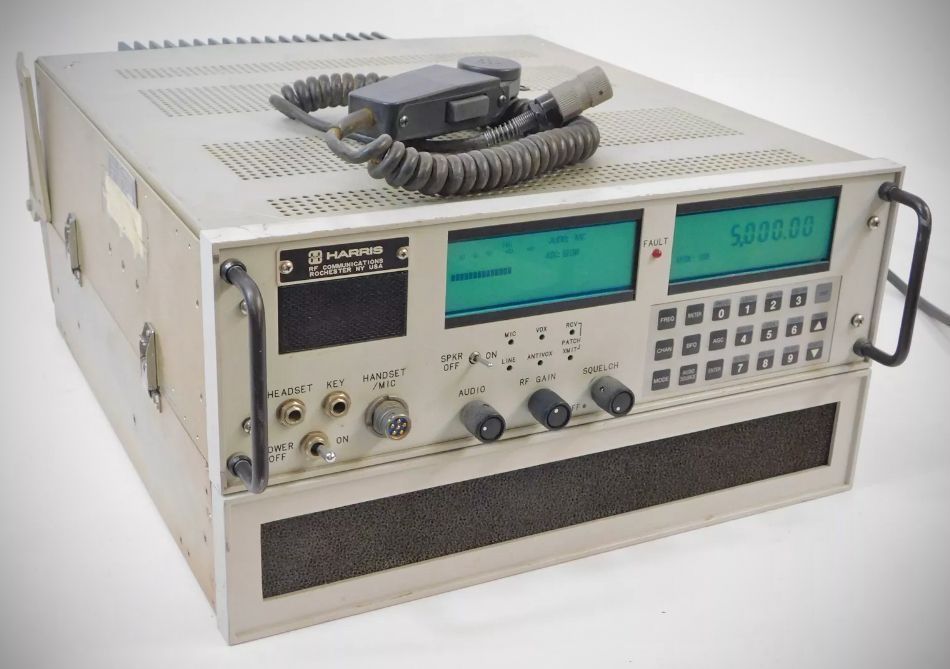
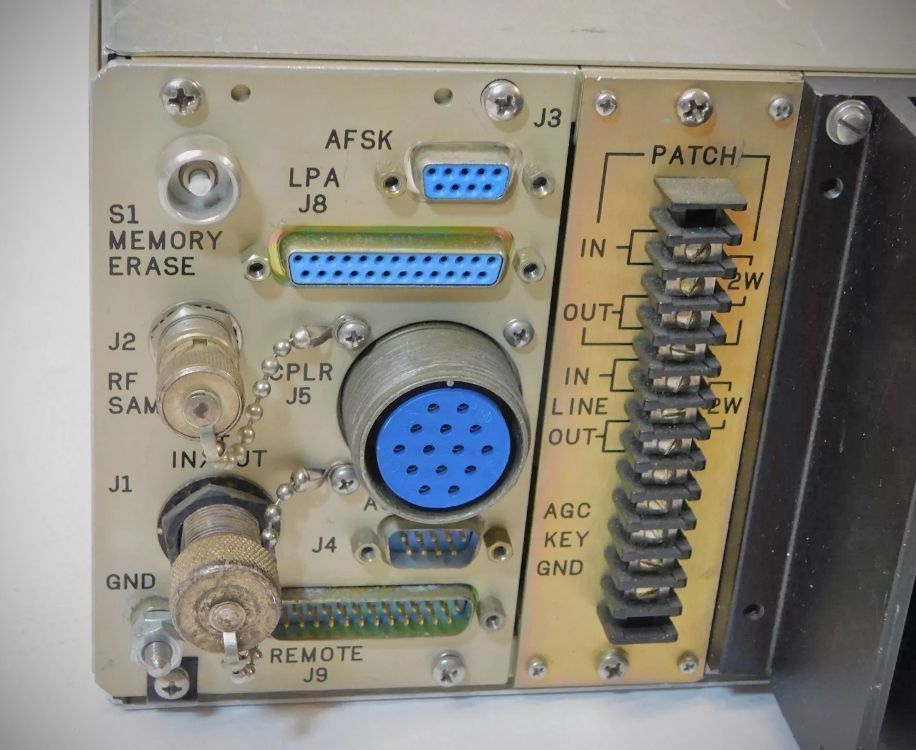
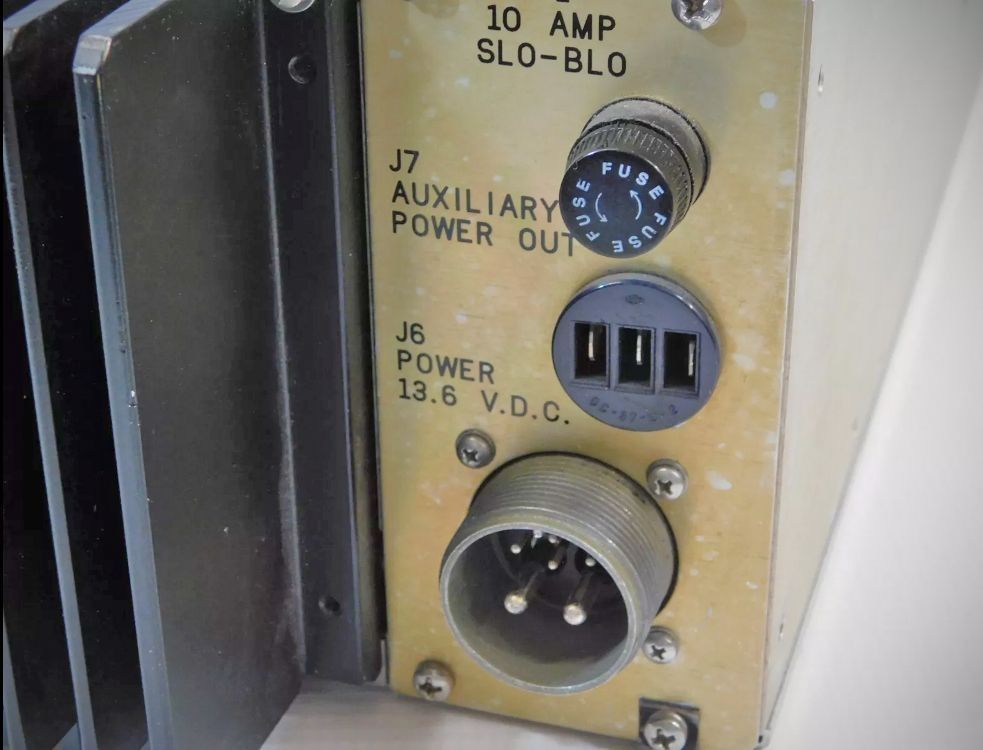
The Harris RT-1446 (also known by its commercial model number, RF-350) is the primary receiver-transmitter unit that the C-11329 remote control is designed to operate.
The RF-350 was developed by Harris as a commercial/military crossover. By 1984, technical manuals and operator cards were in circulation, marking its active entry into service.
Peak Deployment (1985–1992): Most units found on the surplus market today feature date codes and "Publication Numbers" from December 1985 or 1986. This was the height of the Cold War era when the U.S. Navy and Air Force were heavily updating their transportable ground stations.
End of Production: By the late 1990s, the RF-350 series was being phased out in favor of the Falcon II and later Falcon III digital software-defined radios.
Core Specifications
The RT-1446 is a wide-band system designed for reliable long-range communication:
– Frequency Range: 1.6 MHz to 30 MHz.
–Tuning: Digital frequency synthesis in 10 Hz steps.
– Power Output: 100 watts PEP (Peak Envelope Power) and Average. It was often paired with the RF-353 or RF-355 external amplifiers to push that output to 500W or 1,000W.
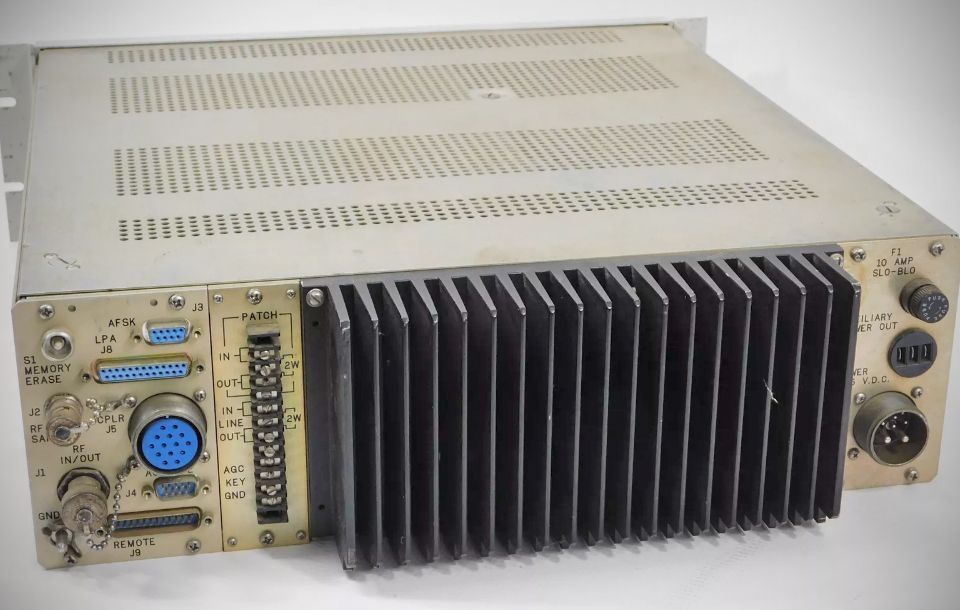
– Modes: USB, LSB, CW, AM, and AFSK (Audio Frequency Shift Keying) for data/teletype.
– Stability: High-stability internal oven-controlled crystal oscillators (OCXO), ensuring the frequency doesn't drift even in extreme temperature shifts.
Features
What made the RF-350/RT-1446 a workhorse for the U.S. Navy and Air Force (as part of the AN/URC-119 system) was its reliability and "smart" features for the era:
– Microprocessor Control: This unit uses an internal microprocessor to handle channel memory, self-diagnostics, and remote interface logic.
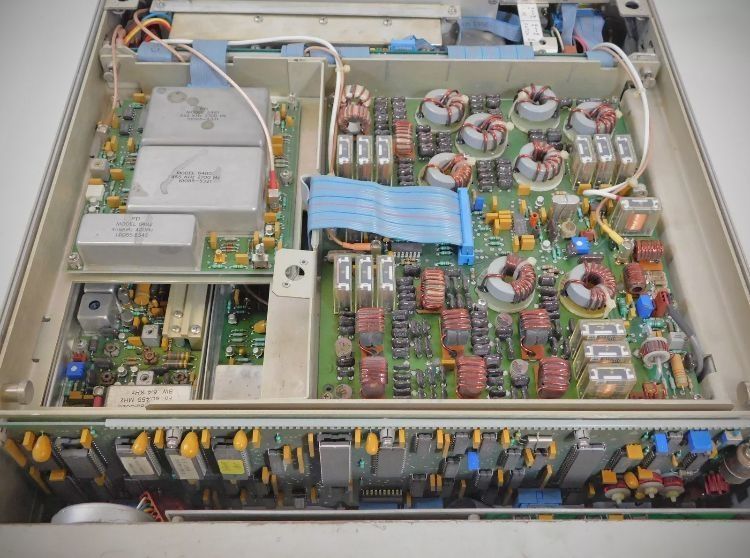
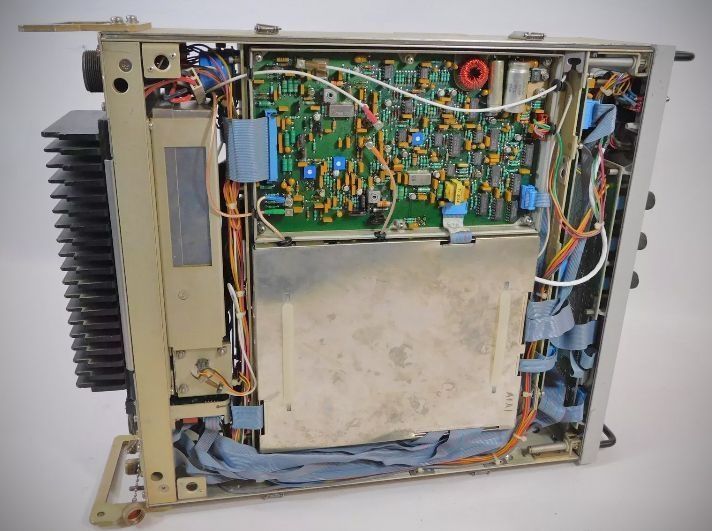
– Modular Construction: The "RT" stands for Receiver-Transmitter, but inside, it is built with several plug-in modules. This allowed technicians to swap out a faulty board in the field rather than trying to repair complex circuitry under fire.
– Built-In Test (BIT): It features a comprehensive self-test system. An operator can run a BIT cycle, and the radio will report exactly which module is failing on the front-panel display.