Note
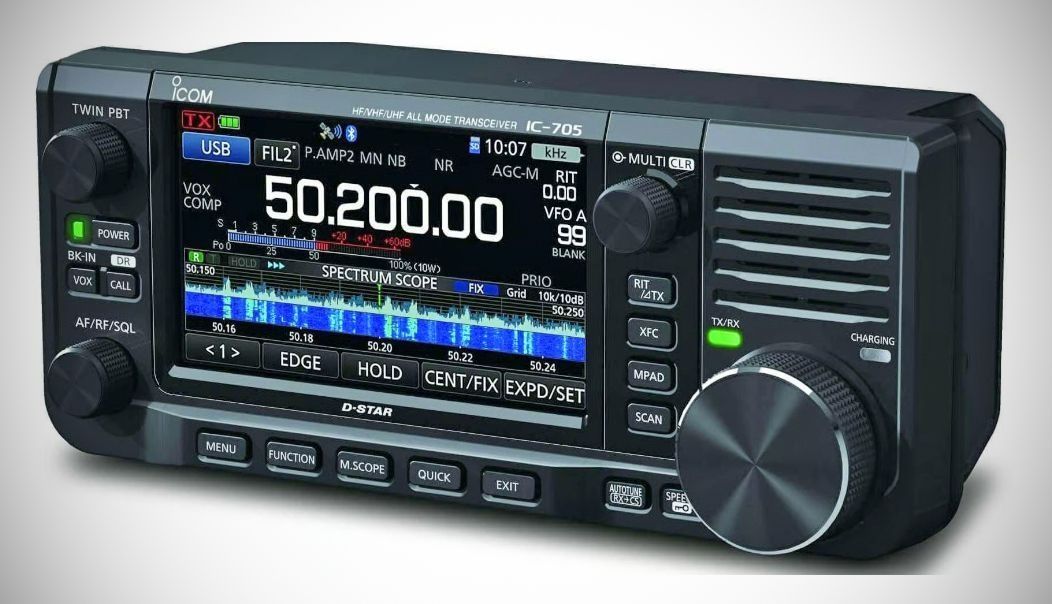
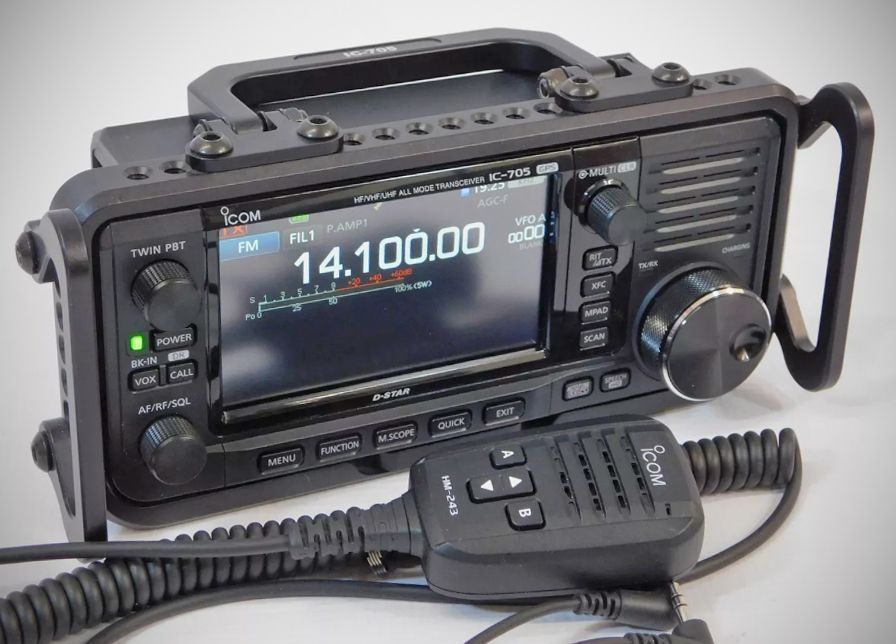
The Icom IC-705 is a highly versatile, QRP portable transceiver that represents the modern evolution of the "shack-in-a-backpack." It utilizes SDR technology and covers the HF, VHF, and UHF bands (160m through 70cm). It was the first portable "backpack" rig to bring the high-performance SDR architecture of base stations like the IC-7300 into a compact, battery-powered form factor.
The IC-705 is less of a traditional radio and more of a portable computer with an RF deck. It bridges the gap between traditional HF operating and modern digital networking, all in a package designed for mountain-topping or emergency communications
The radio’s capabilities are best summarized by its digital integration and field-utility features:
1. Digital & Wireless Connectivity
The IC-705 is built for a cable-free experience.
– Bluetooth & WLAN: It supports wireless headsets and remote control via a local area network. You can link it to a smartphone or tablet for integrated operation.
– Integrated GPS: The built-in GPS receiver allows for location reporting, automatic clock synchronization, and a "Near Repeater" search function that identifies the closest D-STAR repeaters based on your current coordinates.
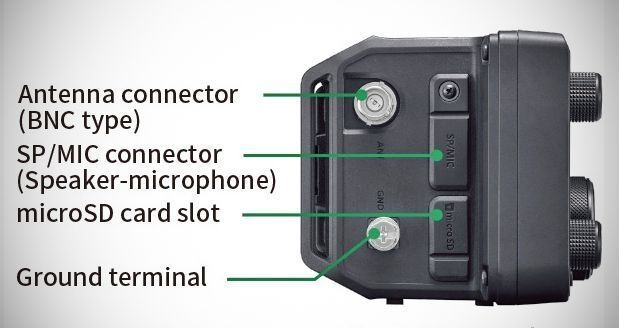
– MicroSD Port: This acts as the radio's "brain," storing voice recordings of QSOs, GPS log data, screen captures, and complete radio configurations for easy backup or sharing.
2. Advanced Visuals & Scans
The radio features a large color touchscreen with a high-speed Real-Time Spectrum Scope.
– Waterfall Display: This allows you to see signal strength over time, making it easy to find weak signals or clear frequencies in the field.
– Audio Scope: You can visualize the FFT scope and oscilloscope of either transmitted or received audio to check modulation or filter performance.
– Advanced Scanning: Beyond basic frequency scans, it offers "Fine Program Scan" for high-resolution searching and "Tone Scan" to identify sub-audible tones on repeaters.
3. D-STAR & DV Gateway
– DV Gateway Mode: The radio can act as a gateway to the D-STAR network, allowing you to use a PC or Android device to connect to the digital network even if there isn't a local D-STAR repeater nearby.
– Digital Voice (DV) Functions: It supports one-touch reply, digital callsign squelch, and the transmission of low-speed data (like GPS coordinates or short text messages) simultaneously with voice.
4. Field Operations & Power Management
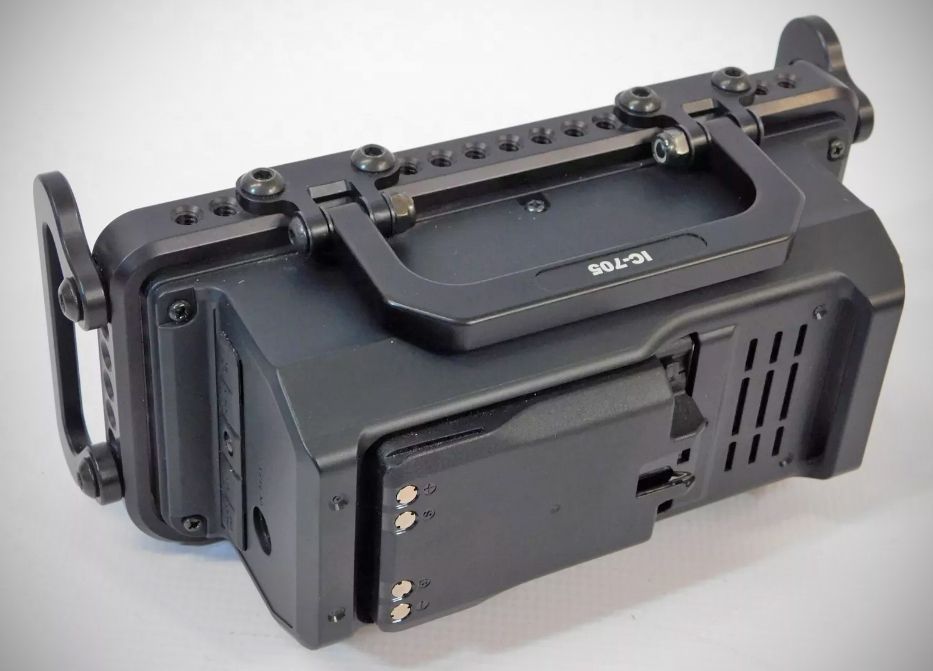
– Variable Power Output: It delivers 5W on battery power and 10W when connected to an external 13.8V DC source.
– Voice Recorder: You can record incoming signals or pre-record your own calls to play back during contests, saving your voice during long operations.
Specifications
– Frequency Coverage: 0.030–470.000 MHz (Continuous receive); amateur bands from 1.6MHz to 450MHz (Transmit).
– Modes: SSB, CW, RTTY, AM, FM, and DV (D-STAR).
– Form Factor: Compact, handheld-style desktop with a large touchscreen.
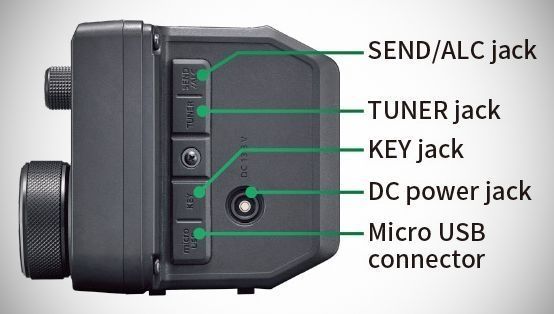
– Interface: Micro-USB for rig control and charging, plus a dedicated tuner jack and BNC antenna connector.
– RF Output Power:
With external DC (13.8V): Variable from 0.1W to 10W.
With battery Power: Variable from 0.1W to 5W.
– Operating Voltage: 9.0V to 15.87V DC.
– Current Consumption:
Transmit (at 10W): Approximately 3.0 A.
Receive (Maximum Audio): Approximately 450 mA.
Receive (Standby): Approximately 300 mA.
– Battery Performance:
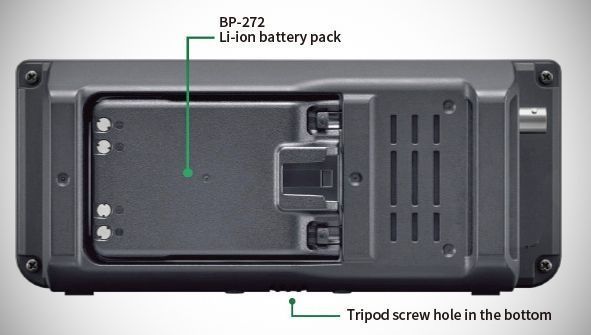
BP-272 (Standard): Approximately 3 hours of operation.
BP-307 (High Capacity): Approximately 5 hours of operation.
Note: These times are based on an FM duty cycle of 1:1:8 (TX:RX:Standby).
Charging Times (Transceiver OFF):
– Via DC Power (13.8V): ~2.3 hours for BP-272; ~4.3 hours for BP-307.
– Via USB (2A port): ~3.2 hours for BP-272; ~5 hours for BP-307.
Frequency & Modulation Specs
– Frequency Stability: Employs a high-stability TCXO providing ±0.5 ppm stability (from –10°C to +60°C).
– Continuous Coverage: The receiver covers 0.030 MHz to 470.000 MHz without gaps.
– Filter Customization: For CW operation, the rise time of the transmitted envelope can be adjusted between 2, 4, 6, or 8 milliseconds to tailor the keying characteristics.
– Subaudible Tones: Supports 50 standard DTCS and CTCSS tones, ranging from 67.0 Hz to 254.1 Hz.
Digital & Data Integration
– Connectivity Hardware: Features two virtual COM ports (A and B) over a single microUSB connection. Port A is typically used for CI-V rig control, while Port B can be assigned to functions like GPS weather data input.
D-STAR Networking:
– D-PRS Modes: Supports five digital position reporting formats: Mobile Station, Base Station, Object, Item, and Weather.
– Gateway Capability: In "Access Point" mode, the radio acts as a wireless bridge, allowing another D-STAR handheld to make gateway calls through the IC-705’s internet connection.
– Bluetooth Profiles: Supports simultaneous pairing of up to five devices, including headsets and data devices (like Android tablets), plus up to two iOS devices via Bluetooth LE.
Mechanical & Environmental Specs
– Display: 4.3-inch (diagonal) color TFT touchscreen with a resolution of 480 x 272 pixels.
– Storage: Supports microSD cards for cloning radio settings, logging GPS data, and recording voice audio.
– Antenna Interface: Uses a BNC connector (50Ω) and includes a dedicated tuner control jack for the AH-705 automatic antenna tuner