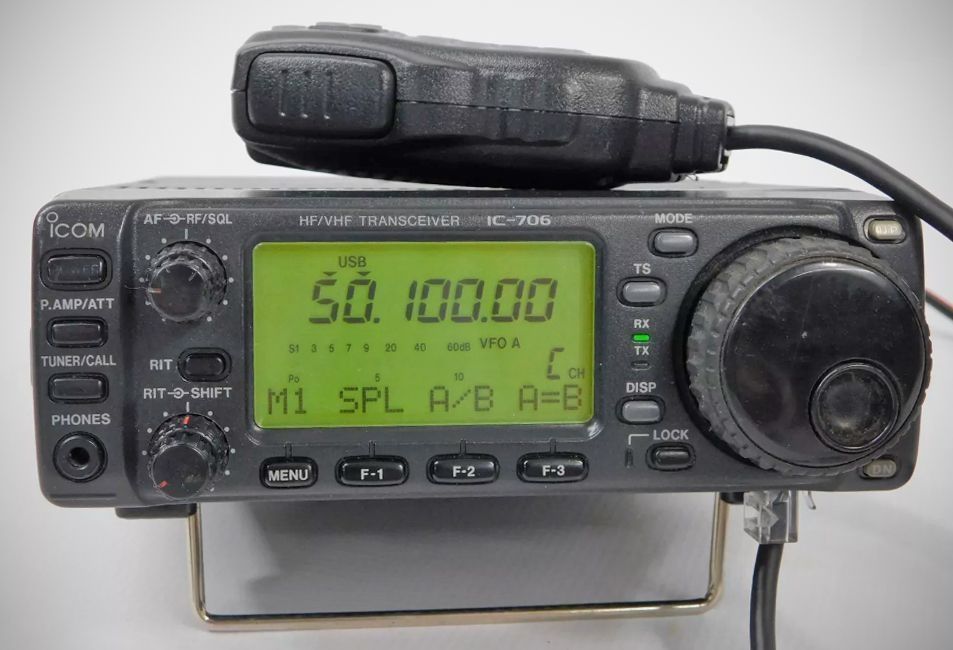
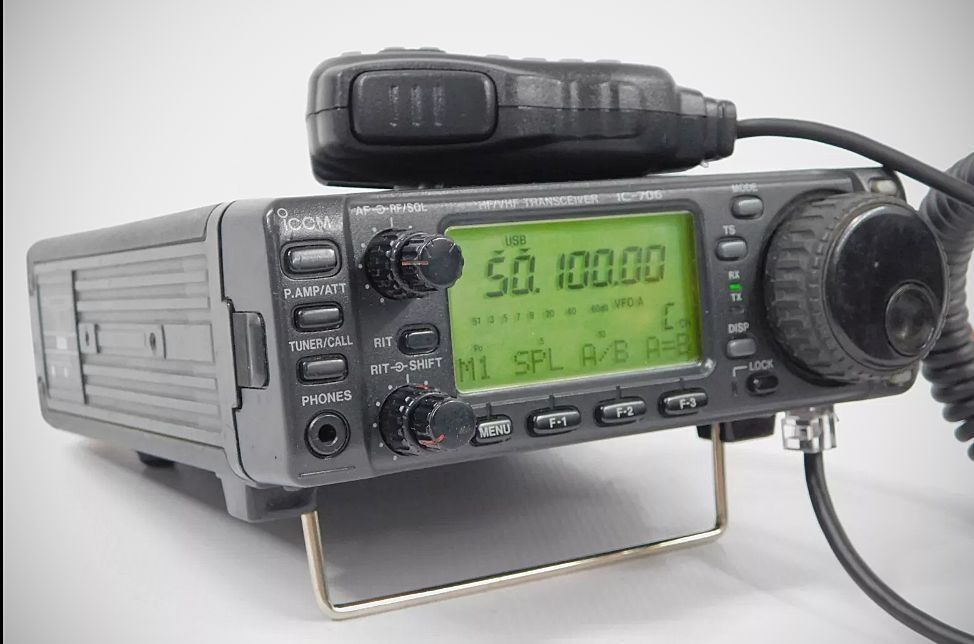
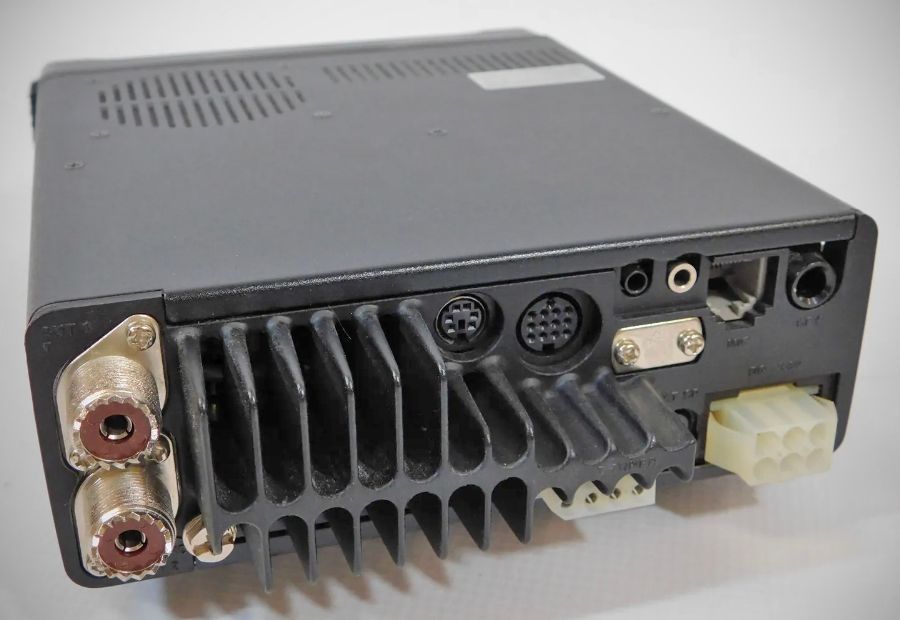
The Icom IC-706 series was a landmark in amateur radio, packing HF, VHF, and (eventually) UHF capabilities into a single mobile-sized chassis with a detachable faceplate. There were three iterations released during its production run.
The "G" version was remarkably long-lived. While the first two iterations came out in quick succession (just two years apart), the MKIIG remained the flagship of the line for a full decade before being fully superseded by the IC-7000, which arrived in 2005, but was sold alongside the 706 for several years. The MKIIG was finally discontinued in 2009.
1. Icom IC-706 (1995)
The "Classic" 706 revolutionized the market by offering a "shack-in-a-box" experience in a tiny form factor.
– Coverage: HF + 6 Meters (50 MHz) + 2 Meters (144 MHz).
– Power Output: 100W on HF/6m, but only 10W on 2m.
– Key Features: It lacked built-in DSP and had a simpler menu system. It could only accommodate one optional plug-in IF filter.
2. Icom IC-706MKII (1997)
– The second iteration focused on refining the performance and increasing power for VHF users.
– Coverage: Same as the original (HF/6m/2m).
– Power Output: Remained 100W on HF/6m, but increased to 20W on 2m.
Key Improvements:
– Added a second slot for an optional IF filter (allowing for both a CW and an SSB narrow filter, for example).
– Improved receiver performance and a slightly updated display/interface.
– Provided a socket for an optional UT-106 DSP unit.
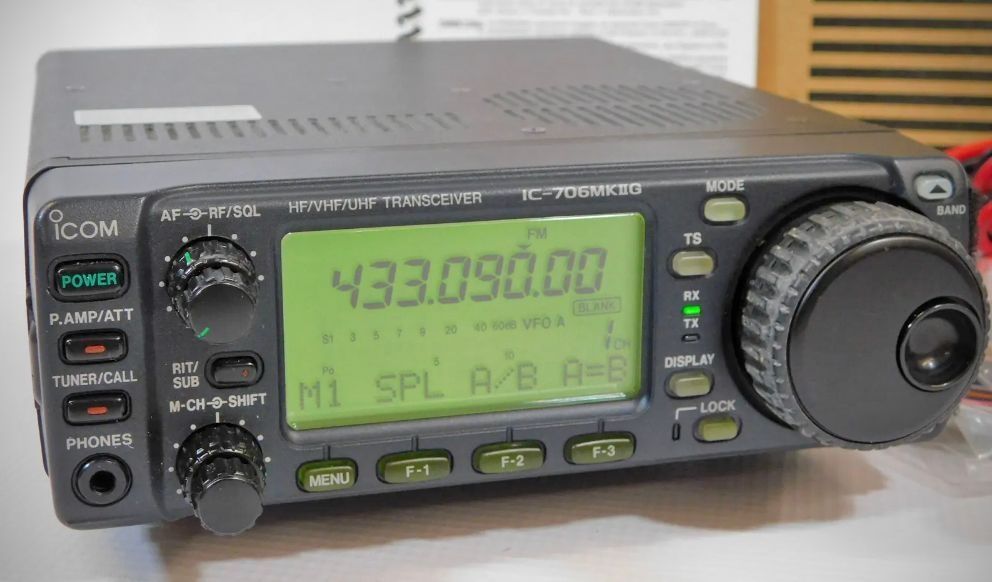
3. Icom IC-706MKIIG (1999)
The "G" version is widely considered the definitive model and was the most popular of the three.
– Coverage: Added the 70cm (440 MHz) band, making it a true "all-band" mobile rig.
– Power Output: Boosted to 50W on 2m and provided 20W on 70cm.
Key Improvements:
– Built-in DSP: The UT-106 DSP board came installed from the factory.
– lluminated Keys: The buttons on the faceplate were finally backlit for easier night/mobile operation.
– High-Stability Crystal: Included the CR-282 high-stability crystal as an option or standard in some markets for better frequency stability.
– Tone Squelch: CTCSS (tone squelch) became standard for both encode and decode.