Note
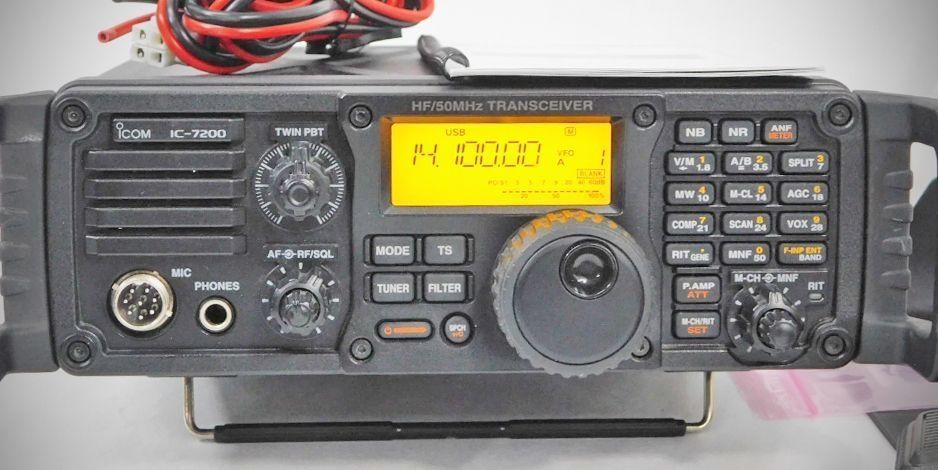
The Icom IC-7200 is a rugged, mid-sized HF/50MHz transceiver designed for durability and high performance in both home and field environments. It combines a "simple and tough" exterior with advanced 32-bit floating-point Digital Signal Processing (DSP) technology typically found in higher-end radios.
The IC-7200 is an entry-class transceiver that emphasizes utility and ease of use. It features a water-resistant front panel, a die-cast aluminum chassis, and a dual-fan cooling system to ensure stable operation during high-duty cycles. Its unique "military-style" design and compact footprint make it highly popular for portable, mobile, and emergency communications. A standout feature is its built-in USB port, which handles both CI-V rig control and digital mode audio, eliminating the need for external interface boxes.
The Icom IC-7200 has a unique production history characterized by an initial release, a brief retirement, and a subsequent return to the market due to its popularity.
Production Timeline
– Initial Announcement: The IC-7200 was first revealed at the Tokyo Ham Fair in August 2007.
– First Production Run (2007–2016): It entered the market shortly after its announcement and remained a staple of Icom’s HF lineup for nearly a decade.
– First Discontinuation (Early 2016): Icom officially discontinued the model in early 2016. This led to a surge in demand on the secondary market as users sought out the "rugged" design before stock disappeared.
Second Production Run (2017–2018): In a rare move for amateur radio manufacturers, Icom resumed production in January 2017 following significant customer feedback. Some internal modules were reportedly retooled during this phase to address component availability issues from the original 2007 design.
Final Discontinuation (Late 2018): The radio was discontinued for the final time in September 2018, as Icom shifted focus toward newer SDR-based models like the IC-7300.
Handle Options
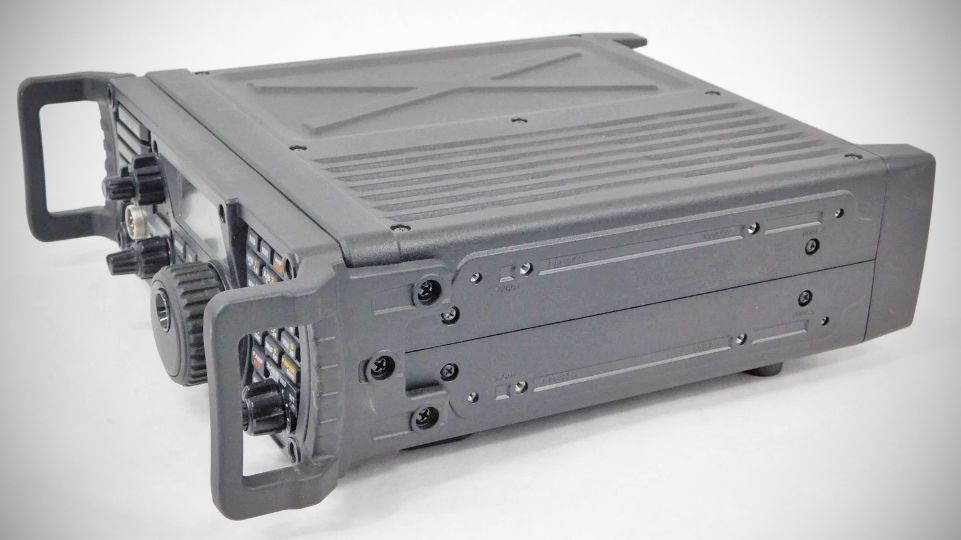
– MB-116 Front Handles: These are official Icom optional accessories designed to protect the front panel buttons and knobs when the radio is used in the field. They are sold as a pair and are often referred to as "rack mount handles".
– MB-117 Carrying Handle: This is an optional side-mounted handle specifically designed for the IC-7200 to increase portability.
– MB-123 Carrying Handle: Another optional handle compatible with several Icom models, including the IC-7200.
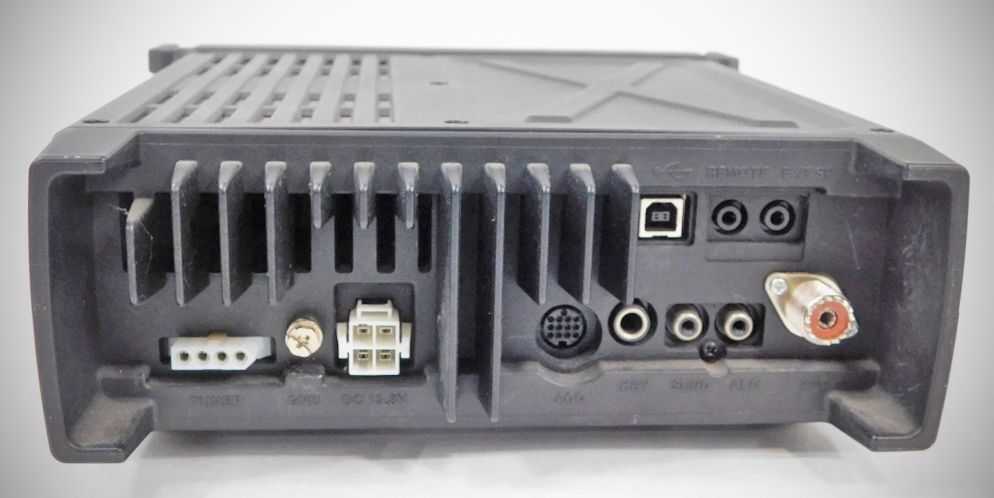
While the handles are optional, the rear bumper (which protects the rear-panel connectors) is a standard design feature built into the transceiver's chassis.
Key Features
– IF DSP Technology: Employs a 32-bit floating-point DSP for advanced functions like digital IF filtering, manual notch filtering, and noise reduction.
– Digital Twin PBT: Allows users to narrow the IF passband by electronically shifting the upper and lower edges of the filter to eliminate interference.
– Built-in USB Port: A rear-panel USB "B" port provides a direct connection to a PC for CI-V data and transmit/receive PCM baseband audio.
– High Stability: Includes a high-stability TCXO as standard, providing frequency stability of ±0.5 ppm.
–Digital Filters: Offers flexible filter width and shape selection for SSB and CW without requiring optional physical filters.
– Manual Notch Filter: Delivers more than 70 dB of attenuation to eliminate strong interfering tones without affecting AGC performance.
– Rugged Construction: Features a water-resistant front panel and a rear bumper to protect connectors.
– Voice Synthesizer: Standard feature that announces frequency, mode, and S-level.
– Other Functions: Includes VOX, RIT ( ±9.99 kHz), Noise Blanker (100-step adjustable), Noise Reduction (16-step), and 201 memory channels.
Specifications
Frequency Range
RX: 0.030–60.000 MHz
TX: 1.8–54 MHz (Amateur bands)
– Operating Modes USB, LSB, CW, RTTY (FSK), AM
RF Output Power:
SSB/CW/RTTY: 2–100 W
AM: 1–25 W (Carrier)
– Receiver System: Triple-conversion superheterodyne (IFs: 64.455 MHz, 455 kHz, 15.625 kHz)
– Sensitivity
SSB and CW
1.8–29.995 MHz: < 0.16 µV
50 MHz band (50–54 MHz): < 0.13 µV
AM
0.5–1.799 MHz: < 13.0 µV
1.8–29.995 MHz: < 2.0 µV
50 MHz band (50–54 MHz): < 1.0 µV
Additional Receiver Performance Notes
– Frequency Coverage: The receiver tunes continuously from 30 kHz to 60 MHz, though sensitivity is significantly reduced for frequencies below 500 kHz.
– Squelch Sensitivity: Less than 5.6 µV for SSB (threshold, preamp on).
– Noise Floor (MDS): Typically measured at approximately –141 dBm on HF and –142 dBm on 50 MHz with the preamp engaged (500 Hz bandwidth)
– Sensitivity SSB/CW: < 0.16 μV (1.8–29.7 MHz), < 0.13 μV (50 MHz band)
– Selectivity (SSB) > 2.4 kHz/-6 dB; < 3.6 kHz/-60 dB
– Selectivity (CW) > 500 Hz/-6 dB; < 900 Hz/-60 dB
– Spurious Rejection > 70 dB (HF); > 70 dB (50 MHz band, except 1/2 IF through)
– Audio Output > 2.0 W (at 10% distortion with an 8 Ω load)
Power Supply 13.8 V DC ±15% (Negative ground)
Current Drain RX: 1.3 A (Standby), 2.0 A (Max audio); TX: 22.0 A (Max power)