Note
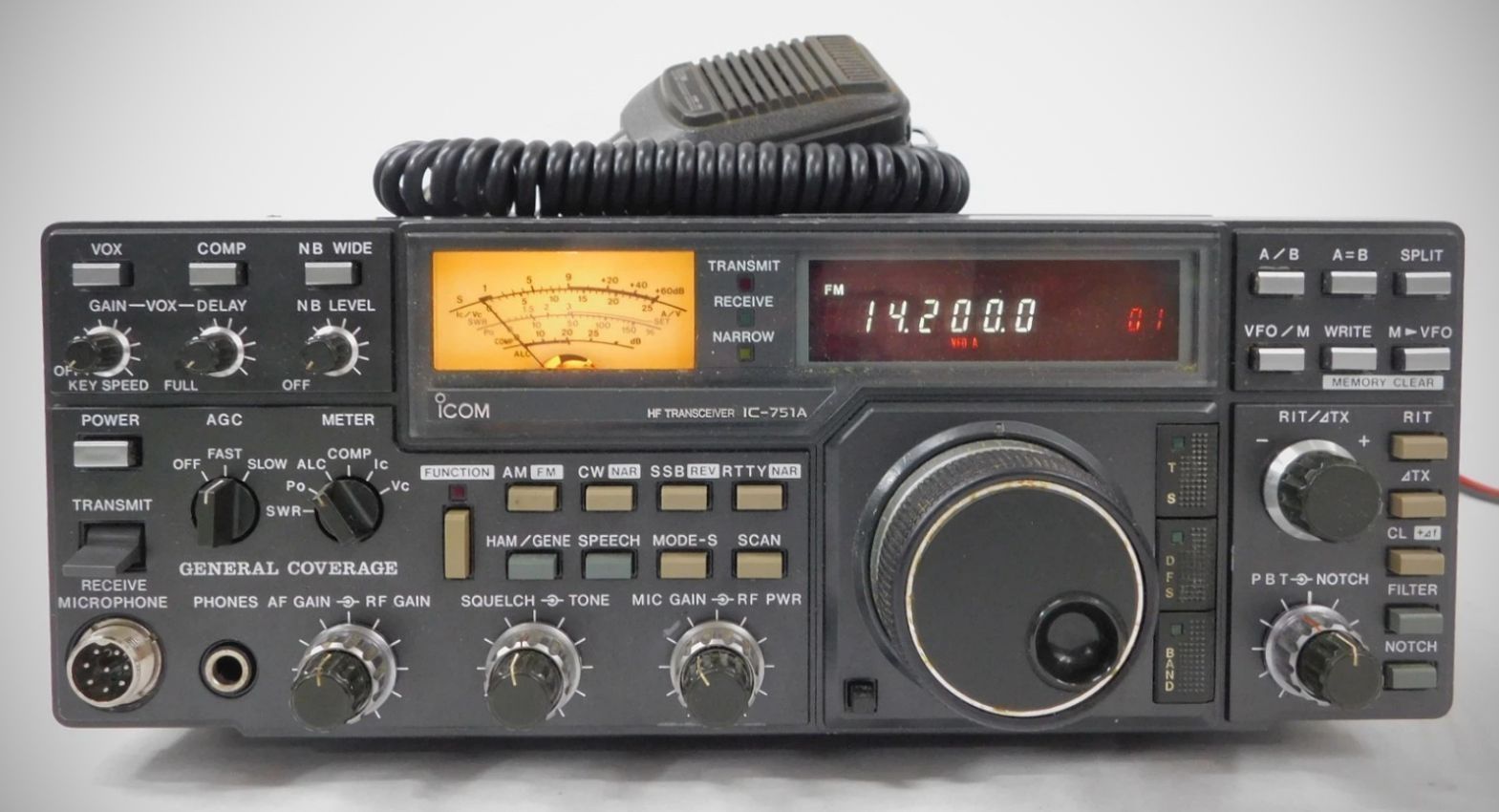
The original IC-751 was designed as a premier HF base station, covering all amateur frequencies from 1.8MHz to 30MHz, including the 10MHz, 18MHz, and 24MHz bands. It offered all-mode capability, including SSB, CW, AM, FM, and RTTY. At its core, the radio uses a quadruple conversion superheterodyne system for most modes, achieving a wide 105dB dynamic range through an Icom-developed J-FET double-balanced mixer (DBM). This high performance is supported by a 70.4515MHz first IF to eliminate spurious responses and a second IF featuring Icom's Passband Tuning (PBT). The transmitter is built for reliability with a 100% duty cycle supported by a standard internal cooling fan, delivering approximately 100 watts of output power.
The IC-751A was introduced as a refined version of the original. While maintaining the core strengths of the 751, the "A" model introduced a newly developed CPU and the Direct Feed Mixer (DFM) system. This DFM system feeds incoming signals directly into a high-level first mixer to improve the spurious response rejection ratio and receiver sensitivity. One of the most notable refinements is the enhanced CW performance, which provides both semi and full break-in (QSK). The IC-751A also upgraded the standard microphone to the HM-36 scanning microphone.
The original was released in 1983. The "A" version followed in 1986. Replaced in 1991 by the IC-765.
Key Differences Between the IC-751 and IC-751A
– Mixer Design: The IC-751 utilizes a J-FET DBM, while the IC-751A introduced the Direct Feed Mixer (DFM) system for improved sensitivity and rejection.
– AM Power Output: The IC-751 provides 40 watts of AM output, whereas the IC-751A was increased to 50 watts.
– Scanning and Logic: The IC-751A features a more advanced CPU that supports diverse scanning modes, including Programmed Scan between two frequencies and Mode Scan, which monitors only memories sharing a particular operating mode.
– FM Sensitivity: The IC-751A shows a significant improvement in FM sensitivity, rated at less than 0.3µV for 12dB SINAD compared to the IC-751's rating of less than 3µV.
– Filter Inclusion: The IC-751A specifically lists a 500Hz filter at -6dB for CW and RTTY as part of its standard selectivity specifications, providing a narrower default experience for those modes.
– Internal Components: There is a marked change in internal architecture; the IC-751 uses 105 transistors and 51 ICs, while the IC-751A was redesigned with 59 transistors and 64 ICs.
Features
The general features for these units include:
Frequency Coverage: 1.8MHz through 29.7MHz and a general coverage receiver that spans from 100kHz to 30MHz.
– Frequency Control: Both use a CPU-based 10Hz step digital PLL synthesizer with a 6-digit 100Hz readout.
– Transmit Power: For both models, the maximum RF power input is 200W PEP for SSB and 200W for CW, RTTY, and FM, resulting in approximately 100W of output power.
– Receiver Sensitivity: SSB and CW sensitivity is exceptional at less than 0.15µV for 10dB S/N in the 1.6 to 30MHz range.
– Selectivity Features: Both models include Passband Tuning (PBT), a deep IF notch filter (more than 45dB attenuation), and an adjustable noise blanker.
– Memory and Scanning: They feature 32 tunable memories that store mode and frequency, backed by a lithium battery with a life of seven to ten years.
– Operating Conveniences: Standard features include a high-visibility multi-color fluorescent display, a built-in speech processor, RIT/XIT with ±9.9kHz coverage, and a standard internal cooling fan for high duty-cycle operations
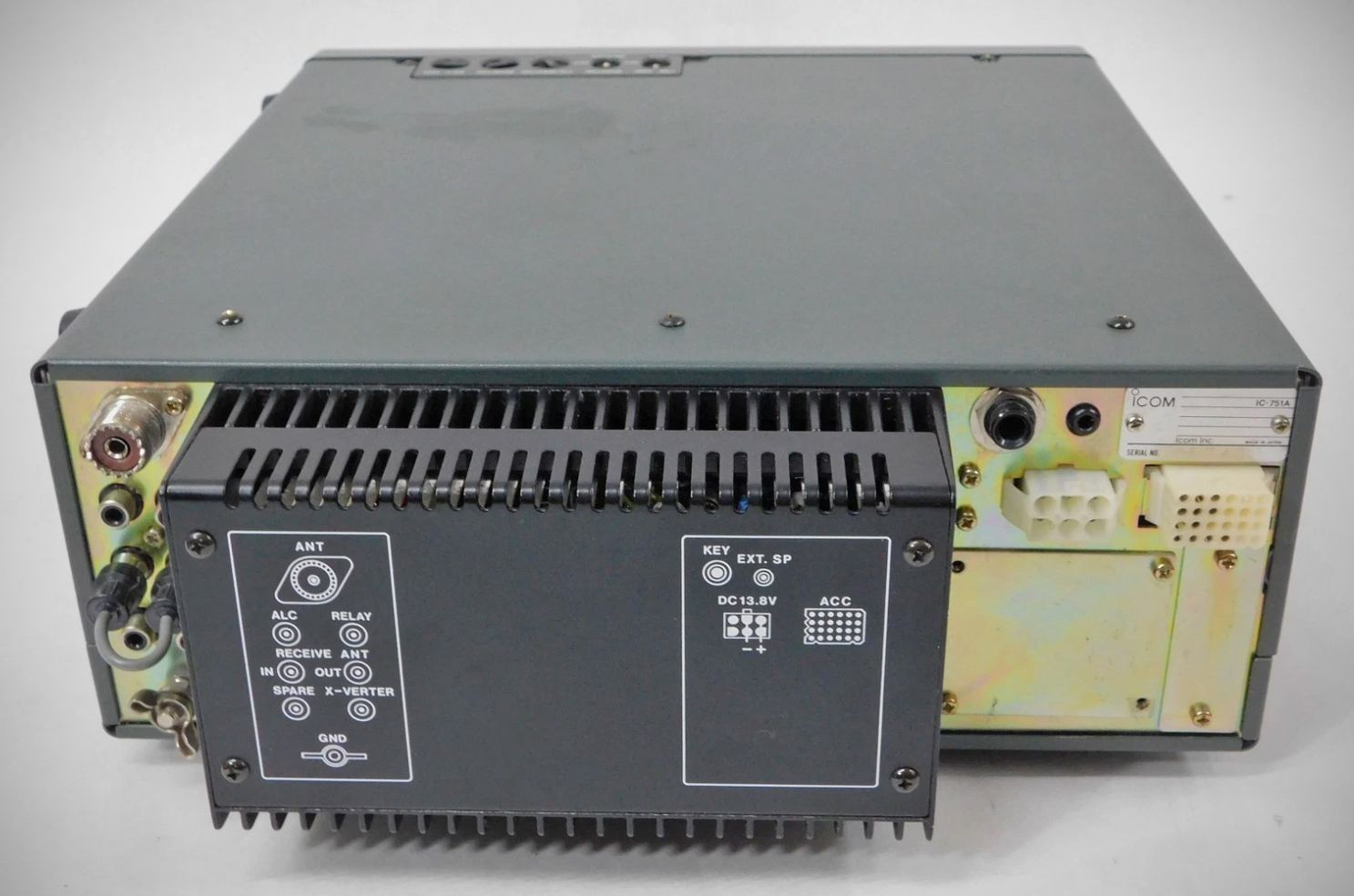
Power requirements: 13.8 VDC, 20 amps max.