Note
The Icom IC-756 series represents a fascinating bridge in amateur radio history, marking the moment when the hobby transitioned to the high-speed digital processing era. Spanning from 1996 into the early 2000s, these four transceivers became the centerpiece of many high-end stations.
The Original IC-756
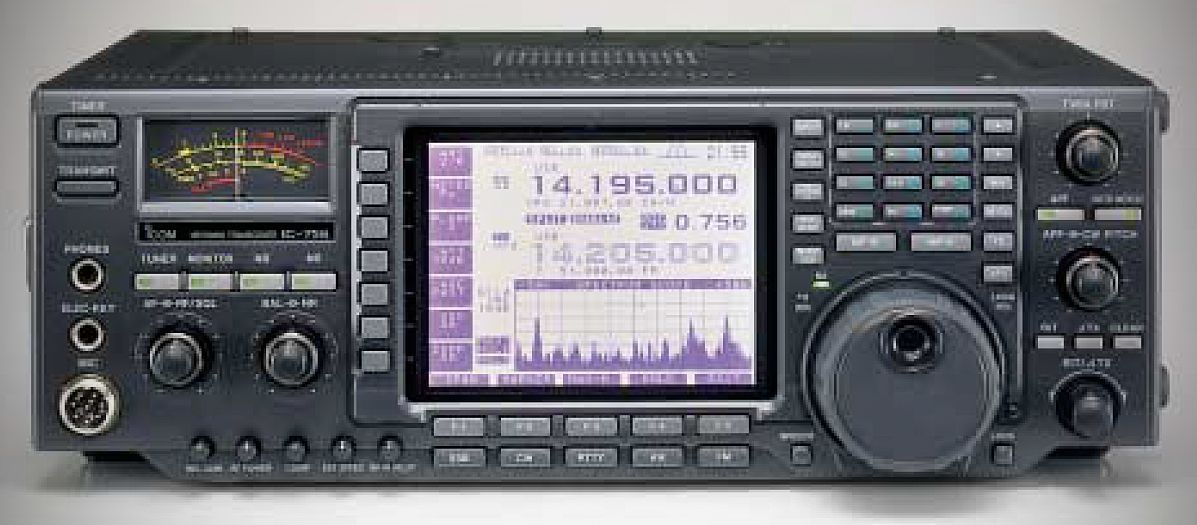
The original IC-756 arrived in 1996. It was one of the first non-luxury rigs to feature a large, multi-function Liquid Crystal Display (LCD). While the radio still relied on a traditional 455 kHz IF system, it introduced a dedicated Digital Signal Processing (DSP) unit for low-level functions. It felt modern, offering a real-time spectrum scope—a feature that, at the time, felt like the upper edge of high-end. And all this was delivered at a cost the average ham could (mostly) afford.
The IC-756Pro
The real shift occurred in 2000 with the IC-756Pro. This wasn't just an upgrade; it was a total architectural redesign. Icom moved the DSP to the 36 kHz IF level, effectively creating a software defined radio before that term was common. This allowed for 41 different filter shapes that the user could toggle with a button, rendering traditional, expensive plug-in crystal filters obsolete overnight.
The IC-756Pro II
By 2002, the IC-756Pro II hit the market. While it looked nearly identical to its predecessor, the internal "magic" had been polished. The DSP algorithms were tuned to handle "ringing" better, and the receiver's third-order intercept point was improved to deal with crowded band conditions. It gained a reputation for having a "quieter" receiver, making it a favorite for weak-signal DXers and contesters who spent hours in the chair.
The IC-756Pro III
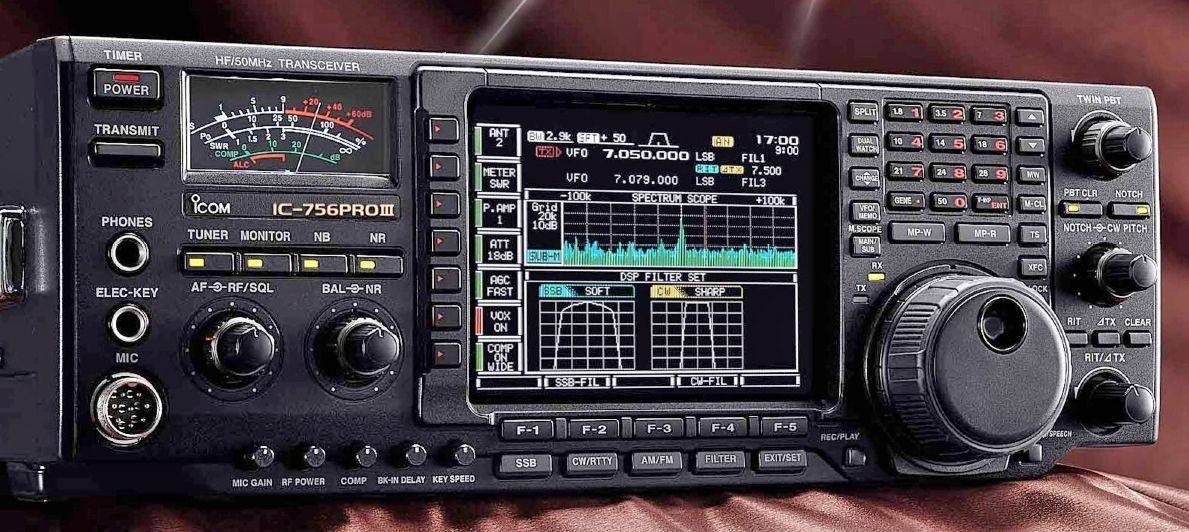
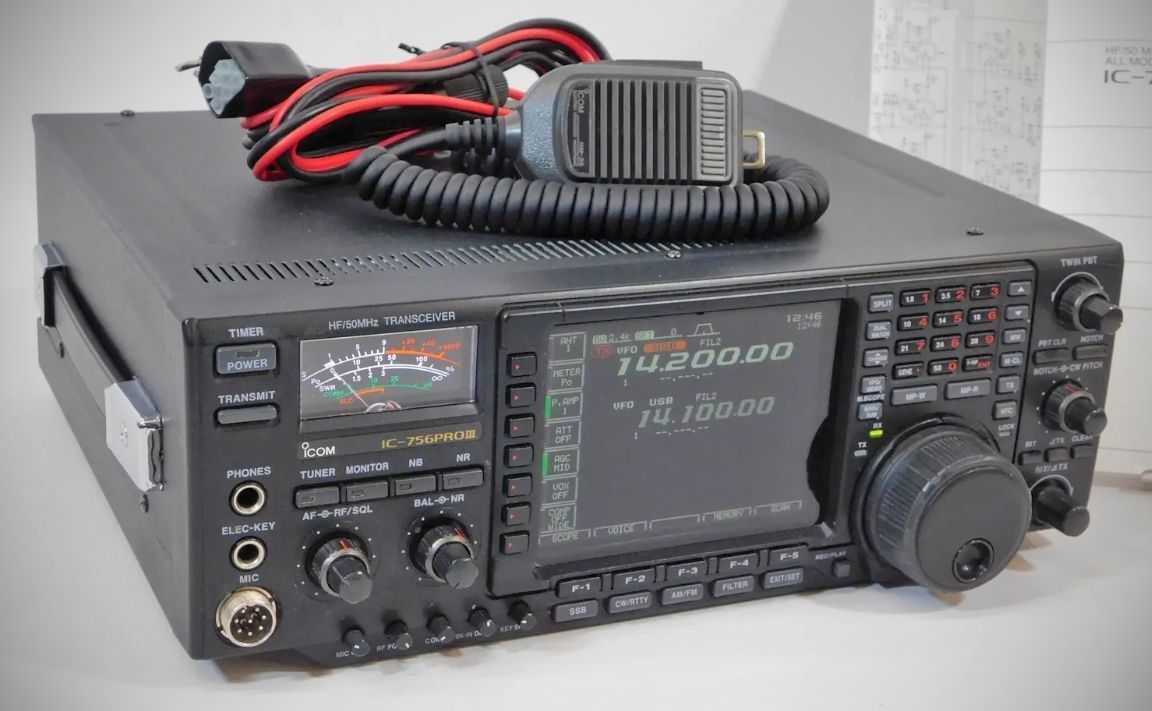
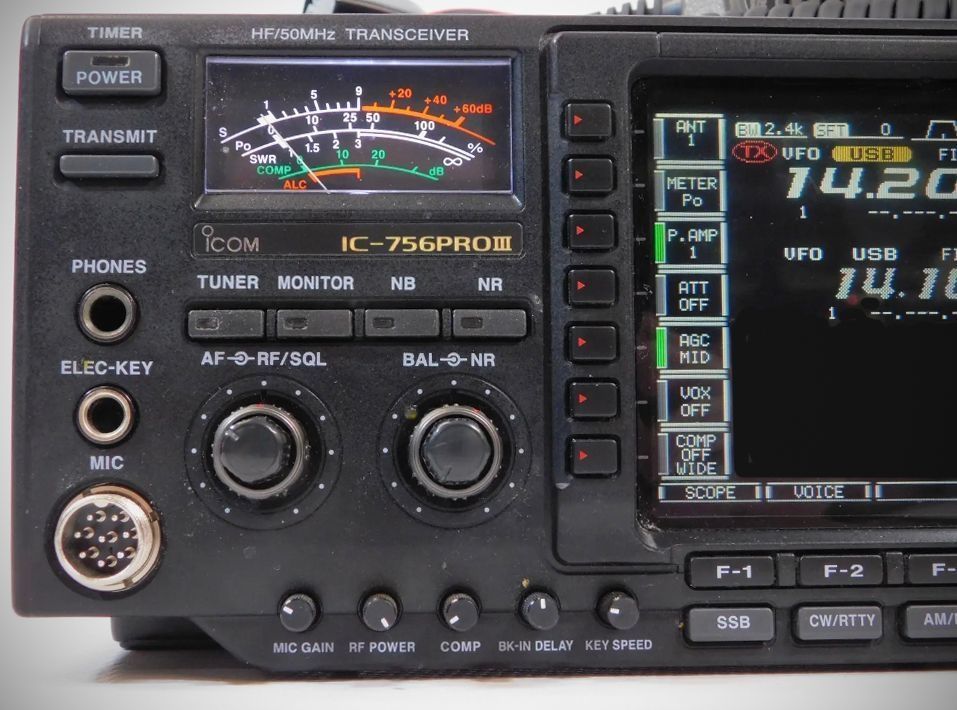
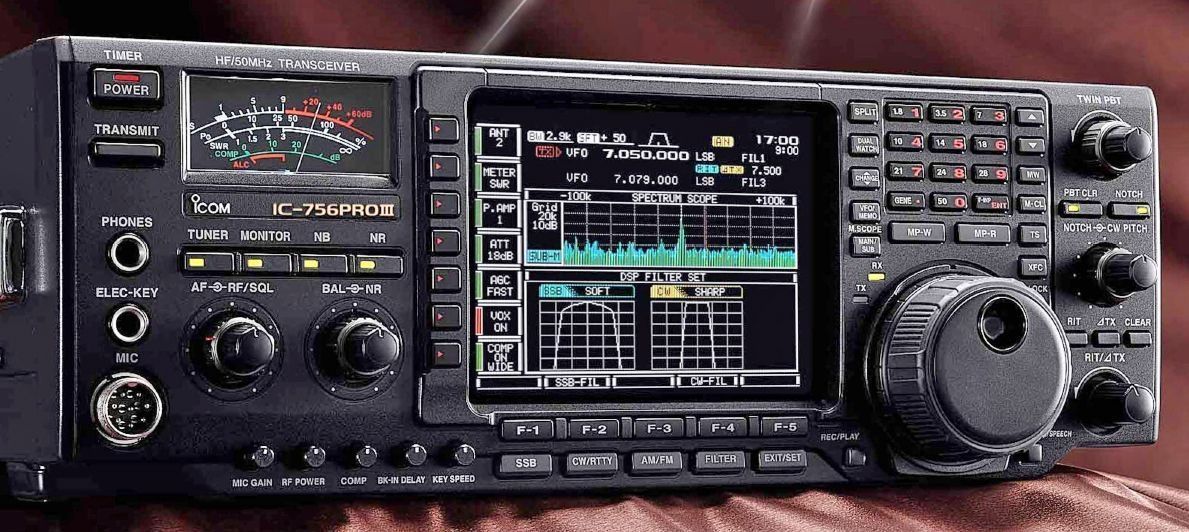
The series culminated in 2004 with the IC-756Pro III. This version was the pinnacle of the 756 lineage. It featured a redesigned receiver front-end with a new pre-amplifier and even better IMD (Intermodulation Distortion) characteristics. The spectrum scope became faster and more sensitive, and the display was refined for better clarity.
The 756 series was incredibly popular. It remained in production for years, even as newer models arrived, because it struck a perfect balance between tactile controls, digital power, performance, and price point.
The IC-756 series eventually handed the baton to the IC-7600, but for many, these four radios represent the "Golden Era" of Icom design. Not until the release of the IC-7300 (2016) would lightning strike again that way it did with the 756.
The original IC-756, utilized a traditional triple or quadruple conversion receiver. Its digital capabilities were limited to a 16-bit integer DSP operating at a low 15.625 kHz IF. Because of this, the radio still required physical crystal filters for high-level selectivity. However, when the IC-756Pro arrived in 2000, Icom shifted to a 32-bit floating-point DSP at a 36 kHz IF. This change, supported by a higher-resolution 24-bit ADC/DAC system, allowed the radio to handle all selectivity digitally, rendering physical plug-in filters obsolete. This 32-bit digital architecture remained the standard through both the Pro II and Pro III models.
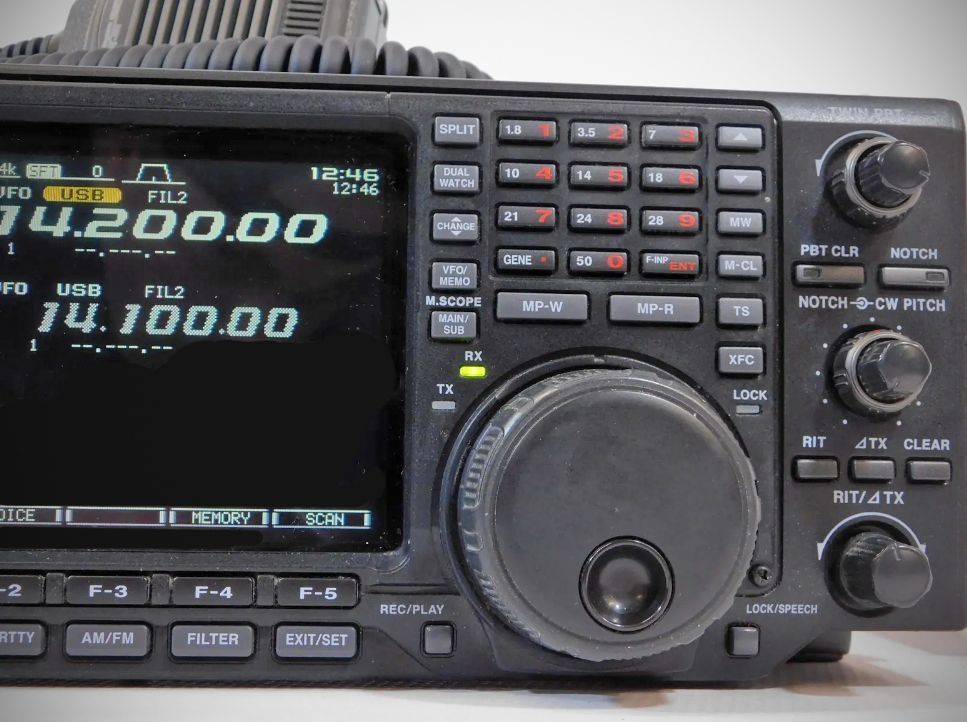
Visually, the original model stood alone with a monochrome TFT LCD, while the three "Pro" successors all moved to a vibrant color TFT display that made the spectrum scope significantly more readable. More importantly, the receiver's ability to handle strong, interfering signals (measured by the IP3 at 20 meters) saw a steady climb. The original started at approximately +15 dBm, the first Pro reached +20 dBm, the Pro II hit +25 dBm, and the series culminated with the Pro III reaching a professional-grade +30 dBm.
While all four radios covered the spectrum from 0.03 to 60 MHz for receiving, the 60-meter band was notably absent from the factory settings of the first three models. It wasn't until the IC-756Pro III in 2004 that 60-meter operation became a standard, out-of-the-box feature. By the time the Pro III was released, the series had moved from a experimental hybrid to a refined, high-performance machine that could navigate the most crowded bands of the early 2000s with ease.
Frequency Coverage: 0.03–60 MHz (RX), 160–6 Meters (TX).
Power Output: 2–100 Watts (SSB/CW/RTTY/FM), 1–40 Watts (AM).
Antenna Tuner: Built-in automatic tuner (Matching range: 16.7–150 Ω).
Memory Channels: 101 total (99 regular, 2 scan edges).
Power requirements: 13.8 VDC (nominal); (Tx): 23 amps, (Rx) 2.5 amps