Note
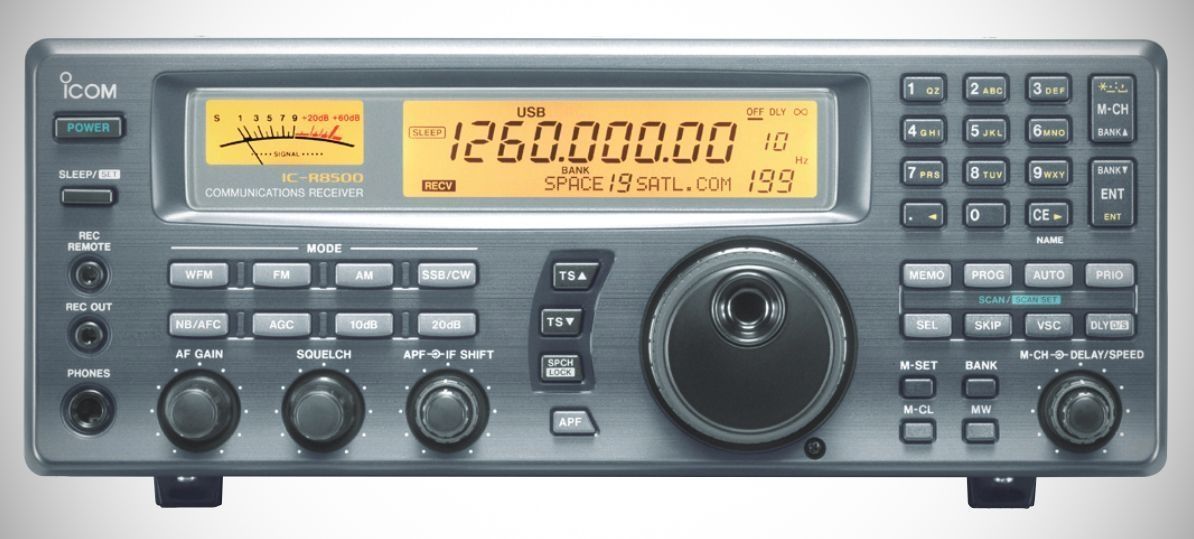
The Icom IC-R8500 is a wideband communications receiver designed for indoor use. It covers a broad frequency range and supports multiple operating modes including SSB (USB/LSB), CW, AM (wide/normal/narrow), FM (normal/narrow), and WFM. The device is engineered for versatility, featuring a superheterodyne receive system, 1000 memory channels, and advanced functions like an automatic frequency control (AFC), noise blanker, and audio peak filter.
The Icom IC-R8500 was first introduced in 1996. It had an exceptionally long production run for a communications receiver, remaining a staple of the Icom lineup for almost twenty years.
While the consumer-grade version (cellular frequencies blocked) was discontinued in most markets in 2004, the "government/export" unblocked versions remained in production much longer, with some units being manufactured as late as 2016. It was eventually succeeded by the IC-R8600 in 2017.
Features
– Tuning Steps: Multiple selectable steps ranging from 10 Hz to 1 MHz, with programmable steps available between 0.5 and 199.5 kHz.
– Scanning: Supports various scan types with a maximum speed of 40 channels per second and adjustable delay from 3 to 18 seconds.
– Timer: Includes a sleep timer (30–120 min) and a front panel lock function to prevent accidental setting changes.
Specifications
– Frequency Coverage: Guaranteed specifications cover 0.1–1000 MHz and 1240–1300 MHz.
– Operating Modes: FM (normal/narrow), AM (wide/normal/narrow), SSB (USB/LSB), CW (normal/narrow with optional FL-52A), and WFM.
– Memory Channels: 1000 channels, plus 20 scan edges and 1 priority channel.
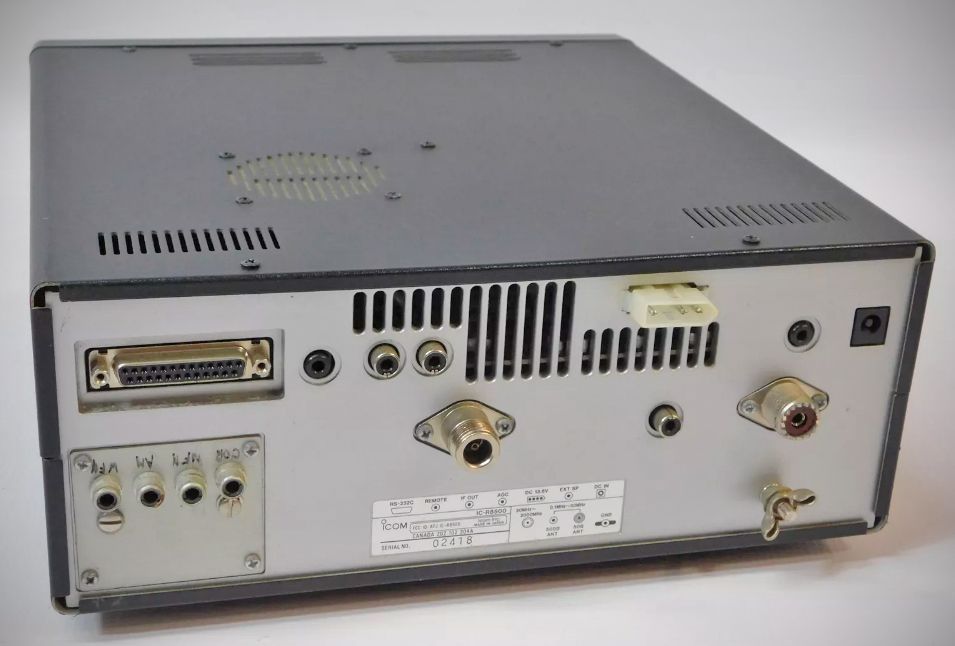
– Antenna Connectors:
Below 30 MHz: SO-239 (50 Ω) or Phono/RCA (500 Ω).
Above 30 MHz: Type-N (50 Ω).
– Frequency Stability:
Below 30 MHz: ±100 Hz (±20 Hz with optional CR-293).
Above 30 MHz: ± 0.0003% (±0.00006% with optional CR-293).
– Usable Temperature Range: −10∘C to +50∘C (+14∘F to +122∘F).
– Receive System: Superheterodyne.
– Intermediate Frequencies (MHz):
0.1–29.99999 MHz: 1st: 48.8; 2nd: 10.7; 3rd: 0.455.
30.0–499.99999 MHz: 1st: 778.7; 2nd: 10.7; 3rd: 0.455.
– Selectivity:
WFM: More than 150 kHz / −6 dB.
FM / AM-W: More than 12 kHz / −6 dB.
FM-N / AM: More than 5.5 kHz / −6 dB.
AM-N / SSB / CW: More than 2.2 kHz / −6 dB.
CW-Narrow: More than 500 Hz / −6 dB (requires optional FL-52A).
– Spurious and Image Rejection Ratio:
Below 30 MHz: More than 60 dB.
30–1000 MHz: 50 dB (typical).
– Audio Output Power: More than 2.0 W at 10% distortion with an 8 Ω load.
– IF Shift Variable Range: More than ±1.2 kHz.
– Connectors:
Front: Headphone jack (4–16 Ω), recorder remote, and recorder out jacks.
Rear: RS-232C for PC control, CI-V remote jack, IF output (10.7 MHz), and external speaker jack (4–8 Ω).
Power Supply: 13.8 V DC ±15% (negative ground).
Current Drain: Standby at 1.8 A; maximum audio at 2.0 A.