Note
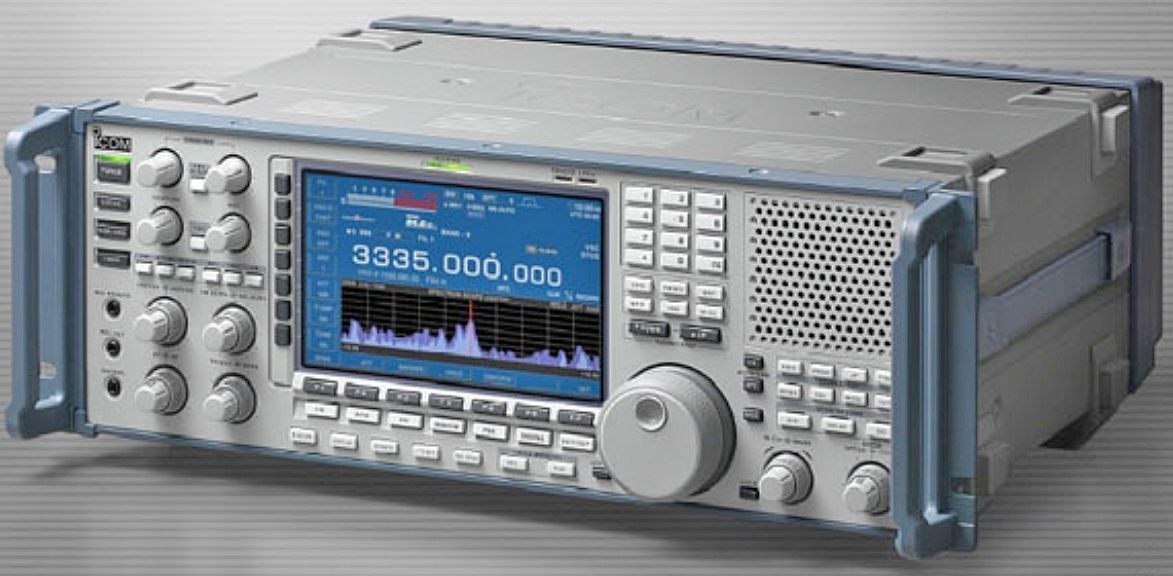
The DC-to-daylight R9500 was introduced in 2007 as the successor to the R9000. It represents a significant technological leap, transitioning from the analog-heavy architecture of the 9000 series to a dual-DSP (Digital Signal Processing) system.
In enthusiast circles, the R9500 is often praised for its "flywheel" VFO feel and professional build quality, including a heavy aluminum chassis. However, it is also noted for having a power supply that runs quite hot and is somewhat prone to failure if not well-ventilated—a common discussion point for those maintaining these units today.
Features
– Frequency Coverage: It covers a continuous range from 5 kHz to 3335 MHz (3.3 GHz), extending significantly beyond the 2 GHz limit of the R9000 series.
– Dynamic Range & IP3: The receiver achieves a +40 dBm 3rd-order intercept point (IP3) and a 109 dB dynamic range at 14.1 MHz.
– Dual DSP Units: It utilizes two independent 32-bit floating-point DSPs—one dedicated to the receiver functions and another specifically for the high-speed spectrum scope.
– Frequency Stability: It uses an Oven Controlled Crystal Oscillator (OCXO) providing ±0.05 ppm stability.
– 7-inch Color TFT Display: Replaces the CRT (R9000) or smaller LCD (R9000L). It supports multiple spectrum scope modes (normal/wide and center/fixed) and can display a waterfall indicator.
– Five Roofing Filters: Features independent roofing filters at 240, 50, 15, 6, and 3 kHz to provide superior selectivity in crowded RF environments.
– Digital Recorder: Includes a built-in digital voice recorder that can save audio in WAV format to an internal Compact Flash (CF) card or an external USB drive.
– Reception Modes: Supports SSB, CW, FSK, AM, FM, WFM, and optional APCO P25 (with the UT-122 digital unit).
– Connectivity: Modernized for its era with a USB port (for keyboard and storage), an Ethernet port for remote control, and a VGA output for an external monitor.
Specifications
– Frequency Coverage (Unit: MHz, USA version):
0.005000–821.999999
851.000000–866.999999
896.000000–3335.000000
– Operating Modes: USB, LSB, CW, FSK, AM, FM, WFM, P25 (requires optional UT-122 unit)
– Memory Channels: 1220 total (1000 regular, 100 auto memory write, 100 skip, and 20 scan edge channels)
– Antenna Connectors:
Two Type-N (50 Ω)
One SO-239 (50 Ω)
One Phono/RCA (500 Ω)
– Frequency Stability: Less than ±0.05 ppm (after approx. 5 minutes at 0∘C to +50∘C)
– Frequency Resolution: 1 Hz
– Operating Temperature: 0∘C to +50∘C (+32∘F to +122∘F)
– Display: 7-inch diagonal TFT color LCD (800×480 resolution)
– Sensitivity (Typical):
SSB/CW/FSK (10 dB S/N): 0.2 μV (1.8–29.999 MHz); 0.32 μV (30–2999.999 MHz)
AM (10 dB S/N): 2.5 μV (1.8–29.999 MHz); 3.5 μV (30–2999.999 MHz)
FM (12 dB SINAD): 0.5 μV (28–2999.999 MHz)
WFM (12 dB SINAD): 1.4 μV (30–2999.999 MHz)
– Selectivity:
SSB/FSK (BW=2.4 kHz): More than 2.4 kHz/–3 dB; Less than 3.6 kHz/–60 dB
CW (BW=500 Hz): More than 500 Hz/–3 dB; Less than 700 Hz/–60 dB
AM (BW=6 kHz): More than 6.0 kHz/–3 dB; Less than 15.0 kHz/–60 dB
FM (BW=15 kHz): More than 12.0 kHz/–3 dB; Less than 25.0 kHz/–60 dB
– Spurious and Image Rejection: More than 70 dB (0.1–30 MHz); More than 50 dB (30–2500 MHz)
– Internal Modulation Distortion: 109 dB dynamic range (at 14.100 MHz, 100 kHz separation)
– Audio Output Power: More than 2.6 W at 10% distortion with an 8 Ω load
– Interface and Connectivity
USB: Version 1.1/2.0 for memory media or keyboards
LAN: Ethernet connector for PC connection
CI-V: For remote control via PC
Video: Phono (RCA) connectors for VIDEO IN and VIDEO OUT
External Display: D-sub 15-pin connector
– Other Outputs: S/P DIF, Line Out, Speech Out, and External Speaker
Power Supply: 100 V, 120 V, 230 V, or 240 VAC
Power Consumption: Less than 100 VA (at receive stand-by or max audio)