Note
QST, Jan 1955, pp. 80–81.
QST, Jan 1955, p. 115.
QST, Jul 1955, p. 107. (Good inside view)
Allied Radio catalog 1956 (copyright 1955), p. 196.
CQ, Mar 1962, p. 128. (Close out)
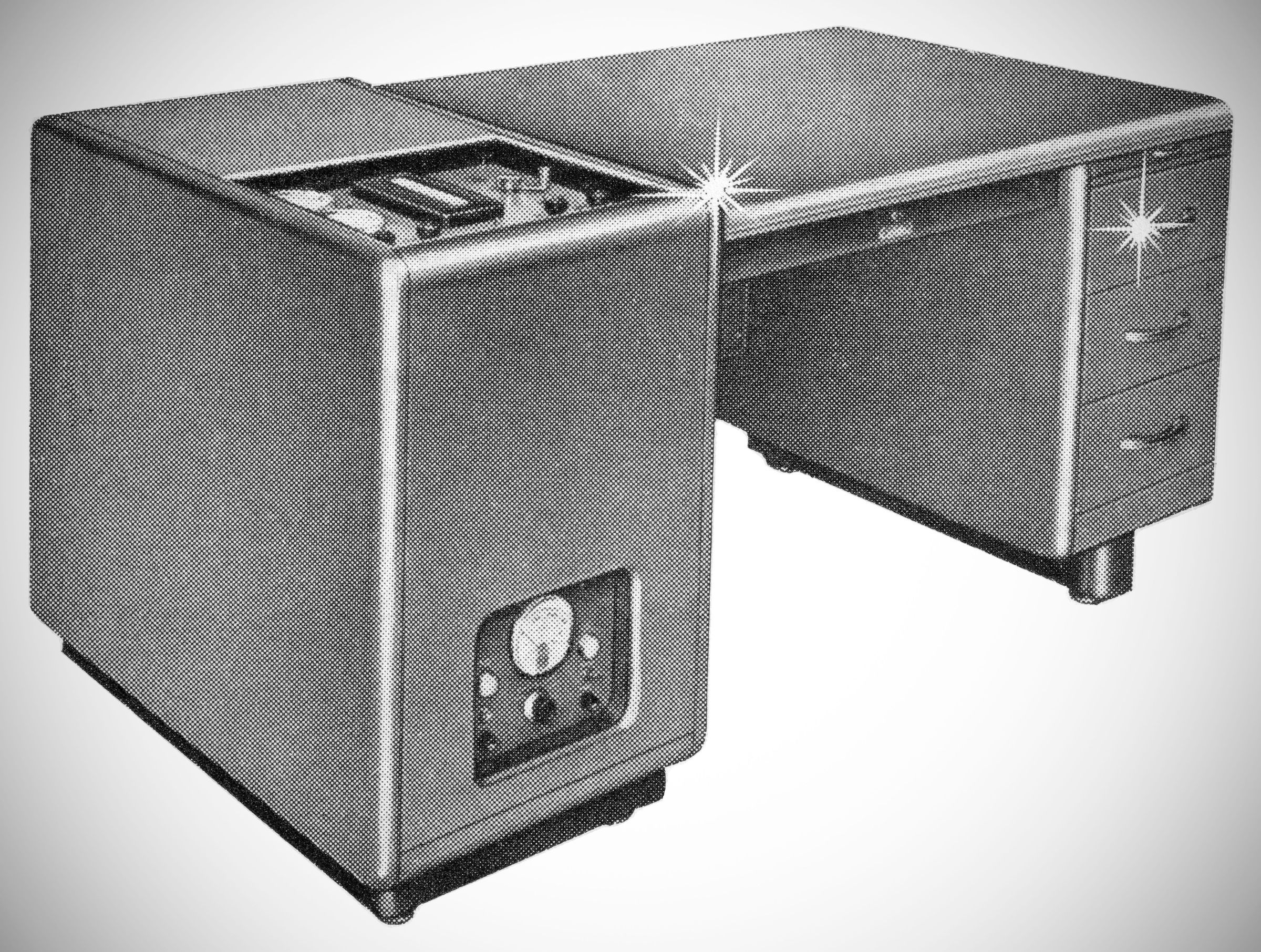
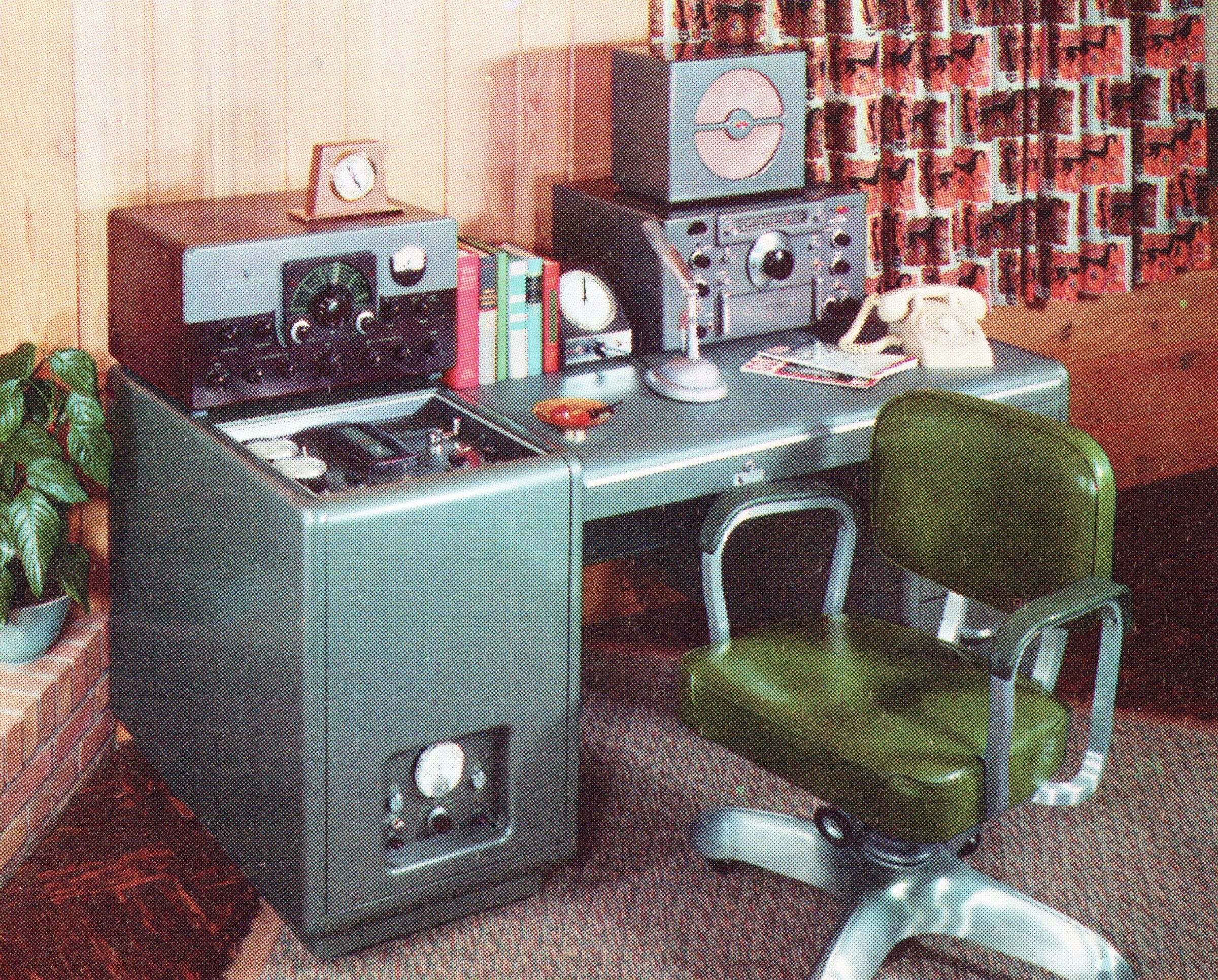
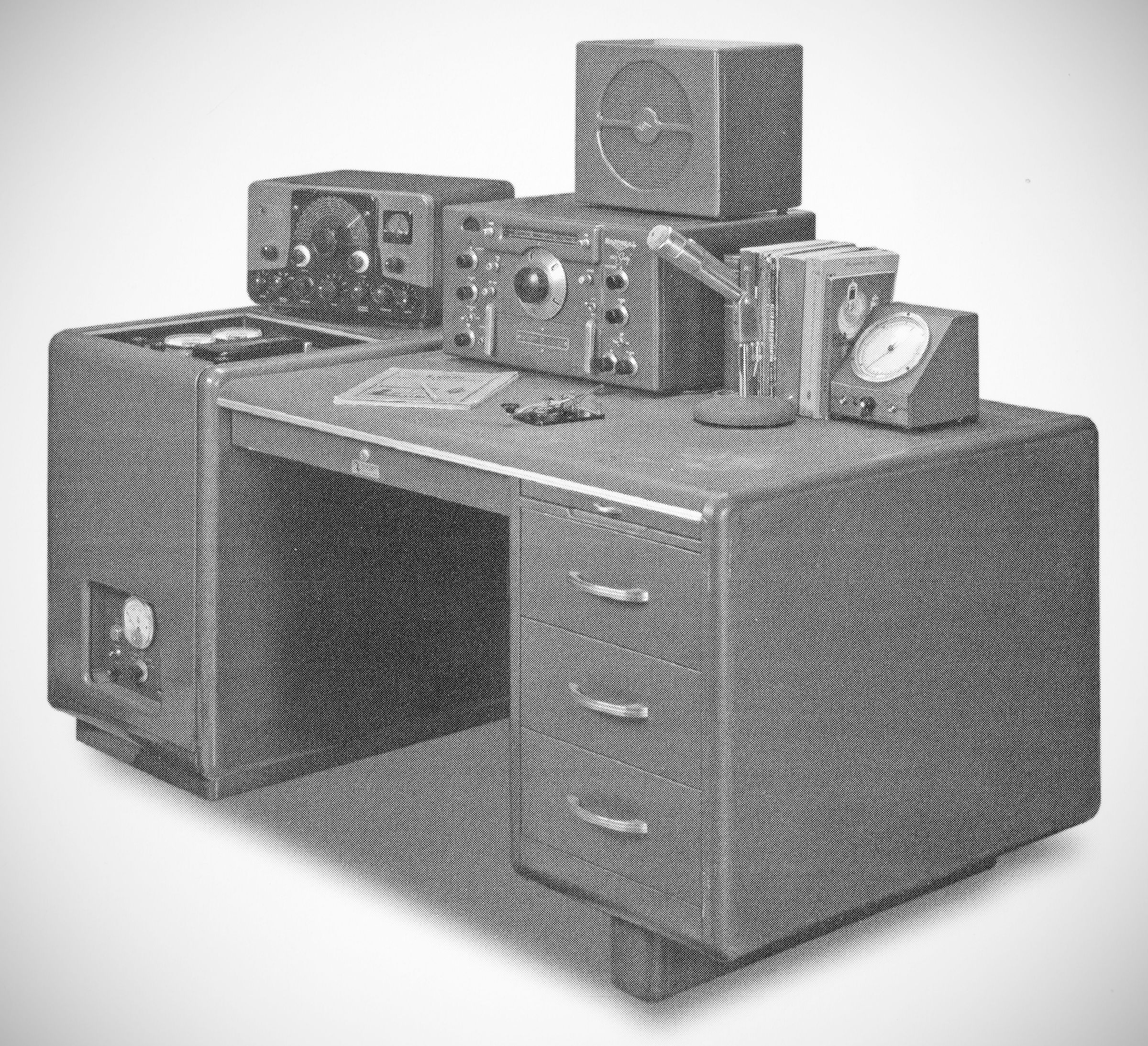
In April, 1957, Johnson bought a four-page full color insert in QST and CQ magazines to show off its new amplifier, often referred to as the casually as the Desk Kilowatt.
The amplifier came in a floor-standing pedestal enclosure that could be combined with an optional desktop and three-drawer pedestal. The amplifier unit pulled out of its enclosure on ball-bearing rollers for access and maintenance.
The amplifier contained an RF deck, modulator, power supplies, and control equipment. It ran a solid kilowatt on SSB, CW, and AM. Frequency coverage was continuous from 3.5 to 30 MHz. It used a pair of 4-250A tubes modulated by a pair of push-pull 810s in Class B. The Desk KW required 30 watts RF and 15 watts audio drive.
The amplifier is always shown in advertising with the desk, but the desk section was sold as an optional accessory: $123.50 (specify right or left hand).
The concept of a desk-based or "package" radio station was first attempted by Kluge Electronics in 1946 with the "California Kilowatt." Johnson choose to use a somewhat less integrated (and subsequently more versatile) approach, and had modest success with the Desk Kilowatt. Hallicrafters designed an integrated station (the SR-500) in 1955, with somewhat less success.
References
Brief technical description. Radio News, Oct 1955, p. 71.