Note
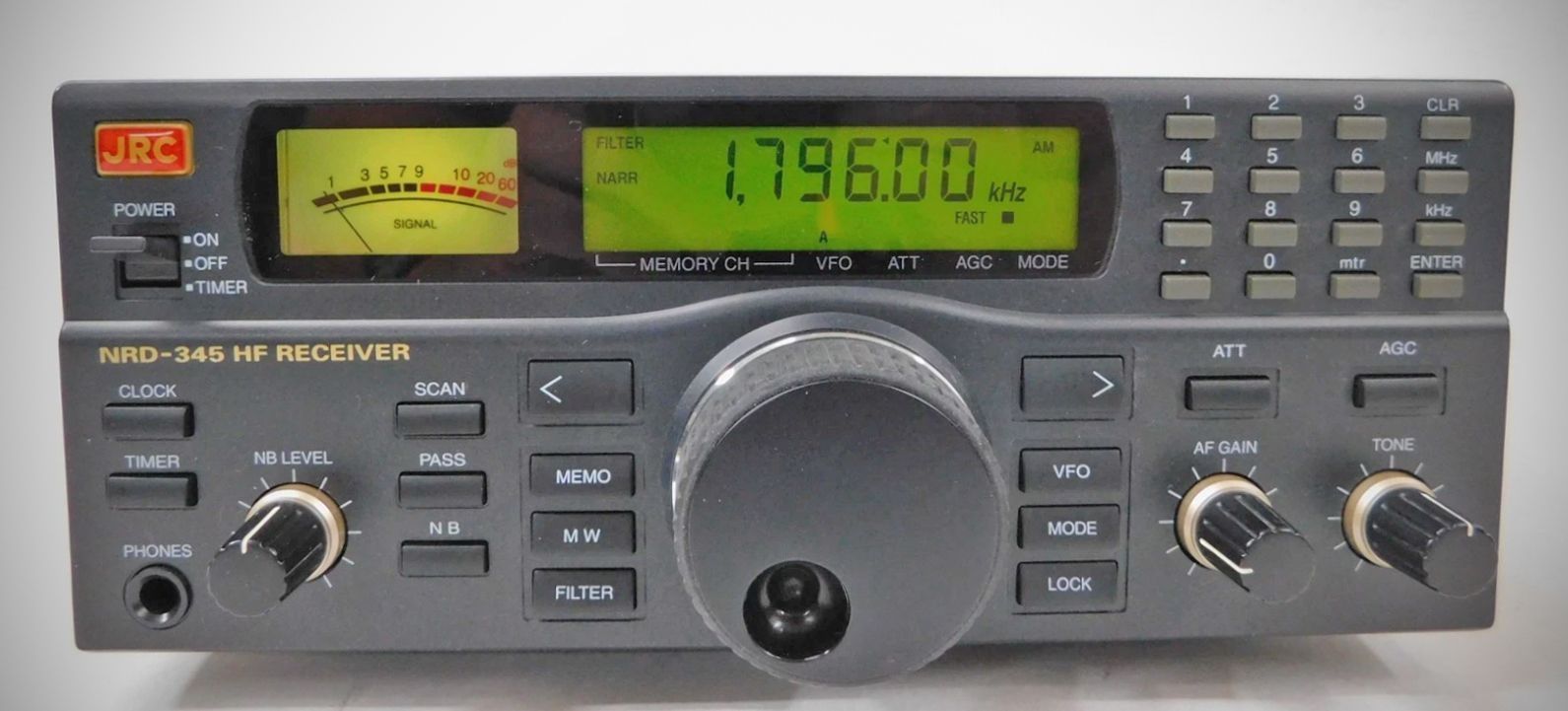
The JRC NRD-345 is an HF receiver designed for continuous coverage across the 100 kHz to 30 MHz range.
It was released as an entry-level, high-quality alternative to JRC's more expensive professional-grade models (like the NRD-535 or the later NRD-545), specifically targeting the shortwave listening community with its simplified interface and standard synchronous detection.
Despite its high build quality, it had a relatively short production run, being discontinued in 2000.
Detailed Features
– High Sensitivity and Dynamic Range: The unit utilizes an RF amplifier with four parallel-connected JFETs and a double balanced mixer with quadruple-connected FETs to ensure high sensitivity and a broad dynamic range.
– Advanced Synthesis Technology: One-chip Direct Digital Synthesis (DDS) ICs are integrated into the PLL circuit to improve the C/N (Carrier-to-Noise) ratio while maintaining a compact circuit size.
– Tuning Precision: While the digital display shows a resolution of 10 Hz, the receiver's main tuning dial actually supports 5 Hz steps for precise frequency adjustments.
– AM Synchronous Detection: Standard-equipped to improve the reception of AM signals under fading conditions.
– FAX Reception: Includes a dedicated FAX mode for receiving facsimile transmissions.
– Selectable IF Filters: Toggles between WIDE and NARR (narrow) filters; an optional AUX filter can also be installed for specialized bandwidths.
– Memory and Scanning: Features a 100-channel memory capacity backed up by a lithium cell, supporting various scanning operations including pause-scan.
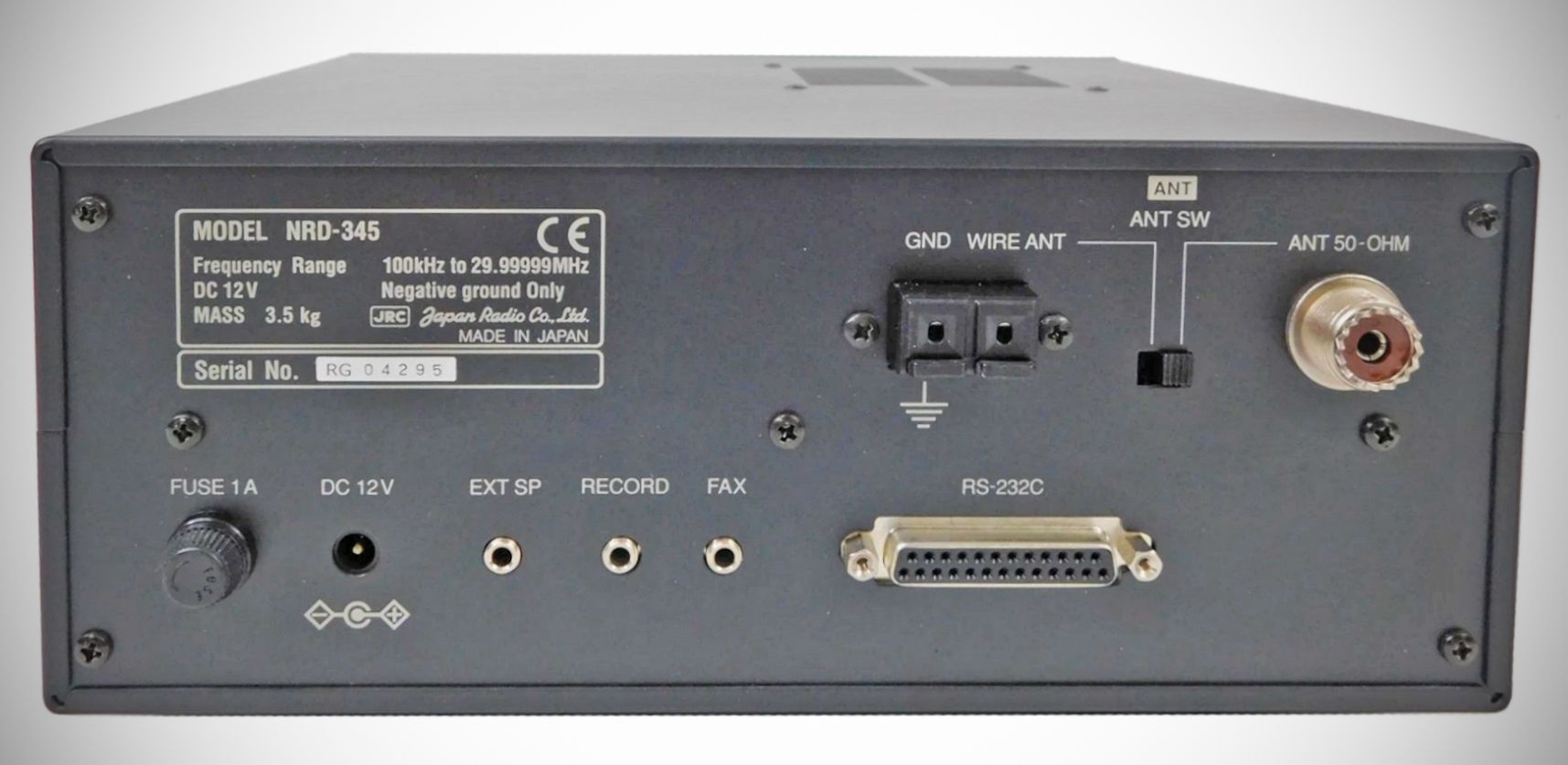
– PC Control: Standard RS-232C serial interface allows for remote operation and system status monitoring via a personal computer.
– Clock/Timer: A built-in real-time clock can be toggled between Local and UTC time and used to automate powering the receiver on or off.
– Noise and Signal Management: Includes a noise blanker (NB) with adjustable levels and a 20 dB high-frequency attenuator (ATT) to manage strong interference.
Specifications
– Frequency Range: 100 kHz to 30 MHz (Continuous)
– Tuning Resolution: 5 Hz (Display shows 10 Hz)
– Reception Modes: AM, SAM (Synchronous AM), USB, LSB, CW, FAX
– Memory Capacity: 100 Channels
– S-Meter Scale: 1–9, 9+10 dB to 9+60 dB
– Antenna Inputs: Low impedance (50 Ω) and High impedance (WIRE)
– Interface: RS-232C (D-SUB 25-pin)
Power Requirements 12.0 V DC ±10%; Minimum 0.8 A
References
Review. QST, Jun 1997.