Note
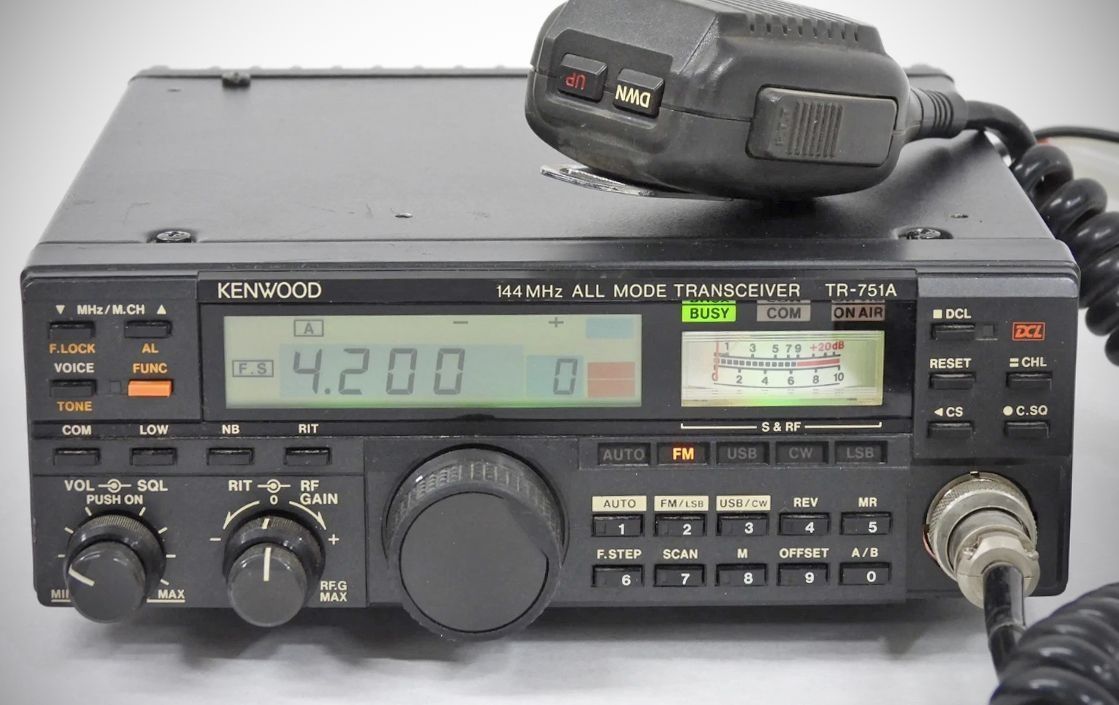
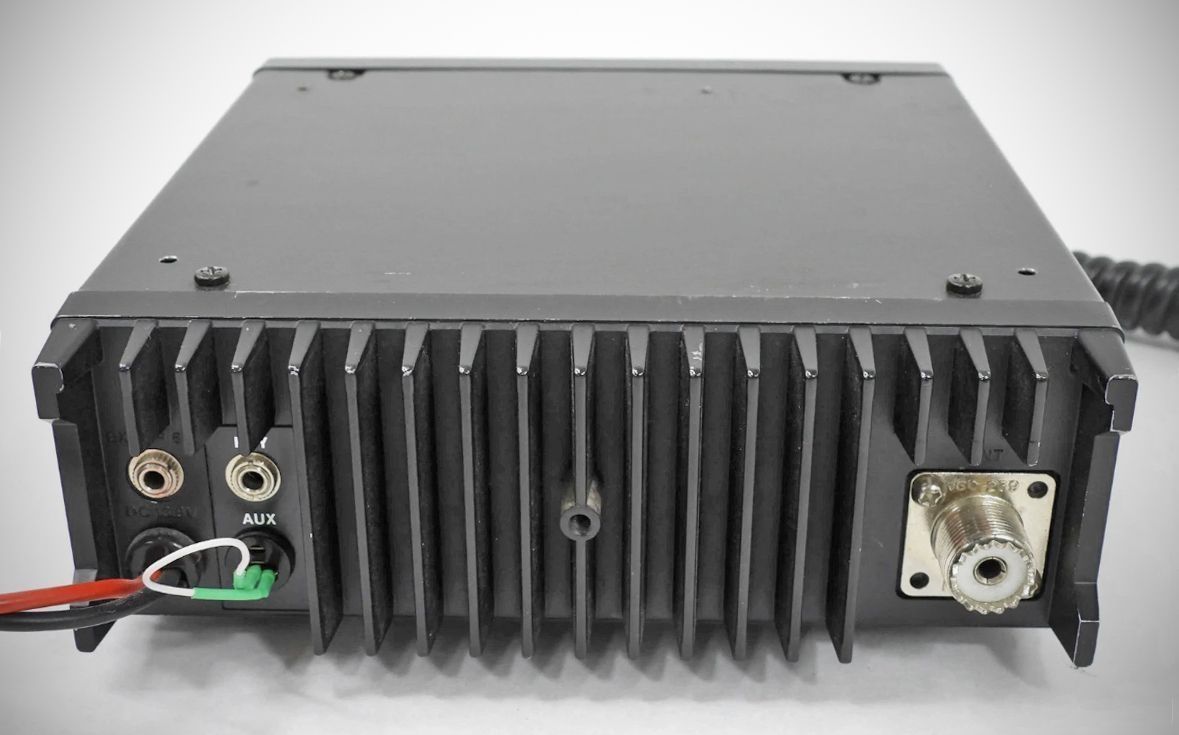
The Kenwood TR-751A (2-meter) and TR-851A (430 MHz) multi-mode transceivers are engineered for mobile or fixed-station operation.
Features
Dual VFOs & Memory: Incorporates VFO A and VFO B modes alongside dedicated memory channel controls for programming, recalling, and scanning amateur frequencies.
Integrated Display & Metering: A large central LCD panel shows explicit operating details, complemented by an analog S & RF meter that reads incoming signal strength on receive and relative power output on transmit.
Digital Channel Link (DCL) System: Features built-in hardware support for Kenwood's digital data networking protocols using NRZ equal-length code and MSK modulation at a transmission speed of 1200 bps.
Front-Panel Controls: Includes a dedicated FUNC (Function) key to map alternative layouts to existing buttons. This grants access to a F.LOCK (Frequency Lock) to protect active dials, a 6-second interval AL (Alert) priority channel checker (M.CH1), and a subaudible TONE key.
Specifications
– Frequency range:
TR-751A: 144 to 148 MHz
TR-851A: 430 to 440 MHz
– Mode: USB/LSB (J3E), CW (A1A), FM (F3E, F2D for the control signal of the DCL system)
– Antenna impedance: 50 ohms
Frequency stability (–20°C to +60°C):
TR-751A: Better than ±15 x 10^-6
TR-851A: Better than ±20 x 10^-6
Operating temperature: –20C to +60°C (-4°F to +140°F)
– Output power:
HI: 25 W
LOW: 5 W (Adjustable up to about 25 W)
– Modulation:
USB/LSB: Balanced modulation
FM: Reactance modulation
– Spurious radiation: Less than -60 dB
– Carrier suppression (SSB): More than 40 dB
– Unwanted sideband suppression (SSB): More than 40 dB
– Maximum frequency deviation (FM): ±5 kHz
– Audio distortion (FM, at 60% modulation): Less than 3% (300 to 3000 Hz)
– Microphone impedance: 500 to 600 ohms
Receiver Circuitry:
USB/LSB/CW: Single conversion superheterodyne
FM: Double conversion superheterodyne (Note: The TR-851A/E specs also reference a double conversion superheterodyne for SSB/CW and triple conversion superheterodyne for FM)
Intermediate frequency:
TR-751A: 10.695 MHz / 455 kHz (FM only)
TR-851A: 41.415 MHz / 10.695 MHz / 455 kHz (FM only)
– Sensitivity:
USB/LSB/CW (10 dB S+N/N):
TR-751A: Less than 0.13 μV
TR-851A: Less than 0.11 μV
FM (12 dB SINAD):
TR-851A: Less than 0.18 μV
TR-751A: Less than 0.2 μV
– Selectivity:
USB/LSB/CW:
-6 dB: More than 2.2 kHz, -60 dB: Less than 4.8 kHz
FM:
-6 dB: More than 12 kHz, -60 dB: Less than 24 kHz
– Spurious response: Better than 70 dB (Except fd-IF/2)
– RIT variable range: More than ± 1.2 kHz
– Squelch sensitivity: Less than 0.1 μV
– Audio Output: More than 2 W across 8 ohms load (5% distortion)
– External speaker impedance: 8 ohms
– DCL Control:
Code: NRZ equal-length code
Modulation: MSK modulation
Frequency deviation: ±3.5 kHz (Reference)
Mark frequency and deviation: 1200 Hz, ±2 x 10^-4
Space frequency and deviation: 1800 Hz, ±2 x 10^-4
Code transmission speed and deviation: 1200 bits/second, ±2 x 10^-4
– Duty Cycle:
1 minute: transmit
3 minutes: receive
Power requirement: 13.8 VDC ±15%, Grounding: Negative
Current drain:
Receive mode with no input signal: 0.8 A
Transmit mode (Max.):
TR-751A: 6A
TR-851A, 7.5A