Note
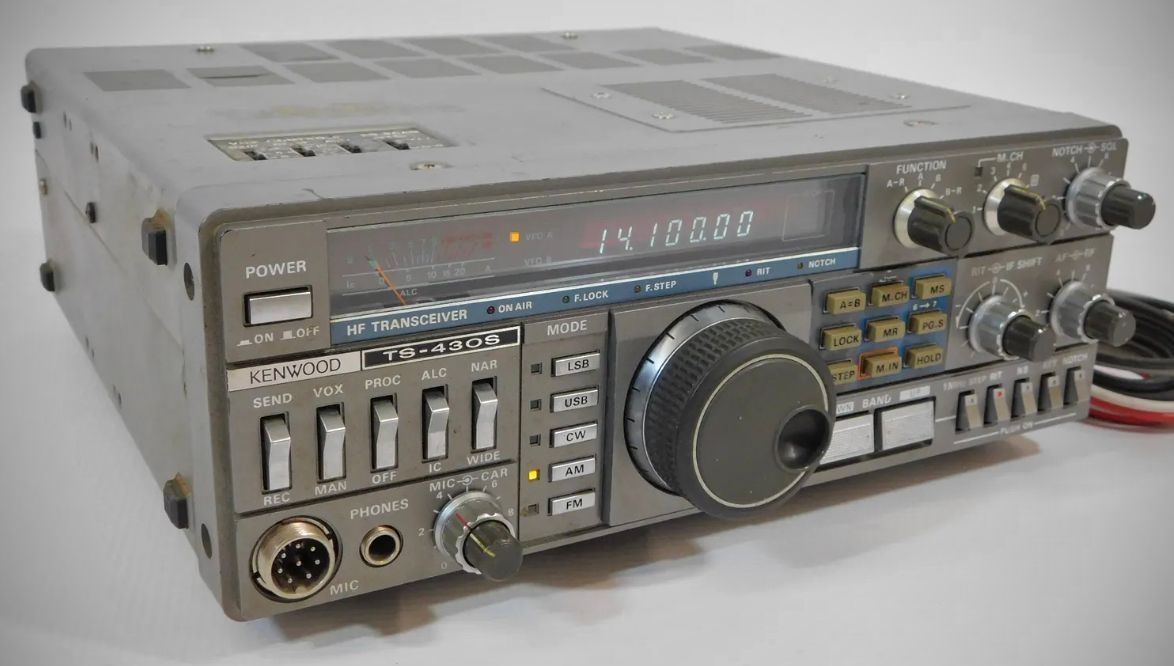
The Kenwood TS-430S is an all-solid-state all-mode HF transceiver designed for amateur radio use, featuring a general coverage receiver and dual digital VFOs.
The 430 model was introduced by Kenwood in 1982 as a successor to the TS-130 series, marking a significant transition to a fully solid-state design with general coverage receiving capabilities. Production for the TS-430S spanned from 1982 until it was replaced by the TS-440S in 1986.
The rig was particularly notable for being a fully solid-state "no tune" transceiver that integrated a general coverage receiver (150 kHz to 30 MHz), which was a major advancement over the previous ham-band-only models like the TS-130S.
Features
– General Coverage Receiver: Covers a continuous frequency range from 150 kHz to 30 MHz.
– All-Mode Operation: Supports LSB, USB, CW, and AM as standard; FM is available with the optional FM-430 unit.
– Dual Digital VFOs: Features 10 Hz step dual VFOs that include band and mode information for split-frequency or cross-band operation.
– Memory Capabilities: Includes eight memory channels that store frequency, mode, and band data. Channel 8 can store separate receive and transmit frequencies.
– Scanning Options: Offers memory scan for channels with stored data and programmable band scan between limits set in memories 6 and 7.
– Signal Processing: Equipped with an IF shift circuit to move interfering signals out of the passband and a tunable notch filter to null beat signals.
– Speech Processor: Utilizes an audio compression amplifier to increase "talk-power" during SSB and AM transmission.
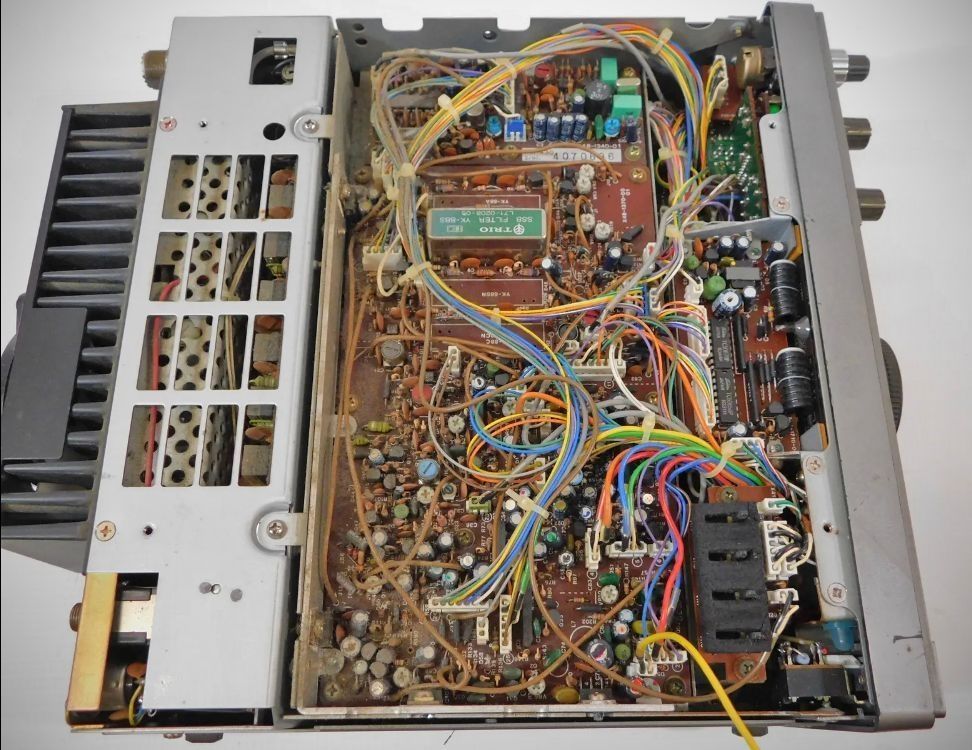
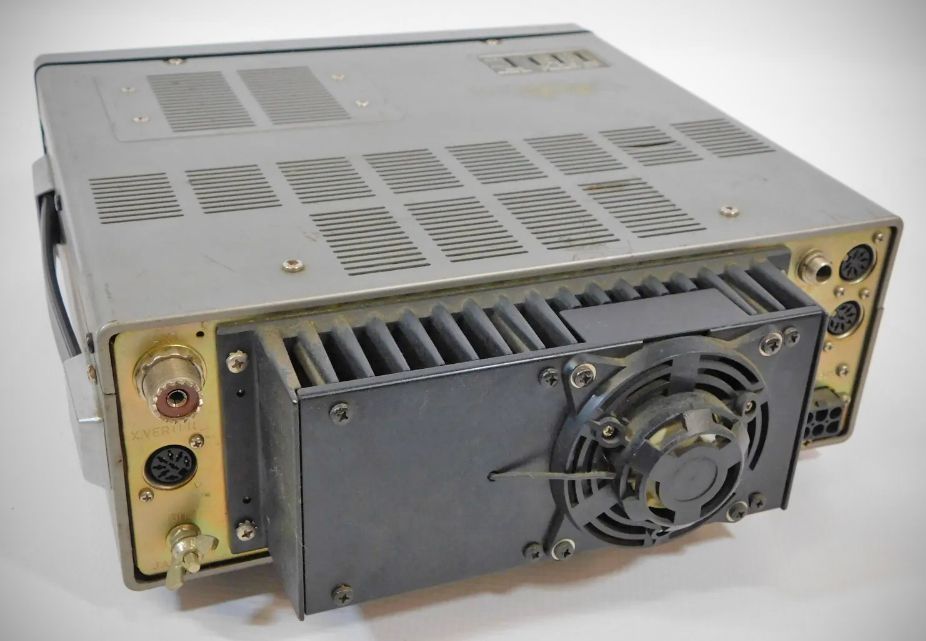
– Solid-State Design: Provides 250W PEP input on CW and SSB (160–10 meters) with no tuning required for the wideband final amplifier.
Specifications
– Frequency Range (Transmitter): 160, 80, 40, 30, 20, 17, 15, 12, 10
– Frequency Range (Receiver): 150 kHz to 30 MHz.
– Modes: SSB, CW, AM, and FM (optional).
Final Power Input:
SSB: 250W PEP.
CW: 200W DC.
AM: 60W.
FM: 120W (with optional FM-430).
– Carrier Suppression: Better than 40 dB.
– Unwanted Sideband Suppression: Better than 50 dB.
– Harmonic Content: Less than 40 dB.
– Microphone Impedance: 500 Ω to 50 k$\Omega$.
– Receiver Circuitry: Double conversion superheterodyne (SSB, CW, AM); Triple conversion (FM).
– Intermediate Frequencies: 1st IF: 48.05 MHz; 2nd IF: 8.83 MHz; 3rd IF: 455 kHz (FM only).
– Sensitivity (1.8 MHz - 30 MHz):
SSB/CW (10 dB S/N): Less than 0.25 μV.
AM (10 dB S/N): Less than 2.5 μV.
FM (12 dB SINAD): Less than 0.7 μV.
Selectivity (-6 dB / -60 dB):
SSB/CW: 2.4 kHz / 4.4 kHz.
AM: 6 kHz / 12 kHz (with optional YK-88A filter).
– Image Ratio: More than 70 dB (1.8 to 30 MHz).
– IF Rejection: More than 70 dB (1.8 to 30 MHz).
– Audio Output Power: More than 1.5W across 8 Ω (at 10% distortion).
Power Requirement: 12.0 to 16.0 V DC (13.8 V nominal).
Power Consumption: Approximately 20A in transmit; 1.2A in receive.