Note
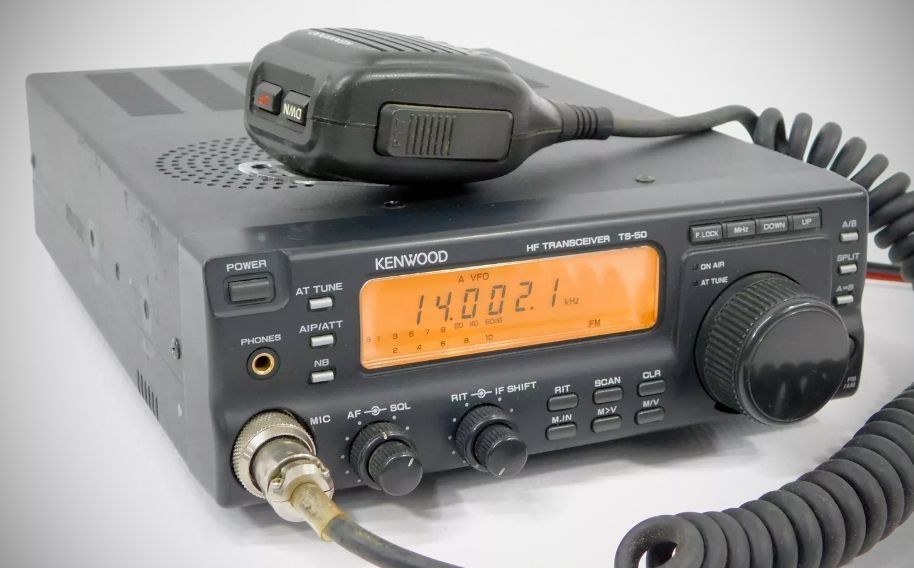
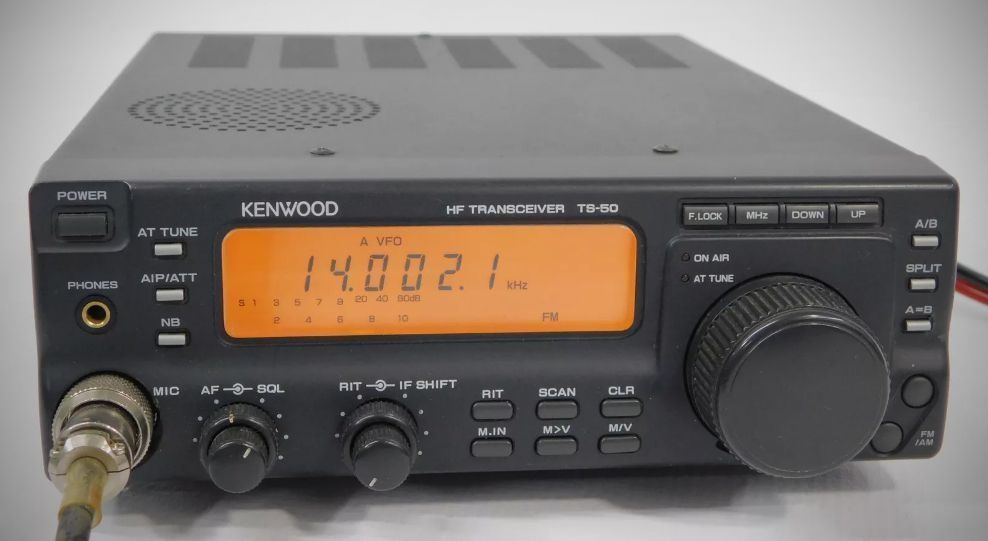
The Kenwood TS-50S is a legendary ultra-compact HF transceiver that brought 100-watt performance to a form factor previously reserved for VHF/UHF mobile rigs. It is highly regarded for its ruggedness and "Fuzzy Logic" tuning, which intuitively adjusts frequency steps based on the speed of the tuning knob.
When it debuted in 1993, the TS-50 was the world's smallest 100-watt HF transceiver. It proved that a radio didn't need to be the size of a microwave oven to provide full-power performance, effectively creating the market for "shack-in-a-box" mobile rigs that competitors like Icom (with the IC-706) would follow years later.
It was one of the first HF rigs to move away from a "one-button-per-feature" design. By using a menu system (borrowed from the flagship TS-950SDX), Kenwood kept the front panel clean and uncluttered while still providing deep customization for things like CW break-in delay and mic gain.
Features
– Dual Digital VFOs: Allows for flexible frequency management.
– TF-SET Function: Enables the user to change the transmit frequency while listening to the received signal.
– Automatic Power Off (APO): Automatically switches the unit off if it remains unoperated for approximately three hours.
– Protection Circuits: Includes a temperature protection circuit that reduces transmission output if the heat sink becomes too hot, and an SWR protection circuit that activates if the Standing Wave Ratio exceeds 2.5:1.
– Multi-mode Capability: Supports SSB, CW, AM, FM, and data operations such as Packet, AMTOR, and RTTY.
– AIP (Advanced Intercept Point): Significantly increases receiver dynamic range (up to 105 dB) to handle strong nearby signals.
– Fuzzy Logic Control: Automatic tuning step adjustment for smooth frequency browsing.
– Includes CW Reverse mode to shift interference and full/semi break-in capability.
– Menu System: Allows deep customization of functions (e.g., beep levels, brightness, and tuning steps) without cluttered front-panel buttons.
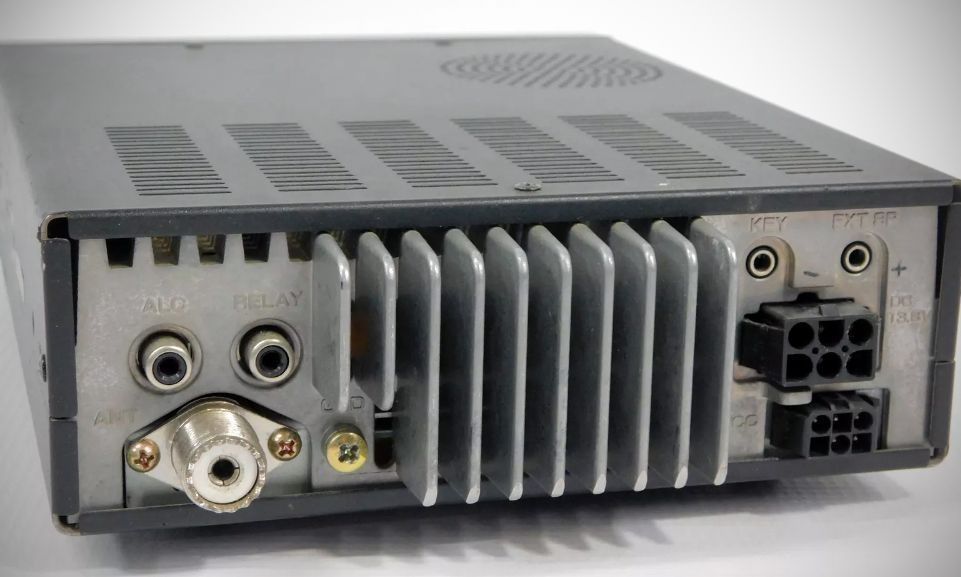
– Internal Cooling: Large heatsink and an automatic temperature-controlled fan for sustained high-power operation
Specifications
– Frequency Range (Receive): 500 kHz to 30 MHz (General Coverage)
– Frequency Range (Transmit): All 160m through 10m Amateur Bands (including WARC bands)
– Modes: SSB (J3E), CW (A1A), AM (A3E), FM (F3E)
– Memory Channels: 100
– Antenna Impedance: 50 Ω
– Operating Temperature: -20°C to +60°C (-4°F to +140°F)
– Frequency Stability: * Standard: ±10 ppm (-10°C to +50°C)
With Optional SO-2 TCXO: ±0.5 ppm (-10°C to +50°C)
– RF Output Power:
SSB / CW / FM: 100 W / 50 W / 10 W (Selectable)
AM: 25 W
– Modulation:
SSB: Balanced Modulation
AM: Low-Power Modulation
FM: Reactance Modulation
– Spurious Radiation: Less than -50 dB
– Carrier Suppression: More than 40 dB
– Unwanted Sideband Suppression: More than 40 dB (at 1 kHz)
– Maximum Frequency Deviation (FM): ±5 kHz
– Frequency Response (SSB): 400 Hz to 2600 Hz (-6 dB)
– Microphone Impedance: 600 Ω
– Receiver Circuitry:
SSB / CW / AM: Double Conversion Superheterodyne
FM: Triple Conversion Superheterodyne
– Intermediate Frequencies (IF):
1st IF: 73.045 MHz
2nd IF: 10.695 MHz
3rd IF (FM only): 455 kHz
– Sensitivity (10 dB S+N/N):
SSB / CW (0.5 – 30 MHz): < 0.25 µV
AM (0.5 – 30 MHz): < 2.5 µV
FM (28 – 30 MHz, 12 dB SINAD): < 0.5 µV
Selectivity:
SSB / CW: > 2.2 kHz (-6 dB), < 4.8 kHz (-60 dB)
AM: > 5.0 kHz (-6 dB), < 40 kHz (-60 dB)
FM: > 12 kHz (-6 dB), < 25 kHz (-50 dB)
– Image Ratio: More than 70 dB
– IF Rejection: More than 80 dB
– Audio Output: 2.0 W (8 Ω, 5% distortion)
– RIT Range: ±1.1 kHz
Power Requirement: 13.8 V DC ±15% (Negative Ground)
Current Drain:
Receive (no signal): 1.45 A
Transmit (max): 20.5 A