Note
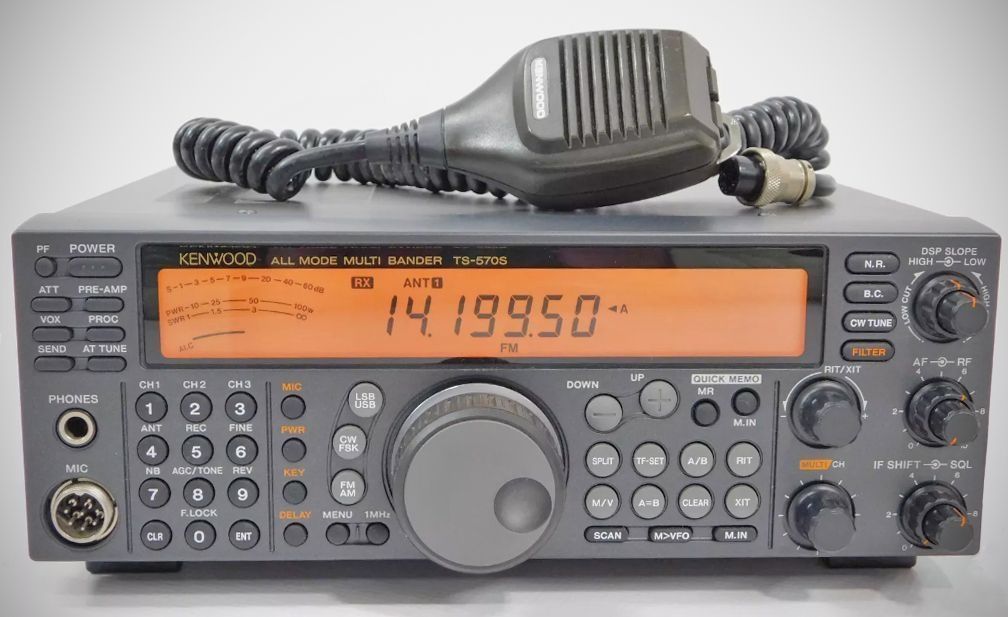
The Kenwood TS-570 series, introduced in the mid-1990s, was a significant step forward for mid-range HF transceivers, primarily because it integrated 16-bit digital signal processing (DSP) at the AF stage. The series consists of two primary models, both of which received a mid-cycle update designated by the letter "G."
TS-570D and TS-570S
The initial release included two distinct versions based on frequency coverage:
TS-570D: This was the standard HF-only version, covering all amateur bands from 160 meters through 10 meters.
TS-570S: This version expanded the capabilities of the "D" model by adding the 6-meter (50 MHz) band.
The "G" Revisions (TS-570DG and TS-570SG)
In 1999 Kenwood updated both models to the "G" specification. These revisions were not just minor cosmetic changes but involved significant firmware and hardware-level refinements to the DSP and user interface. Key improvements in the "G" models included:
CW Auto-Tune: Perhaps the most notable addition, this allowed the operator to press a button to automatically zero-beat a CW signal.
Improved DSP Performance: The noise reduction algorithms (NR1 and NR2) were refined, and the filtering became more effective at reducing QRM.
Enhanced Equalization: Additional TX and RX equalizer settings were added to allow for better tailoring of audio response.
Firmware Tweaks: Various ergonomic improvements were made to the menu system and the way the RIT and XIT functions behaved.
Kenwood offered a retrofit service for roughly $125 to upgrade the original models to the "G" specifications (excluding the addition of 6 meters to the D model).
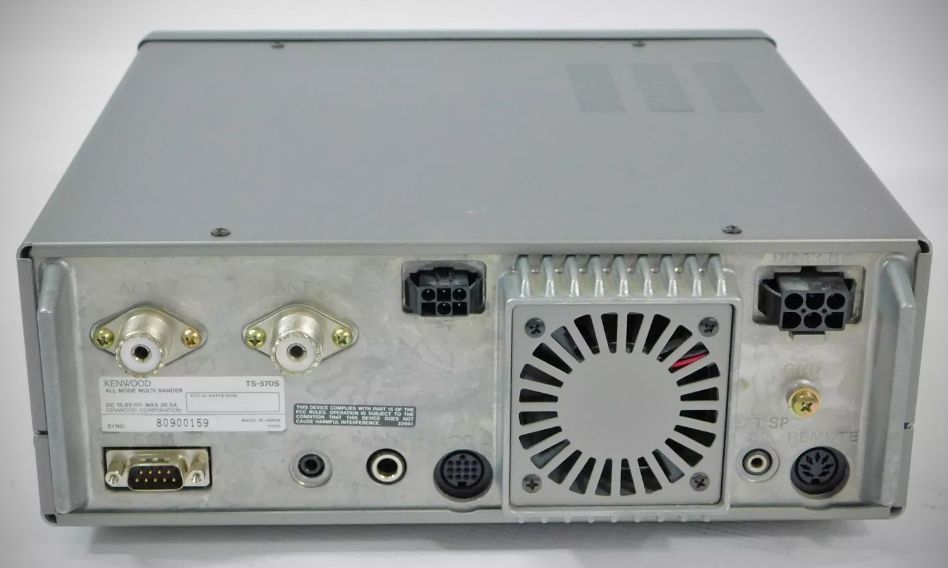
All versions of the TS-570 shared a common architecture that made them popular for both base station and mobile use. They featured a large, high-visibility orange LCD, a high-speed internal antenna tuner as standard equipment, and a dedicated data port for PC control via the RCP-2 software.
The receiver design used a triple-conversion superheterodyne system, and while the DSP was at the AF level, it provided features like a digital notch filter and beat canceler that were highly effective for the era. For operators looking to expand the unit's selectivity, the radio provided a single slot for an optional plug-in IF filter (typically 1.8 kHz for SSB or 500 Hz/270 Hz for CW).
The TS-570 series was eventually replaced by the TS-590S, which moved the DSP to the IF stage, but the 570 remains well-regarded for its straightforward ergonomics and reliable performance.
Core Features
– Digital Signal Processing (DSP): Utilizes a 16-bit DSP unit for audio frequency processing, providing enhanced interference reduction and improved transmit audio quality.
– DSP Tools: Includes high-performance receive filters, Beat Cancel (adaptive filter to attenuate cyclic interference), and Noise Reduction (NR1 and NR2).
– Operating Modes: Supports LSB, USB, CW, FSK, AM, and FM.
– Memory Capabilities: Features 100 conventional memory channels and a "Quick Memory" system for rapidly saving and recalling current settings.
– Antenna Tuner: Equipped with a built-in automatic antenna tuner that can also preset capacitor positions for different bands.
– User Interface: Includes a large, easy-to-read LCD display and a multi-purpose keypad for direct frequency entry and function selection.
– Customization: Features a Programmable Function (PF) button on the front panel and supports up to four customizable buttons on optional microphones.
– CW Specialties: Offers automatic zero-beating, a built-in electronic keyer with adjustable weighting, and CW message memory.
– Computer Control: Includes a dedicated COM connector for direct RS-232C connection to a computer without needing an external hardware interface.
Specifications
Frequency Stability: Within ±10 PPM from -10°C to 50°C.
Usable Temperature Range: -10°C to 50°C (+14°F to 122°F).
Transmitter Specifications
RF Output Power:
SSB, CW, FM, and FSK: 100 watts (5 watts min)
AM: 25 watts (5 watts min)
– Frequency Ranges:
160m: 1.8 – 2.0 MHz.
80m: 3.5 – 4.0 MHz.
40m: 7.0 – 7.3 MHz.
30m: 10.1 – 10.15 MHz.
20m: 14.0 – 14.35 MHz.
17m: 18.068 – 18.168 MHz.
15m: 21.0 – 21.45 MHz.
12m: 24.89 – 24.99 MHz.
10m: 28.0 – 29.7 MHz.
6m (TS-570S only): 50.0 – 54.0 MHz.
– Antenna Impedance: 50 Ω (Tuner range: 16.7 – 150 Ω).
Receiver Specifications
– Frequency Range: 30 kHz to 60 MHz (TS-570S) or 30 kHz to 30 MHz (TS-570D).
– Intermediate Frequency (IF) Filters: Selectable bandwidths; supports optional high-quality filters like YK-88C-1 (CW) or YK-88SN-1 (SSB).
– Interference Rejection: Features a receive preamplifier, attenuator, and analog noise blanker.
– DSP Slope Tuning: Independent High and Low cut-off controls for SSB and AM modes to improve readability.
Supply Voltage: DC 13.8 V ± 15% (negative ground).
Current Consumption: Maximum 20.5 A during transmit; 2 A during receive.