Note
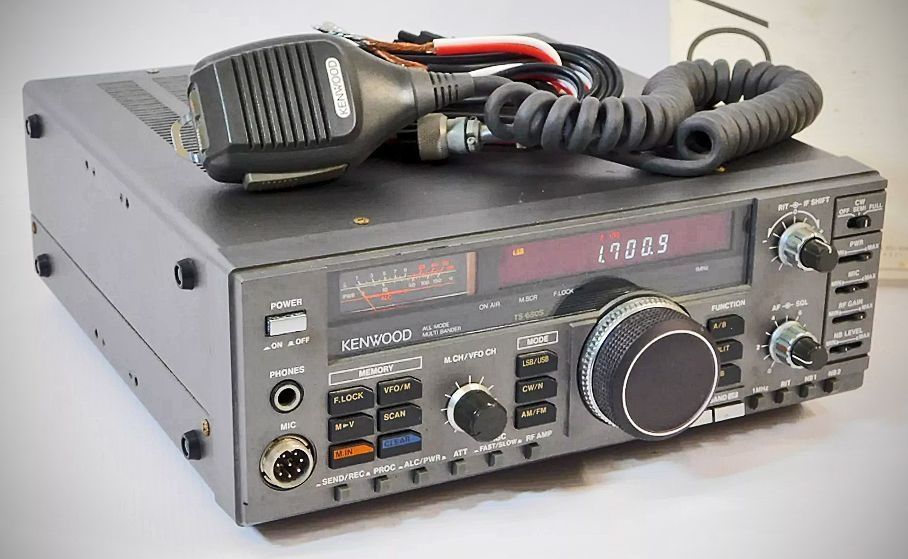
The Kenwood TS-680S arrived in 1988 as a versatile evolution of the TS-140S, specifically designed to bridge the gap between traditional HF operations and the 6-meter "magic band." While it looks nearly identical to its HF-only sibling, the internal engineering includes an additional power amplifier and filter stage to accommodate the 50 MHz frequency range.
The transceiver utilizes a triple-conversion superheterodyne receiver system. It provides a continuous receive range from 500 kHz to 30 MHz, plus the 50–54 MHz band. On the transmit side, the rig delivers 100 watts of RF output across all HF bands, though it scales back to 10 watts on 6 meters. This power management is handled by a solid-state final amplifier section that was notably durable for the era.
The internal circuitry reflects Kenwood’s transition into highly integrated digital control while maintaining an analog signal path that many operators find warmer and more natural than later DSP-heavy models. It features an all-mode capability—including SSB, CW, AM, and FM—which made it an early example of a comprehensive "multi-band" solution for small shacks or mobile installations.
Design and Interface
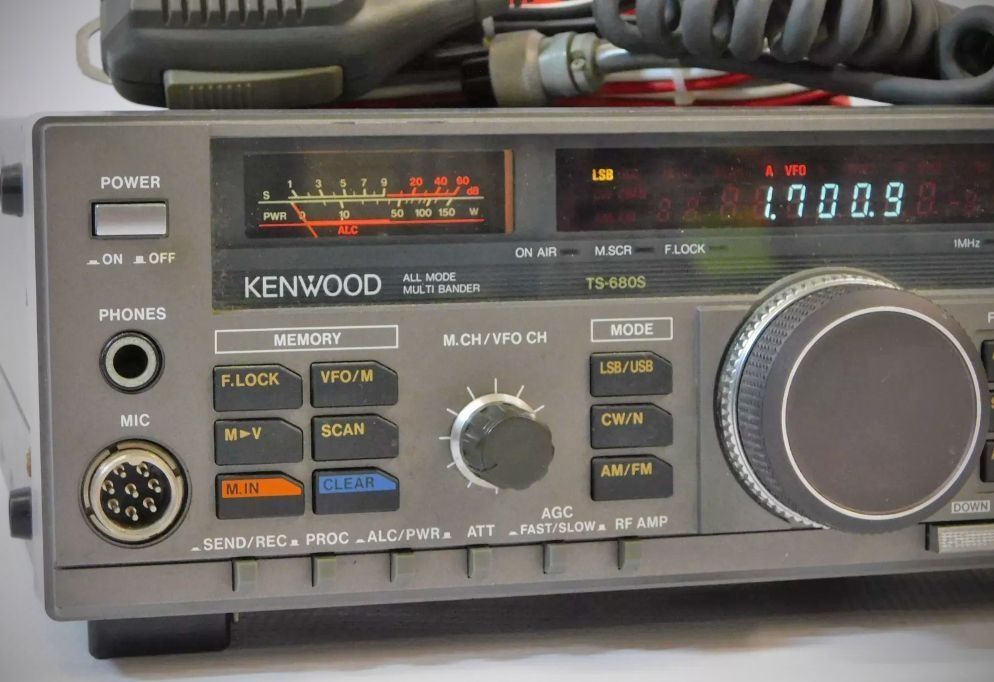
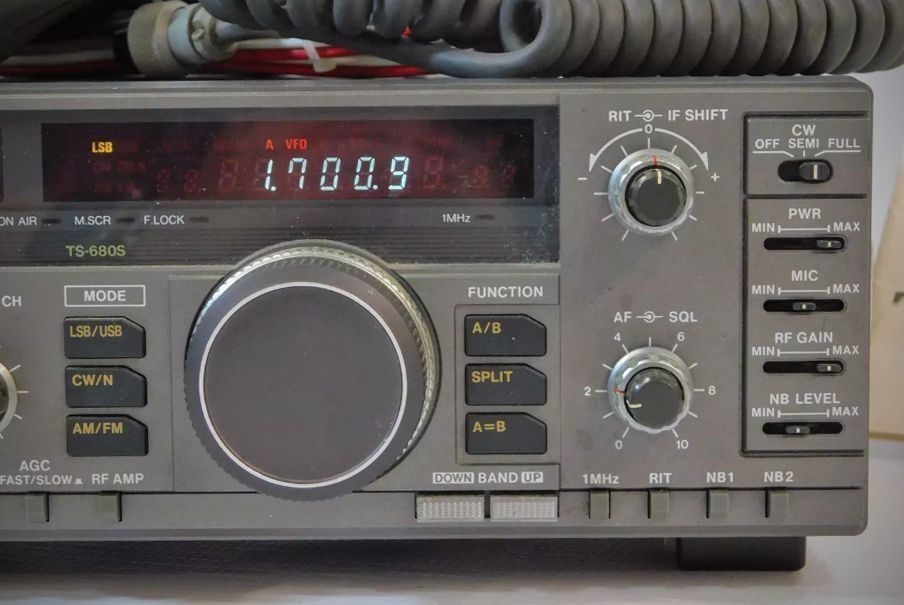
The front panel is characterized by a large, high-contrast fluorescent display and a logical, "one button, one function" layout that avoids the menu-heavy navigation found in contemporary equipment. Notable technical features accessible from the panel include:
– IF Shift Control: Allows for the adjustment of the intermediate frequency passband to reject adjacent channel interference.
– Dual VFOs: Facilitates split-frequency operation, which is essential for working DX stations.
– RIT/XIT: Receiver and transmitter incremental tuning for fine-adjusting frequencies without moving the main VFO.
– Noise Blanker: An effective circuit for mitigating pulse-type interference, common in mobile environments or areas with electrical noise.
The Kenwood TS-680S is an all-mode transceiver that builds upon the HF capabilities of the TS-140S by adding the 6-meter "magic band". Its design emphasizes a high-performance receiver and versatile frequency management for both base and mobile operation.
Core Technical Specifications
– Frequency Coverage (Transmit): Covers all Amateur bands from 160 to 10 meters, plus the 50–54 MHz 6-meter band.
– Frequency Coverage (Receive): Features a general coverage receiver from 500 kHz to 30 MHz and specifically 50–54 MHz for 6-meter operation.
– Modes of Operation: USB, LSB, CW, AM, and FM.
– RF Power Output:
HF (160–15m): 100W PEP (SSB/CW), 40W (AM).
HF (10m): 95W PEP (SSB/CW), 40W (AM), 50W (FM).
6-meters: 10W (SSB, CW, FM), 4W (AM).
– Receiver Architecture: Double conversion system with a 1st IF of 45.055 MHz and a 2nd IF of 455 kHz.
– Dynamic Range: 102 dB intermodulation dynamic range with a +12 dBm intercept point.
Key Functional Features
– Digital Control: Employs dual 10 Hz step digital VFOs that allow for independent frequency and mode control for split or cross-band operation.
– Memory Management: Includes 31 memory channels:
– CH 10–19: Store independent transmit and receive frequencies for repeater or split operation.
– CH 20–30: Define limits for the programmable band marker.
– CH 31: Establishes limits for programmable band scanning.
– Signal Processing: Dual-Mode Noise Blanker: NB 1 targets pulse-type ignition noise, while NB 2 addresses longer-duty cycle interference like "woodpecker" noise.
– IF Shift: Moves the passband away from interference without altering the center frequency.
– Switchable AGC: Features FAST and SLOW settings to optimize reception for CW, SSB, and AM.
– CW Operation: Supports full break-in (QSK) and semi break-in operation.
– Display: Fluorescent tube digital display indicating frequency, mode, VFO status, and scan data.
– Interface: Features a 1 MHz step switch for rapid frequency traversal and a frequency lock (F. LOCK) to prevent accidental shifts.
– Audio Quality: Integrated speech processor with an audio compression amplifier to increase intelligibility and "talk-power".
Differences from TS-140S: The TS-680S includes a 6-meter pre-amp in place of the standard VOX switch; the VOX function requires the optional VOX-4 unit.
The transceiver is designed with a non-volatile operating system, using a lithium battery to back up VFO and memory data
Power Requirements
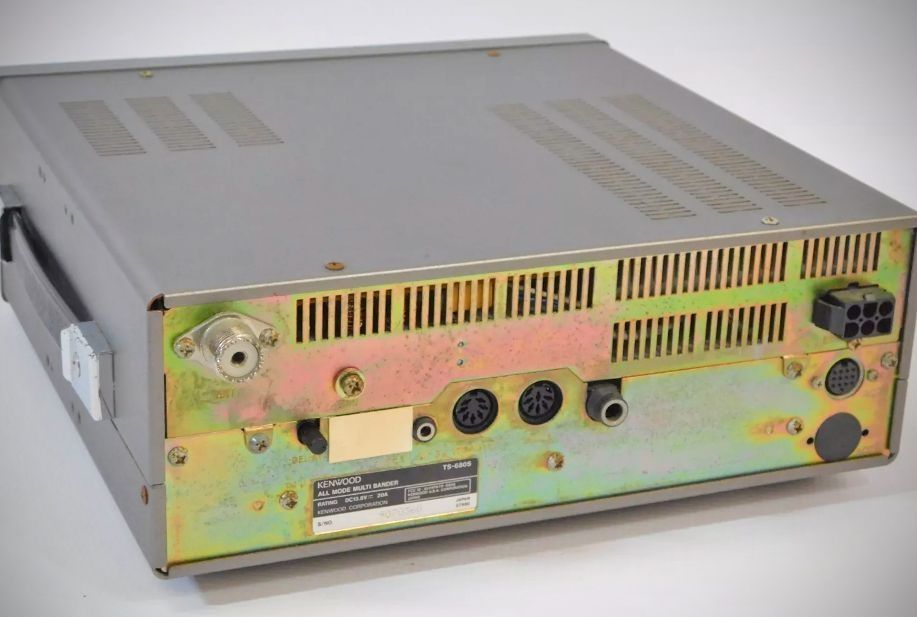
Standard Voltage: 13.8 VDC.
Operating Voltage Range: 12.0 to 16.0 VDC.
Current Drain (Maximum Transmit): 20A.
Current Drain (Receive, no signal): 1.5A