Note
The Kenwood TS-950 series represents the peak of the classic hybrid analog/early-digital contesting transceivers before high-performance IF-DSP completely shifted the landscape. Released in the late 1980s and early 1990s as Kenwood’s ultra-premium flagship, the 950 chassis saw three major variants, along with an internal hardware revision that is highly critical for anyone keeping them running today.
The “S” and “SP” versions are listed separately.
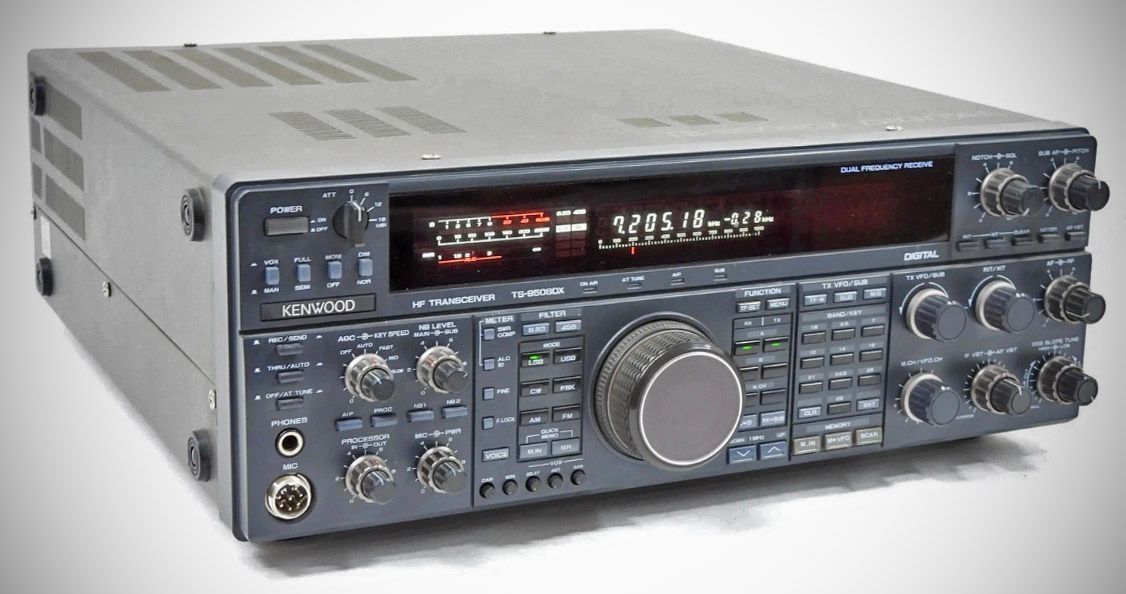
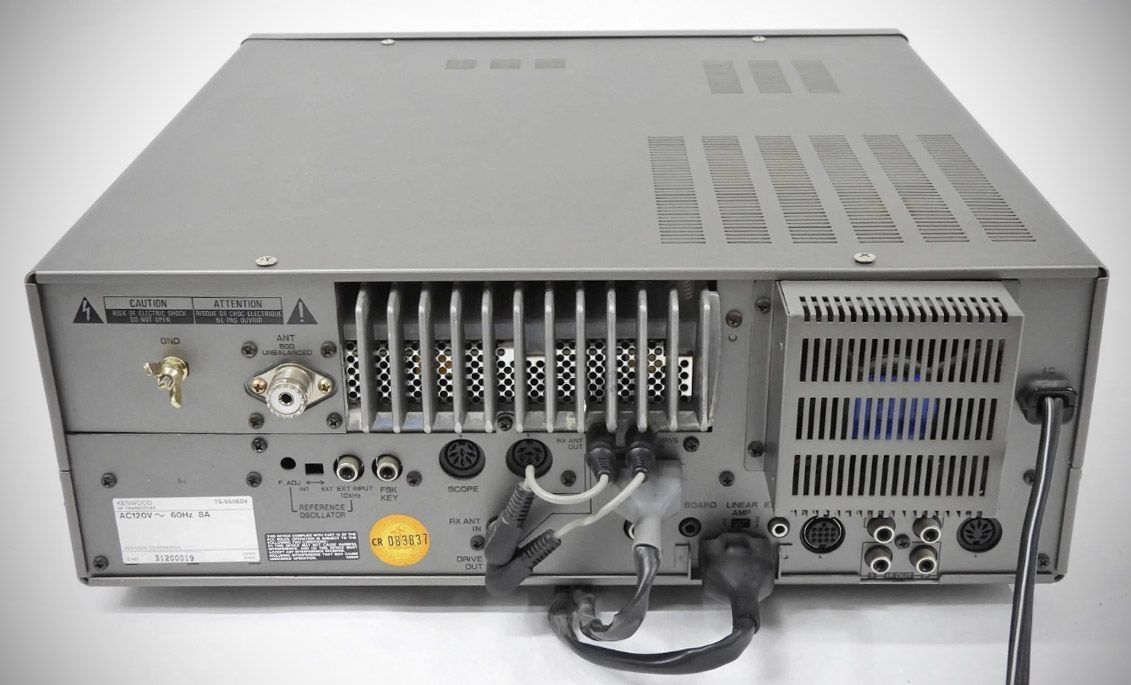
Kenwood TS-950SDX
Released in 1992, the TS-950SDX is functionally a completely different transceiver sharing little more than the silhouette of its predecessors. ARRL reviewers at the time remarked that it was changed so substantially it really should have been named the "TS-960S."
Features
– True Integrated DSP: The DSP was no longer an afterthought, it was designed directly into the core architecture. It introduced a sophisticated digital phase-shift network that completely obliterated the audio image ("opposite sideband") on receive. It brought in a digital SSB comb filter and true digital AGC processing.
– The MOS-FET Final Amplifier: In a major manufacturing shift, Kenwood abandoned the 2SC2879 bipolar transistors and moved to a pair of MRF150MP MOS-FETs in the final section. This was a first for commercial amateur transceivers. While the output remained 150W, the FETs provided excellent linearity across the spectrum, making the SDX highly sought after by early ESSB (Extended SSB) operators.
– Sub-Receiver Upgrades: The dual-frequency receive capability was drastically improved. The original S/SD sub-receiver had a rigid 500 kHz range restriction relative to the main VFO and a fixed 2.4 kHz filter. The SDX sub-receiver was given a wider 1 MHz split window, better filtering options, independent noise blanking, and far more flexible audio routing.
– The Menu System: Kenwood deleted the top adjustment hatch entirely, moving those secondary controls onto the front panel or embedding them into a newly designed, comprehensive firmware menu system (32 power-on menus and 29 operational menus).
– Standardization: Because the DSP was now the mechanical heart of the radio, Kenwood dropped the "base" tiered options. The SDX was sold only as one fully loaded package, complete with the TCXO and premium filters.