Note
QST, Sep 1966, p. 143. (model numbers are not specifically stated)
Allied Radio catalog 1967 (copyright 1966), pp. 84–87.
Allied Radio catalog 1968 (copyright 1967), p. 453.
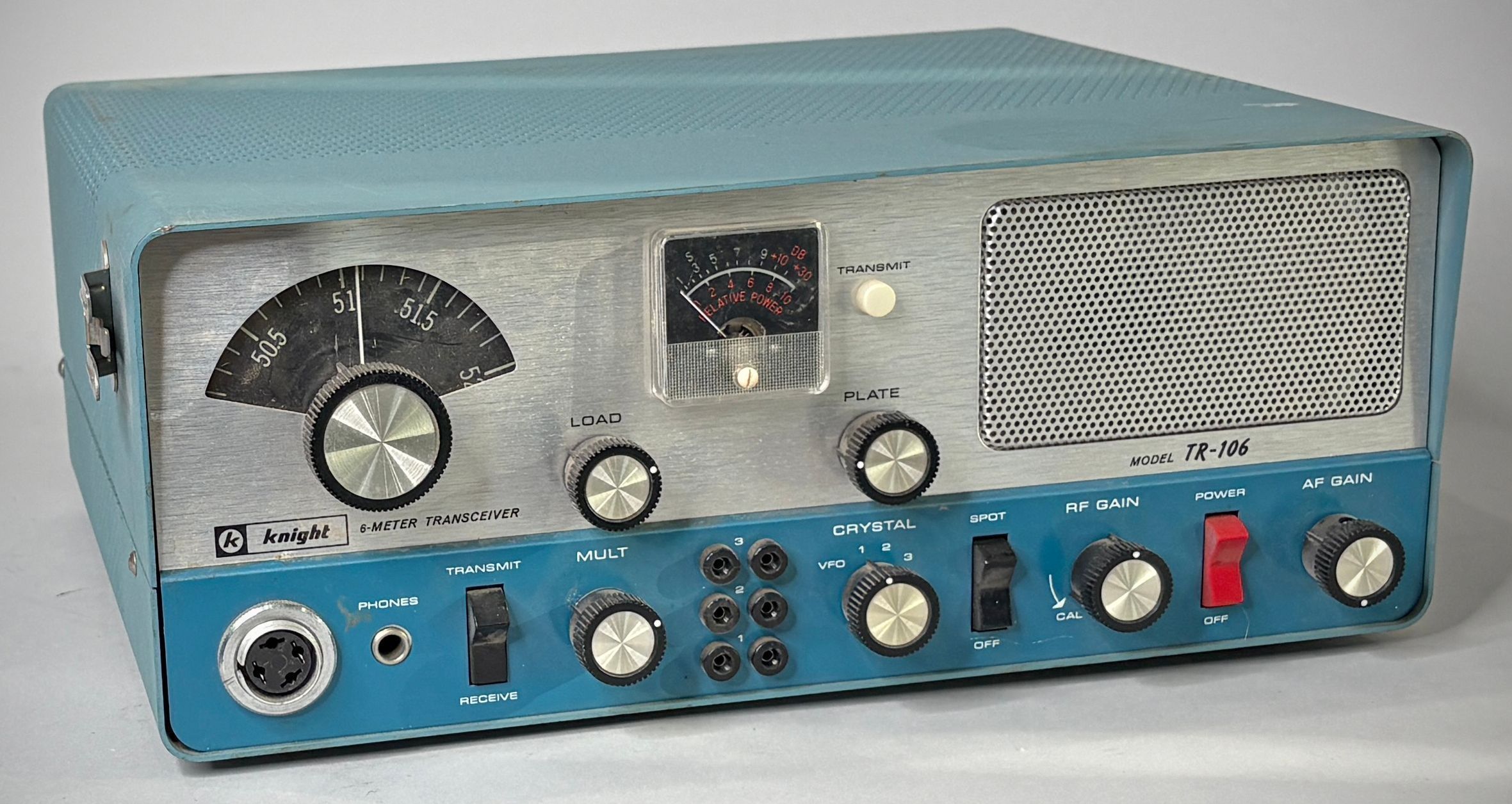
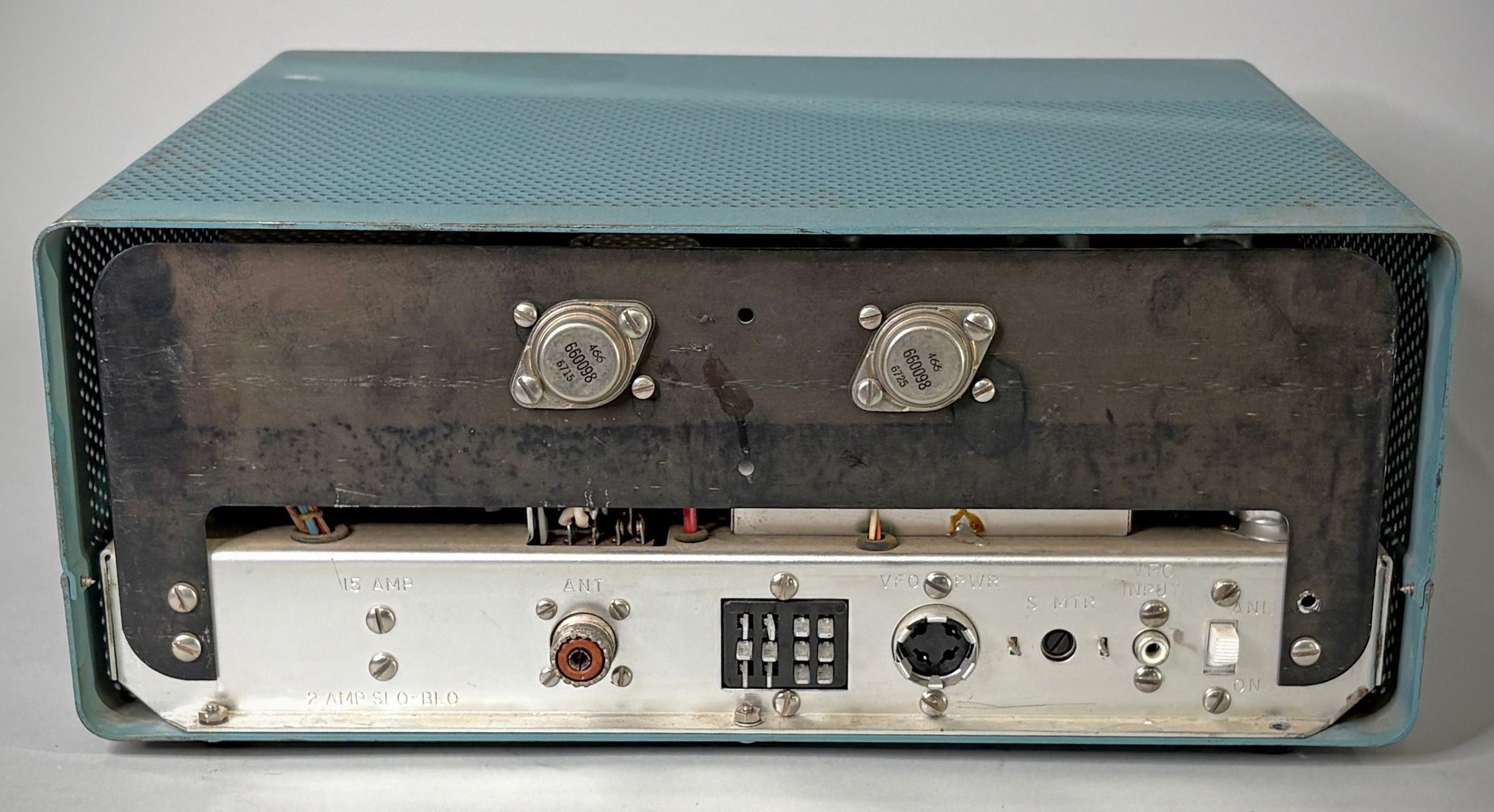
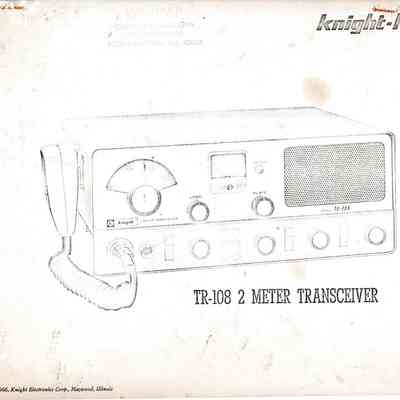
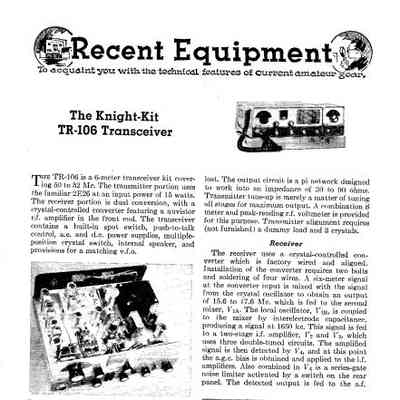
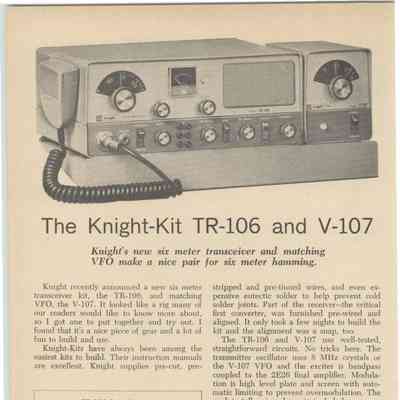
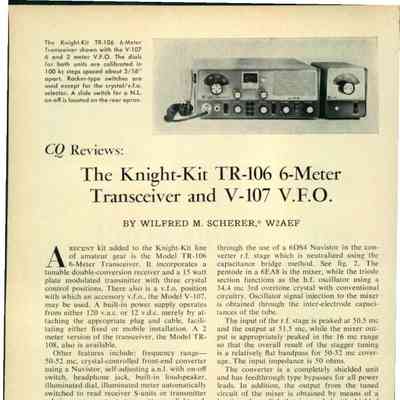
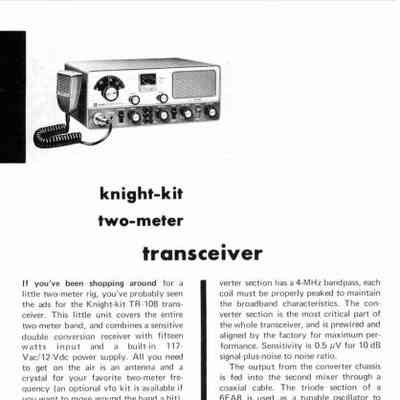
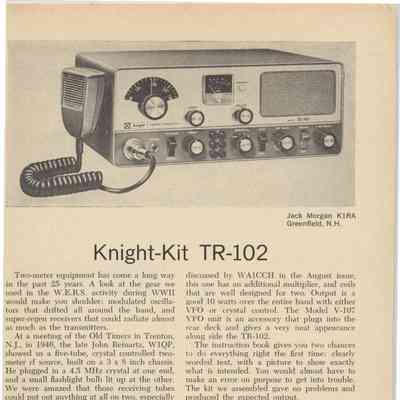
The Knight-Kit TR-106 and TR-108 are 6 and 2 meter amateur transceiver kits.
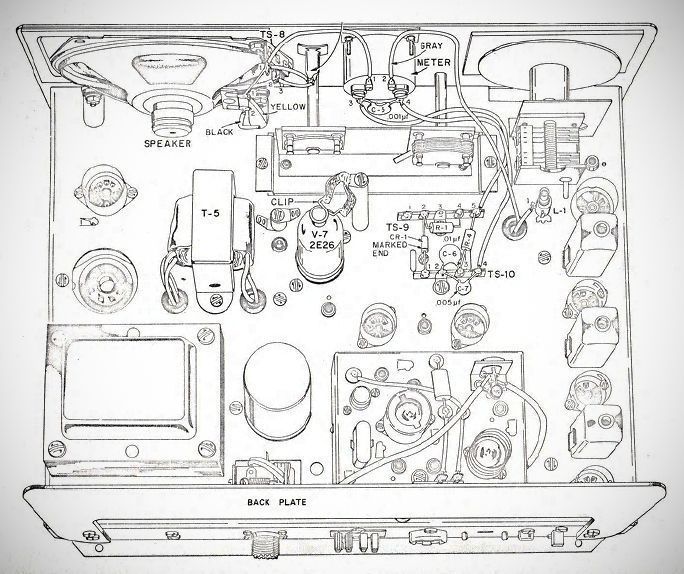
The units feature a double-conversion superheterodyne design featuring a neutralized Nuvistor RF amplifier (TR-106 only), crystal-controlled first oscillator, switchable Automatic Noise Limiter (ANL), RF gain control, and a spot switch. The first converter section comes pre-wired and pre-aligned from the factory.
Operates at 15 watts input power using a 2E26 final amplifier driven by an 8 MHz crystal oscillator or the matching external V-107 VFO. Features high-level plate and screen modulation with automatic limiting to prevent overmodulation.
They use a built-in solid-state power supply utilizing silicon rectifiers and transistor oscillators, capable of running on either 120V AC (60 Hz, 90W) or 12–15V DC (6.8A receive, 8.1A transmit).
Specifications
– Frequency Range: 50–52 MHz, or 144–148 Mhz
– Power Input: 15 watts
– Transmitter Frequency Control: 8 MHz crystals or external VFO
– Transmitter Output Impedance: 30–90 ohms
– Intermediate Frequencies: 15.6 to 17.6 MHz (1st IF), 1650 kHz (2nd IF)
– Selectivity: 6 dB down at 8 kHz
– Sensitivity: 5 µV for 10 dB S+N/N ratio
– Image Rejection: 55 dB or better
– IF Rejection: 50 dB or better (1st IF), 70 dB or better (2nd IF)
– Audio Output: 5 watts or more
Tube Lineup (TR-106) (11 total)
– 6DS4: Nuvistor RF amplifier
– 6EA8: 1st mixer / oscillator
– 6EA8: 2nd mixer / oscillator
– 6BZ6: 1st I.F. amplifier
– 6BZ6: 2nd I.F. amplifier
– 6AL5: Detector / ANL (Automatic Noise Limiter) diode
– 12AX7: Audio / mic preamp
– 6L6GC: Audio output / modulator
– 12DK6: Oscillator / tripler
– 12AQ5: Buffer / doubler
– 2E26: Final power amplifier
Tube Lineup (TR-108) (9 total)
– 6EA8 2nd mixer / VFO
– 6BZ6 IF amp
– 6BZ6 IF amp
– 6AL5 Detector / ANL
– 6L6 Audio output
– 12AX7
– 2E26 Final amp
– 6BQ5 Tripler
– 6CL6 Osc / tripler
The transceiver was designed to pair with the Knight V-107 VFO, a single-tube, temperature-compensated, voltage-regulated unit that plugs directly into the TR-106/108. The V-107 covers 8.333–8.666 MHz for 6 meters (and can be reconfigured for 2 meters across 8.000–8.222 MHz). Accessories for the TR-106 also included a push-to-talk microphone (included with the unit), a mobile mounting bracket, and a desk mount.
References
Review. QST, Oct 1966, p. 42.
Review (TR-106). CQ, Nov 1966, p. 50.
Review (TR-108). 73, Jan 1967, p. 105. (Incorrectly called the TR-102)
Review (TR-108). Ham Radio, June 1970, p. 62.