Note
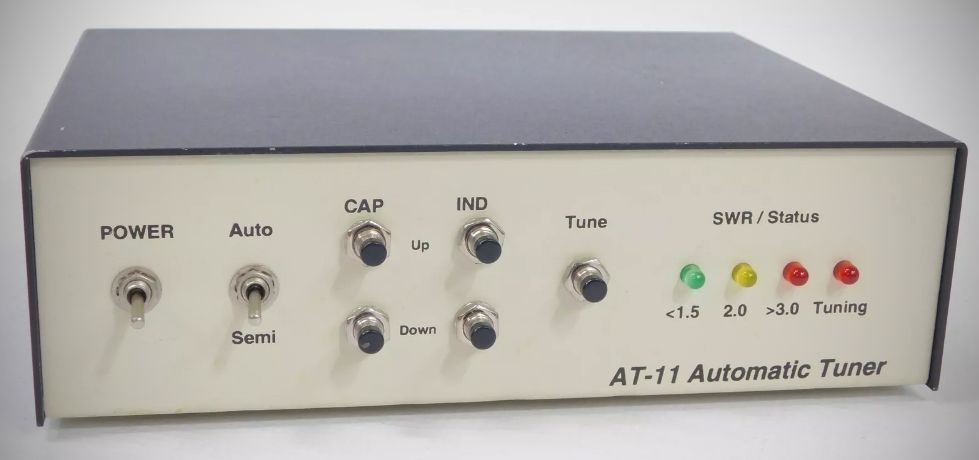
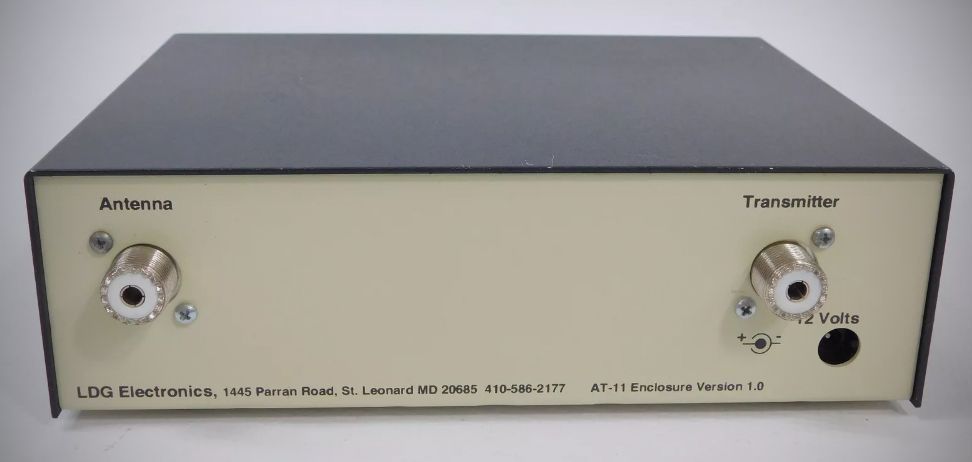
The LDG AT-11 was the first commercial product released by LDG Electronics in the mid-1990s. Designed to provide a low-cost, high-performance alternative to internal tuners, it helped popularize the use of microprocessor-controlled switched-L networks.
The AT-1 was based on a QST construction project titled "An Automatic Antenna Tuner: The AT-11," authored by Dwayne Kincaid, WD8OYG. The success of that specific article and the subsequent demand for kits are what effectively launched LDG Electronics as a company.
The original AT-11 was sold as a kit, making it a favorite for hobbyists who preferred to wind their own toroids and solder the PCB themselves. This "hands-on" origin story is what established LDG’s reputation for rugged, user-serviceable gear.
It was eventually replaced by the AT-11MP.
Features
– Microprocessor Control: Uses a 68HC11 or similar microcontroller to automatically switch relays, finding the best impedance match without manual knob-turning.
– Relay-Based Tuning: Employs high-quality dust-tight relays rather than motorized capacitors, which contributes to its relatively compact size and speed.
– LED Display: Uses a simple LED bar graph or discrete LEDs to indicate SWR and power levels, prioritizing functional feedback over complex LCD menus.
Specifications
– Circuit Type: Switched-L network (series inductors and parallel capacitors).
– Frequency Coverage: 1.8 to 30 MHz (160 through 10 meters).
– Power Rating: 5 to 100 watts (SSB and CW); approximately 30 watts for high-duty cycle modes like RTTY or FM.
– Tuning Range: Handles loads with an SWR of up to 10:1.
– Tuning Time: 0.1 to 5 seconds for a full tune