Note
Logikey K-5 vs. K-3
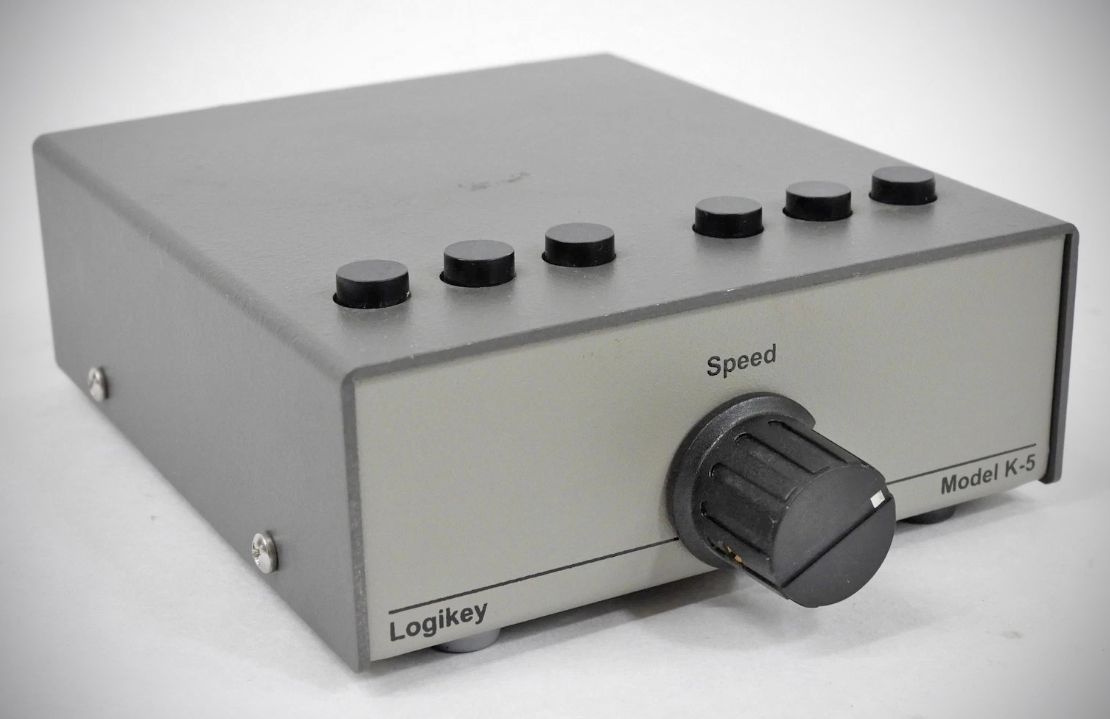
The K-5 was essentially a hardware "refresh" of the K-3. The firmware and operating features are identical between the two models, but the physical implementation was improved.
– Chassis Design: The K-5 moved to a lower-height cabinet with a more refined "fit and finish" compared to the boxier K-3.
– Battery Power: Requires three AAA cells, or external power.
– Circuit Protection: The K-5 introduced improved CPU protection circuitry specifically designed to guard against static discharges and lightning-induced transients—a common point of failure in earlier CMOS keyer designs.
After power is applied, the keyer responds with "OK" and is ready for operation. It is initialized as follows:
– Speed range: 5-40 WPM
– Load mode: character
– Weight: 50%
– Input queue: on
– Monitor: On
– Serial number: 001
– Auto-space: Off
– Emulation: Logikey K1, K3, K5
– Function speed: Equals Paddle speed
– Monitor Tone: 700 Hertz
Features
– Fully iambic keyer; can emulate most other keyers including Curtis “A” timing and Accukeyer
– Works perfectly with single-lever, non-iambic paddles
– Six active messages plus 12 “banked” messages, 1530 characters total
– Messages may ‘call’ others and contain programmed functions
– Messages can loop for continuous replay
– Messages can allow break-in for paddle-inserted text with automatic resumption
– Message editing capability of existing messages
– Ultra Speed mode allows messages at speeds to 990 WPM!
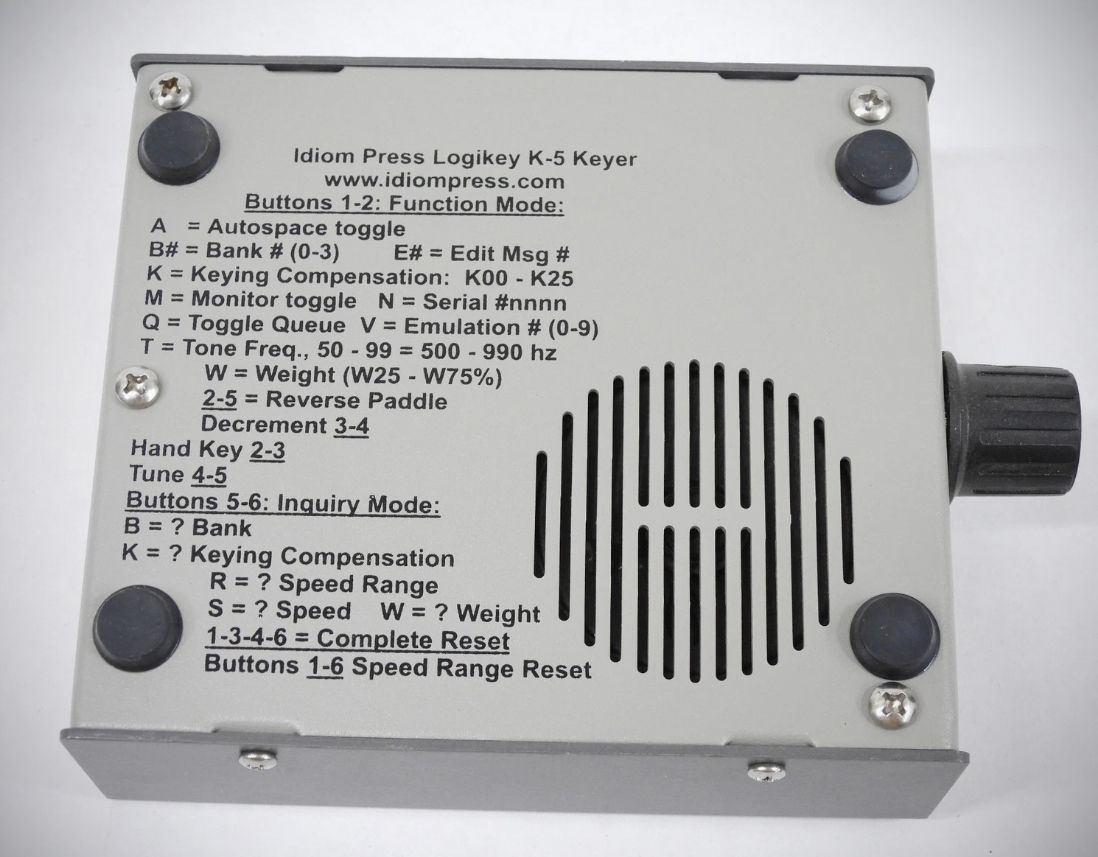
– Contest serial number: 001 to 9999, with push-button decrements if needed
– Linear speed control: 5 to 60 WPM, speed range can be easily customized
– Adjustable weighting: 25% to 75%
– Adjustable frequency sidetone monitor, 500 – 900 Hz, internal monitor level control
– Tune function for transmitter adjustment, hand key mode from paddle
– Operator selectable automatic character spacing
– Full beacon capability
– Messages and keyer configuration saved if power is lost
– Variable compensation for QSK transmitter character shortening
– Keyer offers precise speed read-out
– Keys all solid state and most tube rigs (virtually everything made since 1964)
– No paddle “buffering” or “debouncing” required with any paddle
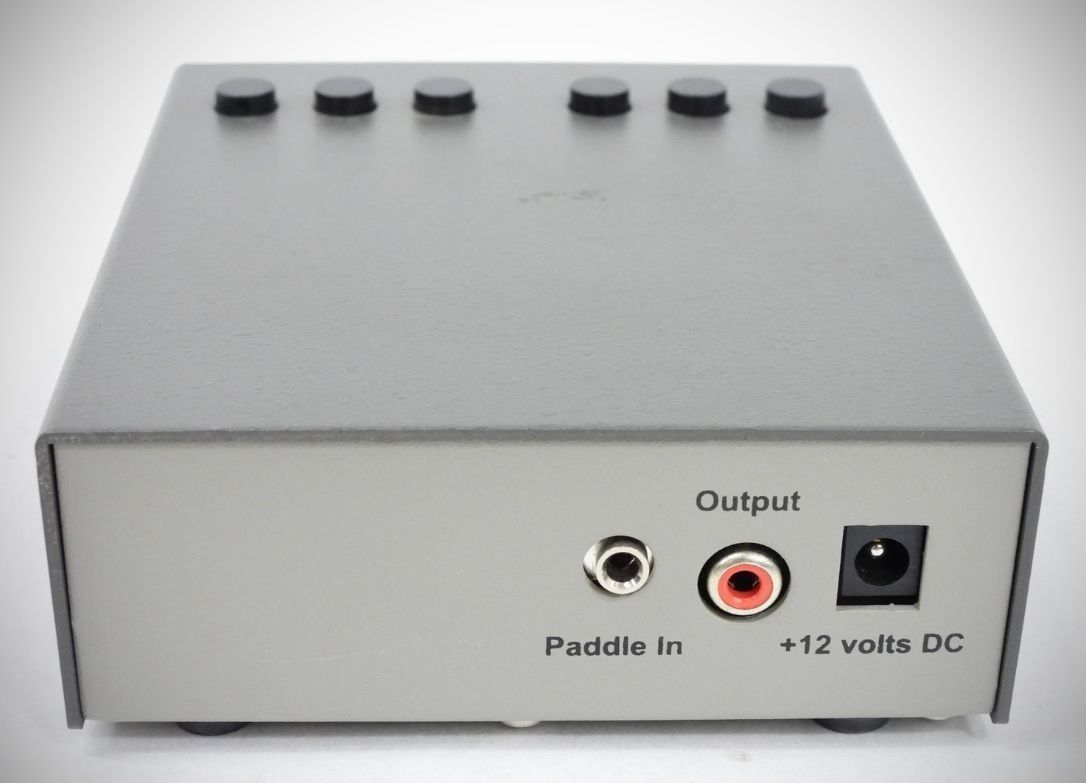
– Runs on 12 volts DC, less than .1 amp, or on 3 AAA batteries when installed in internal battery pack