Note
QST, Jul 1952, p. 95
QST, Jun 1953, p. 101. {"prices slashed")
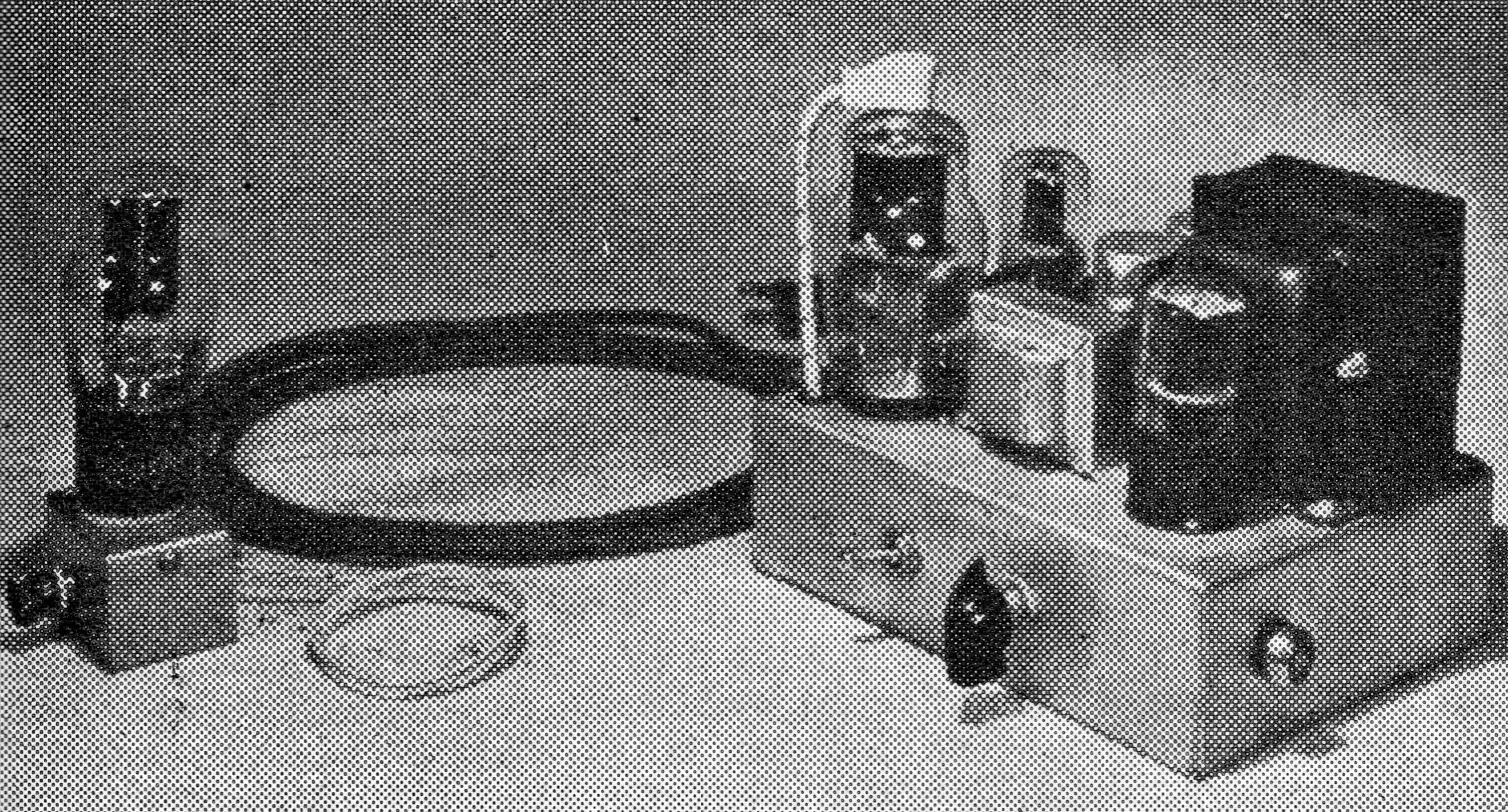
Marmax developed a series of products based on the Rothman modulation scheme, which was described in QST, Jan 1952, p. 56. A summary of the process can be found below.
Extremely linear speech amplifier and modulator for Class C power inputs of 100 watts to 1 KW.
– Input: The unit is designed for high impedance microphone and has automatic gain control.
– Compatibility: Any pentode or tetrode Class C tube or tubes are adaptable to the KW-52.
– Power Supply: The speech amplifier power supply is built into the unit.
– Operation: CW-Phone switching is provided on the front of the chassis by means of a rotary switch.
– Function: Provides an inexpensive and efficient method of converting a CW transmitter to amplitude modulation.
Tube Complement: 1-6SL7GT, 1-6X5GT, 1-6CD6, 1-80.
Power Requirements: 100-125 VAC, 25 watts
The Rothman modulation system, detailed on pages 56-57 of the January 1952 issue of QST, is a high-efficiency method for screen-grid modulation of a radio frequency (RF) power amplifier.
Rothman modulation can be characterized by the following key principles:
Self-Bias Control: The system utilizes a unique method of controlling the screen-grid voltage of a beam power tube (like a 4-65A or 807). It employs a diode rectifier to derive a variable DC bias from the audio signal itself.
Controlled Carrier Operation: It functions as a "controlled-carrier" system. In the absence of an audio input (silence), the carrier power is very low because the screen voltage is kept at a minimum. As the audio level increases, the screen voltage rises proportionally, increasing the carrier strength to match the modulation requirements.
High Efficiency: By only providing full carrier power during peaks of modulation, the system allows the final amplifier to run much cooler and more efficiently than standard constant-carrier plate or screen modulation.
Simplified Audio Requirements: Unlike plate modulation, which requires a high-power modulation transformer and an audio amplifier capable of providing half the DC input power, the Rothman system requires very little audio power to drive the screen.