Note
QST, Jul 1952, p. 95.
QST, Jun 1953, p. 101. {"prices slashed")
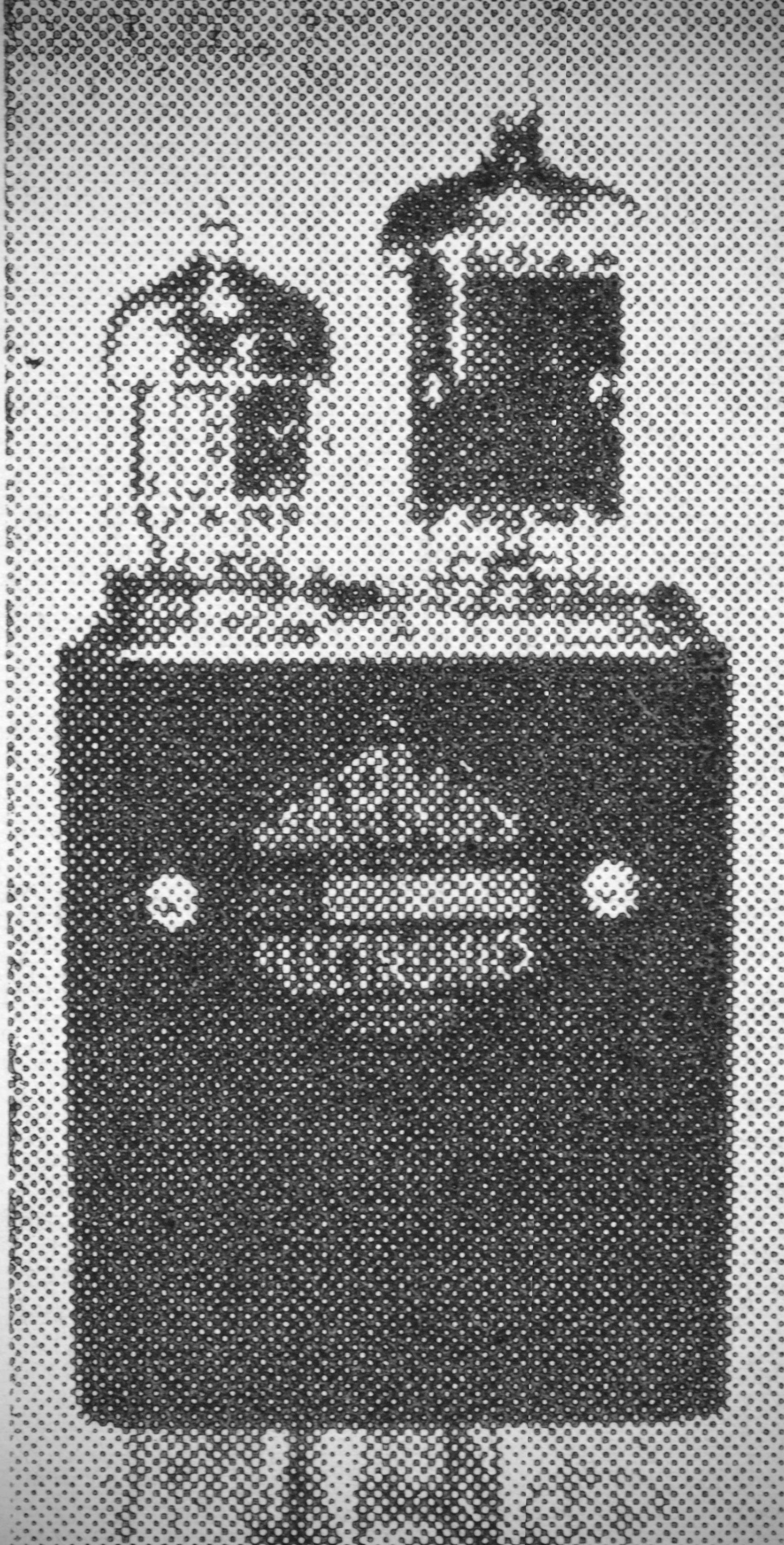
Marmax developed a series of products based on the Rothman modulation scheme, which was described in QST, Jan 1952, p. 56. A summary of the process can be found below.
Also, an ad for Terminal Radio Corp featured a series of Rothamn devices in QST, Mar 1952, p. 109, . It is not if these are the same devices marketed by Marmax that first appeared in the July 1952 issue.
Designed to modulate any mobile or fixed station transmitter using a pentode or tetrode for the Class C final amplifier with a power input to the Class C stage of up to 100 watts.
– Input: For carbon mike.
Tube complement: 1-12AU7, 1-6J6.
Power requirements: 0.75 amperes @ 6 volts DC or AC and 5 to 15 ma. @ 300 volts DC depending on class C tube.
- - - - - -
Rothman modulation can be characterized by the following key principles:
Self-Bias Control: The system utilizes a unique method of controlling the screen-grid voltage of a beam power tube (like a 4-65A or 807). It employs a diode rectifier to derive a variable DC bias from the audio signal itself.
Controlled Carrier Operation: It functions as a "controlled-carrier" system. In the absence of an audio input (silence), the carrier power is very low because the screen voltage is kept at a minimum. As the audio level increases, the screen voltage rises proportionally, increasing the carrier strength to match the modulation requirements.
High Efficiency: By only providing full carrier power during peaks of modulation, the system allows the final amplifier to run much cooler and more efficiently than standard constant-carrier plate or screen modulation.
Simplified Audio Requirements: Unlike plate modulation, which requires a high-power modulation transformer and an audio amplifier capable of providing half the DC input power, the Rothman system requires very little audio power to drive the screen.