Note
QST, Jul 1952, p. 95.
QST, Jun 1953, p. 101. {"prices slashed")
Marmax developed a series of products based on the Rothman modulation scheme, which was described in QST, Jan 1952, p. 56. A summary of the process can be found below.
Also, an ad for Terminal Radio Corp featured a series of Rothamn devices in QST, Mar 1952, p. 109. These may be the same devices marketed by Marmax that first appeared in the July 1952 issue.
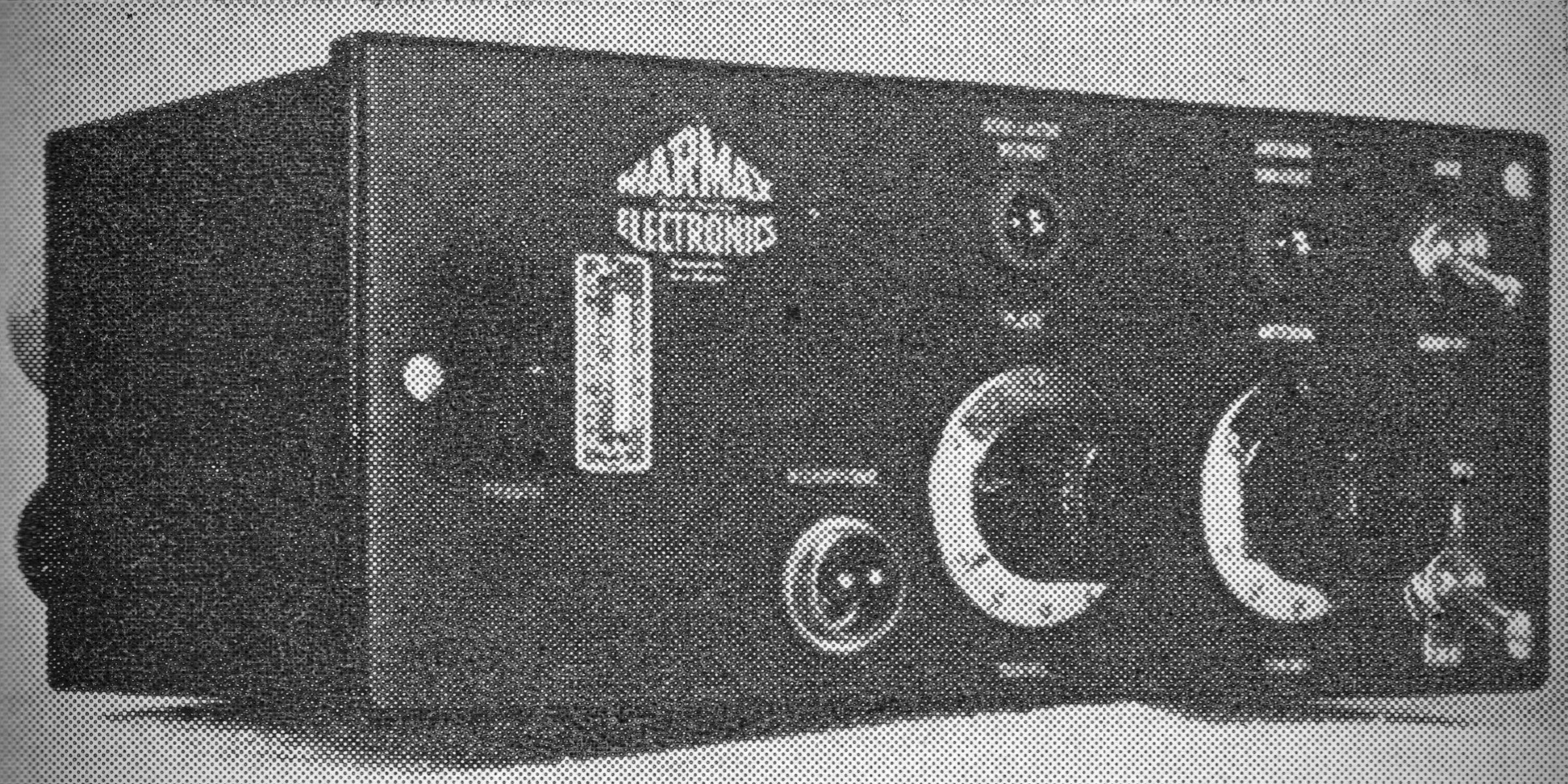
Compact, versatile, all-band high efficiency mobile or fixed phone CW transmitter possessing high fidelity with a minimum of battery drain. Designed for under-dash mounting. Tuning accomplished by easily visible neon bulb and pilot lamp indicators.
Modulation: The Modulation section is the unique Marmax Plug-In-Modulator model MO-52.
Oscillator: The crystal oscillator section is straightforward in all respects and employs the modified Pierce oscillator circuit. The oscillator tube, 6AG7, has been chosen for high stability, rugged construction and rich harmonic output. The oscillator coil is of the slug-tuned fully shielded plug-in type and is optional for oscillator output at 80, 40, 30, or 20 meters.
When operating the final amplifier in the 15 and 10 meter bands, the final is used as an efficient doubler. Individually shielded sections provide a high degree of accuracy and stability.
Provision is made for simultaneous receiver muting and external power supply relay control. Antenna change-over is accomplished within the unit by a 6 volt DC coaxial relay, which may be controlled either by the push-to-talk button of a carbon microphone (not supplied) or the standby switch.
Ratings: Peak power rating of final stage: 50 watts.
Tube Complement: (1) 6AG7, (1) 6BQ6GT, (1) 12AU7, (1) 6J6
Power Requirements: 2.9 amperes @ 6 volts DC or AC and 100 to 150 ma @ 400 to 600 volts DC.
- - - - - - -
Rothman modulation can be characterized by the following key principles:
Self-Bias Control: The system utilizes a unique method of controlling the screen-grid voltage of a beam power tube (like a 4-65A or 807). It employs a diode rectifier to derive a variable DC bias from the audio signal itself.
Controlled Carrier Operation: It functions as a "controlled-carrier" system. In the absence of an audio input (silence), the carrier power is very low because the screen voltage is kept at a minimum. As the audio level increases, the screen voltage rises proportionally, increasing the carrier strength to match the modulation requirements.
High Efficiency: By only providing full carrier power during peaks of modulation, the system allows the final amplifier to run much cooler and more efficiently than standard constant-carrier plate or screen modulation.
Simplified Audio Requirements: Unlike plate modulation, which requires a high-power modulation transformer and an audio amplifier capable of providing half the DC input power, the Rothman system requires very little audio power to drive the screen.