Note
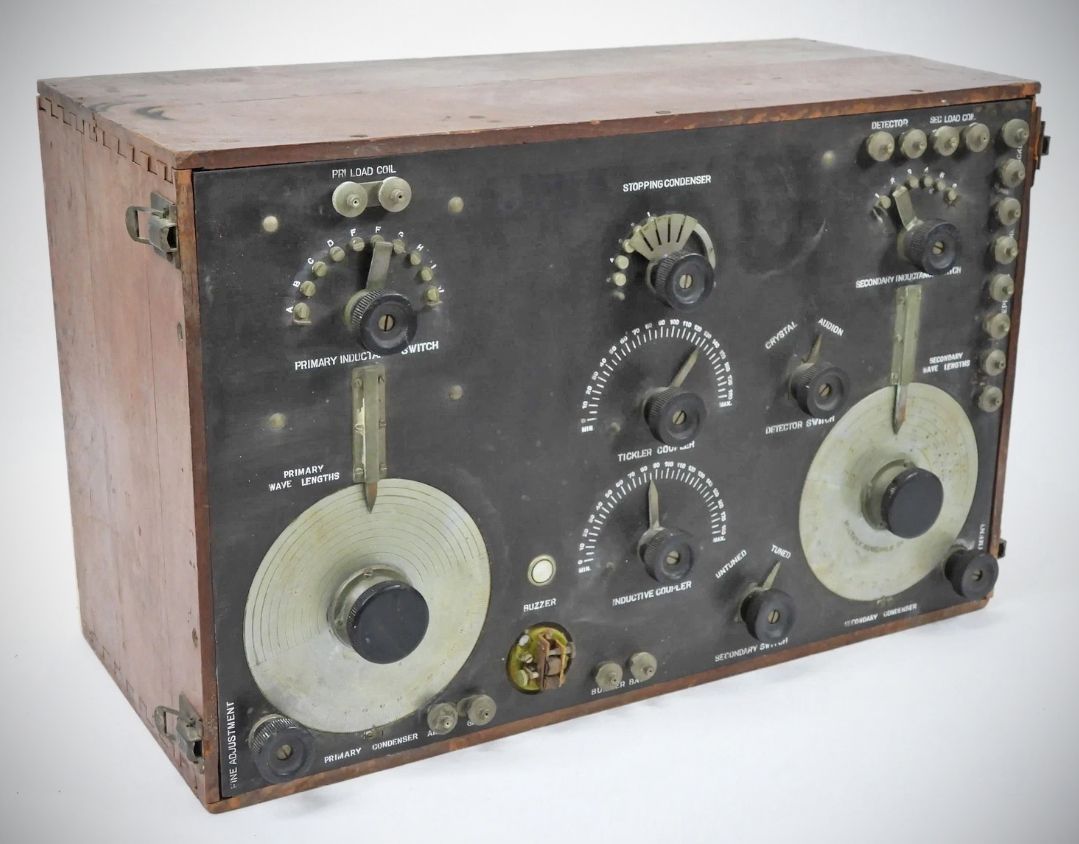
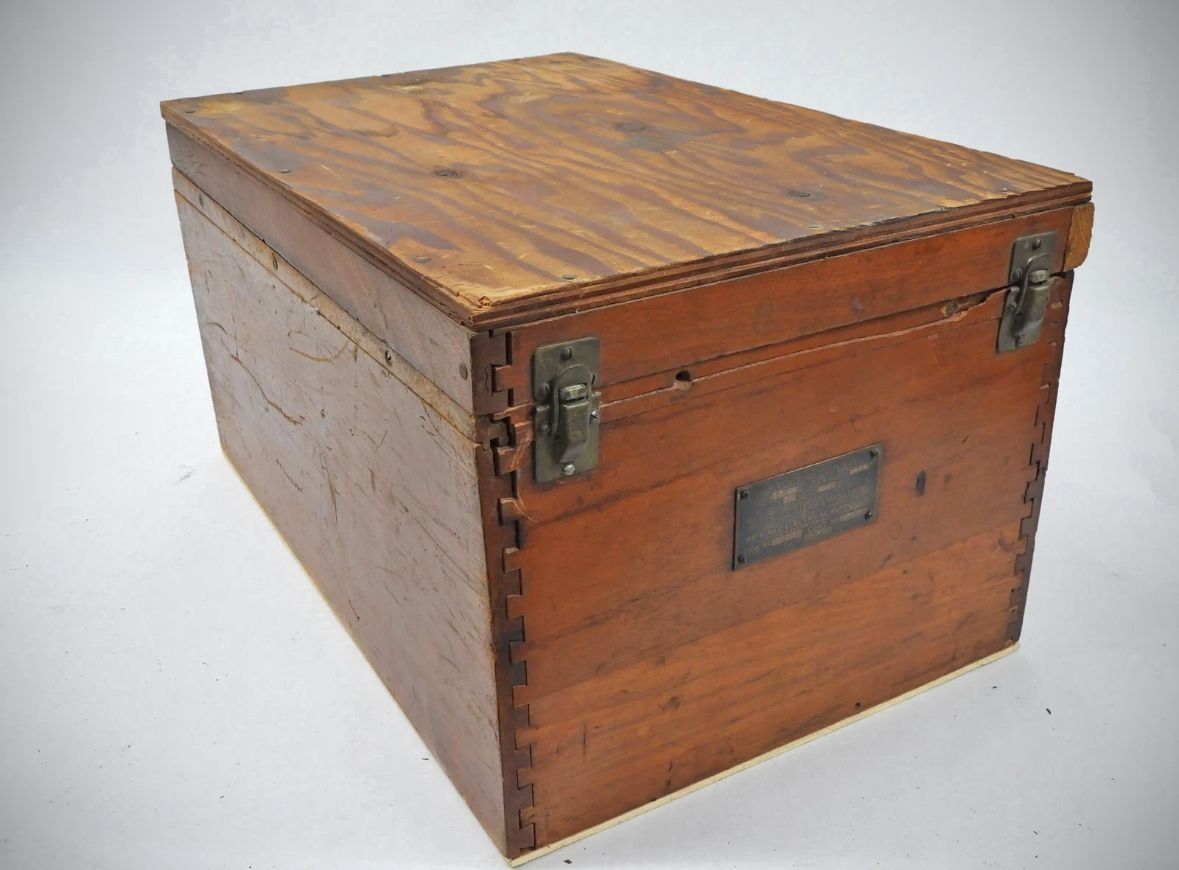
The U.S. Navy Type SE-143 is historically recognized as the first highly successful, mass-produced production standard radio receiver used by the United States Navy. Developed by the Navy Yard's Bureau of Steam Engineering (hence the "SE" designation) and approved in December 1918, it replaced early, marginally acceptable receivers and established a legendary lineage of military and commercial radio gear.
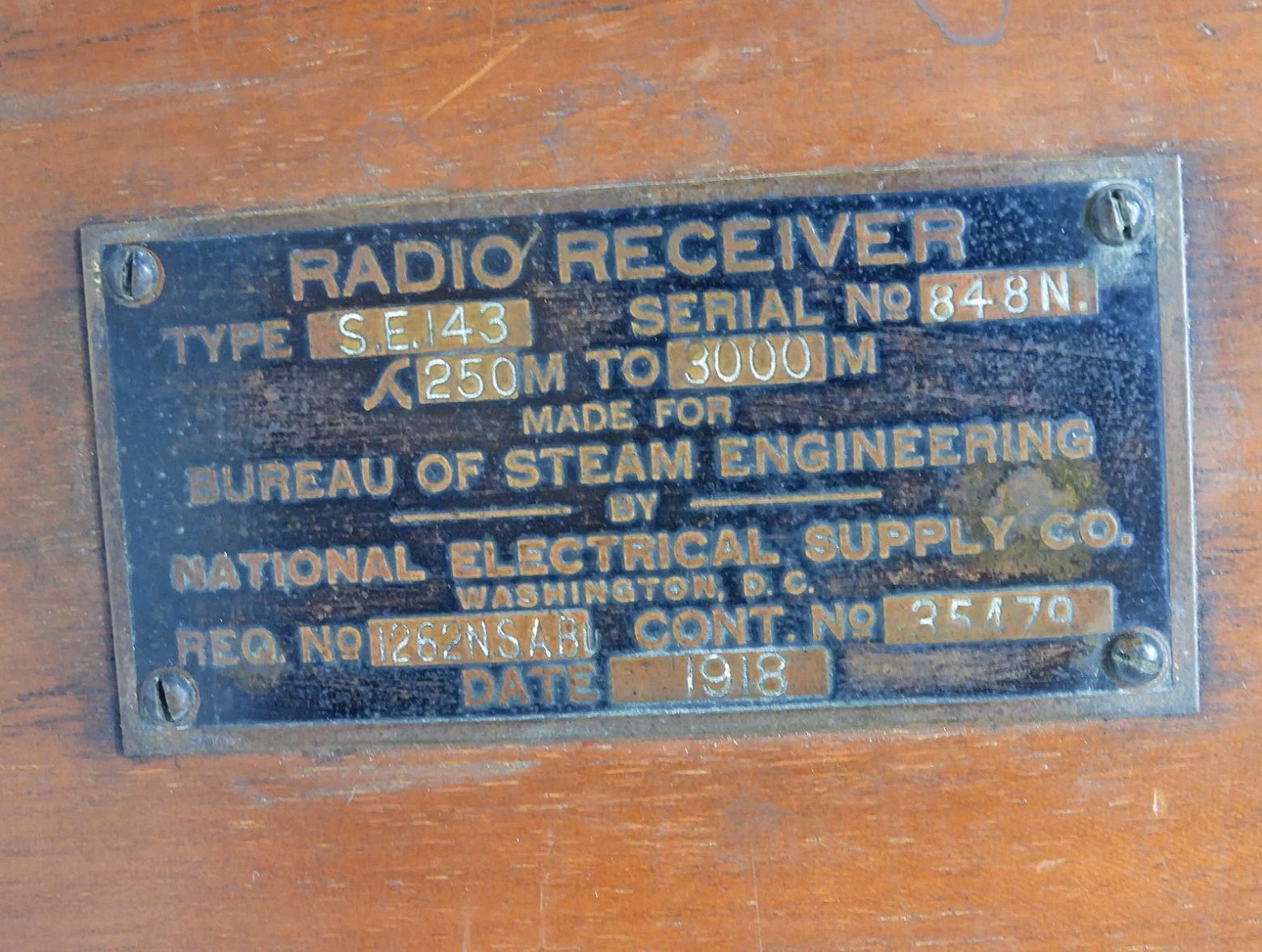
The design was so robust that thousands were manufactured between 1918 and 1920 by companies like the National Electrical Supply Co (not to be confused with National Company), Wireless Specialty Apparatus Co and the Radiomarine Corporation of America (a subsidiary of RCA), eventually serving as the Navy's wartime utility set.
Technical Specifications & Tuning Range
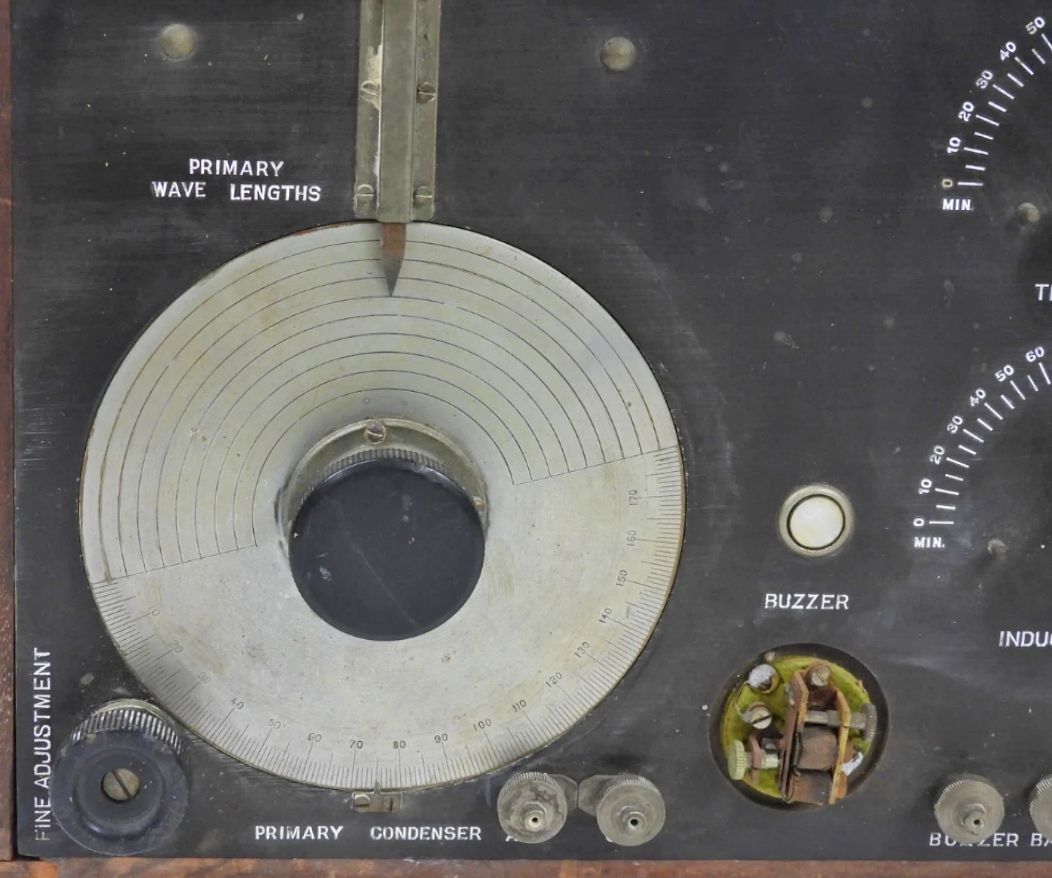
– Primary Tuning Range: Officially rated for 250 to 3000 meters (approximately 100 kHz to 1200 kHz).
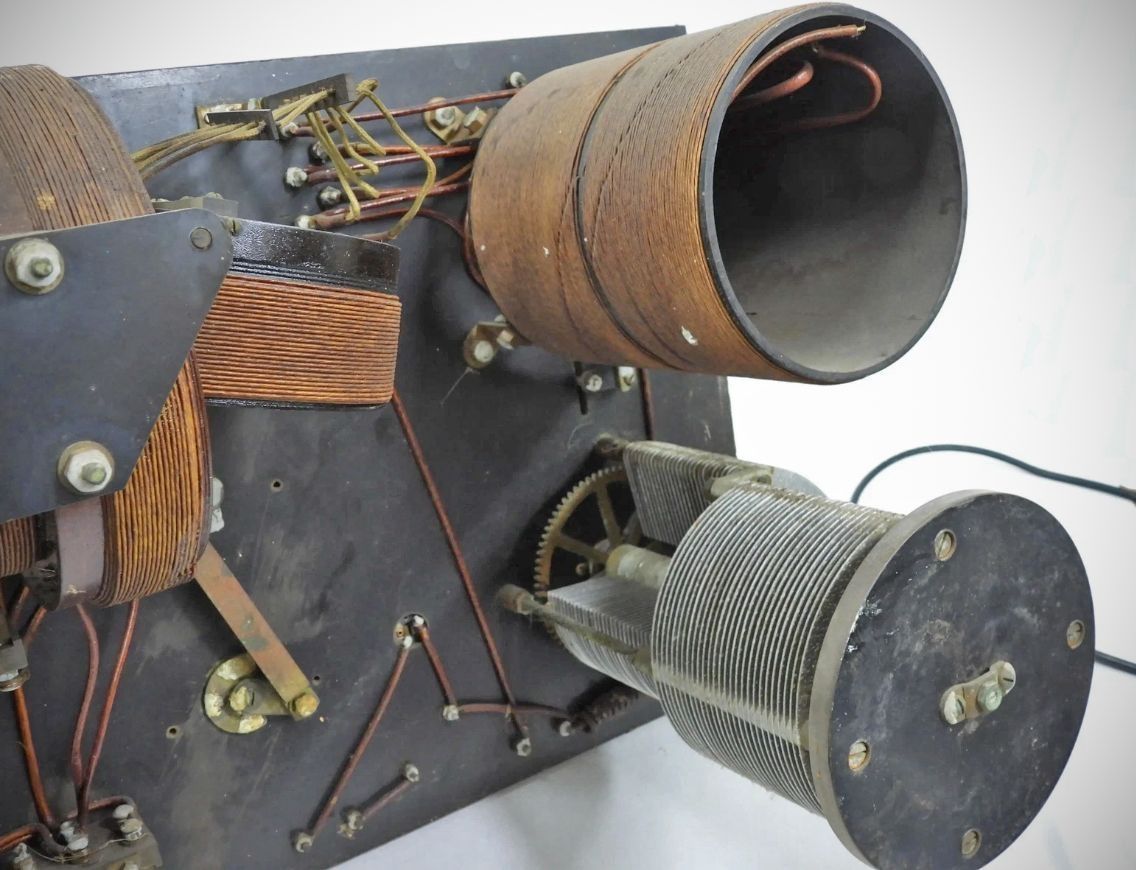
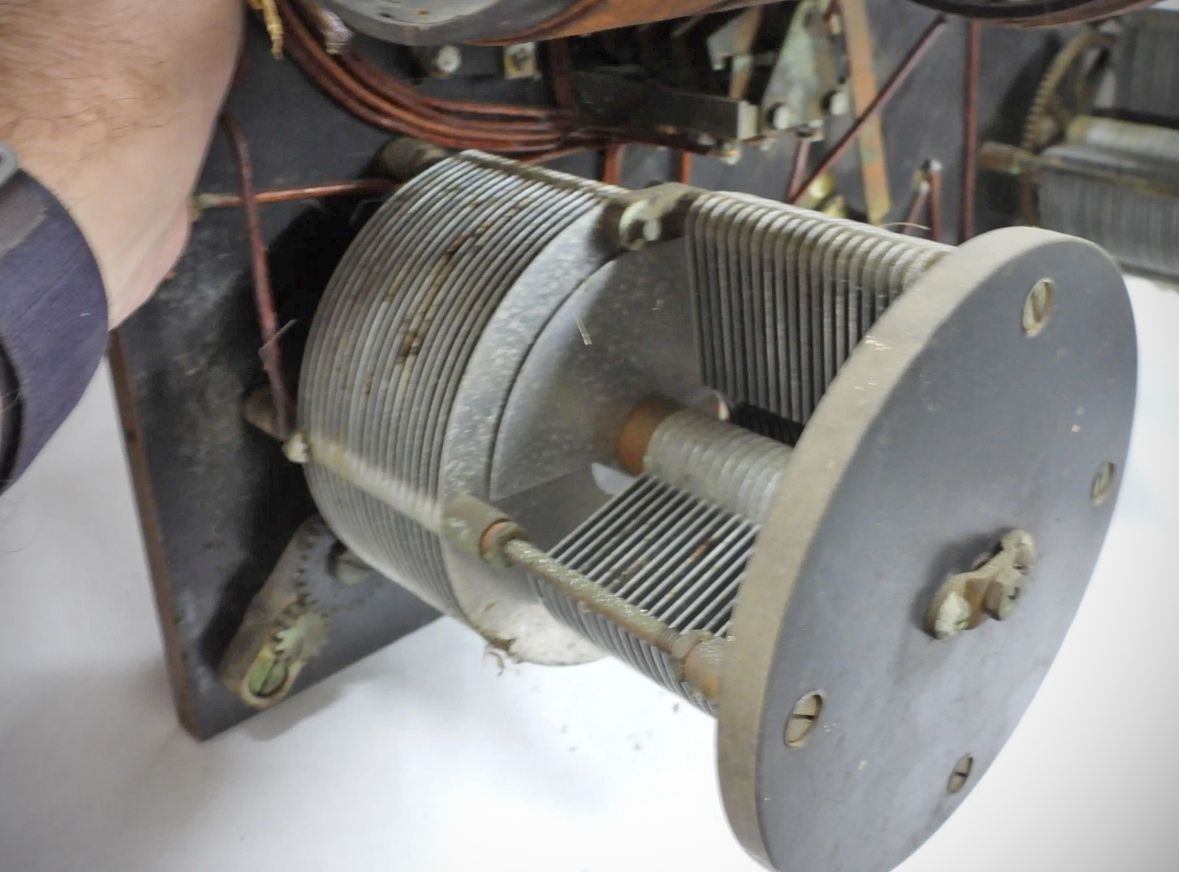
– Circuit Design: It consists of a primary antenna circuit tuned with a series variable air condenser, inductively coupled to a secondary circuit.
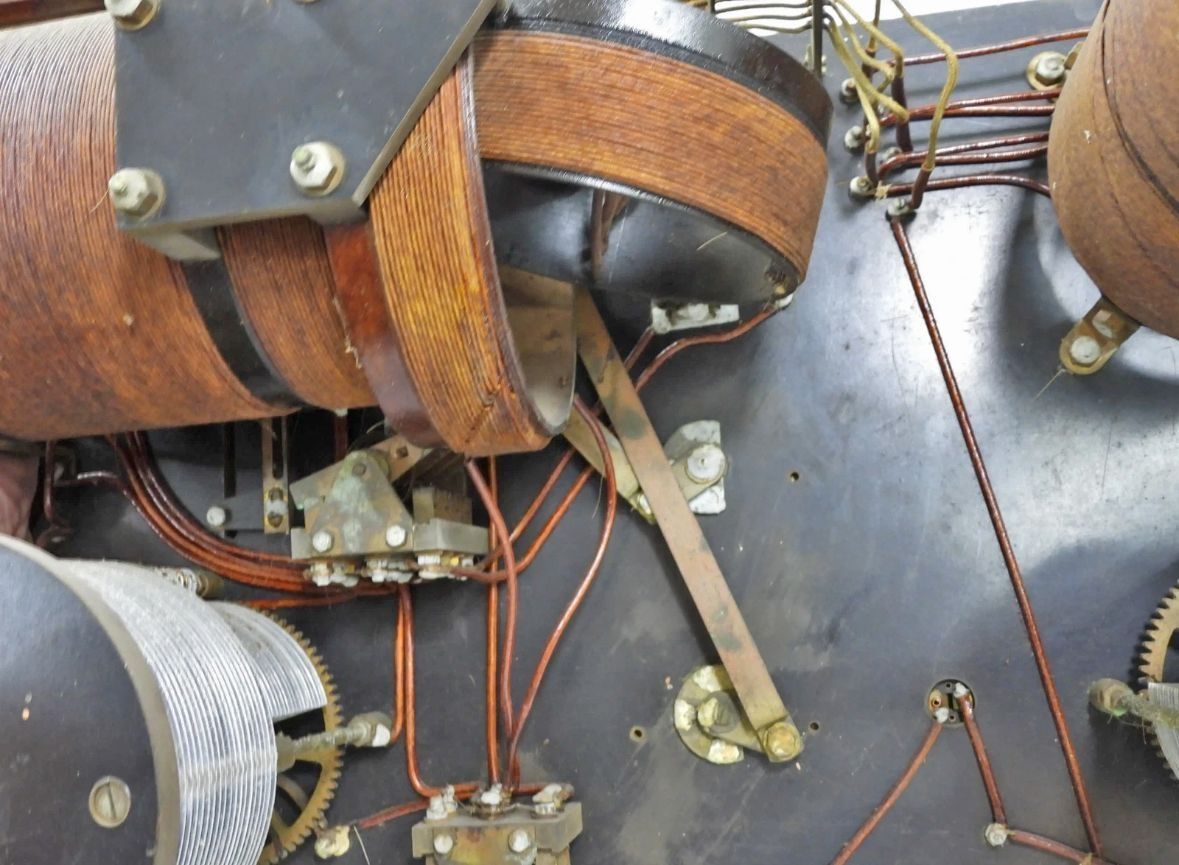
– Inductance Configuration: Primary Inductance: Divided into 3 sections split across 10 distinct taps ranging from 50 to 3,800 microhenries. It utilizes a mechanical "endpoint switch" to automatically disconnect unused coil sections, completely eliminating dead-end or "overhang" power losses.
– Secondary Inductance: Similarly split into 3 sections across 6 taps ranging from 19 to 3,670 microhenries.
Operating Modes
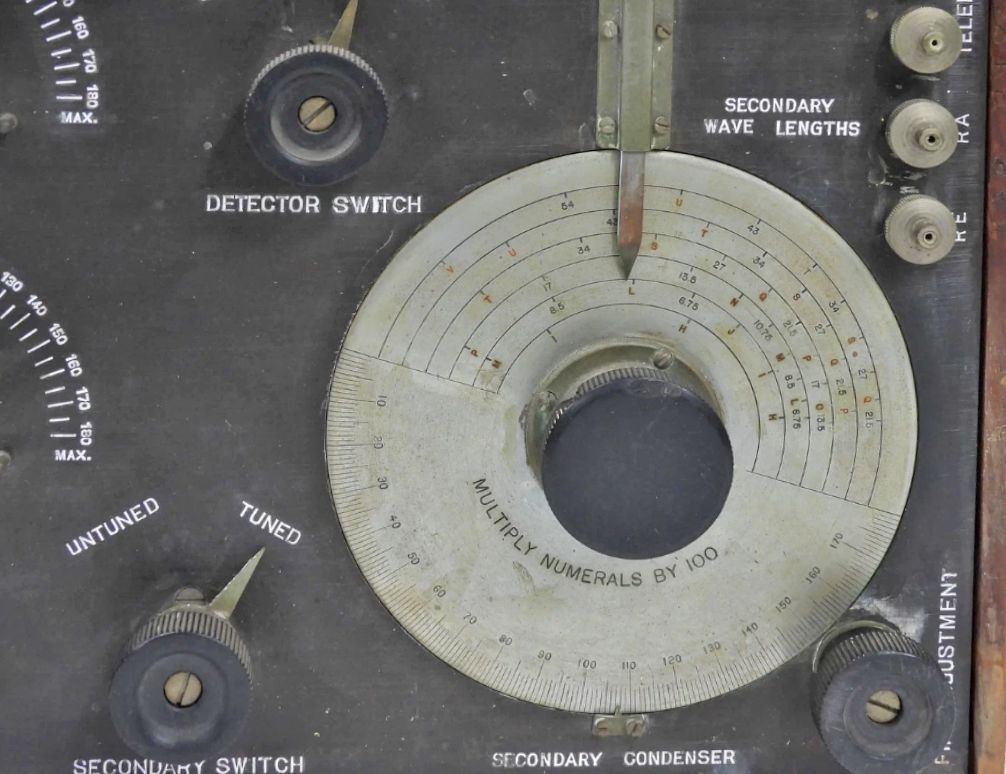
The receiver includes a "Secondary Switch" featuring two distinct operational setups:
1. TUNED: The secondary circuit is shunted by a variable condenser, allowing sharp, selective tuning.
2. UNTUNED: The secondary variable condenser is bypassed, cutting in a separate secondary winding tightly coupled to the primary. This mode behaves like a wide-open filter, allowing operators to rapidly sweep through the primary dial to find stations of unknown wavelengths.
Detector Capabilities & Hookups
True to the era, the SE-143 contains only the tuning circuitry—amplification and detection required external components.
– Crystal Detector: Can be wired directly to the unit for local "spark" (damped wave) reception, requiring no external tubes.
– Audion (Vacuum Tube) Detector: When paired with an external Audion Control Box, the SE-143 transforms into a single-tube regenerative receiver.
The SE-143 features an internal tickler coil variably coupled to the secondary winding. Adjusting this tickler allows the circuit to oscillate, enabling the reception of continuous-wave "arc" (undamped) signals or drastically increasing the sensitivity of spark signals.
Auxiliary Connections: The unit features explicit external binding posts for a localized test buzzer and battery (used to test crystal sensitivity), ground, antenna, tickler, and dual-phone audio outputs.
Legacy & Variations
The SE-143 layout was so efficient that it served as the direct template for the commercial Wireless Specialty Apparatus IP-501, a legendary receiver widely used across transatlantic monitoring stations during WWI. It is also structurally identical to the SE-1220, with the sole variance being that the SE-1220 modified the internal coils to cover medium wavelengths from 300 to 6,800 meters.