Note
Lafayette catalog number 55, p. 68.
QST, Mar 1933, p. 77.
QST, Apr 1933, p. 54 (FB-X or FBX)
QST May 1933, p. 59. (Good internal photo of FB-7 )
Radio News, May 1933, p. 697.
QST, Jun 1933, inside back cover. (use of "true tracking")
Radio News, Aug 1933, p. 105.
QST, Jun 1933, p. 57. (Good internal photo of FB-X )
QST, Jul 1933, p. 79. (first reference to FBX-A)
QST, Sep 1933, p. 59. (first reference to FB-7A)
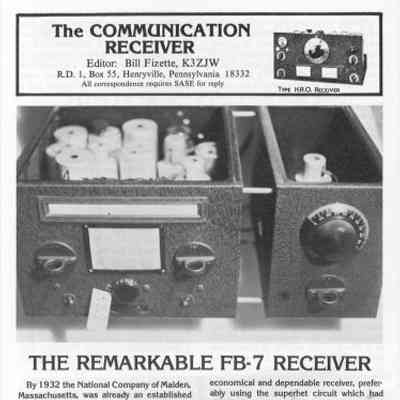
The National FB-7 was a ground-breaking, budget-friendly communications superheterodyne receiver introduced in March 1933 by the National Company of Malden, Massachusetts. Designed by James Millen, it was engineered specifically to bring high-performance "single-signal" technology to everyday amateur radio operators during the hardships of the Great Depression.
Here is a detailed breakdown of the receiver based on the historical documentation:
Design & Build
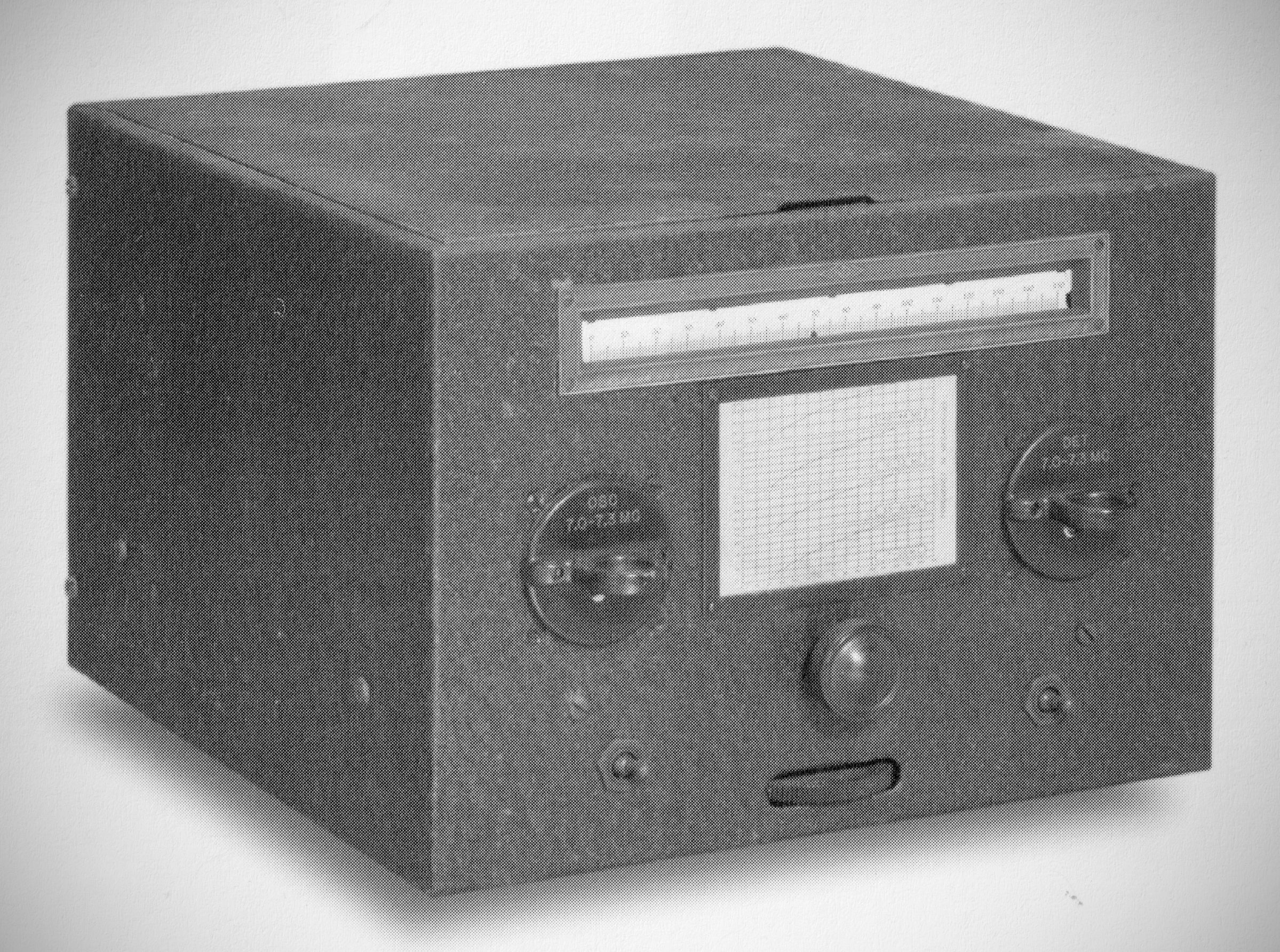
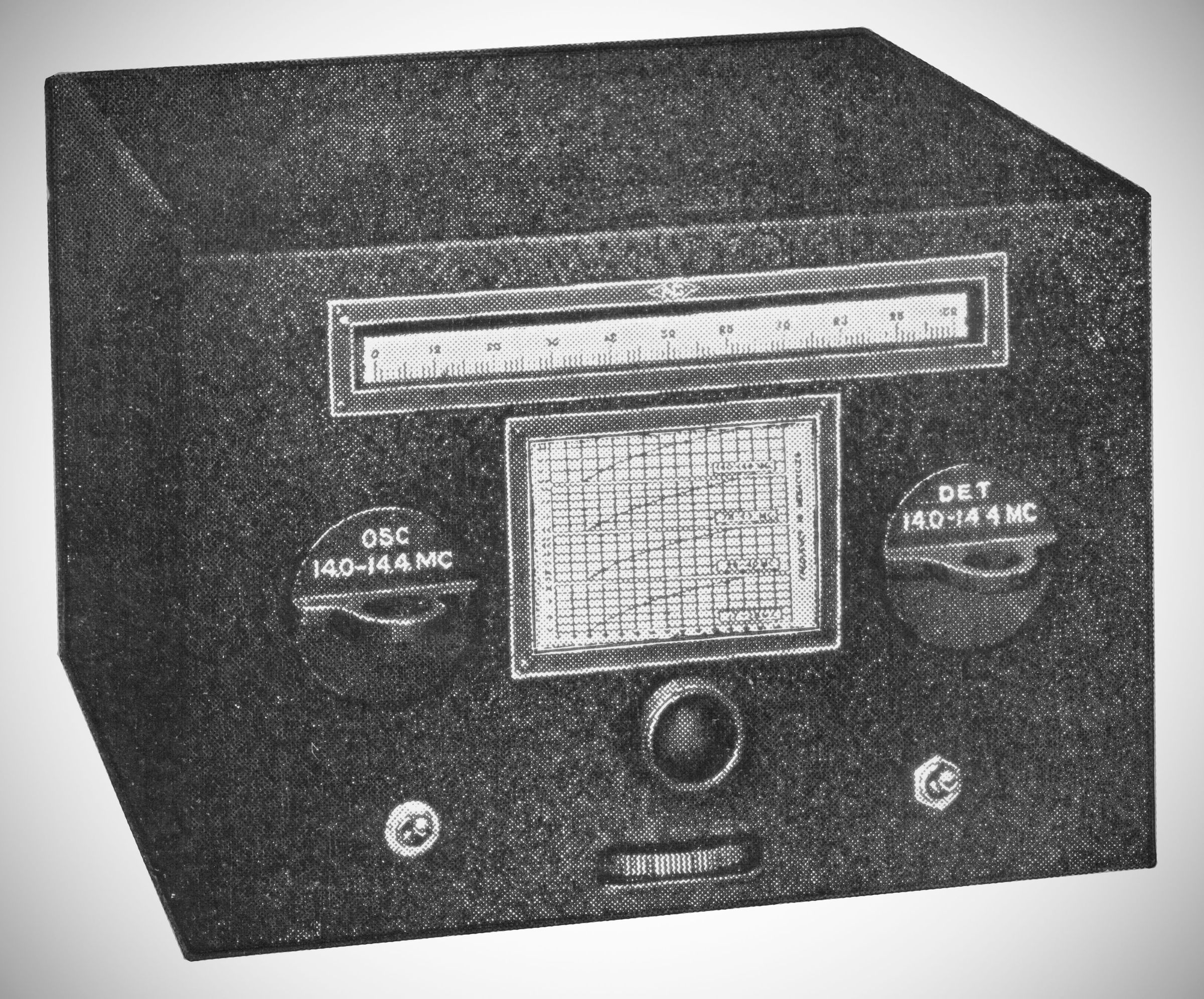
Enclosure: Far from a luxury centerpiece, the finished receiver was housed in a utilitarian, black sheet-metal box measuring 11 1/2 x 12 x 8. The controls and switches on the front panel were completely unmarked.
Tuning & Controls: It featured a single-dial tuning system with a "slide-rule" style VK dial (modified to a 1–150 division scale) borrowed from the older SW-58 receiver. Frequency calibration charts were mounted directly on the front panel. It also included a calibrated gain control to approximate signal strength.
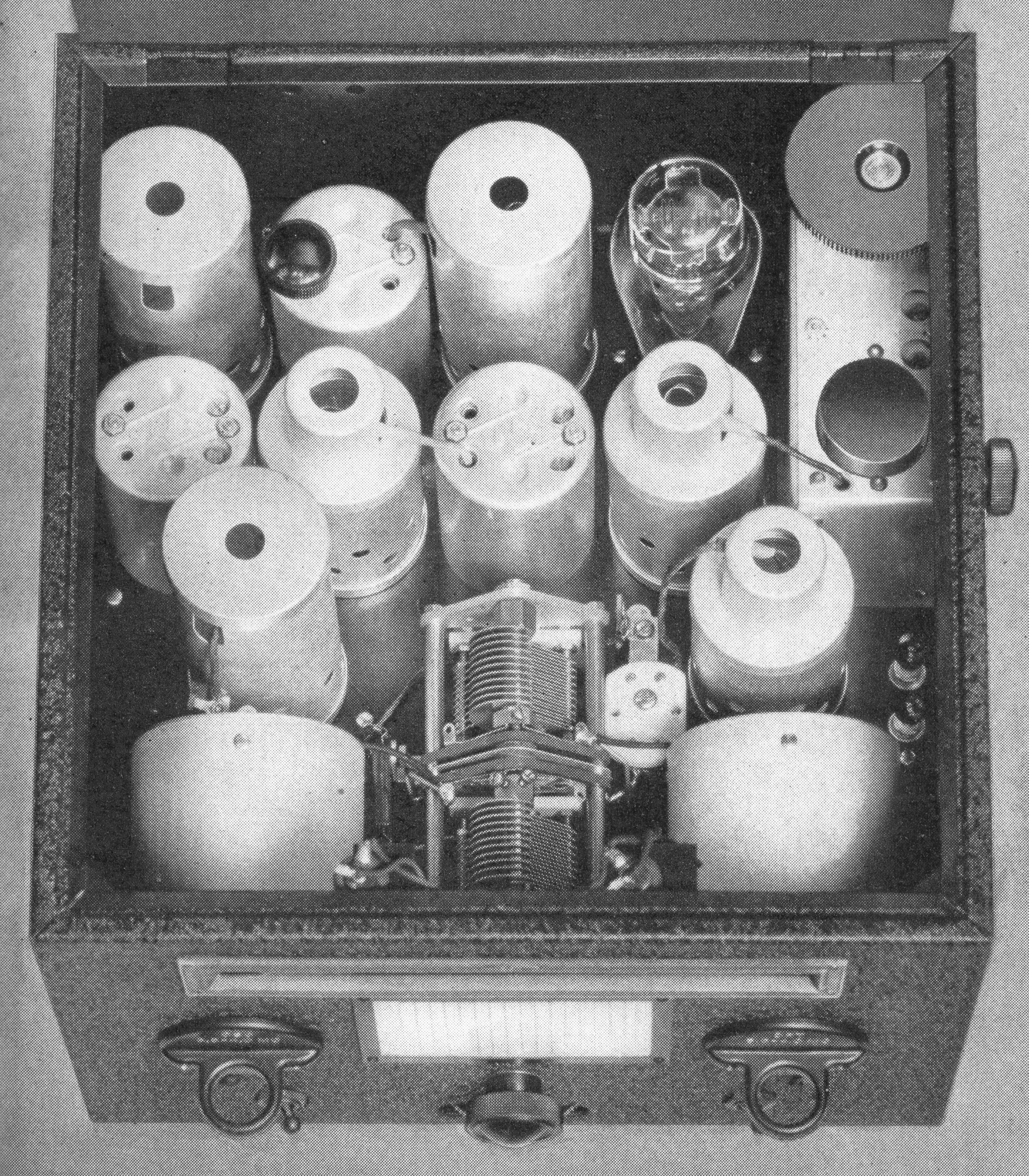
Coils: The FB-7 utilized a convenient front-of-panel plug-in coil system. The coils were molded from R-39 material and utilized an air variable trimmer condenser mounted inside to ensure "true-tracking" and drift-free operation.
Technical Architecture
Circuitry: It was a superheterodyne receiver utilizing a 500 kc intermediate frequency (IF) system derived from National's high-end AGS receiver.
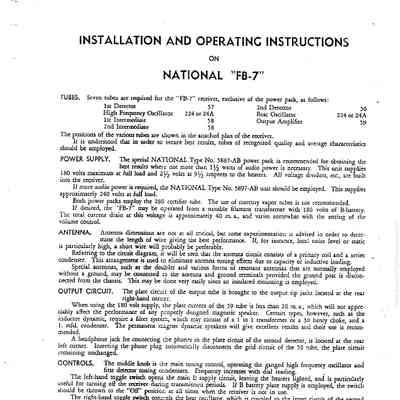
Tube Lineup: The schematic for the enhanced variant (FBXA) shows a multi-tube design utilizing then-modern tubes, including a 57 first detector, 58 IF amplifiers, a 56 oscillator/detector, a 59 audio output stage, and 224 tubes in the oscillator circuits.
Audio & Power: True to National’s engineering philosophy at the time, the receiver required an outboard, separate power pack. It lacked an internal audio output transformer, meaning the operator had to use a common, high-impedance electro-magnetic speaker.
The Lamb Crystal Filter & Variants
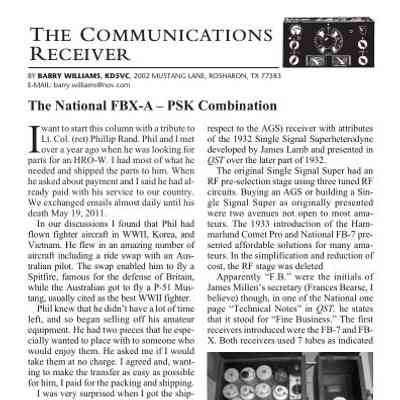
A core selling point of the platform was its compatibility with the quartz crystal IF filter invented by James Lamb, which offered unparalleled selectivity against CW interference. National sold the receiver in a few staggered variants based on component upgrades:
FB-7 / FBX: The original models. The base FB-7 used standard "Litzendraht" IF transformers with compression trimmers. The "X" denoted the inclusion of the Lamb crystal filter.
FB-7A / FBXA: The upgraded "A" versions introduced air-dielectric tuned IF transformers, which can be visually identified by adjustment holes positioned $180^\circ$ apart on opposite sides of the top of the IF cans.
Frequency Coverage & The Preselector
The receiver launched with coils available for the 160, 80, 40, and 20-meter amateur bands, with 10-meter coils joining the lineup later in 1933 to expand total coverage from 1,500 kc to 33,000 kc.
Because the basic FB-7 lacked an RF preselector, it suffered from severe image interference on higher frequencies like 7 Mc and 14 Mc (20 meters). To solve this, National quickly released the matching PSK Preselector. This $6^" \times 8^" \times 12^"$ outboard box bolted to the side of the FB-7, dramatically improving image suppression, weak-signal response, and sensitivity.
Historical Legacy
Selling for an incredibly low initial base price of $33.00 (minus tubes, coils, and power supply), the FB-7 allowed cash-strapped hams to buy a highly stable, advanced superhet and upgrade it over time as their finances allowed. Though it was largely replaced by more integrated receivers like the legendary National HRO by 1937, both the FB-7 and its rare PSK preselector remain highly prized collector's items today.
National FB-7 Coil Ranges
Catalog No.
AB 20 20 Meter Band Spread
AB 40 40 Meter Band Spread
AB 80 80 Meter Band Spread
AB 160 160 Meter Band Spread
FB AA 34,000 to 18,000 Kc
FB A 19,500 to 11,400 Kc
FB B 11,700 to 7,000 Kc
FB C 7,300 to 4,000 Kc
FB D 4,200 to 2,400 Kc
FB E 2,500 to 1,500 Kc
FB F 1,500 to 900 Kc
References
Review. Radio News, Oct 1933, p. 211.
Brief description, (FB-7A). Radio News, Apr 1934, p. 609.
National's notes, QST, Mar 1934, p. 65.
National's notes, QST, Apr 1934, p. 63.
National's notes, QST, Sep 1934, p. 65. (new crystal and holder)
Good information, QST Oct 1934, p. 75.
National's notes, QST, Mar 1935, p. 77. (reference to the FBX "since 1932.")
Reference to the FB-7 being retired, QST, Jun 1937, p. 71.