Note
QST, Aug 1936, p. 62. (First reference to NC-100)
Radio Craft, Dec 1936, p. 357.
QST Jun 1938. ("XA" introduced)
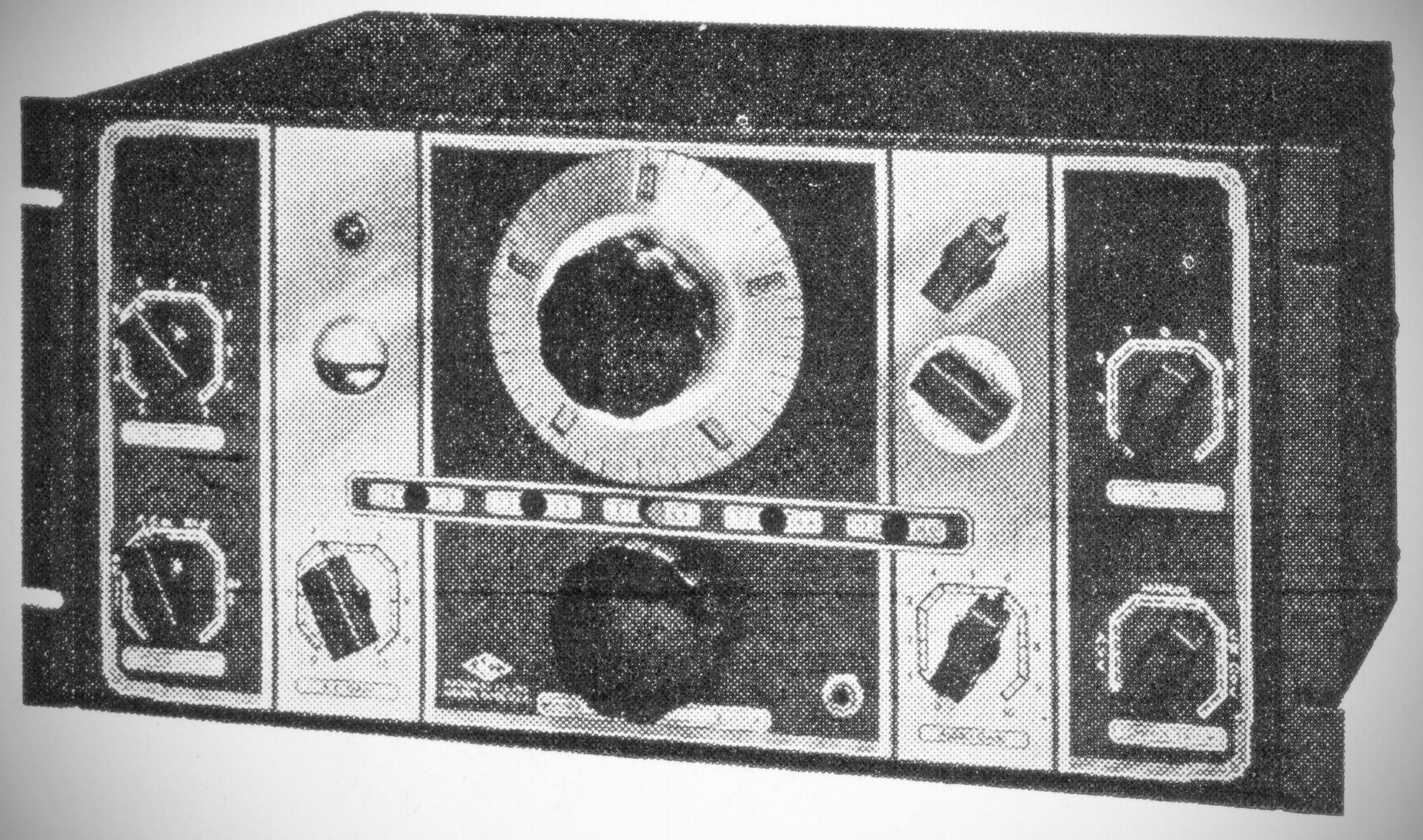
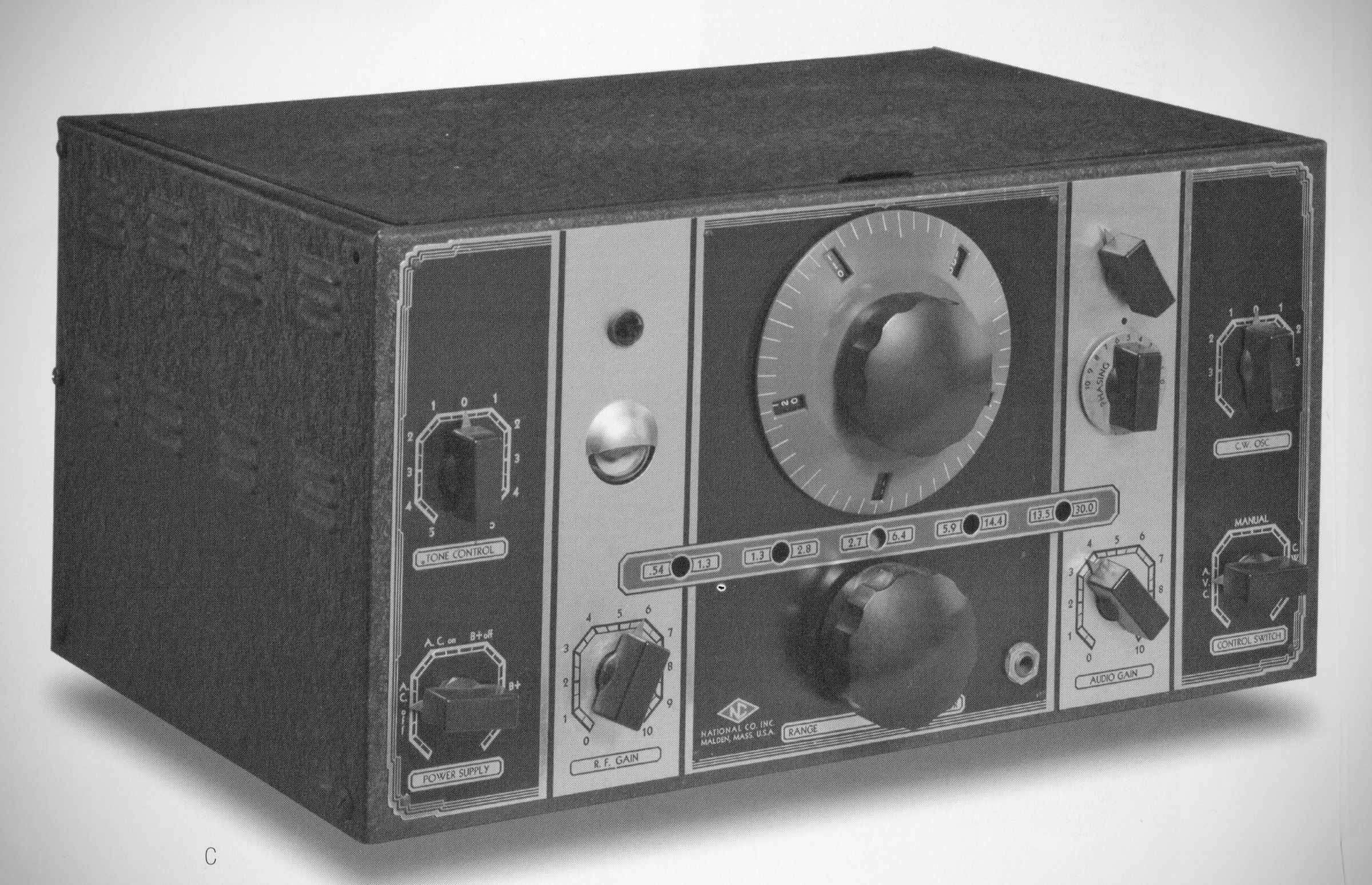
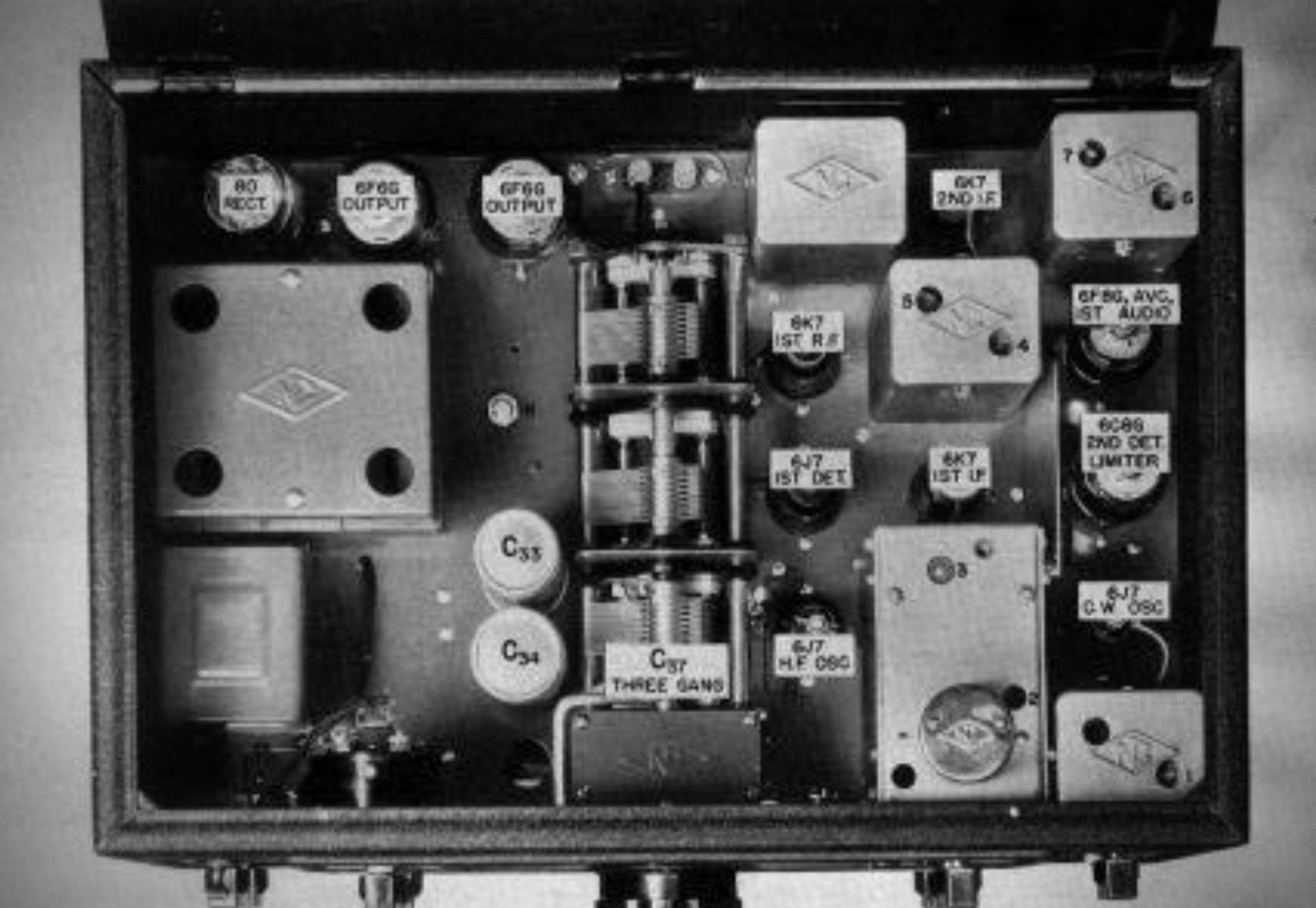
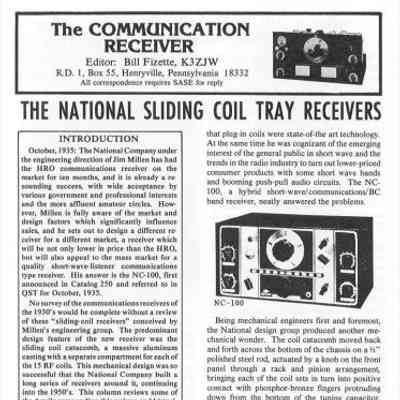
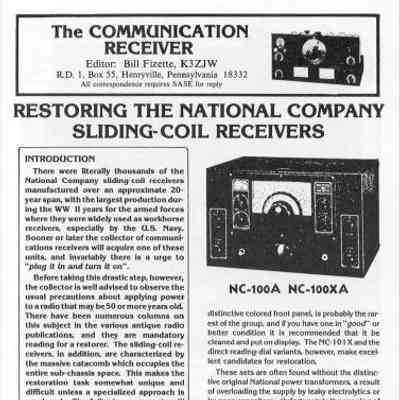
National advertised the NC-100 as the perfected superhet. The 12-tube receiver covered .54-30 MHz in five ranges using a moving coil catacomb and had a built-in power supply. With the addition of the optional crystal filter, it became the 1OOX.
The National NC-100, introduced in 1936 by the National Company of Malden, Massachusetts, is one of the most mechanically ingenious communication receivers ever built. While most radios of the era used "band switches"—wafer switches that clicked between different sets of coils—National took a completely different, almost over-engineered approach to solve the problem of signal loss and stray inductance.
They called it the Moving Coil design (often referred to as the Moving Coil Catacomb").
The concept was first described by it's inventor, James Millen, in the December 1936 issue of QST.
The "Moving Coil Catacomb"
The heart of the NC-100 is a massive, heavy cast-aluminum tray (the "catacomb") that sits in the bottom of the chassis. Instead of rotating a switch to connect different coils to the tuning circuit, the NC-100 physically moves the coils themselves.
How it Works:
1. The Rack and Pinion: When you turn the large band-change knob on the front panel, a rack-and-pinion gear system slides the entire aluminum tray horizontally across the bottom of the radio.
2. Direct Contact: Each band has its own shielded compartment within the tray containing the necessary RF and oscillator coils.
3. Gold-Plated Pins: As the tray slides into position for a specific band (e.g., the 20-meter band), a set of heavy-duty, spring-loaded, gold-plated contact pins "plugs" the coils for that specific band directly into the tuning condenser and vacuum tube circuits.
Why go to all that trouble?
In the 1930s, high-frequency performance was often hindered by "long leads"—the wires connecting a band switch to the coils. These wires acted like tiny antennas and inductors, causing drift and reducing sensitivity.
– Zero Lead Length: By moving the coils directly under the circuit and "plugging" them in, National achieved the shortest possible connection.
– Superior Shielding: Each band's coils were isolated in their own aluminum cell, virtually eliminating interference from other bands.
– Mechanical Precision: The "thunk" of the tray locking into place gave the NC-100 a feeling of extreme ruggedness. It felt like a piece of naval artillery rather than a consumer radio.
NC-100 Variations
– NC-100: The original "Magic Eye" tuning version with a built-in speaker.
– NC-101X: The ham-band only" version.
– NC-100A: Uses a direct-reading dial and and an S-meter instead of a tuning eye tube. |
– NC-100ASD: The military version (WWII era), finished in wrinkle-black and built for extreme durability.
References
Description. Radio News, Sep 1936, p. 145.
A few notes on the NC-100, QST Jun 1938, p. 55.
National's Notes, QST, Mar 1940, p. 73.
A few notes on the NC-100, QST Aug 1941, p. 55.