Note
QST, Nov 1940, pp. 60–61.
Lafayette catalog number 87 (New York), p. 59.
QST, Feb 1945, inside back cover.
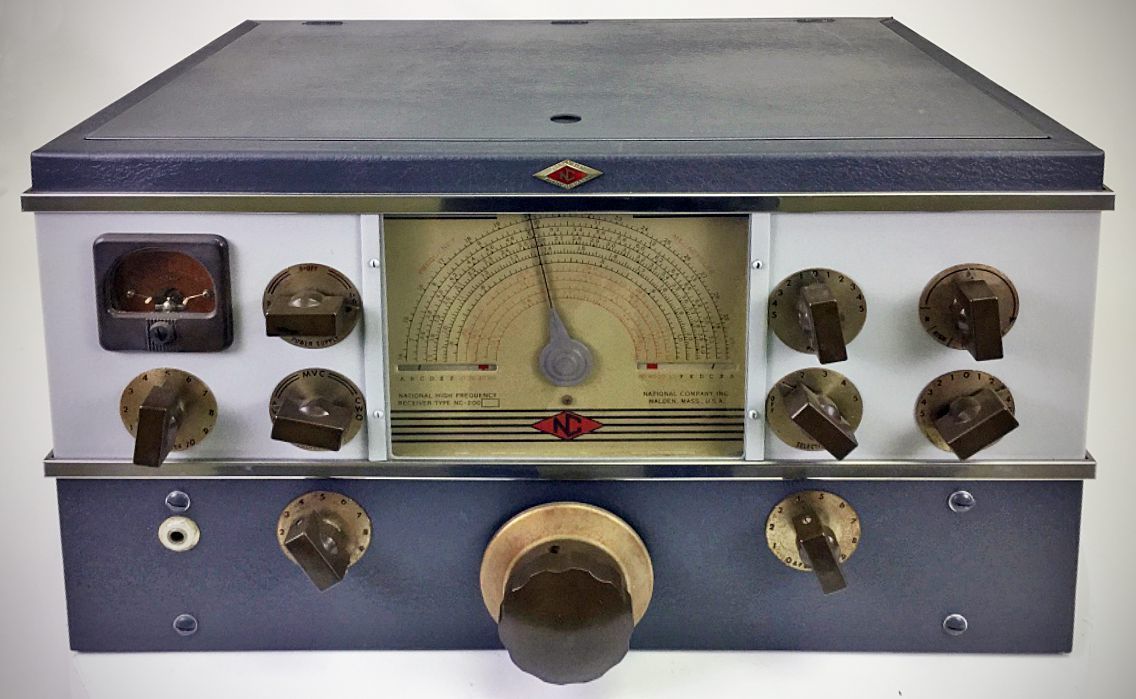
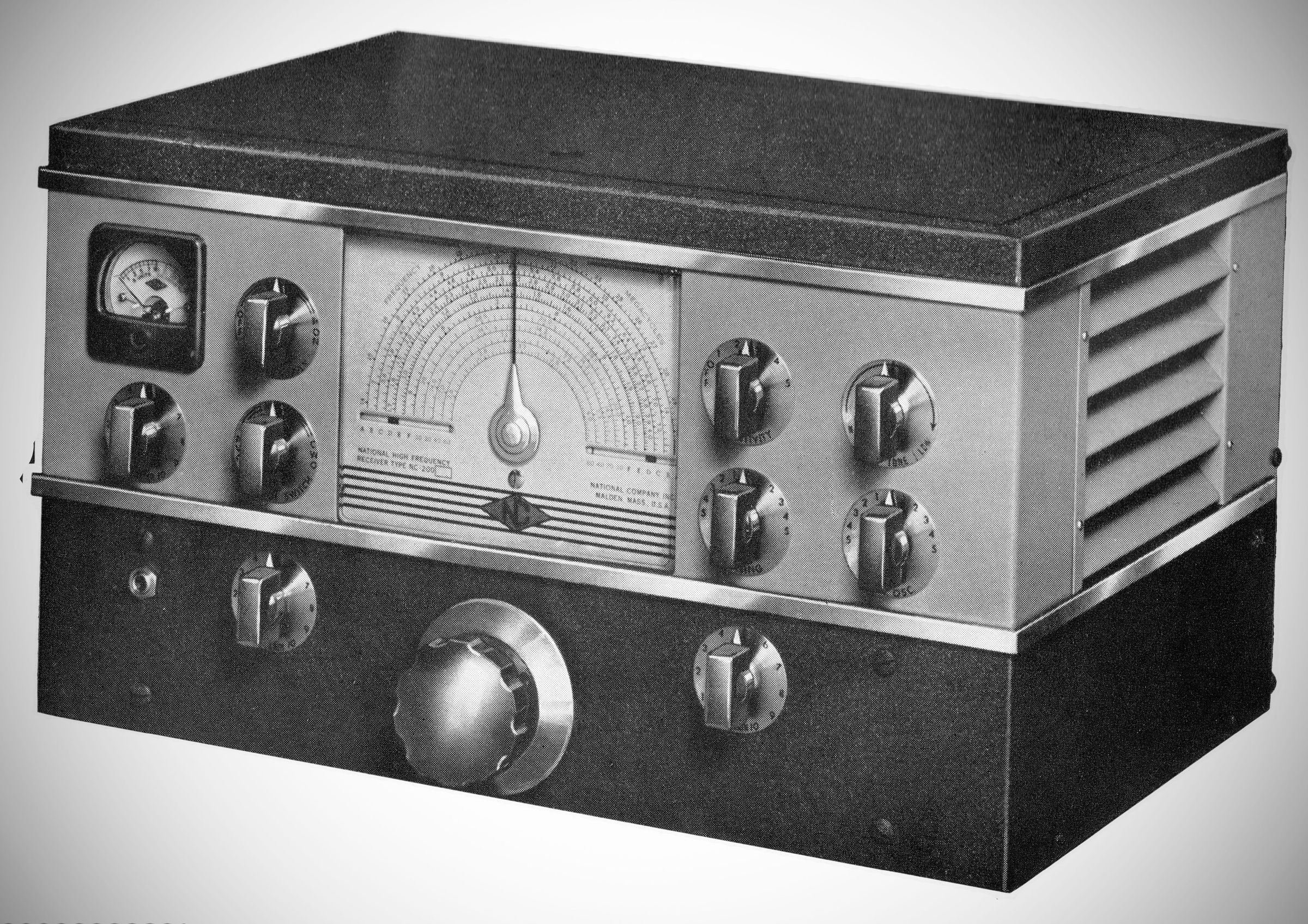
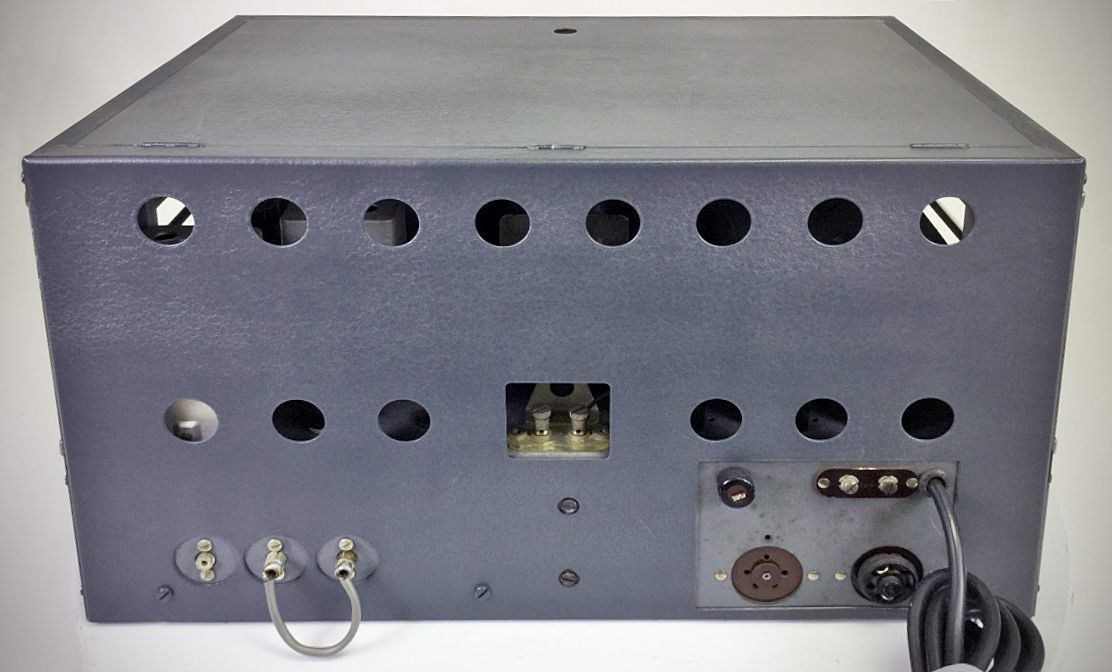
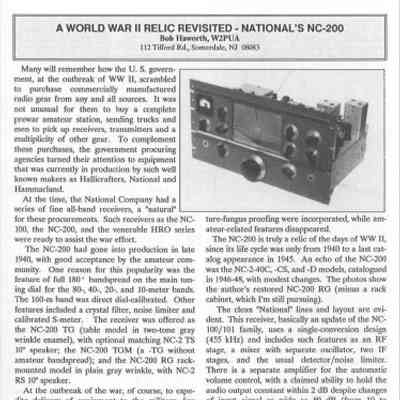
The National Company NC-200 is an all-band communications receiver that went into production in late 1940 and had a lifecycle spanning until 1945. It saw significant use during World War II when the U.S. government purchased commercially manufactured amateur radio gear to support the war effort.
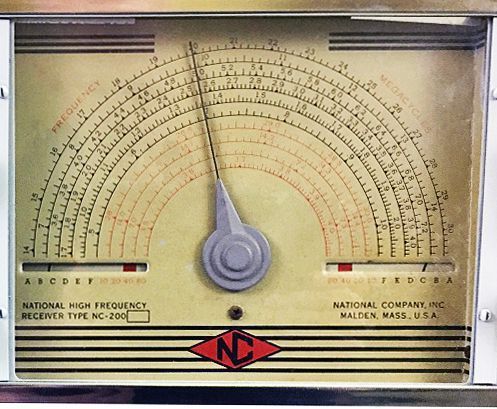
The NC-200 covered 0.49-30 MHz in six bands. Four more bands were dedicated to band spreading the 80, 40, 20, and 10 meter amateur bands. The 12-tube receiver had a crystal filter.
Single-conversion design with a 455 kHz intermediate frequency and It features an RF stage, a mixer with a separate high-frequency oscillator, two IF stages, a detector/noise limiter, and a separate amplifier for the AVC.
Tube Lineup:
– RF Amp: 6SK7
– 1st Detector (Mixer): 6K8
– HF Oscillator: 6J5
– 1st IF: 6K7
– 2nd IF: 6SK7
– 2nd Det/Limiter: 6C8G
– AVC Amp: 6SJ7
– CW Oscillator: 6SJ7
– Audio Inverter: 6F8G
– Audio Output: Uses push-pull 6V6 tubes to deliver 8 watts of audio output.
– Rectifier: 5Y3G
Frequency Range: Covers 490 kHz 30 MHz across ten total bands. This includes six standard medium and shortwave bands, plus four specialized amateur bandspread settings.
Bandspread: Offers a full 180° bandspread on the main tuning dial for the 80-, 40-, 20-, and 10-meter amateur bands, while the 160-meter band is direct dial-calibrated.
A unique electromechanical mechanism designed by James Millen's team. Pulling the main tuning knob outward disengages it from normal tuning, allowing the operator to rotate it to change bands and select the bandspread functions. Pushing the knob back in engages standard tuning for the selected band.
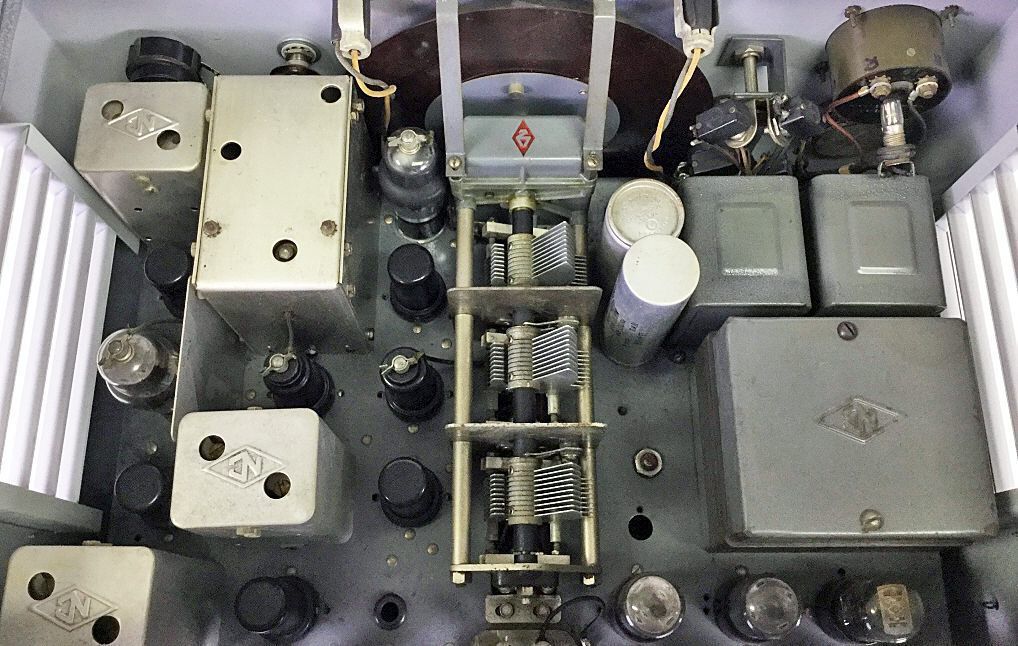
Sliding-Coil Catacomb: An advancement of the NC-100 architecture, the RF section utilizes a massive, movable aluminum casting shaped like a rectangular honeycomb.
Protruding "dagger pins" on the moving catacomb make a direct, wiping connection to the rigidly chassis-mounted main tuning capacitor, minimizing lead lengths to an absolute minimum for peak performance.
Shielding & Efficiency: Each cell houses the individual coils, air trimmers, and padder capacitors for a specific circuit, providing full four-sided shielding. The entire catacomb moves laterally under the chassis on a large support rod using a rack-and-pinion driver.
The receiver is equipped with a five-position crystal filter in the IF section, a calibrated S-meter, an automatic noise limiter, a phono input, and a heavy-duty built-in power supply utilizing two-choke filtering. Its robust AVC system was rated to keep the audio output stable within 2 dB, even when handling input signal variations as wide as 80 dB (10 to 100,000 µV).
References
National's Notes: QST, Sep 1940 p. 49.
National's Notes: QST, Oct 1940 p. 81.
National's Notes: QST, Aug 1941 p. 55.