Note
First mention. A few notes: QST, Nov 1945, p. 69.
Concord catalog 4-46 (1946), p. 112.
Radio News, Apr 1946, p. 17.
Lafayette catalog number 88 (1947, copyright 1946), p. 97.
Allied catalog 1948, p. 157. (info)
Lafayette catalog number 89, p 174.
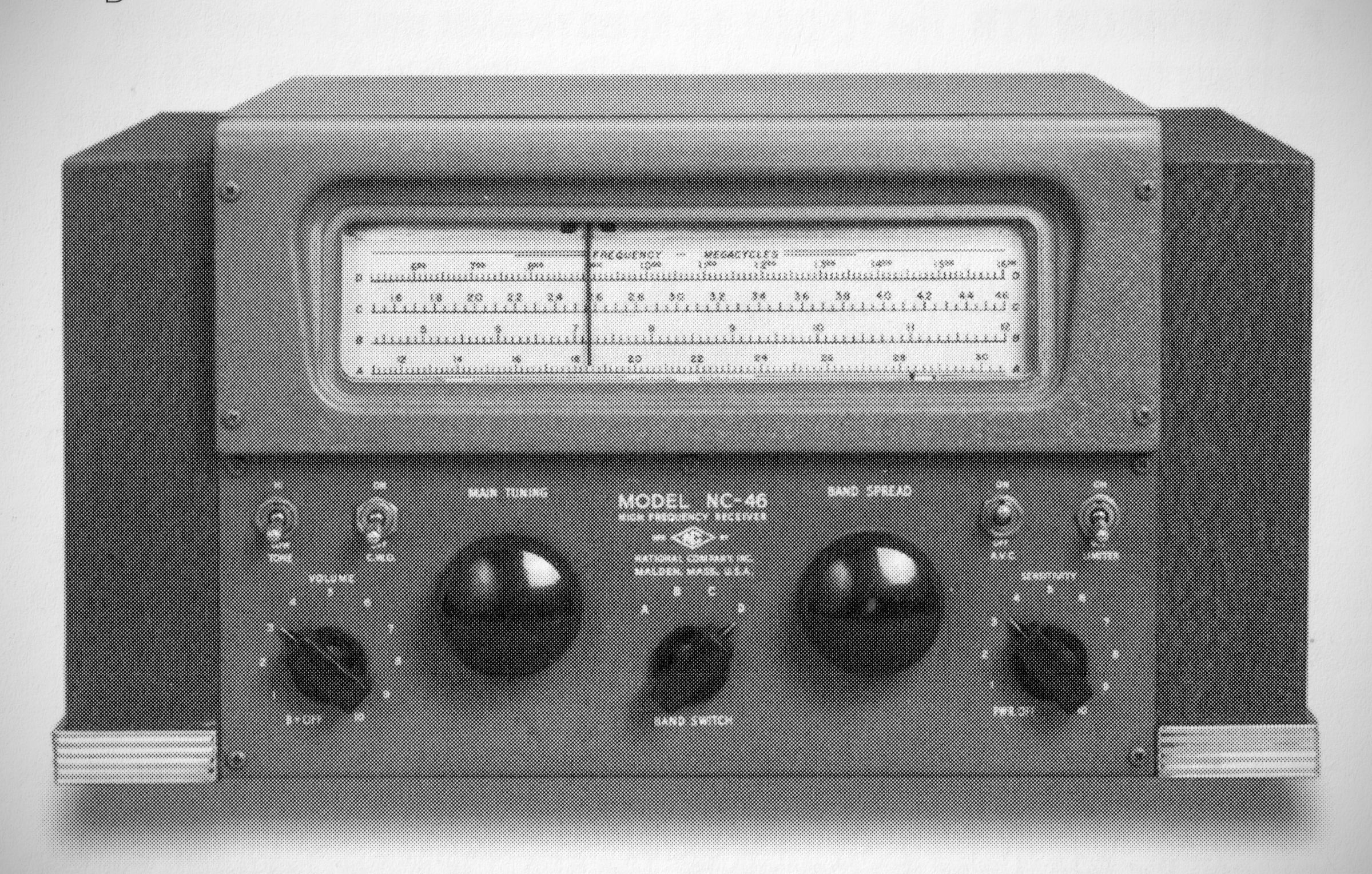
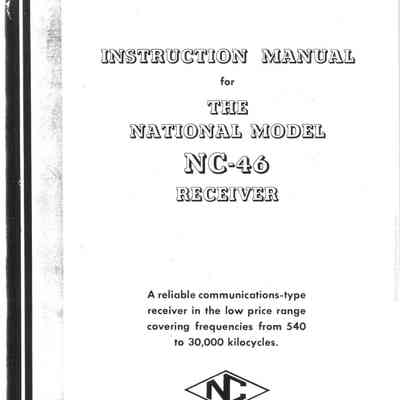
National's pre-war NC-44 and war-years' NC-45 evolved into the NC-46 as the company joined the rush to bring a moderately priced receiver to the post World War II marketplace. The 10-tube, single-conversion set (455 kHz IF) covered 0.55-30 MHz in four bands. It had an AC/DC power supply, AVC, series noise limiter, and 3 watts of push-pull audio.
Unlike some of National’s famed pre-war designs that used a sliding-coil assembly, the NC-46 uses a more economical, conventional rotary band switch.
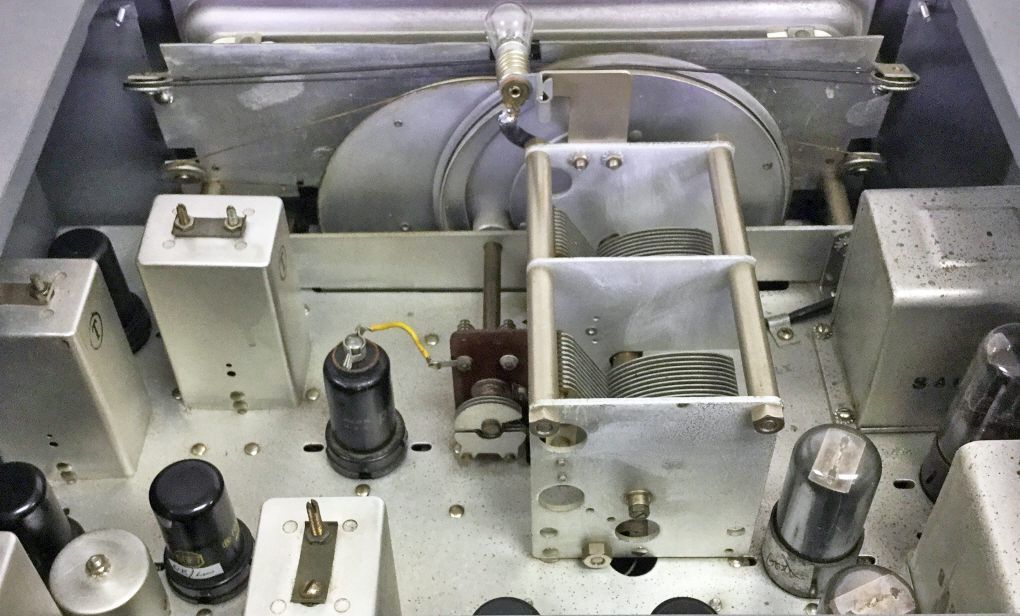
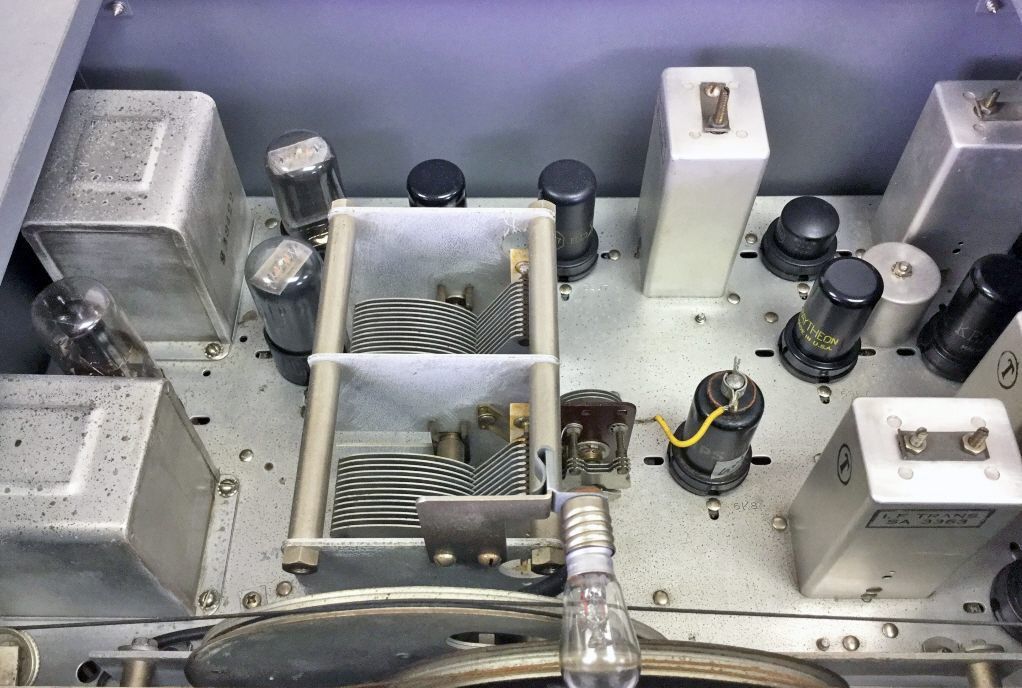
True to National’s reputation, the under-chassis wiring and component placement are meticulous, geometric, and highly organized. The top side of the chassis features a centrally located main tuning capacitor shield assembly with tubes arranged neatly to the side and rear.
Specifications
–Frequency Coverage: 540 kHz to 30 MHz across four bands.
– Intermediate Frequency (IF): 455 kHz.
– Circuit Design: It features a 10-tube superheterodyne circuit but notably lacks both an RF amplifier stage and a crystal filter.
– Audio Output: It utilizes a pair of 25L6 tubes in a push-pull configuration, delivering a 3-watt audio output.
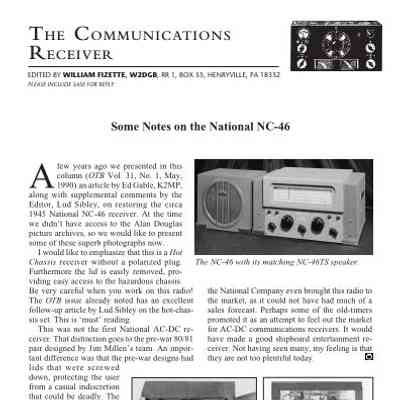
Matching Speaker: The receiver was paired with the National NC-46TS matching external speaker.
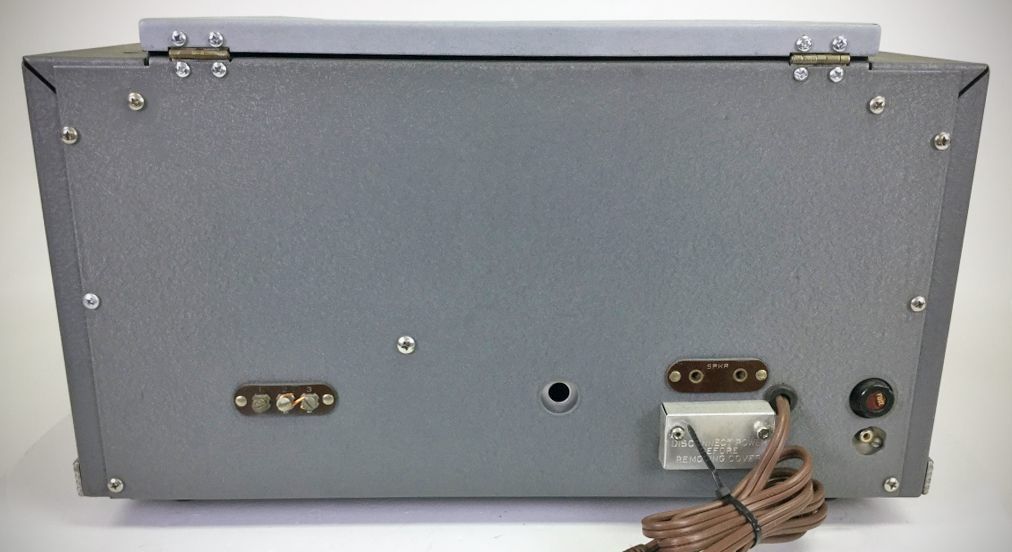
⚠️ CAUTION. The NC-46 is a "hot-chassis" receiver. Because it lacks a power transformer and was built without a polarized plug, the entire metal chassis can become electrically live relative to the ground depending on which way the power cord is plugged into the wall.
⚠️ Compounding this hazard, the cabinet features an easily removable, lift-up lid that provides instant, unprotected access to the internal circuitry. Extreme caution—including the use of an isolation transformer—is highly recommended when servicing or operating this unit.