Note
QST, Oct 1962, inside back cover. "Delivery Dec 30"
QST, Mar 1963, inside back cover. (a few details)
QST, Jan 1964, inside back cover.
QST, Feb 1966, back cover.
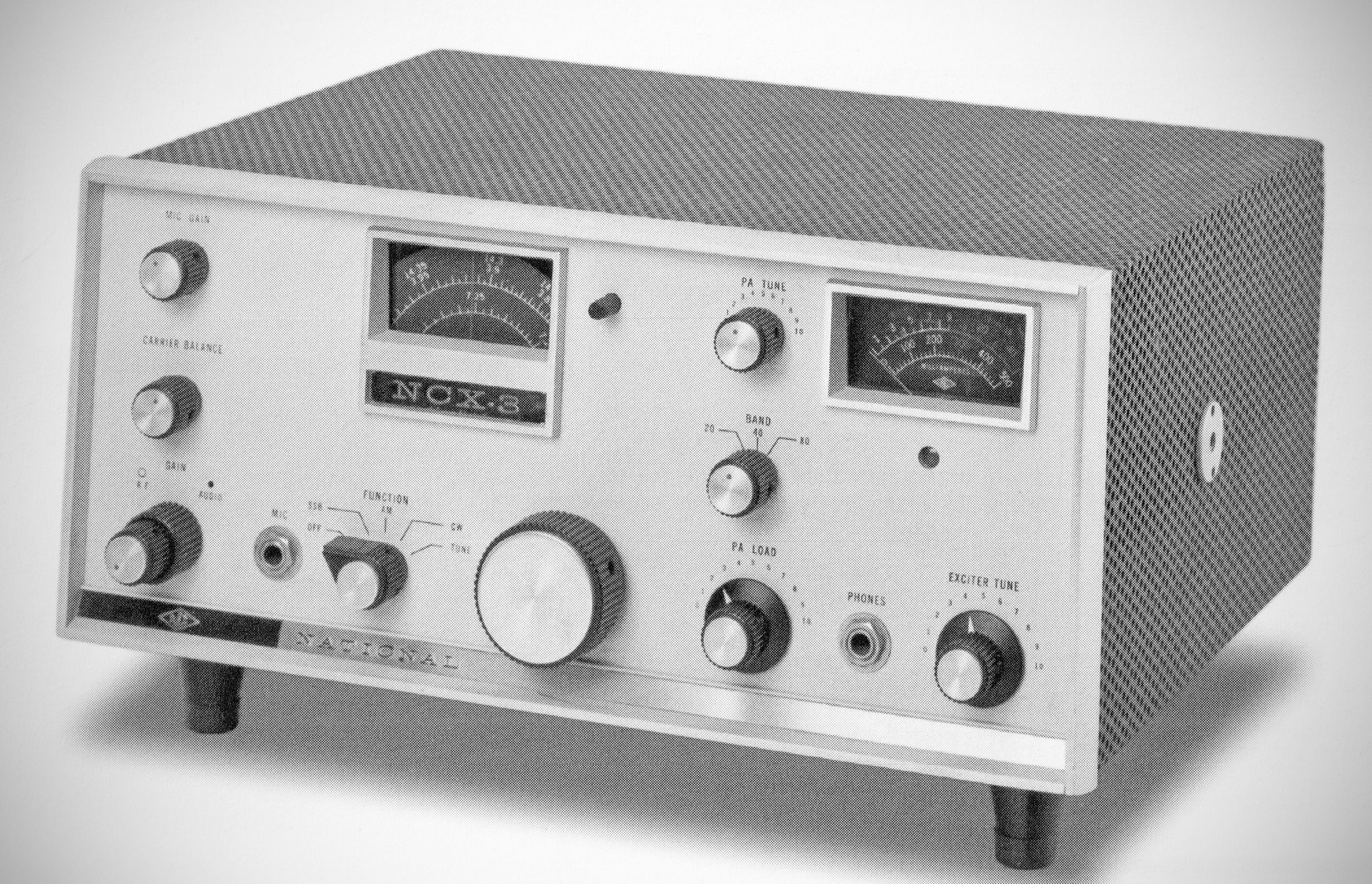
The NCX-3 transceiver covered the 80, 40, and 20 meter bands. It had PTT or VOX operation on SSB and break-in on CW. It was lower sideband on 80 and 40, upper sideband on 20. Power input was 200 watts PEP on SSB, 180 watts on CW, and 100 watts on AM. National's tri-band transceiver used 18 tubes and 6 diodes.
The NCX-3 utilizes a single-conversion superheterodyne receiver architecture.
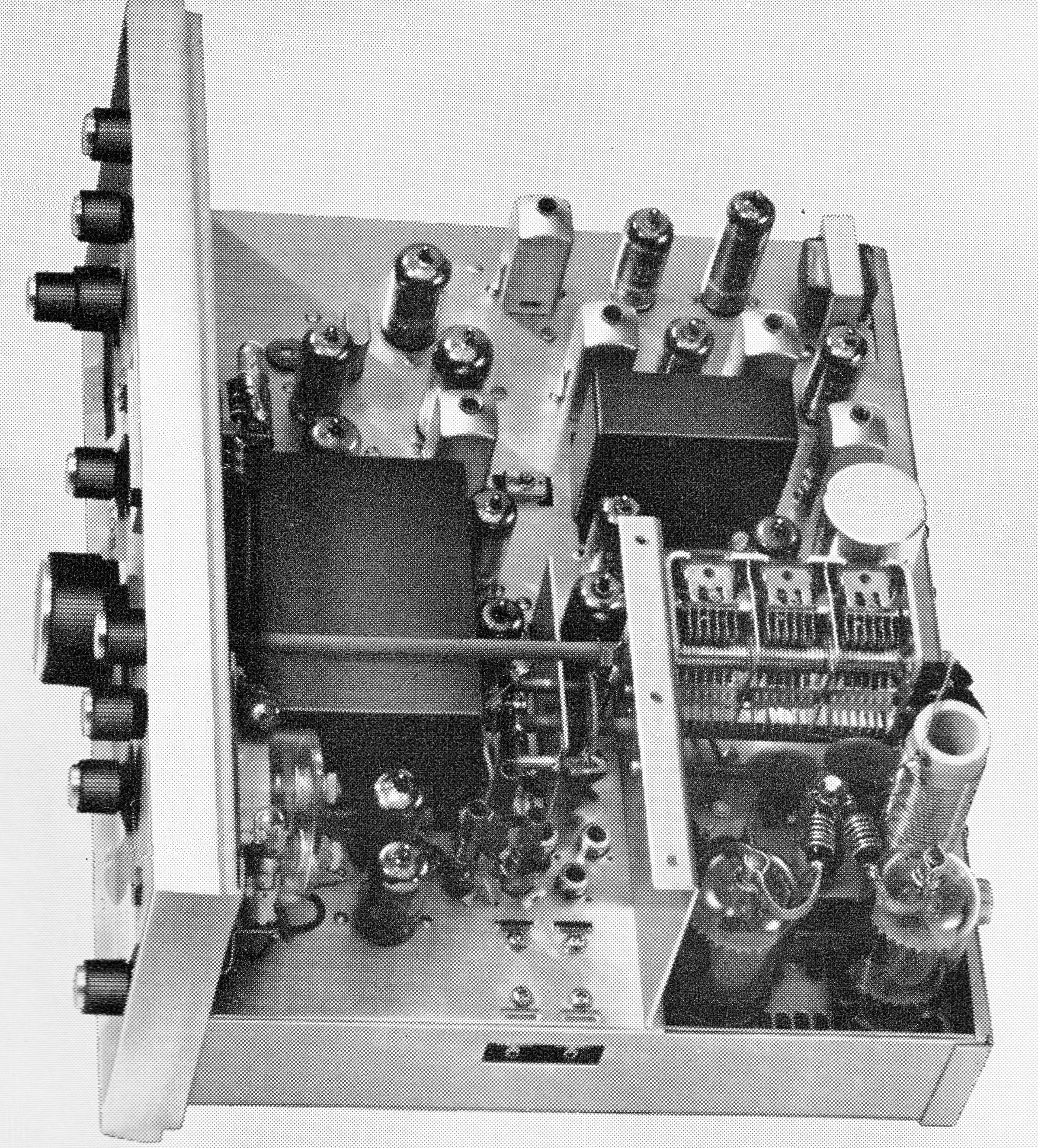
One of its most distinctive technical features is the use of the 7360 beam-deflection tube as the balanced modulator. This choice was known for providing excellent carrier suppression and stability, though it can be sensitive to external magnetic fields and requires careful balancing via a trimmer capacitor and deflection electrode voltages.
The final power amplifier consists of a pair of 6GJ5 sweep tubes. These tubes allow the NCX-3 to achieve approximately 120 watts PEP input on SSB and 120 watts on CW. For AM operation, the carrier is re-inserted by unbalancing the 7360 modulator using the "TUNE" position on the function switch, resulting in about 30 watts of output.
Features
– Multi-Mode Capability: Supports SSB, AM (SSB with carrier inserted), and CW emissions.
– Detection: Employs a product detector for SSB/CW and a triode detector for AM.
– Operating Convenience: Includes VOX or push-to-talk (PTT) operation and grid-block break-in keying for CW.
– Signal Processing: Features a 2.5 KC high-frequency crystal lattice filter for sideband suppression and a fast-attack, slow-decay AGC.
– Stable VFO: Utilizes a shielded National "high-zero" VFO to ensure mechanical and electrical stability.
– Final Amplifier: Uses neutralized parallel 6GJ5 tubes in the final amplifier with a variable pi-network for impedance matching.
– Dual-Purpose Metering: A D'Arsonval meter automatically switches to read S-Meter levels on receive or PA cathode current on transmit.
Specifications
– Frequency Range:
80 Meters: 3480 KC to 4020 KC
40 Meters: 6960 KC to 7310 KC
20 Meters: 13880 KC to 14420 KC
– Power Input: 200 watts SSB PEP, 200 watts CW, and 100 watts AM.
– R.F. Power Output: 120 watts SSB PEP, 120 watts CW, and 30 watts AM.
– Sensitivity: 1.0 μV for 10 db S/N ratio.
– Selectivity: 2.5 KC at 6 db.
– Audio Output: Better than 2 Watts into 3.2 ohms.
– Carrier Suppression: -50 db.
– Unwanted Sideband Suppression: -40 db.
– Frequency Stability: 400 cycles long-term after warm-up.
– Output Impedance: 40-60 ohms.
– Tube Complement: 18 tubes and 6 diodes.
Power Requirements: 700 V.D.C. @ 300 ma, 280 V.D.C. @ 100 ma, -80 V.D.C. @ 10 ma, and 12.6 V @ 5A.
Accessories
– NCXA AC Supply: A matching console with a built-in 6x4" PM speaker that provides all necessary operating voltages for tabletop use.
– NCXD DC Supply: A transistorized 11-14V D.C. power system for mobile operation, featuring 90% efficiency and reverse polarity protection.
– XCU-27 Calibrator: An optional 100 KC crystal calibrator that plugs into a dedicated internal socket.
References
Review. 73, Apr 1963, p. 78.
An inboard calibrator. 73, May 1964, p. 42.
Adding RIT. 73, Nov 1964, p. 72.
See National's comments: QST, Apr 1963, p. 105.
See National's comments: QST, Jul 1963, p. 119.
See National's comments: QST, Aug 1963, p. 111.
See National's comments: QST, Oct 1963, p. 131. ("thousands...")
See National's comments: QST, Nov 1963, p. 117.