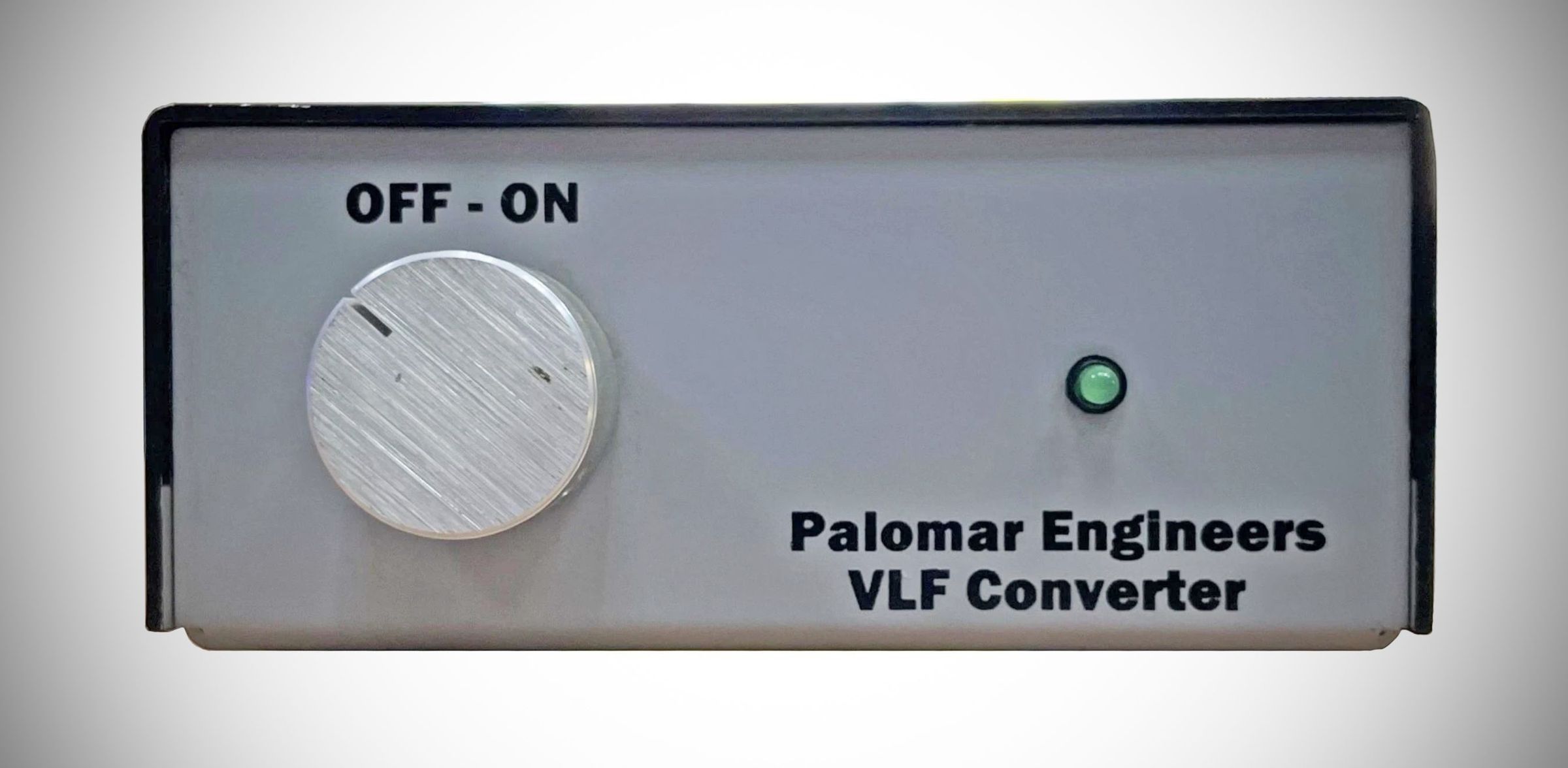
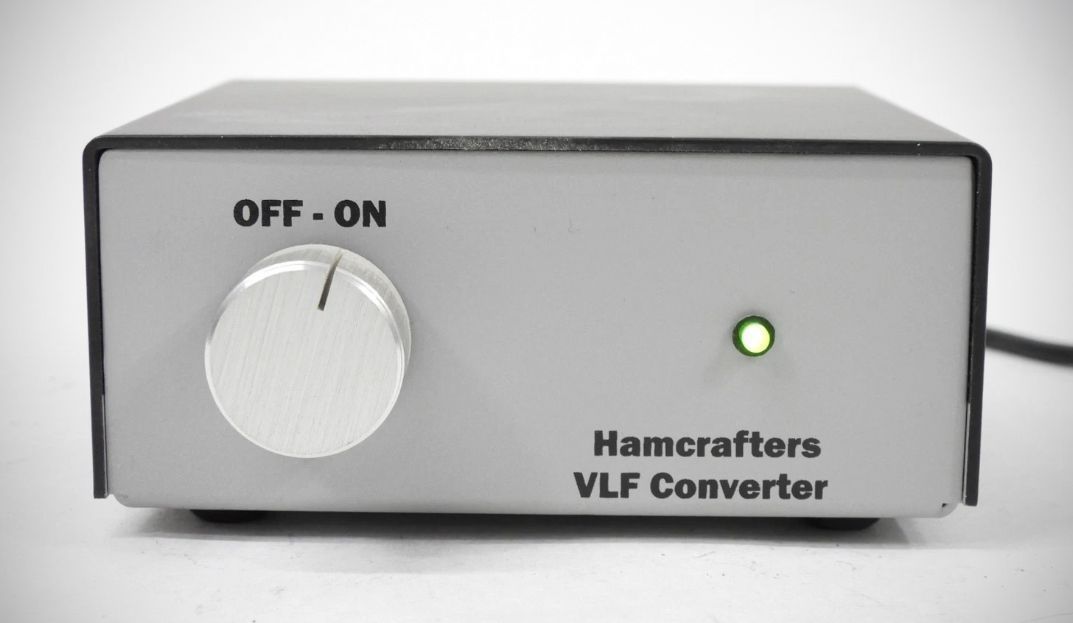
Palomar VLF-A, VLF-B VLF Converter

Object/Artifact

-

Radio Alpha

Image: Chuck Penson, WA7ZZE, hamfest
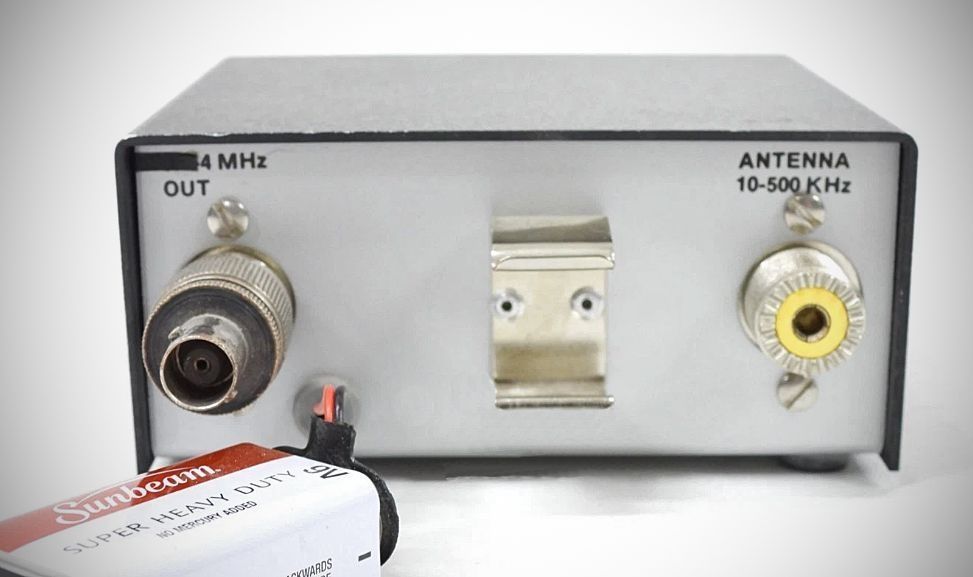
Image: Chuck Penson, WA7ZZE, hamfest
Name/Title

Palomar VLF-A, VLF-B "VLF Converter"

Description

VLF Receiving Converter

Category

Receiving Converter, VLF

Made/Created

Manufacturer

Palomar Engineers

Date made

1981 - 1982

General Notes

Note

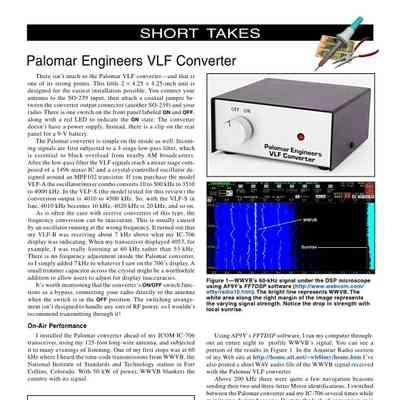
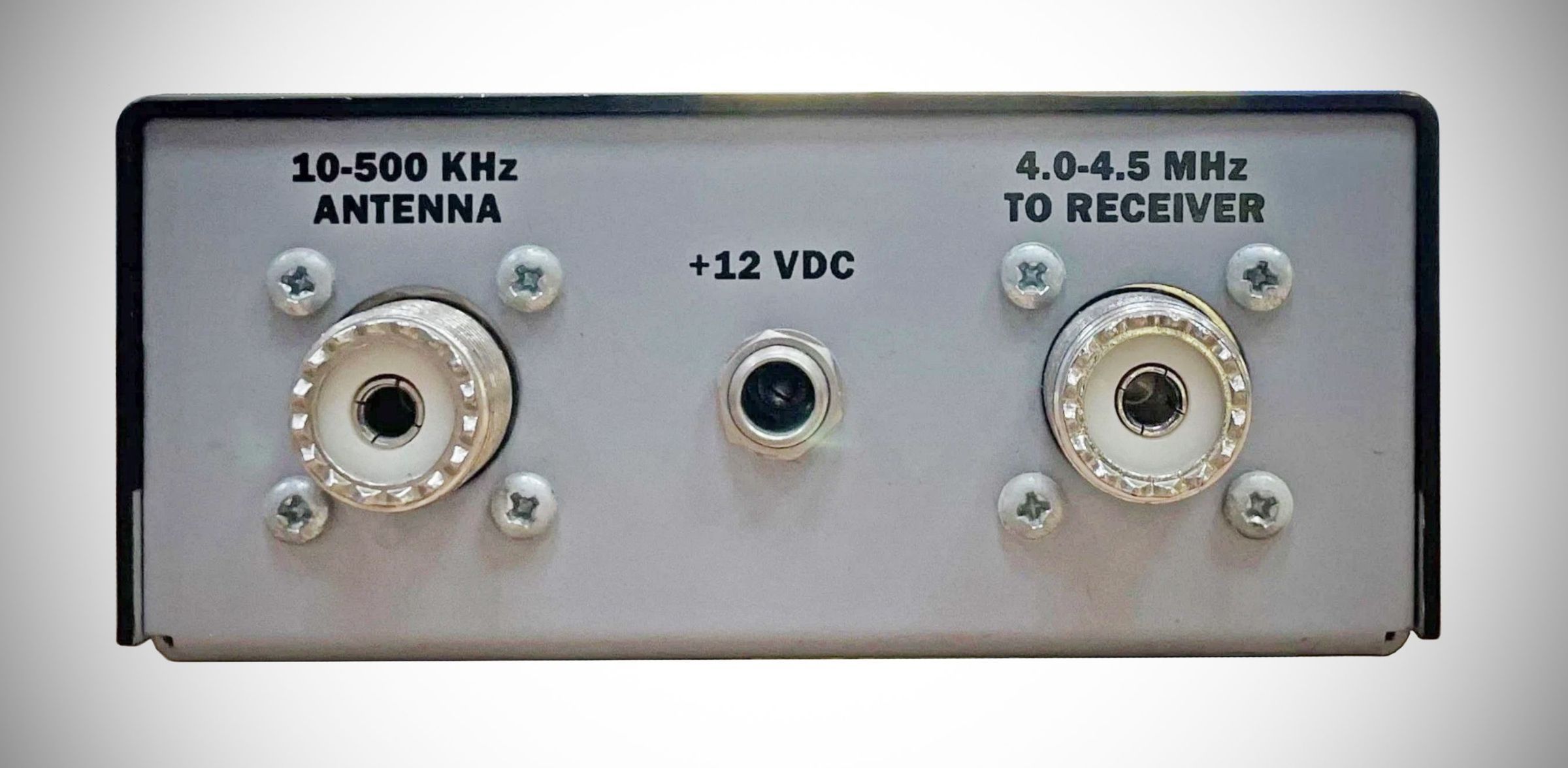
QST, Dec 1981, p. 224. QST, Jun 1982, p. 181. Converts from 10 to 500 kHz. VLF-A converts to 3510–4000 kHz VLF-B converts to 4010–4500 kHz There isn’t much to the Palomar VLF converter and that is one of its strong points. This little 2 × 4.25 × 4.25-inch unit is designed for the easiest installation possible. You connect your antenna to the SO-239 input, then attach a coaxial jumper between the converter output connector (another SO-239) and your radio. There is one switch on the front panel labeled ON and OFF, along with a green LED to indicate the ON state. The converter needs an Input of 12VDC. The Palomar converter is simple on the inside as well. Incoming signals are first subjected to a 3-stage low-pass filter, which is essential to block overload from nearby AM broadcasters. After the low-pass filter the VLF signals reach a mixer stage composed of a 1496 mixer IC and a crystal-controlled oscillator designed around an MPF102 transistor. ARRL Lab Measurements: Palomar VLF-B Converter Current consumption: <20 mA L.O. Accuracy: 6.9 kHz error Conversion gain: 0 dB to –14 dB (loss), frequency dependent Conversion gain over frequency: Frequency (kHz) Gain (dB) 10 –7 20 –5 50 –4 100 –2 150 0 200 –2 250 –5 300 –9 400 –12 500 –14