Note
QST, Jul 1963, p. 70.
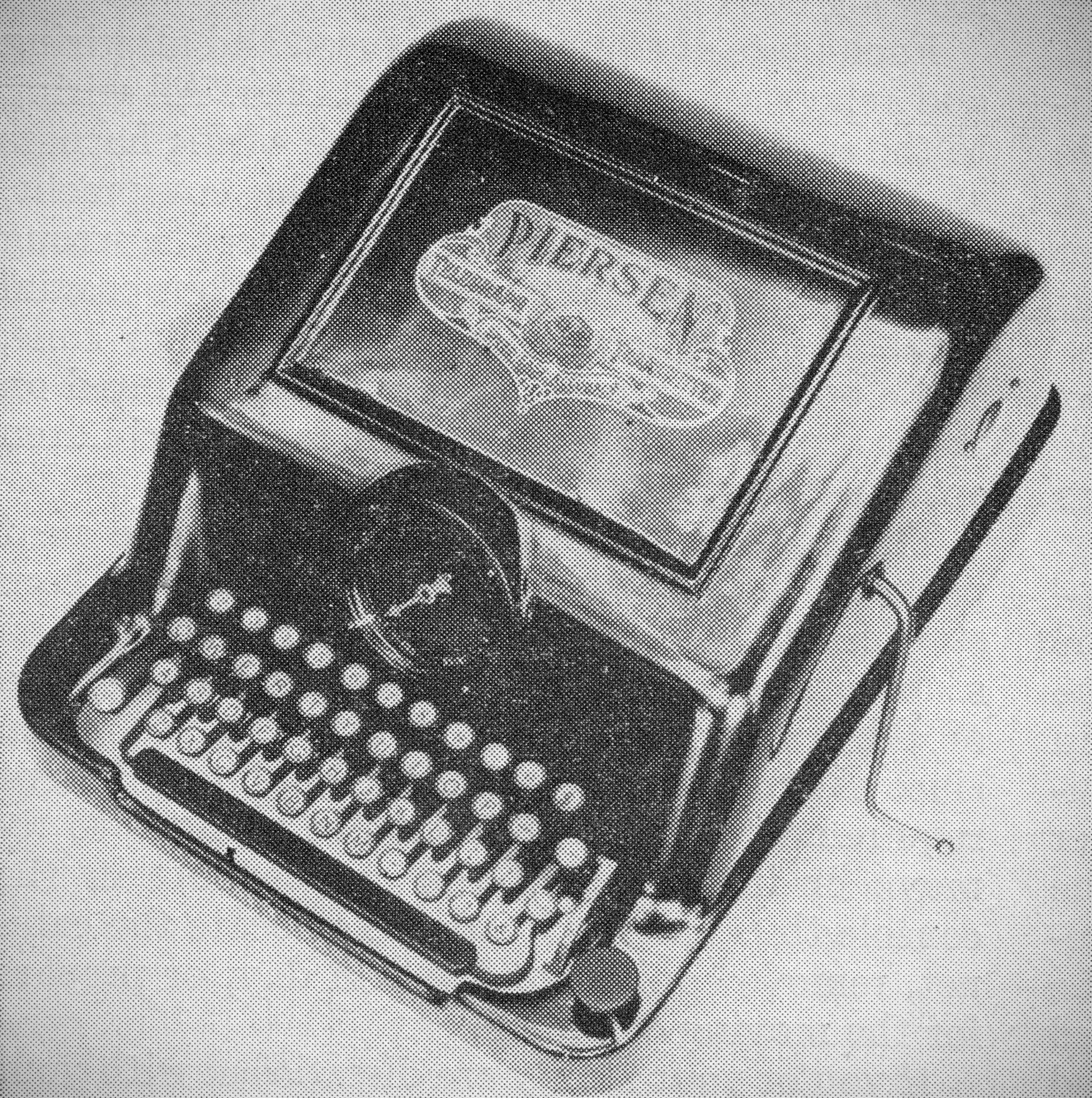
This spring-wound machine is a keyboard for sending Morse code, and included what is effectively a 72 character type-ahead buffer. It requires no electricity.
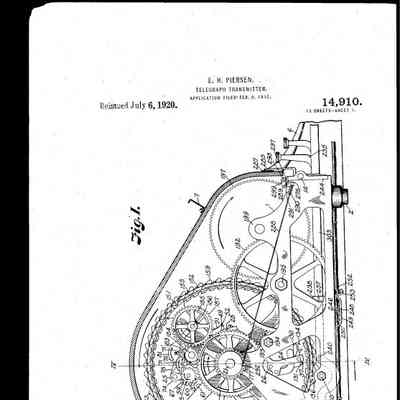
The attached patent, issued in 1912, describes this machine, or one that is nearly identical.
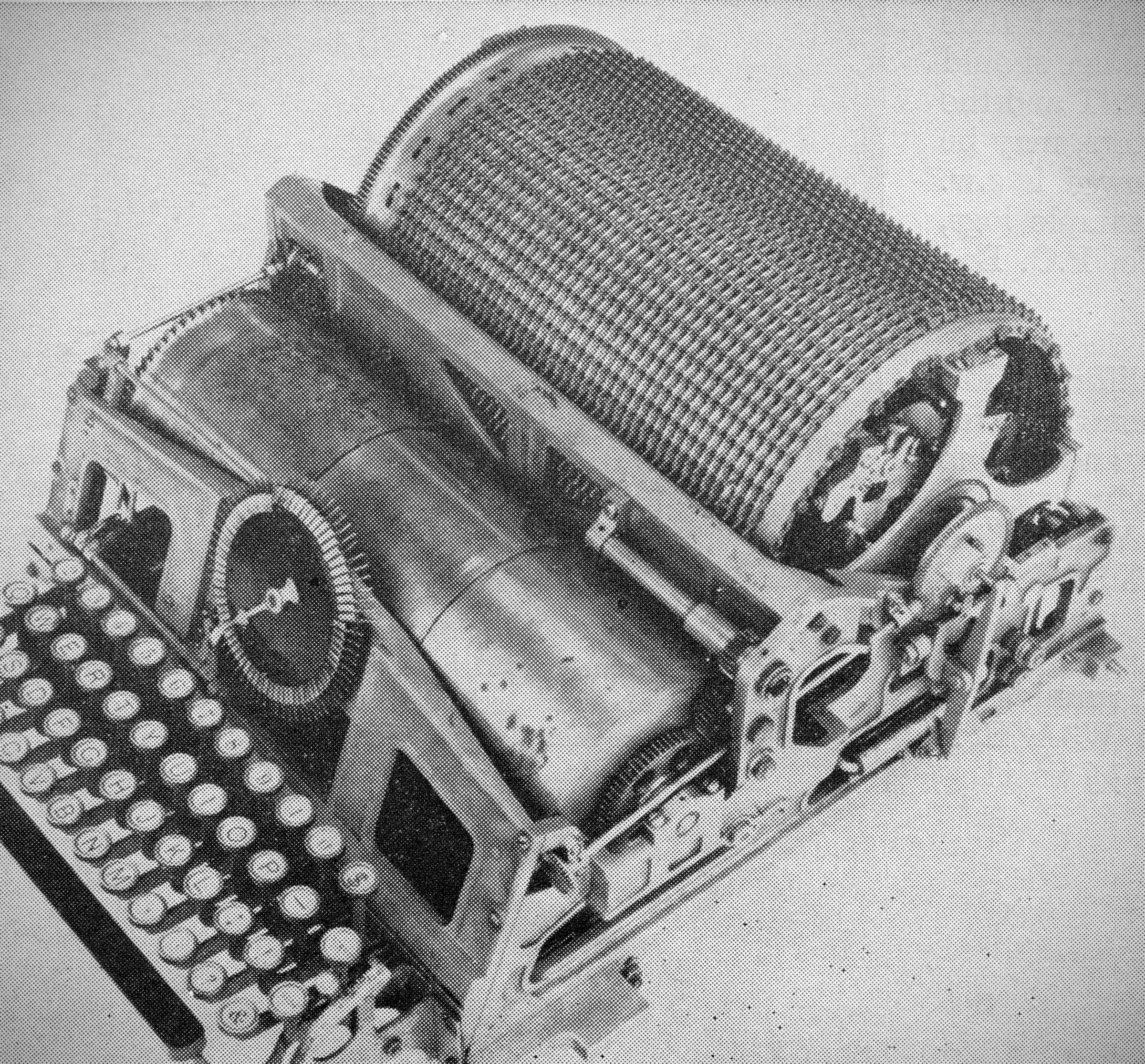
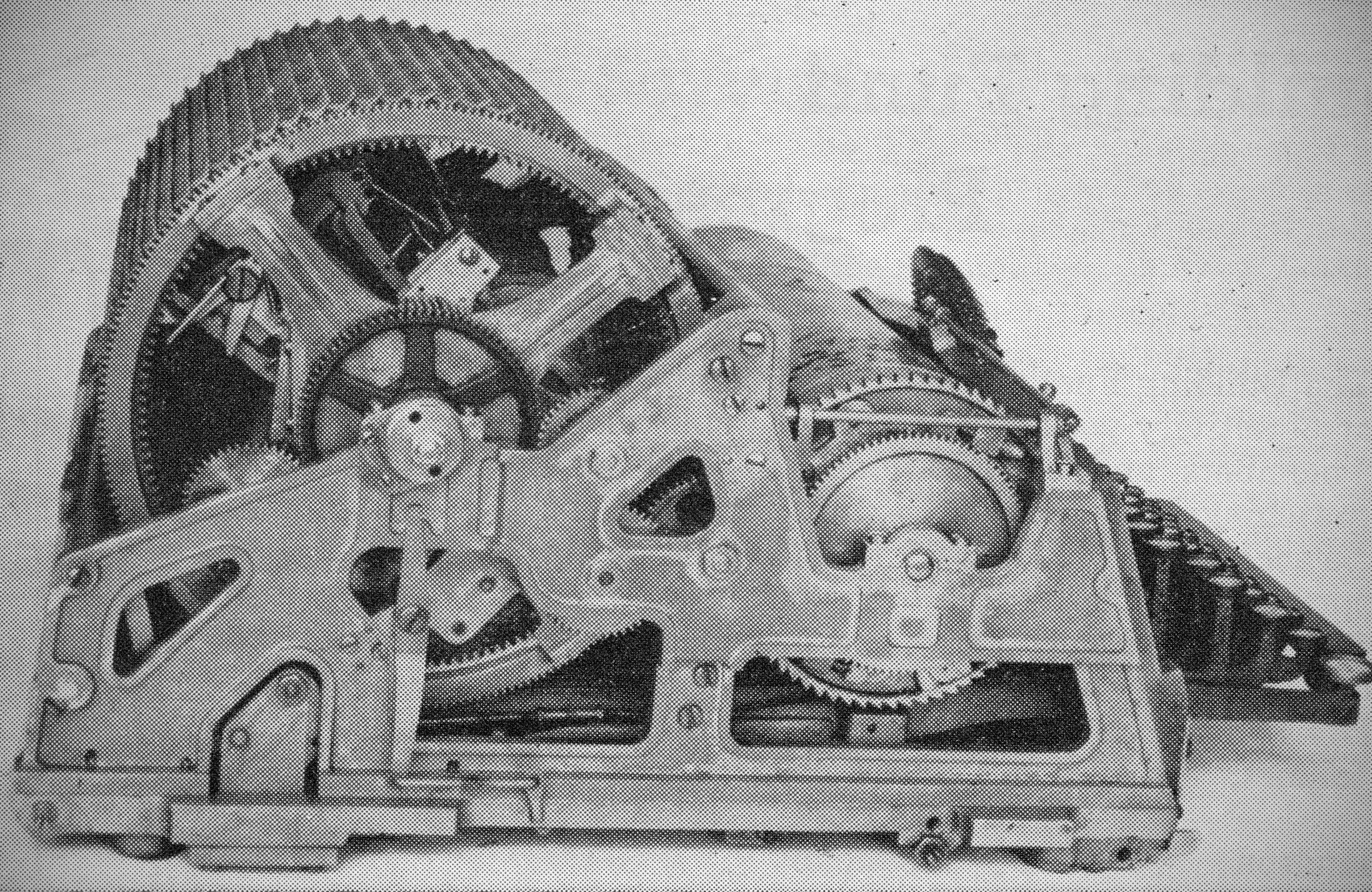
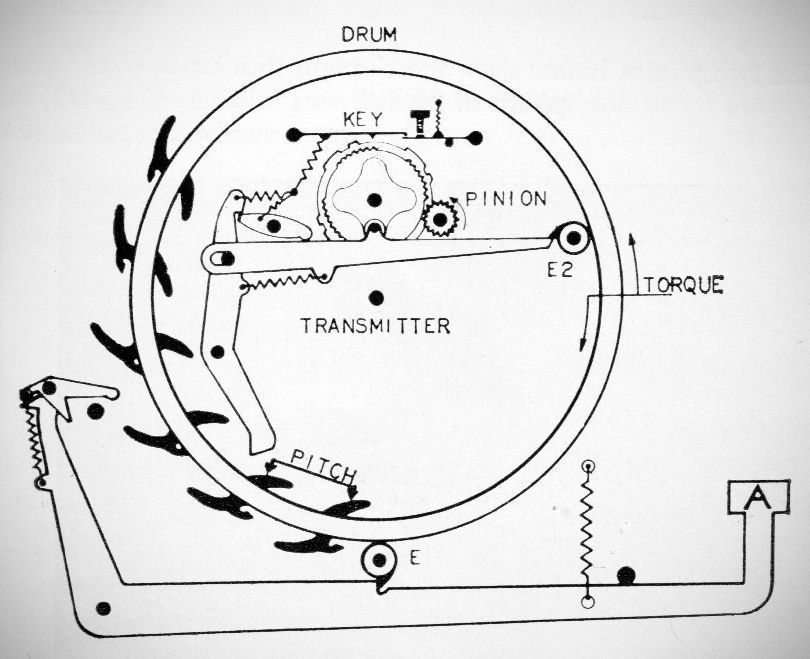
The machine was a marvel of ingenuity and engineering, with hundreds of gears, cams, ratchets, levers, and untold gizmos of all description. Its operation is, at first glance, incomprehensible, but fundamentally, it works as follows: pressing a key causes a lever to rotate one of 72 "setting dogs" located around the circumference of one row of the drum to its “set” position. As the drum rotated, the setting dog engaged a cam that, ultimately, set in motion a gear that was notched with the Morse character to be sent. The notches operated the key, which closed a circuit, sending the character. As the drum continued to rotate, the previously set setting dog was returned to its original unset position, effectively "erasing" that bit of memory. The entire mechanism functioned as what we would now call a type-ahead buffer.
Note that the drum rotated only when a setting dog was set. So that that if the operator stopped pressing keys, the drum would stop rotating after the last character in memory was sent. In operation the drum probably did not rotate smoothly, instead behaving more like a stepper motor.
The type-ahead buffer permitted the operator to type as rapidly as he or she wanted, while the machine then sent characters at a fixed rate--but one that could be selected by the operator. The operator could type ahead far enough that he or she could pause to wind the machine while the machine continued to send. In this way, as long as the machine was kept wound up, transmission could proceed indefinitely.
A dial on the front of the machine indicated how much of the buffer capacity remained. If the buffer limit was reached, the keyboard was locked out until more space became available.
It was also possible to fill the buffer and then start the machine, so that the entire message was send without the operator having to do any additional typing. There was also a provision for repeating the message as often as required.
Other features included a back space for making corrections, and a hand key for use if the machine broke down.
While the attached QST article specifically states the "memory" as 72 characters, the actual number of storable characters is not stated in the patent. An examination of the patent suggests the machine shown therein is capable of storing only 56 characters, as indicated by the number of "setting dogs" around each row of the drum.
The article also specifies that 45 different characters are available (presumably A–Z, 0–9, and assorted special characters). The actual number is not stated in the patent, but careful inspection of the photos provided in the QST article suggest that 45 is the correct figure.
Also not stated is the words-per-minute speed range of the machine, and the number of characters that can be sent on a single winding.
In all other respects, the patent describes the operation of the machine in eye-glazing detail.
The machine shown here is in the possession of the Kansas State Historical Society, and is the only one known to exist. Because the patent was issued in 1912 and re-issued in 1920, it is possible that many were sold.