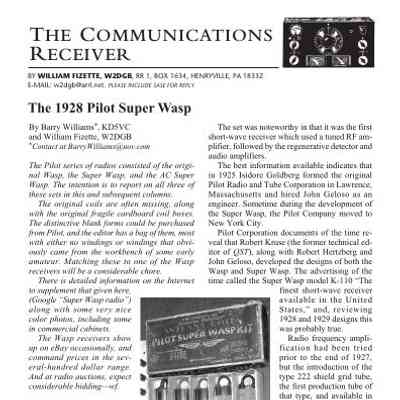
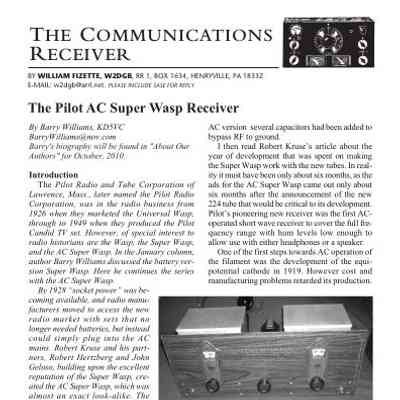
Note
Radio Craft, Jul 1929, back cover.
Radio Craft, Sep 1929, p. 133. (image)
QST, Jan 1930, inside front cover.
QST, Nov 1930, p. 75.
QST, Feb 1931, p. 95.
SUMMARY of the attached AWA article.
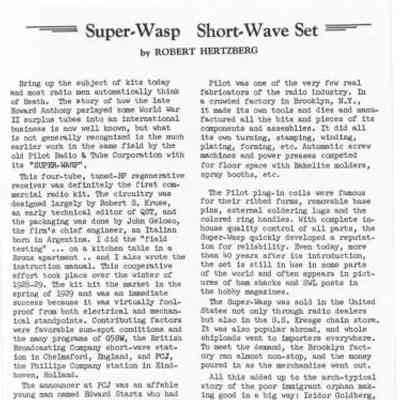
The Origin of the "Super-Wasp"
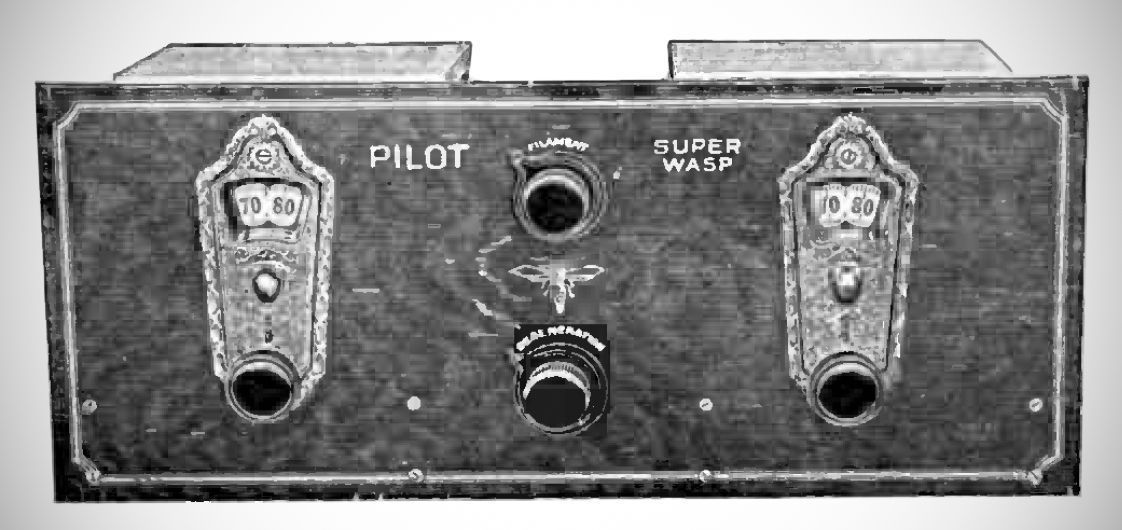
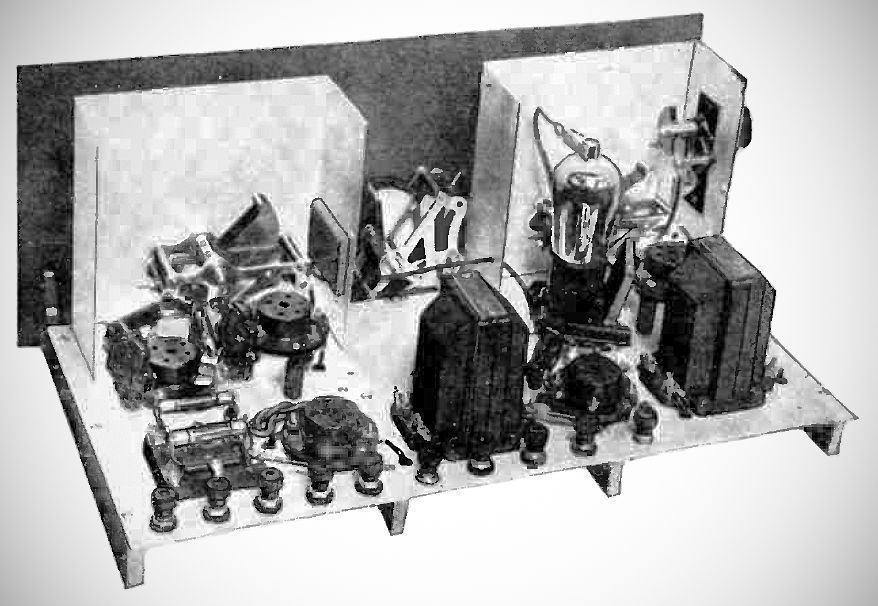
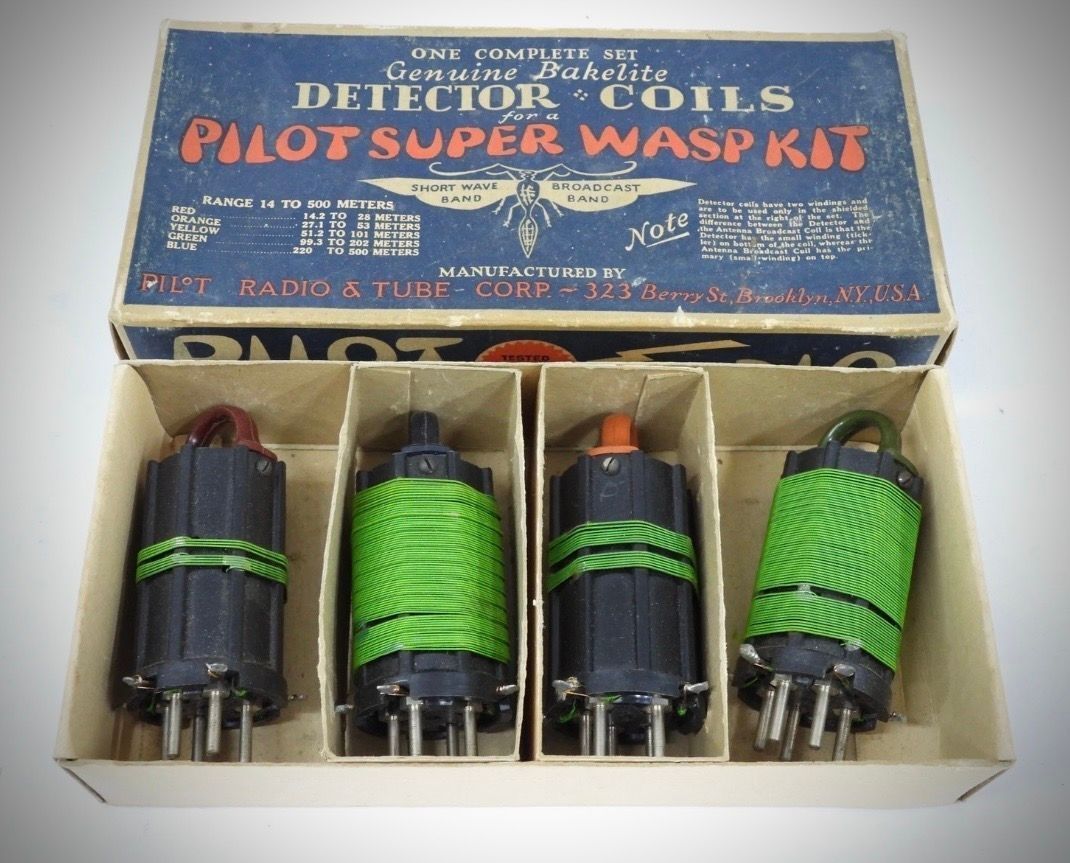
The article highlights the historical significance of the Pilot Radio & Tube Corporation’s "Super-Wasp" as the first commercial radio kit, predating the well-known work of Heath. Developed over the winter of 1928–1929 by a cooperative team—including circuitry designer Robert S. Kruse, packager/chief engineer John Geloso, and author Robert Hertzberg (who handled field-testing and wrote the manual)—the four-tube, tuned-RF regenerative receiver kit was launched in the spring of 1929.
The Super-Wasp became an immediate international success. Its popularity was fueled by its reliable, "foolproof" design, favorable sun-spot conditions, and the popularity of short-wave radio announcers like Edward Startz of Holland's PCJ station.
Production, Expansion, and the Depression
Pilot was a unique fabricator that manufactured all of its own components under strict in-house quality control at its crowded factory in Brooklyn, New York.
Sales Growth: The kits were sold through US radio dealers, the S.S. Kresge chain store, and massive shiploads were exported worldwide. Company founder Isidor Goldberg was on his way to making his first million by the summer of 1929.
The Depression: When the 1929 stock market crash hit, Super-Wasp sales continued climbing. While customers had less money, they had an abundance of free time to dedicate to short-wave listening.
Royal Client: The receiver's global reach even included the King of Siam, who purchased a Super-Wasp during a visit to New York after author Robert Hertzberg personally demonstrated it for him.
Relocation and Collapse
To meet heavy demand, Pilot purchased and relocated to a massive former cotton mill complex in Lawrence, Massachusetts, between 1929 and 1930. However, the interruption of production and a bitter winter in 1931–1932 proved disastrous. The operation collapsed shortly thereafter; key executives scattered, John Geloso returned to Italy, and Isidor Goldberg returned to New York to later form a new, smaller electronics firm.
Post-War Legacy
After returning to Italy, John Geloso applied his Pilot experience to become a highly successful electronics and radio manufacturer, surviving five years in hiding during World War II after being branded an "American" by Fascists. Before his sudden death in February 1969, Geloso and Hertzberg had been planning a new line of radio kits. In honor of its heritage, the chosen name for their flagship amateur receiver was to be none other than the Super-Wasp.
References:
The Super Wasp. Radio News, Jun 1929, p. 1109.
The Pilot Super Wasp Receiver. Radio Craft, Jul 1929, p. 22.
The Shortwave Receiver as a Money Maker. Radio Craft, Jan 1930, p. 310.
High Spots with the Super Wasp. Radio News, Jan 1930, p. 619.
K-115 AC version - $34.50
K-110 Battery version - $29.50