Note
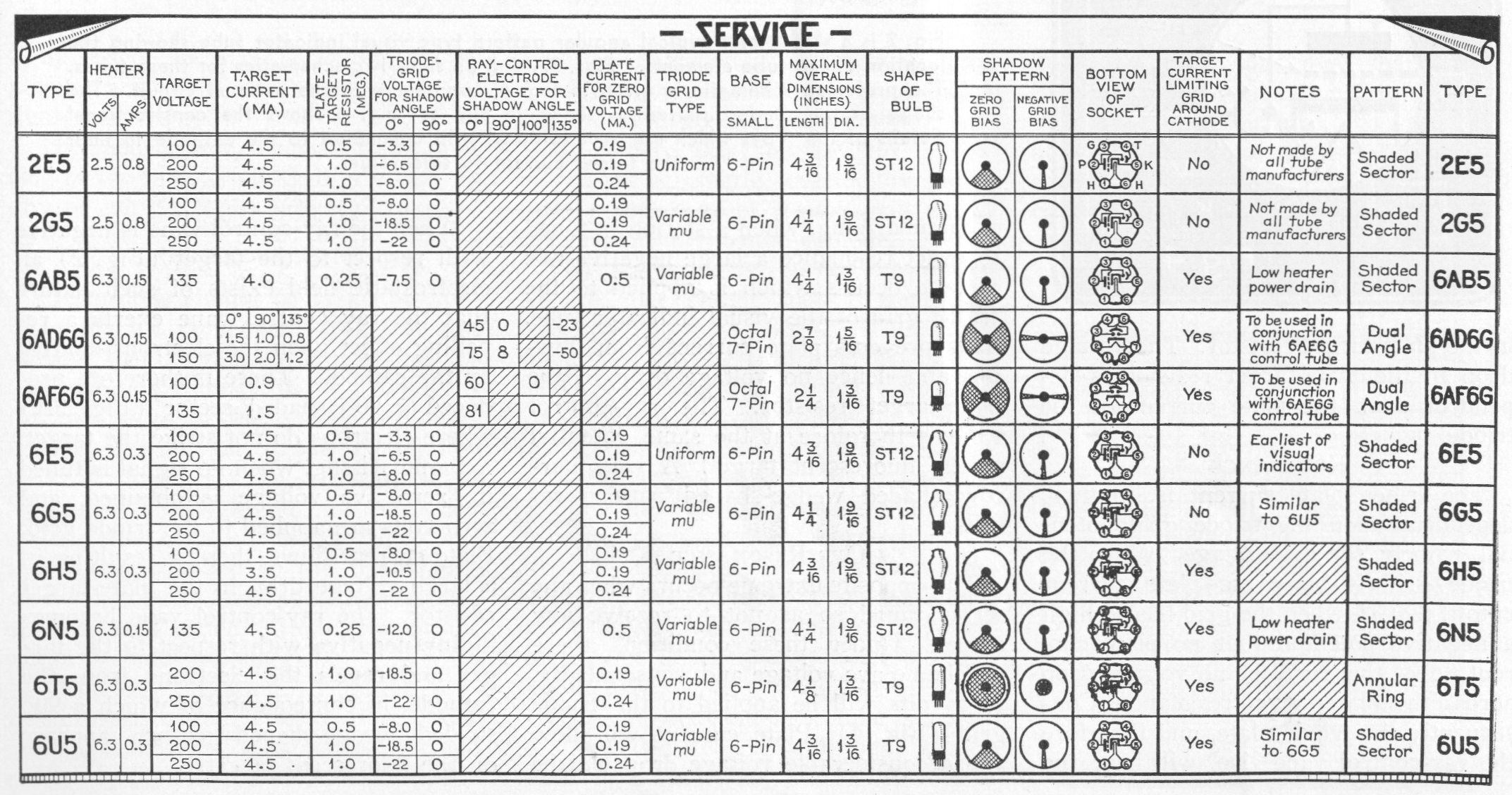
Service, Jul 1935. p. 293. (6E5)
Radio, Jul 1935, p. 8.
Radio Craft, Sep 1935, p. 154.
QST, Nov 1935, p. 73.
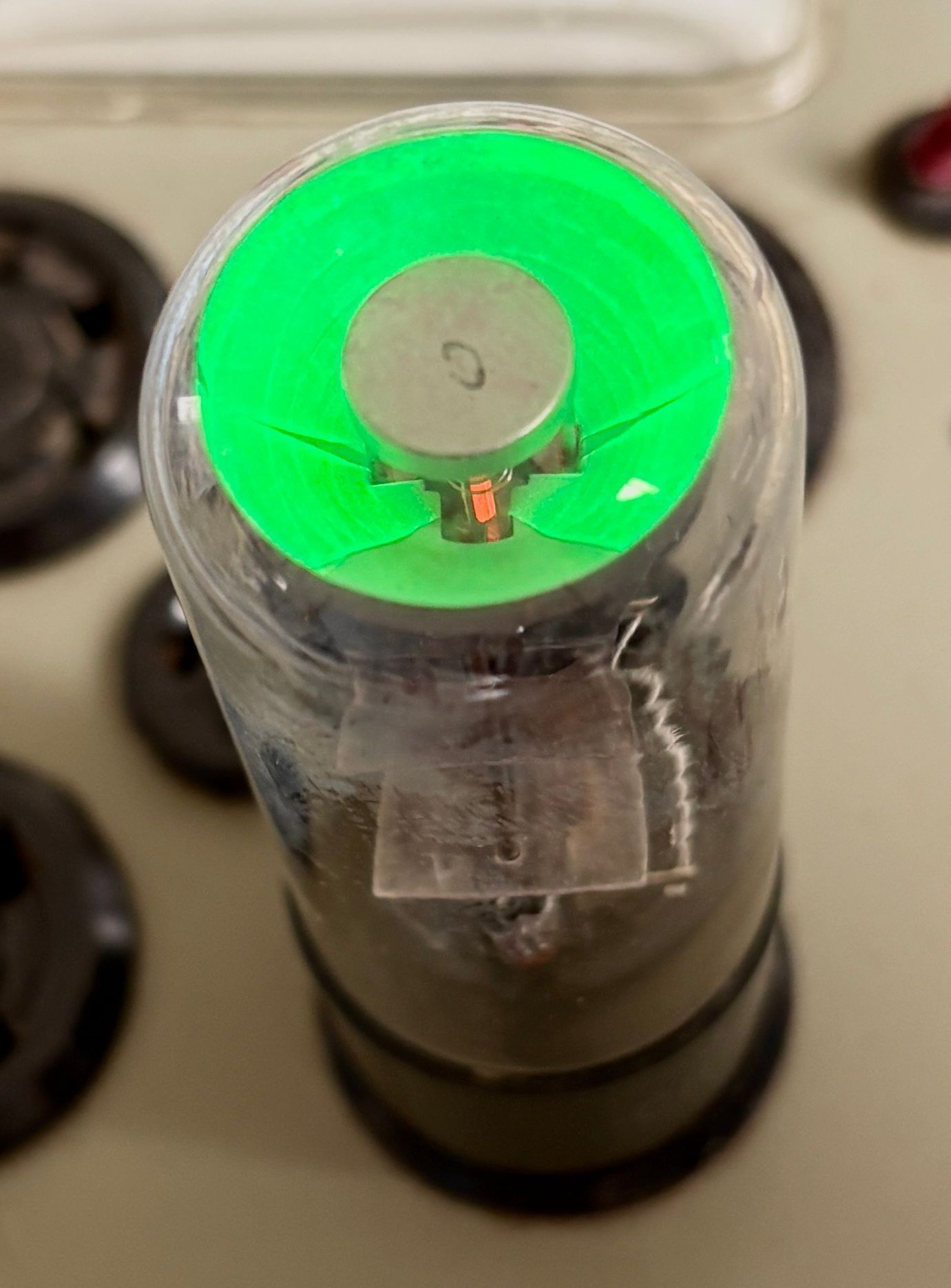
Long before digital LEDs or liquid crystal displays, electronics had a much more poetic way of showing signal strength: a glowing, emerald-green ring that seemed to "blink" as you interacted with it. Known officially as an electron-ray indicator tube, the 6E5 was the world's first commercial "Magic Eye" tube, introducing a touch of sci-fi charm to the living rooms of the 1930s.
In the early 1930s, AM superheterodyne radios were becoming standard. These advanced radios featured Automatic Volume Control (AVC), which automatically leveled out radio signal strengths so loud stations wouldn’t blast out the speaker. However, AVC made it hard to tell by ear exactly when a station was perfectly centered on its frequency.
Radio manufacturers needed a visual tuning aid. Mechanical needle meters (d'Arsonval movements) were far too delicate and expensive for mass-market consumer radios.
Enter American electrical engineer Allen B. DuMont, who invented the concept in 1932. Recognizing its massive consumer potential, RCA bought the patent, refined the design, and introduced the 6E5 to the market in June 1935. RCA aggressively marketed it as the "Magic Eye," capturing the public's imagination and turning a piece of industrial test hardware into a highly desired luxury feature.
How the 6E5 Works: A Miniature CRT
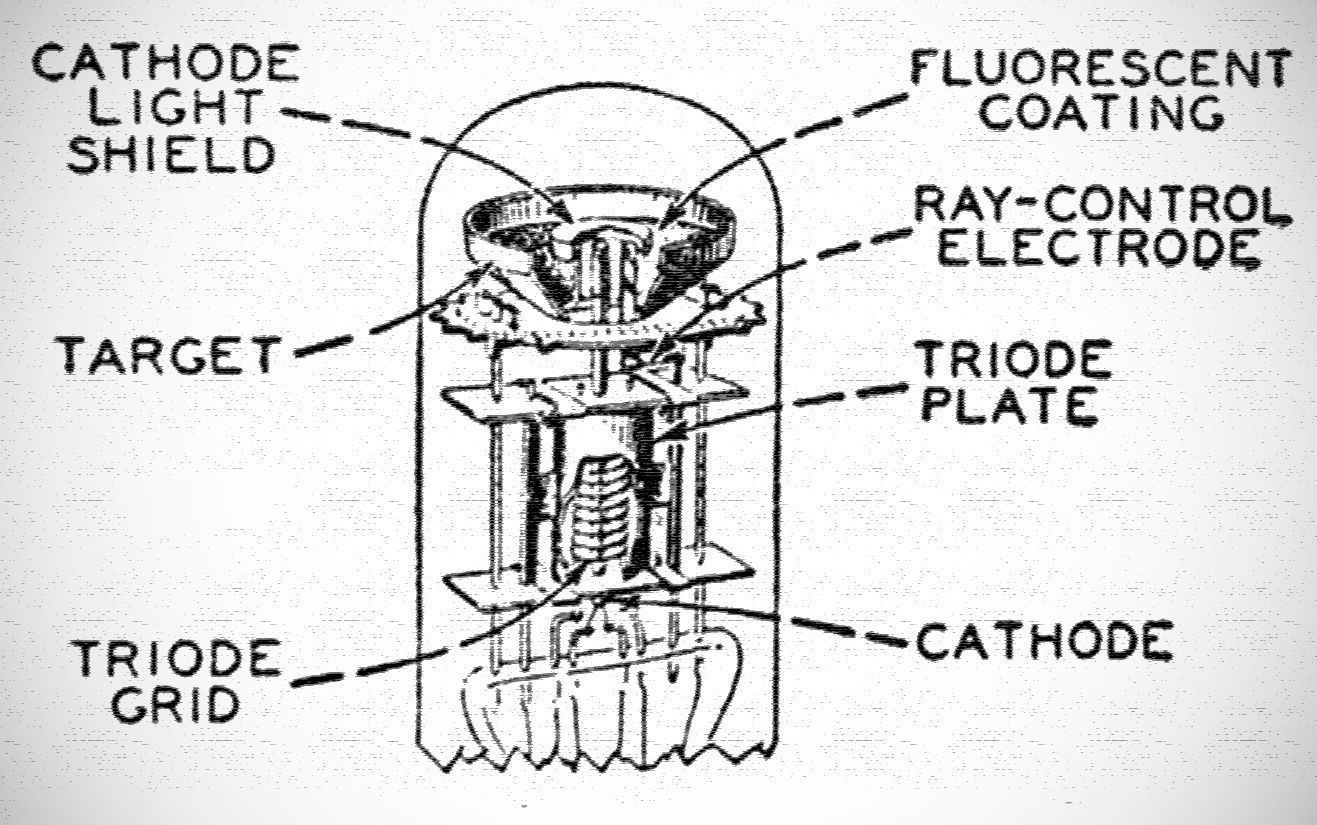
The 6E5 is essentially a specialized, self-contained cathode ray tube (CRT) merged with a standard triode amplifier.
Inside the top of the glass envelope sits a cone-shaped target plate coated with a fluorescent zinc-silicate phosphor. When the central cathode fires electrons at this plate, the phosphor glows a vibrant green.
The "magic" comes from a tiny, vertical wire called the ray-control electrode, positioned between the cathode and the target.
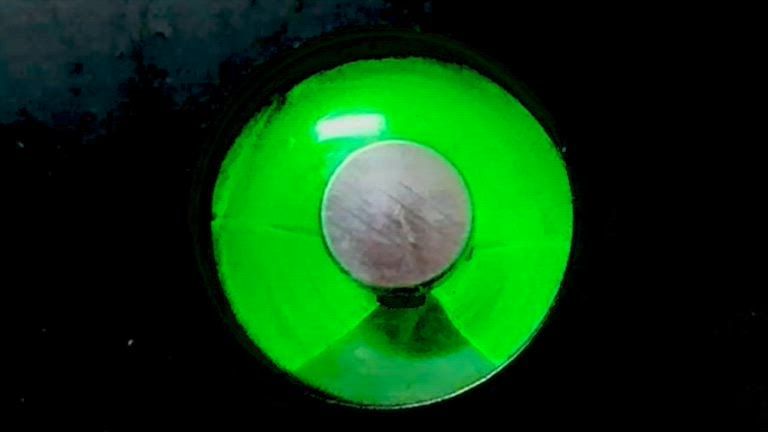
No Signal (zero volts bias): The ray-control electrode stays at a lower voltage than the target plate. It repels incoming electrons, casting a wide, 90-degree wedge-shaped shadow on the green ring.
Strong Signal (negative bias): As a negative voltage is applied to the tube's control grid, the internal triode amplifies this change, bringing the ray-control electrode's voltage closer to the target plate's voltage. The shadow shrinks or "closes."
When the shadow is at its narrowest point, the user knows the incoming voltage—or radio signal—is at its peak.
Historical Uses and Applications
Consumer Radio Tuning Indicators
– The primary home for the 6E5 was high-end console and tabletop radios from manufacturers like RCA, Zenith, Philco, and others. It was wired directly into the radio's AVC line. As you spun the tuning dial and locked onto a strong station, the dark wedge would visibly close, giving a precise, visual confirmation of a perfect tune.
Audio & Tape Recorder Peak Indicators
– In the 1940s and 50s, early reel-to-reel tape recorders and pro-audio gear adopted magic eye tubes as volume units (VU) or peak level indicators. Instead of a slow, mechanical needle that could lag behind sudden loud sounds, the weightless electron beam of the 6E5 reacted instantly, flashing shut to tell the operator that the audio was clipping and distorting.
Test Equipment & Laboratory Instruments
– Because the 6E5 didn't experience mechanical wear and could handle voltage overloads without snapping a needle, it became a staple in test gear. For example, in capacitor/resistor bridges eye tubes were used as a "null indicator." Operators adjusted dials until the eye opened to its widest point, signaling a perfectly balanced electrical bridge. Signal Tracers were another big application. Used by radio repairmen to visually trace a signal through a faulty circuit.
Variations of the 6E5 quickly emerged, and by the late 50s, more than a dozen types of the magic eye tube had been developed, each with specific characteristics making them useful for a wide variety of applications.
By the 1960s, inexpensive Japanese manufacturing made traditional meters cheap to produce, and transistors began replacing vacuum tubes altogether. The magic eye faded into history, eventually replaced by modern LED bar graphs and other solid-state displays.
Today, the 6E5 is prized by antique radio restorers and audiophiles. Because the green phosphor fades over hundreds of hours of use, finding a "bright" new old stock (NOS) 6E5 or other eye tube is a treasure hunt—a glowing remnant of an era when engineering and art beautifully collided.
References
RCA Receiving Tube Manual, Technical Series R-25, 1966 (Note: virtually all the the RCA tube manuals contain a description of the 6E5)
How the Cathode Ray Tuning Tube Works. Radio Craft, Dec 1935, p. 348.
Review (6E5). Radio News, Dec 1935, p. 331.