Note
QST, Nov 1935, p. 87. "Ready November 1st.:
QST, May 1938, p. 127.
QST, Oct 1938, p. 127. Some specs
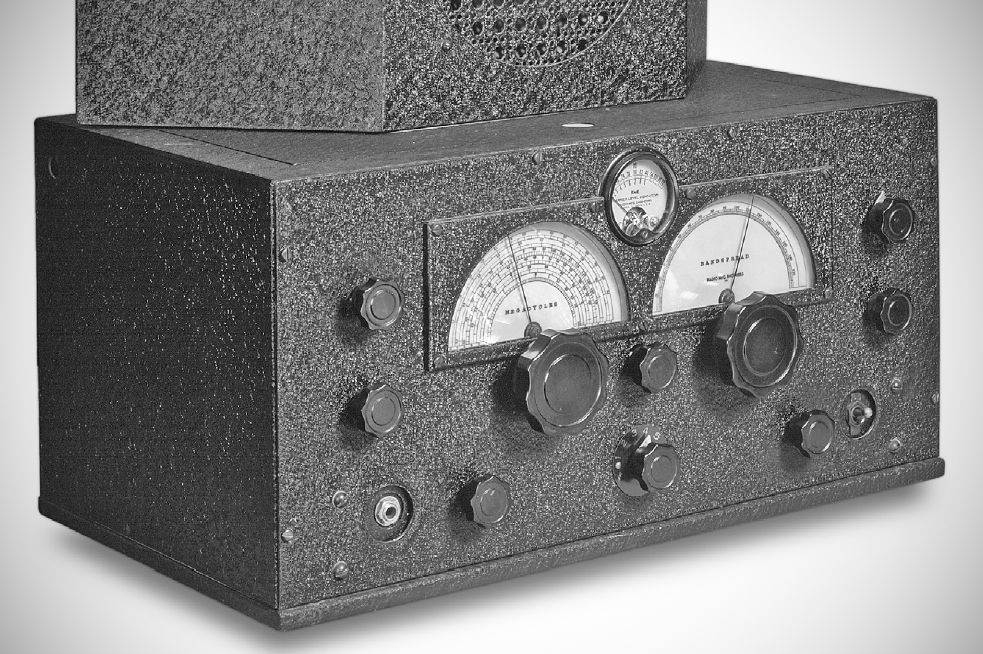
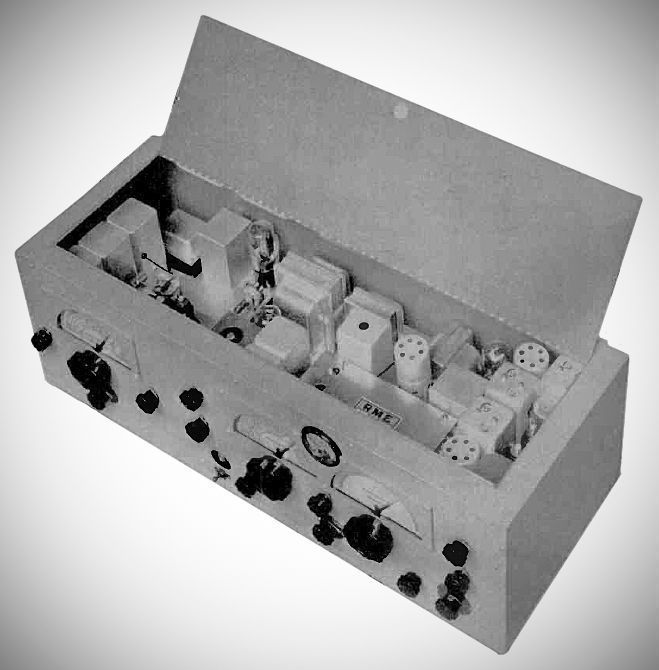
Introduced in November 1935 by Radio Manufacturing Engineers (RME) of Peoria, Illinois, the RME-69 was an upgrade to the company's earlier RME-9 and 9D designs. It became the most popular radio RME ever built, remaining in production until 1940 with roughly 6,500 units sold.
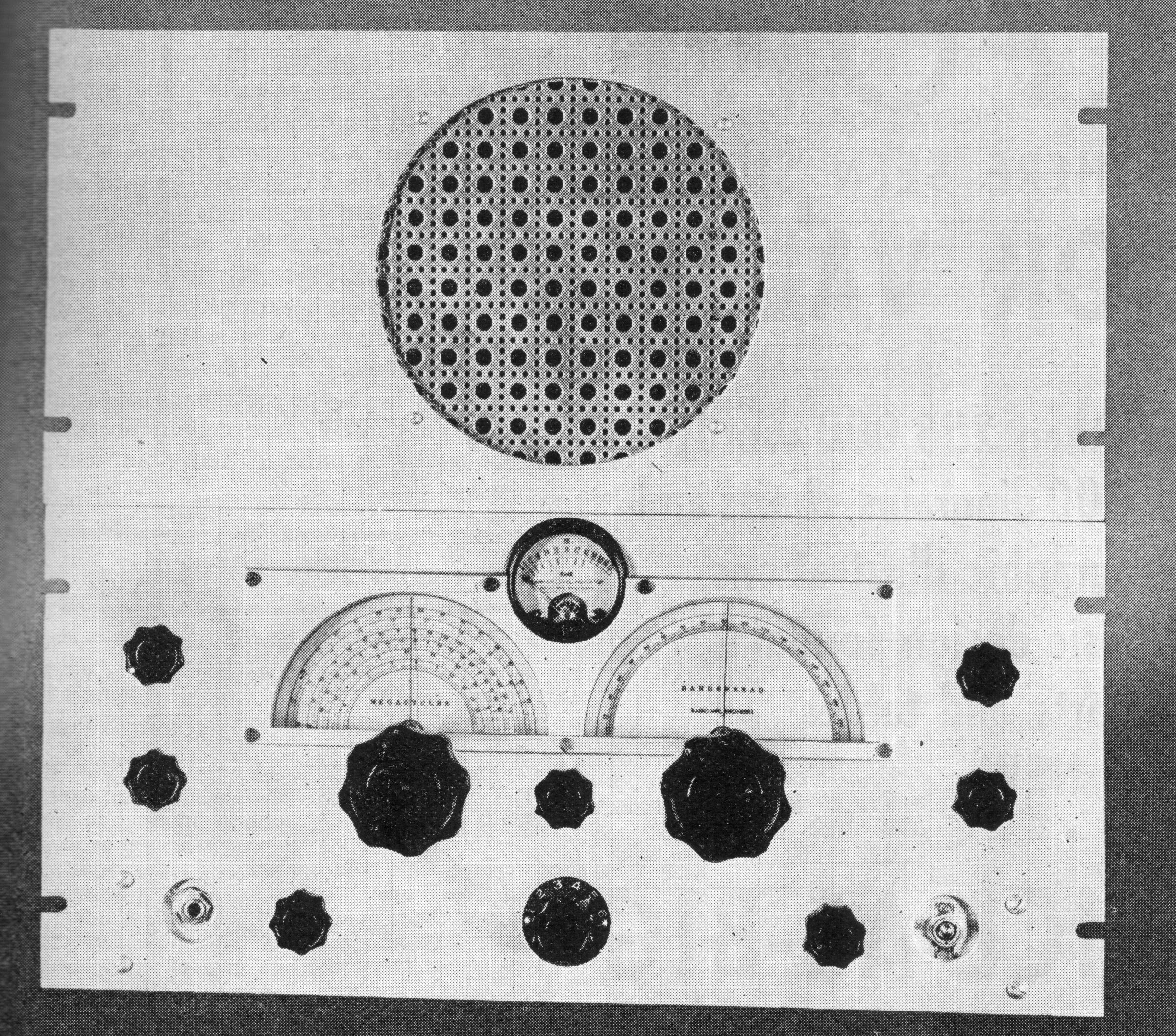
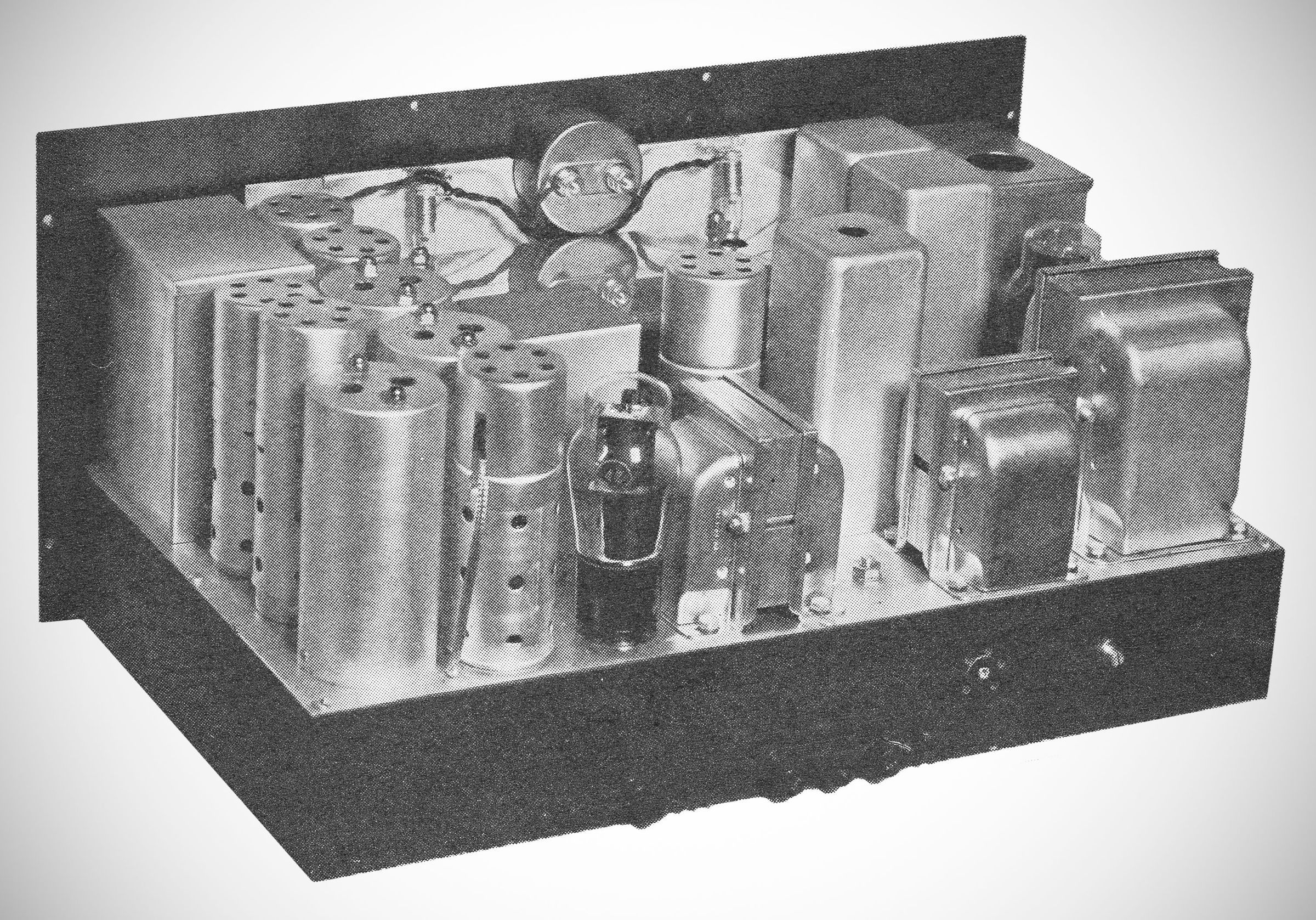
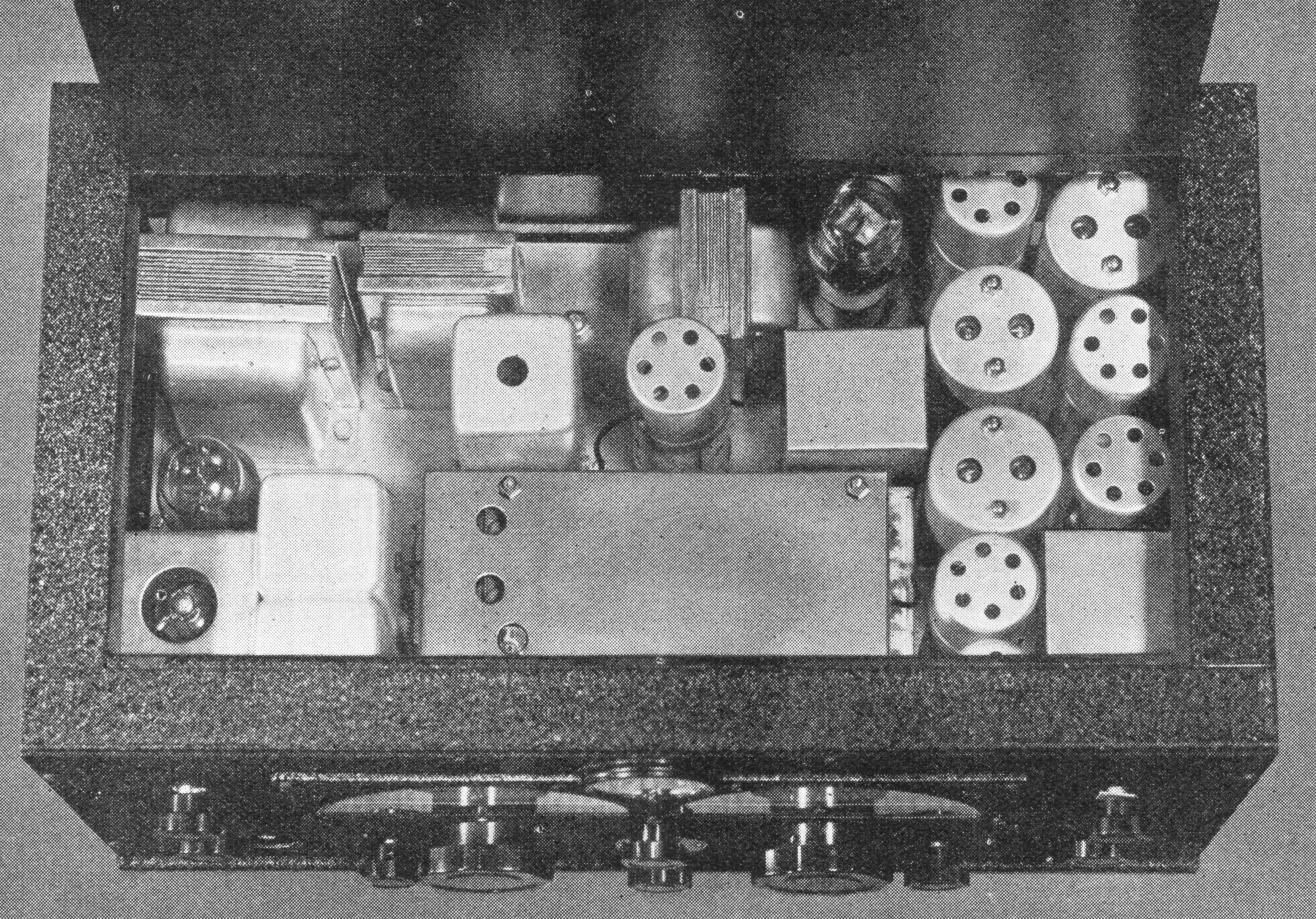
The RME-69 is a 9-tube single-conversion superheterodyne receiver that covers 550 kHz through 32 MHz across six switched bands. Included were a noise limiter, an R-meter (S-meter), and an on-air monitor circuit. RME called the model 69 a single-signal super, referring to the crystal filters ability to reject an incoming signal on one side of zero beat. Main tuning and electrical band-spread dials covered 0.55–32 MHz. The RME-69 acquitted itself well in performance tests with other leading receivers of the day.
The standard original front panel featured a gray crackle-paint finish (though some versions, like the early 1935 models, shipped in black crackle).
True to co-founder E. G. "Shaw" Shalkhauser's design philosophy that "any user worth his salt" should know how to operate the radio, the front panel originally shipped completely devoid of control labels.
The 69 moved away from the older "airplane-style" round dials of its predecessors, adopting large, half-circle general coverage and bandspread dials for better legibility and more room for calibrated scales.
Tube Lineup: Utilizes 6-volt tubes (including the 6C6, 6D6, 6B7, and 42 varieties) which replaced the older 2½-volt tubes used in the RME-9 family.
Includes a front-panel "resonator" control to peak the adjustment of both the RF amplifier and the mixer stage, ensuring excellent sensitivity up to 30 MHz.
Equipped with a crystal filter providing variable selectivity and a phasing notch for CW operation or crowded phone bands.
The BFO signal coupled into the second detector is deliberately low by design, which keeps noise levels down during CW reception and allows the Automatic Volume Control (AVC) to remain active to automatically cut back high-level CW signals.
Unique "Monitor" Feature: When the RF gain control knob is pulled outward from the panel, the second detector switches away from the IF output to a dedicated monitor antenna terminal on the rear apron, allowing AM phone operators to listen to their own modulation on the air.
Features a high audio output impedance of either 600 or 4,000 ohms, requiring a matching transformer or an original matching RME speaker (often found in a distinct trapezoidal cabinet) to drive a modern voice coil.
Known Variants
Over its production run, several variations of the RME-69 were produced:
– RME-69/LS-1: Increased the tube count to 11 by replacing the two 6D6 IF tubes with a 6L7 and a 6K7, and added a two-tube noise silencer circuit.
– RME-69/Battery: Offered as an alternative configuration for operation away from AC line power.
– RME-69/DB-20: Combined the RME-69 receiver and an RME DB-20 preselector into a single, elongated cabinet.
References
Brief review: Radio, Jan 1938, p. 102.