Note
QST, Aug 1936, p. 71.
Radio, Feb 1938, p. 93.
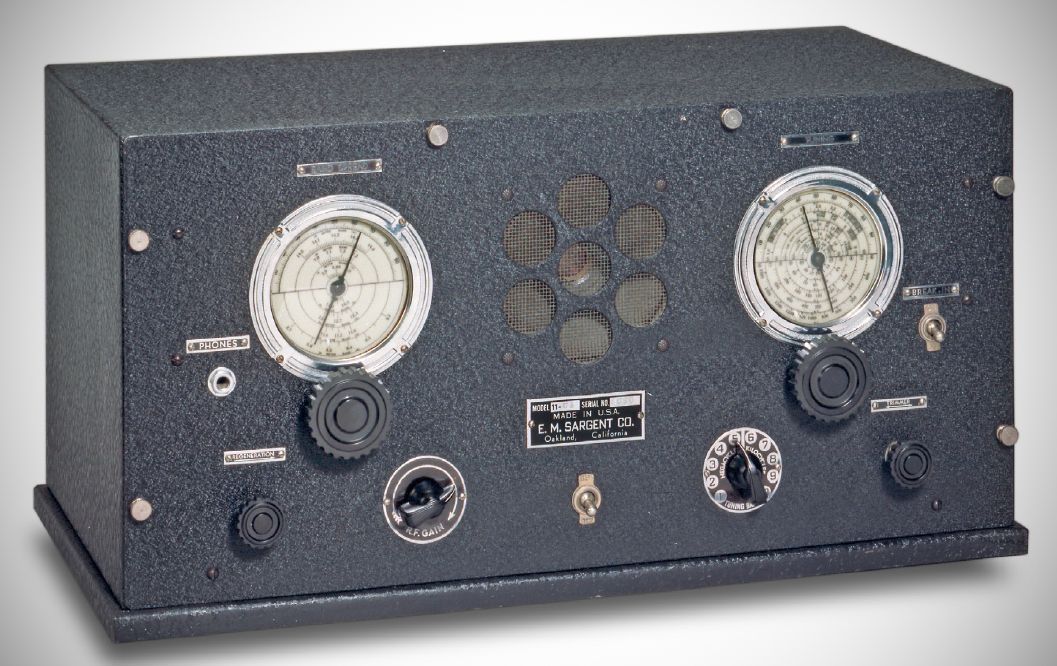
Introduced in July 1936 by the E. M. Sargent Company of Oakland, California, the Sargent Model 11 arrived during an era increasingly dominated by complex superheterodyne receivers. Despite the fierce competition, Sargent presented a compelling, high-quality alternative by perfecting a simpler, time-tested regenerative design. The receiver was marketed not only as an affordable primary station but also as a versatile companion or standby unit for operators who owned a "big superhet" but still required reliable emergency coverage for airplane beacons, time signals, press waves, and long-wave Navy transmissions.
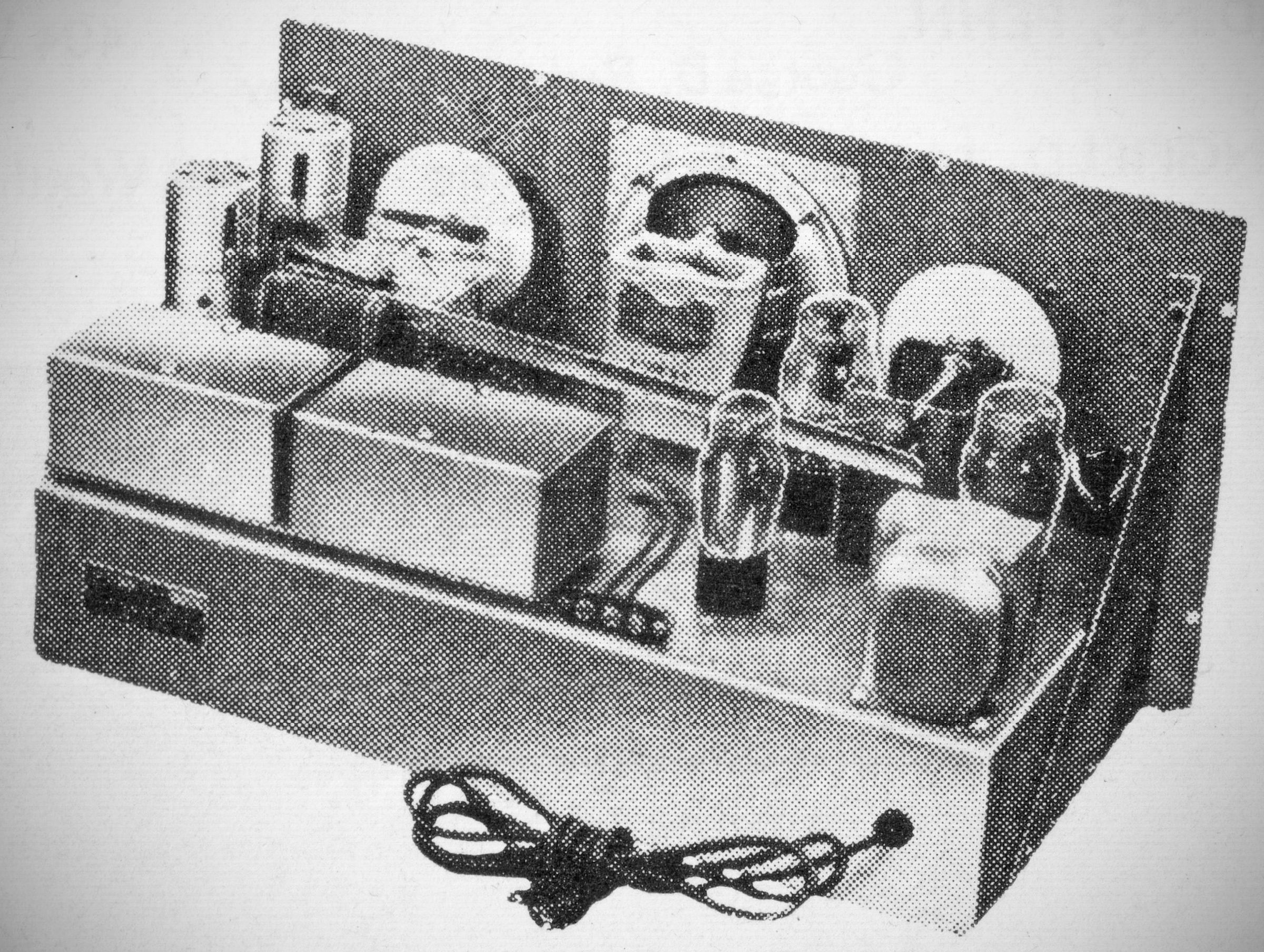
At the heart of the Model 11 was a circuit consisting of a tuned radio frequency (R.F.) stage, a regenerative detector, and two stages of audio amplification. In its standard AC configuration, it utilized a 6D6 RF tube, a 6C6 detector, a 76 first audio tube, a 42 second audio tube, and an 80 rectifier. By incorporating an extra tuned circuit in the RF stage, Sargent successfully eliminated the dead spots and tuning skips that historically plagued regenerative radios, allowing it to deliver exceptionally low noise and high sensitivity across its entire operating range. While operating the radio on lower frequencies (up through 40 meters) was smooth and effective for both phone and CW signals, tuning became notably trickier on higher shortwave bands where the regeneration, RF gain, and antenna trimmer controls interacted heavily.
Sargent built the Model 11 with exceptional mechanical quality, utilizing a modular design with a common chassis that could be adapted for three different frequency ranges.
– Amateur model (11-AA) covered 9.5 to 550 meters (545 kHz–31.5 MHz)
– Marine model (11-MA) scaled up to 3,750 meters (80 kHz)
– Universal model (11-UA) offered an astonishingly wide span from 9.5 all the way to 20,000 meters (15 kc).
To switch between bands, the radio utilized a internal bandswitch connected to specialized coil sets manufactured by J.W.Miller. These coils were carefully mounted on steel plates and protected by heavy, plated steel shield cans. For the extreme long-wave bands on the Universal model, the coil sets were uniquely mounted above the chassis using standout studs to ground them securely while isolating them from chassis eddy currents.
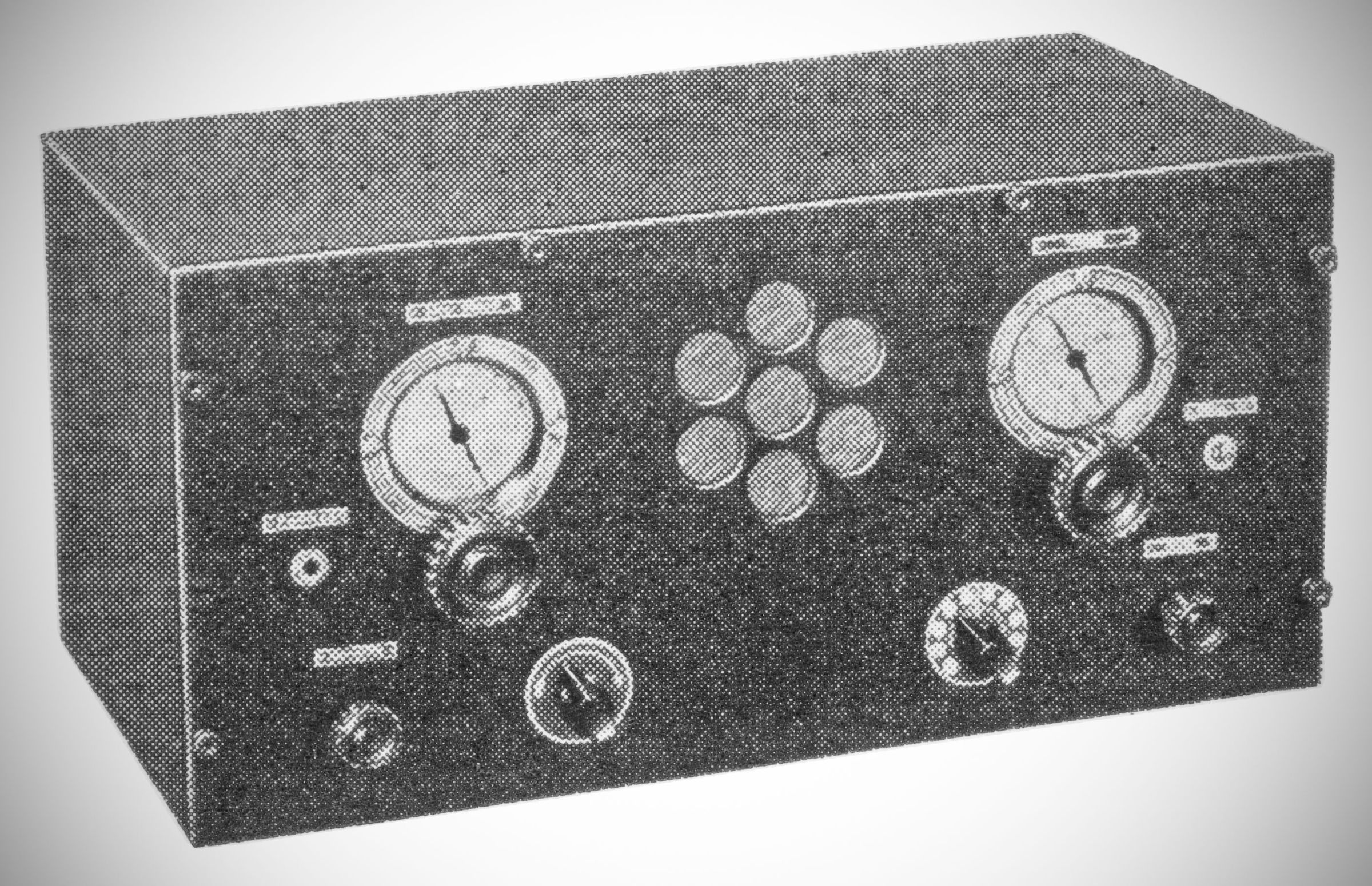
The physical interface of the Model 11 featured a unique, friction-drive tuning mechanism. The main tuning dial and the bandspread dial sat ten inches apart on the front panel, yet they operated a single two-gang tuning capacitor. When an operator turned the main dial, the capacitor's rotor moved normally; however, adjusting the bandspread dial kept the rotor perfectly stationary while physically shifting the stator. These two dials were synchronized beneath the chassis by a 12-inch, cam-operated arm under the tension of an 8-inch, screen-door-style coil spring. Operators could even tweak the cam via three separate adjustments to customize their preferred tuning rate.
To provide a truly complete package, the receiver came standard with a built-in "humless" power supply on AC models, a break-in feature, and a built-in loudspeaker—utilizing an electrodynamic speaker for AC units and a permanent magnet version for battery models. Depending on the operator's environment, Sargent offered three AC models (including a 25-cycle variant for regions like western New York and Ontario) and five DC battery-operated models.
Ultimately, the Sargent Model 11 carved out a brief but memorable legacy. At a launch price of just $46.00 for the Amateur version and $75.00 for the Universal version, it offered "quiet efficiency" at a fraction of the cost of its contemporary rivals. Though its production run was relatively short—fading from the pages of Radio magazine by February 1938 to make way for Sargent's new Model 21 Super-Het—it remains a highly prized, versatile rarity for vintage radio collectors today.
11-UA (universal): 9.5 to 20,000 meters - $75.00
11-MA (marine): 9.5 to 3.75 meters - $54.00
11-AA (amateur): 9.5 to 550 meters - $46.00