Note
QST, Sep 1974, .p 144.
QST, Nov 1975, p. 133.
Ham Radio, Dec 1975, p. 112.
Ham Radio, Dec 1976, p. 97. (now Tec-Kan)
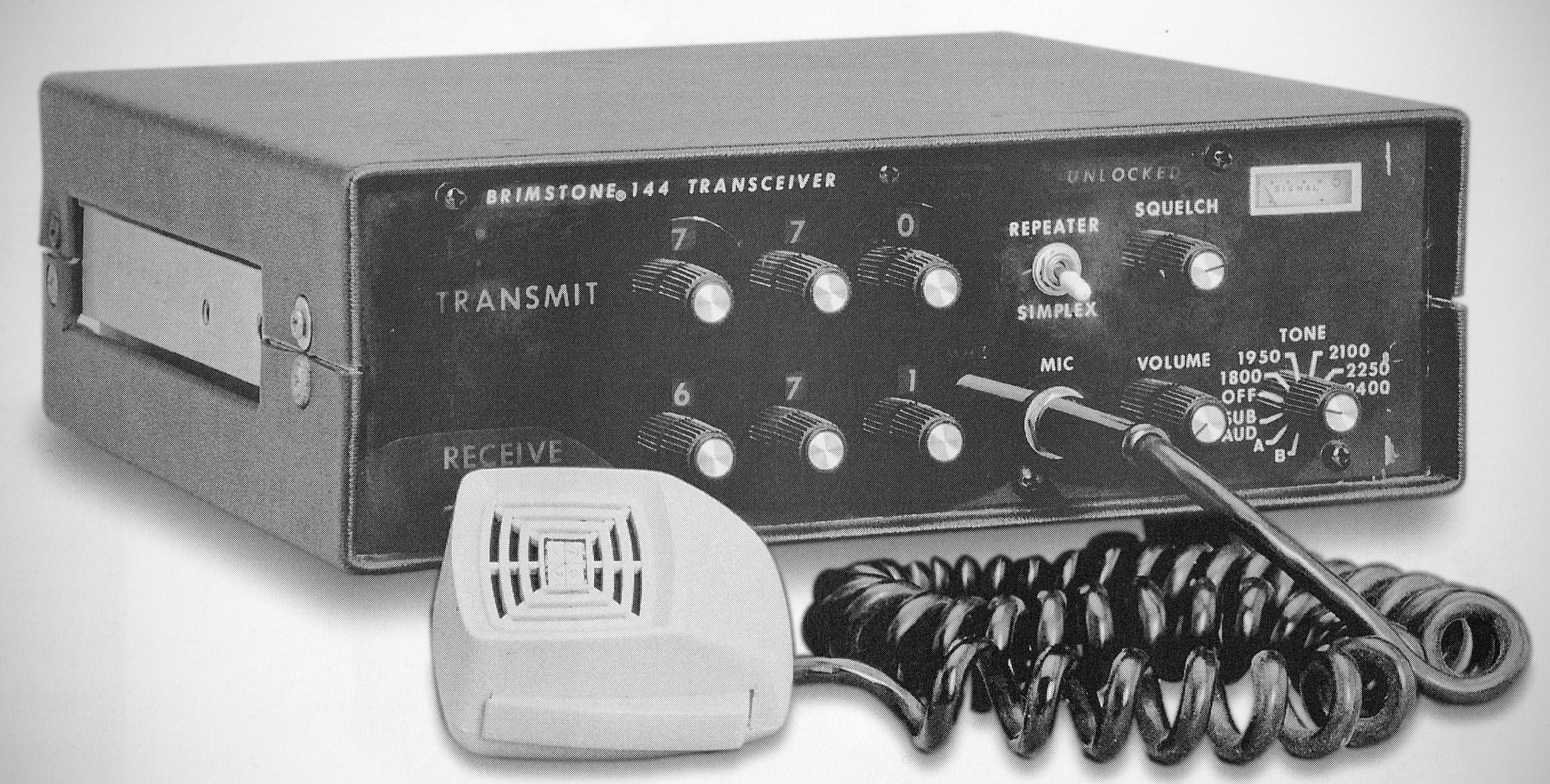
The oddly-named FM transceiver tuned from 143.00 to 149.99 MHz in 10 kHz synthesized steps (optionally 5 kHz). Power output was 25 watts and other options included plug-in modules for Touch Tone®, tone burst, and subaudible tones.
Frequency generation is by the Satan Electronics "Warlock Frequency Control System," which is a phase-locked-loop synthesizer that provides frequency coverage between 143.00 and 149.99 MHz, with 142 MHz coverage an optional accessory. Frequency selection is in 10-kHz steps by dialing in the desired frequency with rotary selector switches. Or, you can step the frequency in 5-kHz increments simply by pulling out the squelch-control knob.
Transmit and receive frequency selection is by separate switches, with a choice of either repeater or simplex operation by flipping another switch.
The front-panel controls and frequency readout indicators are arranged to provide maximum operating efficiency and convenience. A signal strength meter gives an indication of relative transmitter power output and received signal strength.
The transmitter provides 25 watts nominal power output with a frequency stability of 0.001%. with frequency deviation adjustable from 0 to 20 kHz. Non-harmonic spurious output is down 80 dB. The modulation system
uses speech-processed audio applied to a varicap modulator diode. A 500 ohm dynamic microphone i s furnished with the transceiver.
The receiver features a low-noise, dual-gate FET RF amplifier with about 18 dB gain and a bandpass filter to minimize image and cross modulation. The receiver is a single-conversion superhet with a 10.7-MHz IF. Sensitivity is 0.35 uV for 20 dB quieting and 0.25 uV for 12 dB SINAD. An 8-pole filter provides a 2:1 shape factor: ±7.5 and ±15 kHz respectively at 6 and 60 dB bandwidth. Even greater selectivity is available with an optional 12-pole filter.
For added versatility you can choose optional plug-in modules: tone burst for 1800-2400 Hz, Touch-Tone interface, subaudible tone, dial tone, super selectivity, and extended frequency range (142.00-149.99 MHz).
In Nov 1976 the company changed its name to Tec-Kan.
In 1977 the Brimstone was replaced with the Synthetran 144. You have to give them credit for unusual names.