Note
Ham Radio, Feb 1972, p. 37.
QST, Mar 1972 p. 160.
QST, Sep 1973, p. 114.
QST, Feb 1974, p. 146.
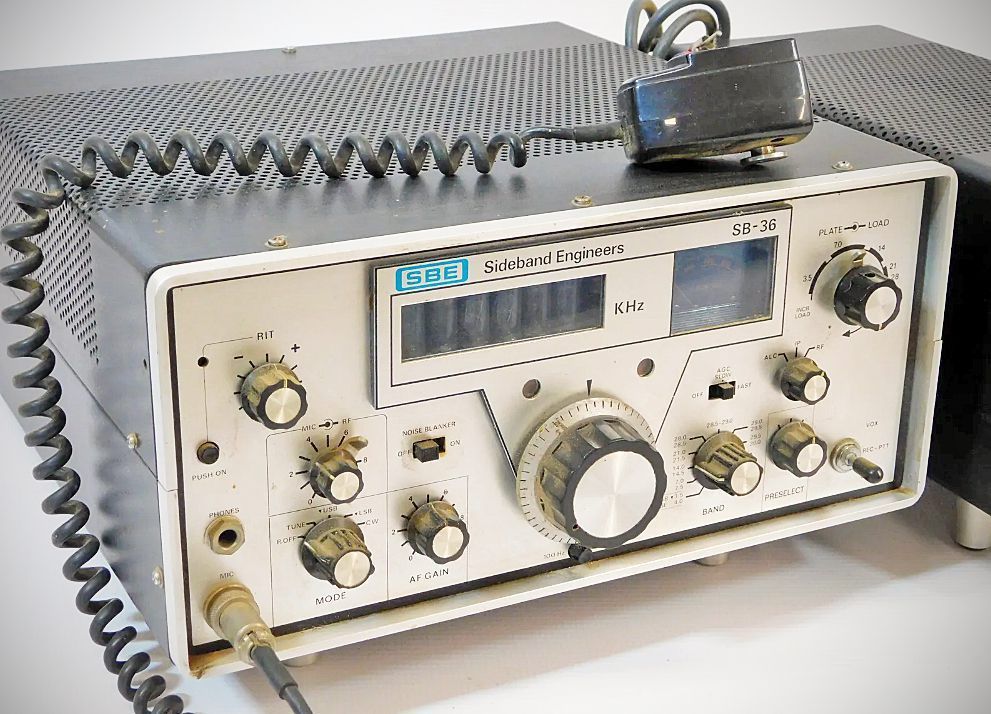
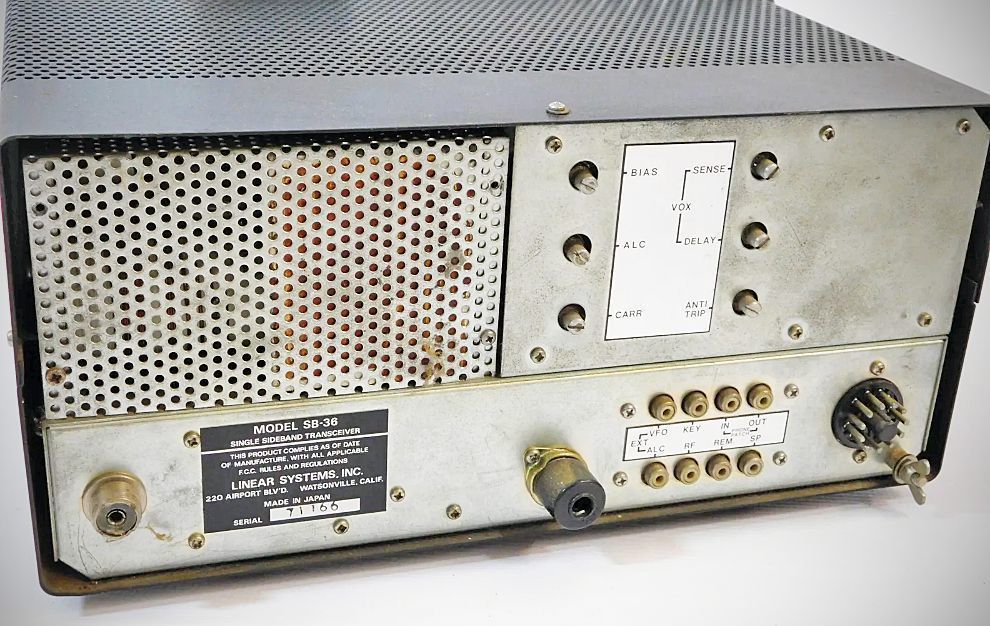
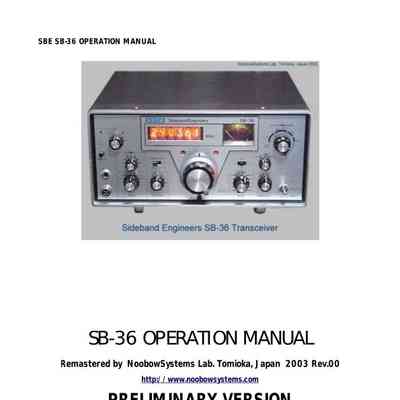
The SBE SB-36 is an artifact from a pivotal transitional era in amateur radio history. While branded under SBE (Sideband Engineers), it was made in Japan for Linear Systems Inc.
The Linear Systems / SBE Connection
To understand the SB-36, you have to look at the corporate hand-offs of the era. Sideband Engineers (SBE) was originally founded in 1962 by the legendary Faust Gonset with the goal of creating compact, transistorized mobile HF rigs (like the SB-33 and SB-34).
By the late 1960s and early 1970s, American ham manufacturers were facing intense competition from Japanese imports. SBE went through organizational shifts, becoming a subsidiary of Raytheon before being taken over by Linear Systems Inc. The SB-36 was introduced early in 1972 at a premium price of $895.00 (including the external power supply)—a massive sum at the time, equivalent to several thousand dollars today. Because of the intense market pressure and its high price tag, very few SB-36 units were actually manufactured before Linear pulled out of the amateur HF market later in the decade to focus on CB radios and scanners. This low production run makes it a rare find today.
Key Technical Specifications & Architecture
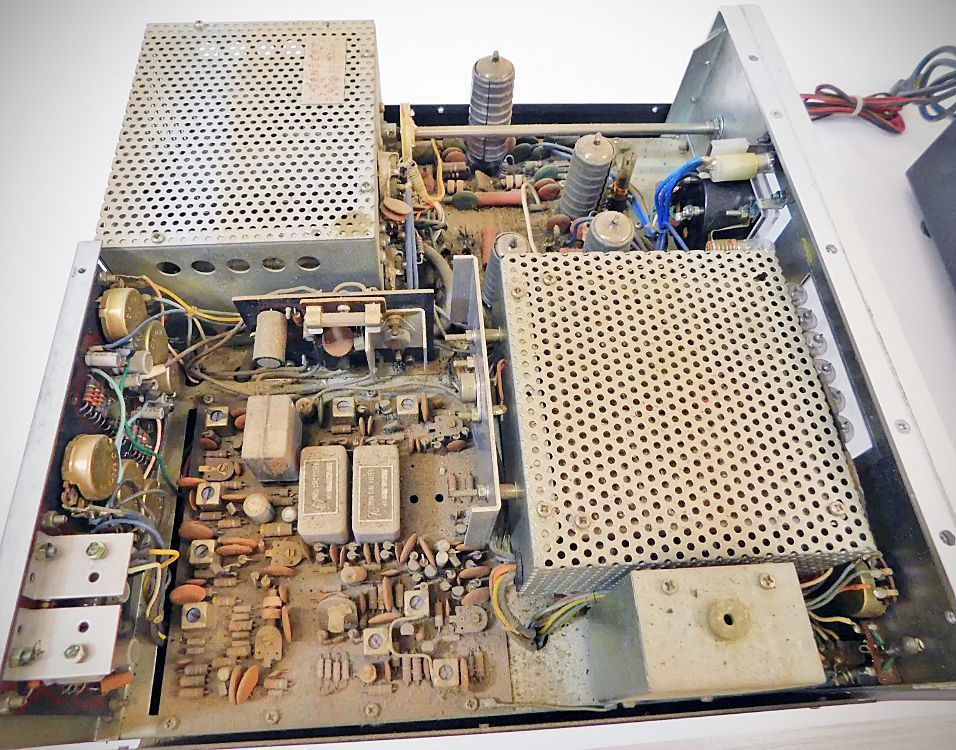
Architecturally, the SB-36 represents the classic "hybrid" design philosophy of the early 1970s—combining solid-state low-level circuitry with a rugged vacuum-tube final amplifier section to deliver serious power.
The Display & User Interface
The most striking visual and technical feature of the SB-36 front panel is its Nixie tube frequency display. While many rigs of this era were still using mechanical analog dials or complex slide-rule scales, the SB-36 pushed for a futuristic digital readout using classic neon-glow Nixie tubes, giving it a beautiful retro-tech aesthetic.
Specifications
– Frequency Range:
3.50 – 4.00 MHz
7.00 – 7.50 MHz
14.00 – 14.50 MHz
21.00 – 21.50 MHz
28.00 – 30.00 MHz
– Frequency Accuracy: Nixie tube Read-out, accurate to within 100 Hz on all bands
– Power Input:
SSB: 500 watts, P.E.P.
CW: 400 watts
– Primary Input Voltage: 115/220 VAC, 50/60 Hertz
– PA cooling Fan: Built in to PA compartment
– Carrier Suppression: -50 db
– Distortion Products: -30 db
– Modes of Operation: USB, LSB or CW.
– Unwanted Sideband: -50 db, @ 1kHz
– Antenna impedance: 50–100 ohms unbalanced
– VSWR: Not to exceed 2:1
– Audio Band Width: 300–2700 Hertz @ 6 db
– Sideband Rejection Filters: Crystal lattice, 9 MHz
– Power Consumption: Single Tone Output - 550 watts
– Front Panel Meter: Indicates Plate current (Ip), Relative RF Output and ALC
– Sensitivity: 0.5 microvolts for 10 db $\frac{S+N}{N}$
– Selectivity:
2.4 kHz @ 6 db, 4.2 kHz @ 60 db
– Spurious Response: Image and IF responses down at least 50 db
– Stability: 100 Hertz (or less) per 1/2 hour under normal ambient condition
– Audio Output: 2.5 watts @ 10% distortion
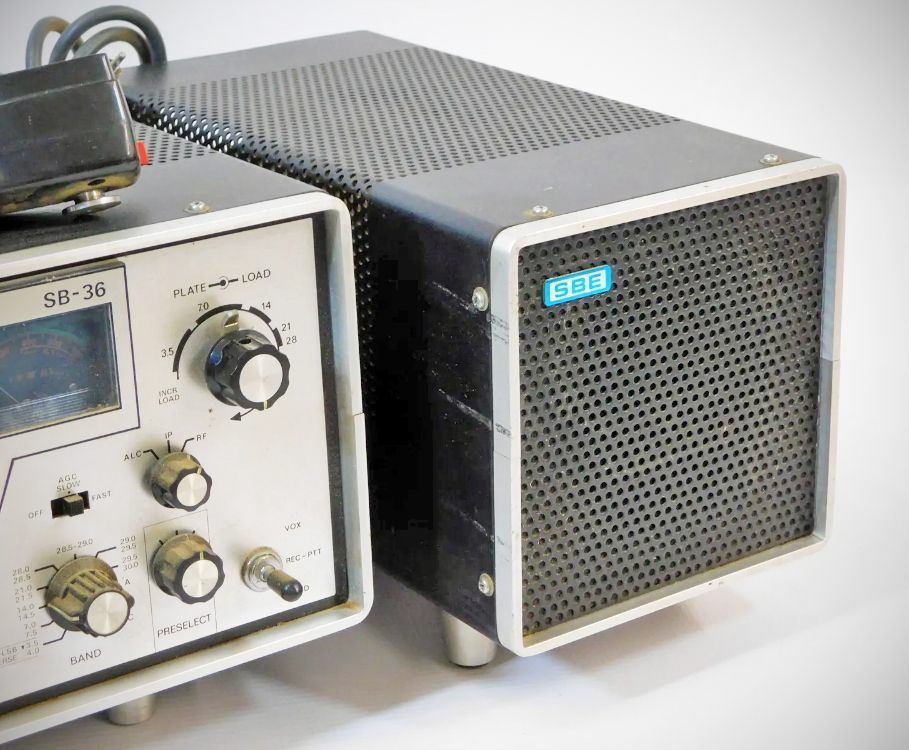
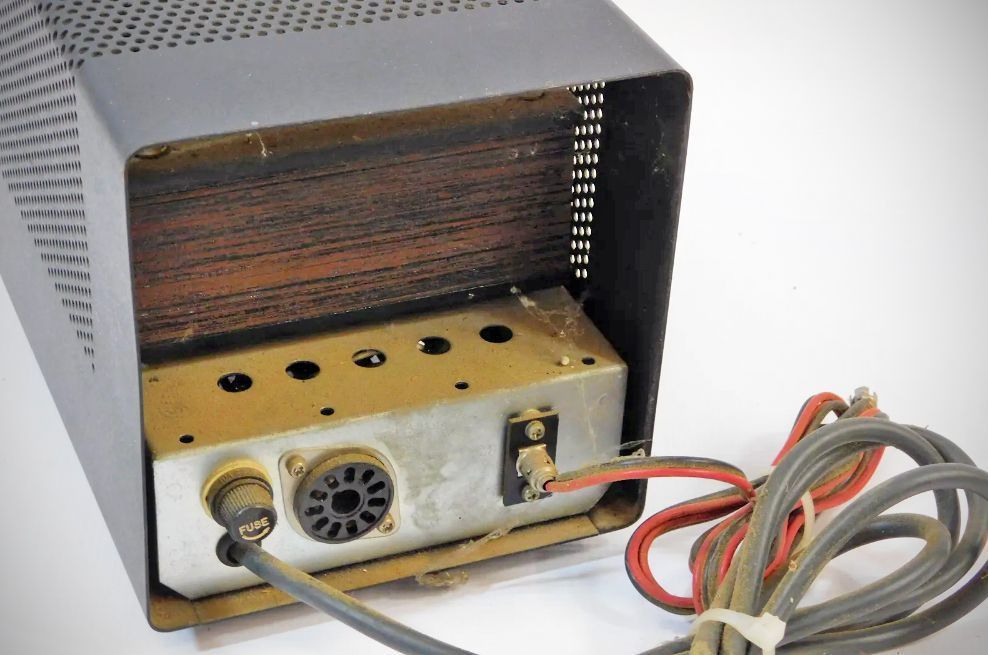
– Speaker: 8 ohms, built into accessory AC Power Supply unit. Rear panel jack provided for external speaker.
– Noise Blanker: IF type, switchable from front panel.
– Receiver Incremental Tuning (RIT): ±7 kHz
– Power Consumption: 100 watts
– Front Panel Meter: Calibrated in "S" units
– Head Phones: Jack on front panel. 600 ohm output.
Tubes: (1) 6EJ7, (1) 6BQ5, (1) 6AW8, (1) 6BZ5, (2) 6KD6
Note: The rear apron of the SB-36 chassis features a 7-pin accessory and interconnection socket. If the mating "dummy" plug is missing, the rig will not power up or function properly.