Note
QST, Oct 1963, p. 117.
QST, Nov 1963, p. 131.
QST, Dec 1963, p. 141.
QST, Jan 1964, p. 139.
CQ, Feb 1964, p. 5.
QST, Jan 1966, p. 107. (701 series)
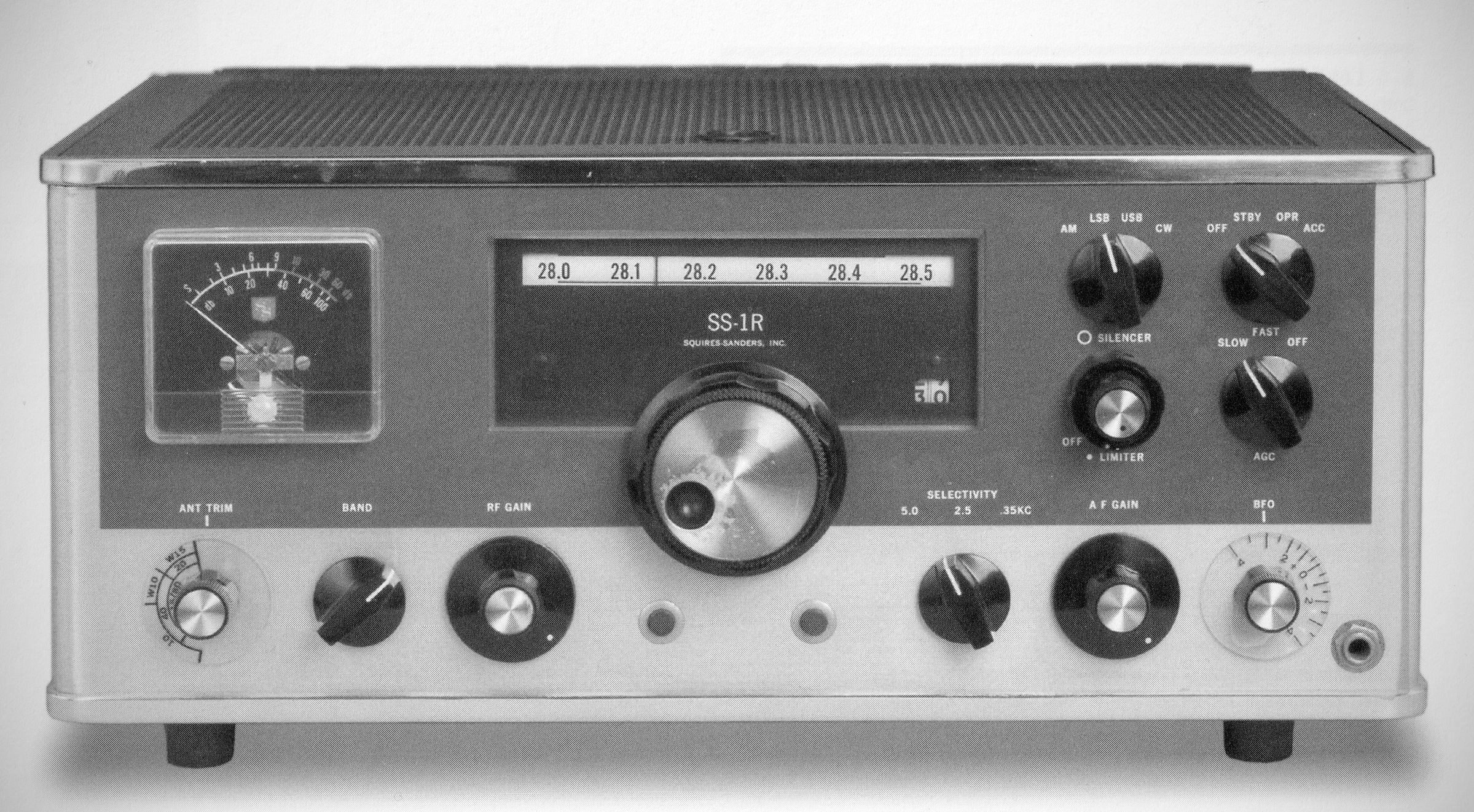
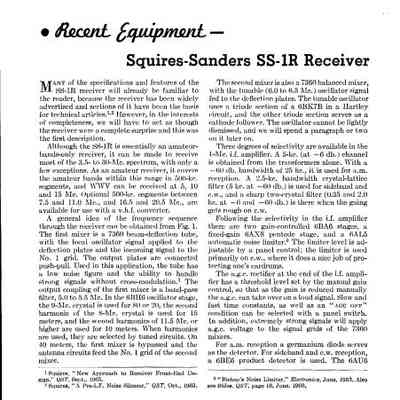
The SS-1 R was designed to provide freedom from front end overload and cross modulation while still delivering outstanding sensitivity.
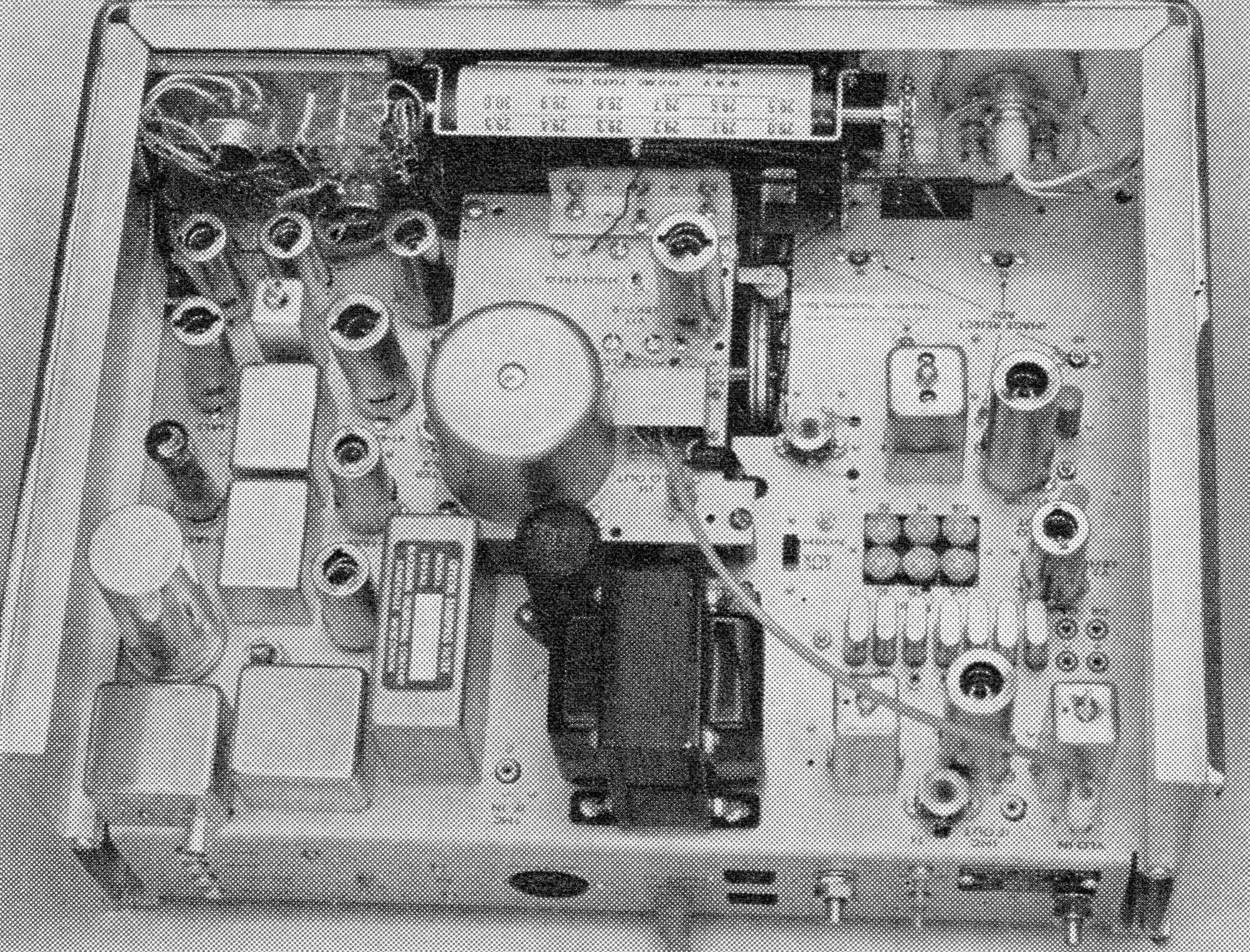
The Squires-Sanders receiver had no RF stage. IF crystal filters yielded selectivity bandwidths of 0.35, 2.5, and 5 kHz. The 12 tube set also used 10 solid-state diodes.
Frequency readout was accomplished with the combination of a slide rule dial and a 2-digit mechanical odometer-type indicator. The main tuning rate was 10 kHz per revolution of the dial, but push button motor tuning could be used for rapid changes.
The receiver covered 80–10 meters in eight 500 kHz segments. There were two additional general coverage ranges, as well as fixed-tuned positions for 10 and 15 MHz WWV.
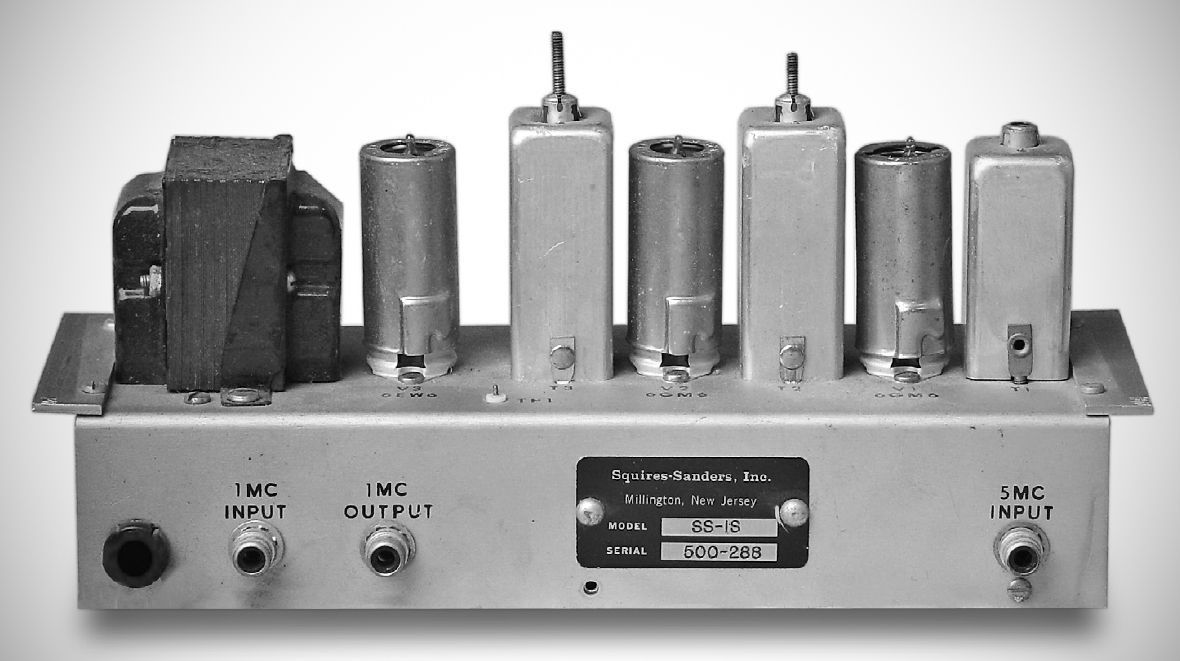
The SS-1S Noise Silencer was an accessory for the SS-1R receiver. It mounted in the SS-1RS speaker enclosure but was controlled from the receiver’s front panel. The SS-1S was especially effective because it was in the receiver’s signal path ahead of selective IF circuits; $135.00.
Features
– Bandswitch Design: A 12-position, 360° continuous bandswitch connected to an internal drum display that shows the active band.
– Frequency Display & Digital Readout: Uses a slide-rule dial to show the nearest 100 kHz section, paired with a gear-driven digital counter display providing direct kilocycle readout from 0 to 99 with ±1 kHz accuracy.
– Tuning Controls & Motor Drive: Incorporates a slow 10 kHz per turn manual tuning knob alongside a push-button motor drive for rapid band traversal.
– Front-End Performance: Features a low-noise front-end with 7360 balanced mixers designed to prevent cross-modulation and signal overload.
– Automatic Noise Limiter (ANL): An I.F.-stage noise limiter featuring an adjustable threshold, capable of establishing automatic threshold control on SSB and CW as well as AM.
– Automatic Gain Control (AGC): Fast-attack AGC with selectable slow, fast, or off settings across all modes.
– System Integration: Includes interface provisions for transceiver operation with the companion SS-1T transmitter, an optional SS-1S noise silencer, and an optional SS-1V video bandscanner.
Specifications
– Frequency Coverage:
80 m: 3.5 - 4.0 (or any 500 kHz 4.0 - 5.0*)
40 m: 7.0 - 7.5
20 m: 14.0 - 14.5 (or any 500 kHz 11.0 - 16.5*)
15 m: 21.0 - 21.5 (or any 500 kHz 20.5 - 28.0*)
10A: 28.0 - 28.5
10B: 28.5 - 29.0
10C: 29.0 - 29.5
10D: 29.5 - 30.0
WWV 10 10.0 Fixed Tuned
WWV 15 15.0 Fixed Tuned
WWV 5 5.0 - 5.5 (internal switch)
GA* Any 500 kHz 7.5 - 11.0
GB* Any 500 kHz 16.5 - 20.5
* – with optional crystals
– Frequency Accuracy: ±1 kHz maximum error.
– Selectivity: 5 kHz / 2.5 kHz / 0.35 kHz
– Sensitivity: 1/2 uV or better for 10 dB signal-to-noise ratio
– Stability: Less than 500 Hz warmup drift (typically in less than 5 min.); less than 100 Hz thereafter including low to high line variation
– Sensitivity: 1.5 uV or better, for 10 db S/N on 10 M with 5 kHz bandwidth
– IF and Image Rejection: Greater than 60 db
– Cross Modulation: Example: Receiving a 10 uV signal with 2.5 kHz selectivity, an unwanted 0.1 volt signal 20 kHz away produces negligible cross modulation
– Internal Spurious: None at stated sensitivity
– AGC: Attack-1 ms., Slow release 1.0 sec., Fast release-0.1 sec. Audio rise less than 2 db from 5 uV to 0.3 volt
– ANL: IF type; operates on AM, SSB, and CW
– Audio Output: 2 watts max. 4 or 500 ohms.
– Mute: Provision is made for muting the receiver on transmit. External contacts open on transmit, closed on
receive, are required
Tube Lineup
– 7360 1st mixer
– 7360 2nd mixer
– 6BH6 crystal osc
– 6BA6 1st IF
– 6BA6 2nd IF
– 6AL5 ANL
– 6AX8 3rd IF / 1st audio amp
– 6AV7 AGC
– 6BE7 Product detector
– 6AS5 Audio outpur
– 6BK7 6.0–6.5 MHz
– 6AU6 BFO
Power requirements: 105–125 VAC, 60 Hz, 55 watts.
References
Review: QST, May 1964, p. 54.