Note
73, Oct 1965, p. 71.
73, Jan 1967, p. 93.
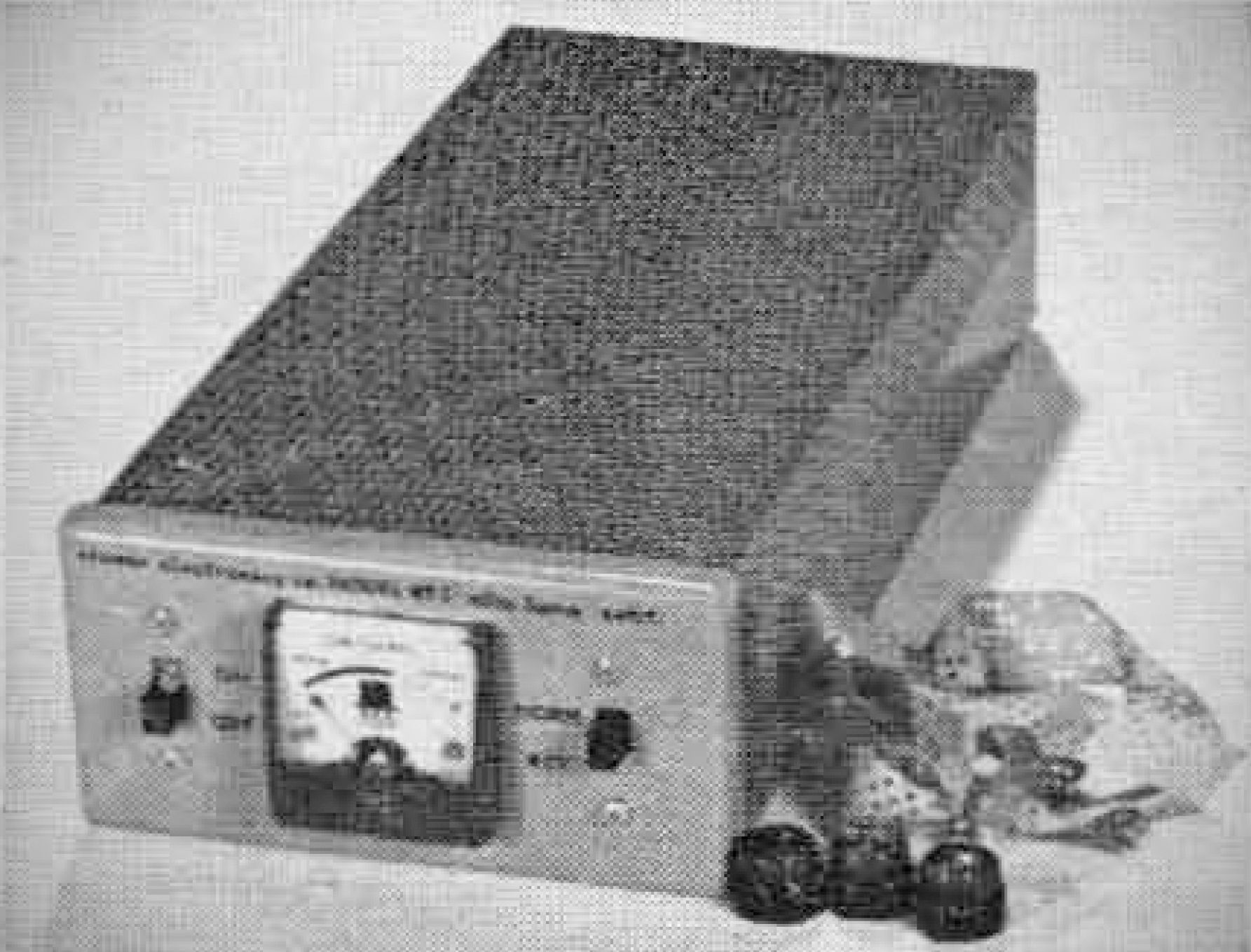
The Stoner RT-1 is a compact, solid-state radioteletype converter manufactured by Stoner Electronics of Alta Loma, California, designed as a simple and economical way to copy 60 WPM amateur RTTY, press, and commercial transmissions. The fully transistorized unit stands out by incorporating a built-in power supply for the teleprinter magnet, eliminating the need for a bulky external bias supply to deliver 60 mA of loop current.
Features
– Built-In Tuning Meter: Features an integrated panel meter showing detector collector currents, allowing precise tuning without requiring an external oscilloscope.
– Self-Contained Power: Supplies the necessary 60 mA printer magnet current internally. A rear-panel control provides quick adjustment of this current.
– Setup & Connections: Plugs in between a receiver’s 500-ohm output (a matching transformer is required for receivers with different output impedances) and the teleprinter.
Features
– Military grade epoxy circuit board.
– Single channel and narrow shift copy.
– Anti-fade and decision circuitry.
– Selective filters to minimize garble due to interference.
– Two cascade limiters employing diodes and transistors.
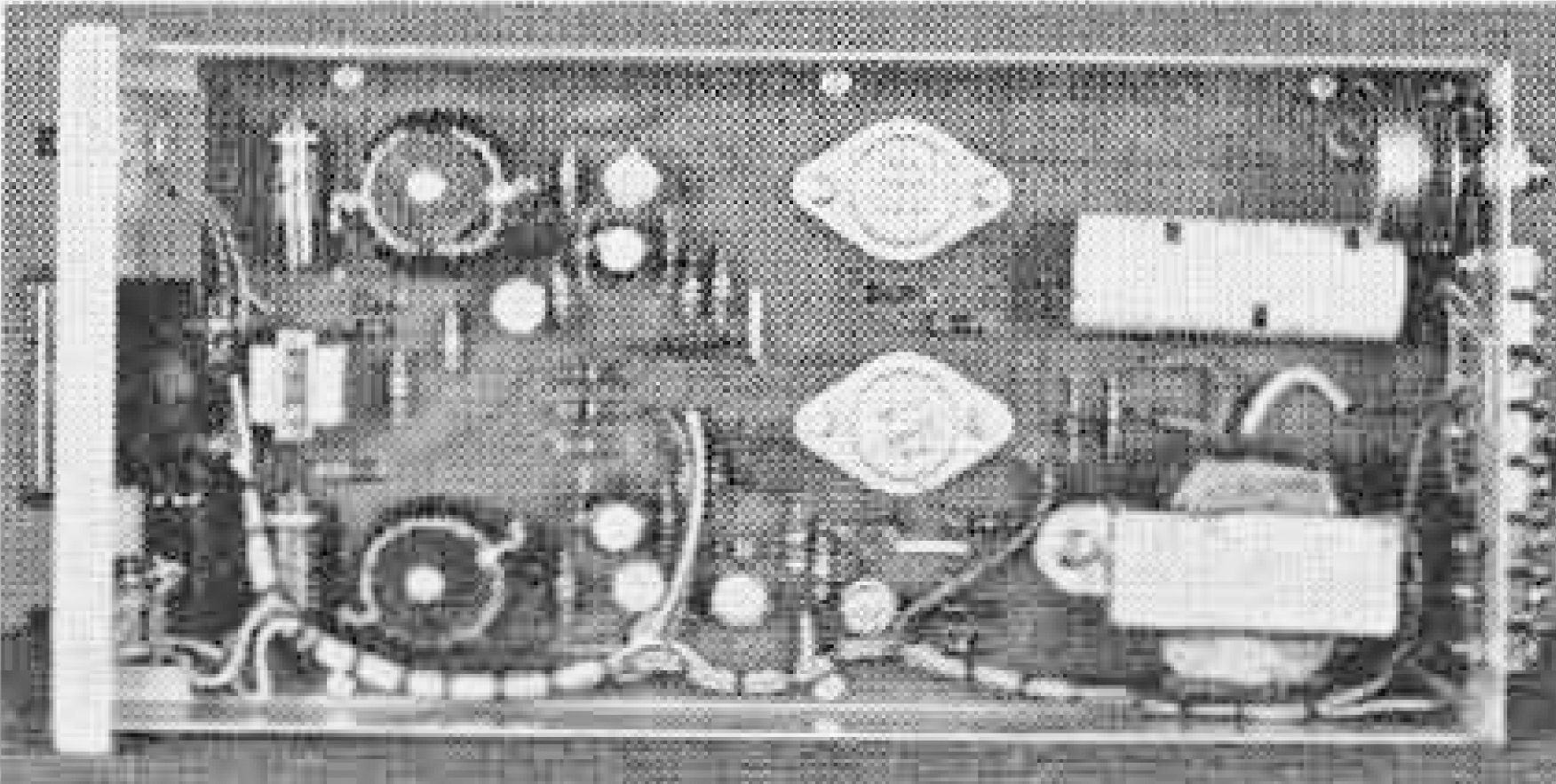
The receiver's 500-ohm audio output enters a matching transformer that steps the impedance up to 10 kΩ. A initial transistor stage then amplifies and limits the incoming tone signal.
The amplified tone feeds into two toroidal filters—one tuned to 2125 Hz for space and the other to 2975 Hz for mark (designed for standard 850 Hz frequency shift keying). These circuits link-couple into Class B transistor detectors, which output a square wave reflecting the keyed signal.
The built-in meter measures the detector collector currents; when properly tuned on a standard signal, the currents equalize and produce a steady upward meter deflection.
The detector output drives a two-transistor squaring stage to produce a clean square wave replica of the RTTY signal. Because this stage lacks sufficient current to directly trip the teleprinter armature, the signal passes into a DC amplifier switch driver.
The driver operates a switching transistor placed in series with a transistor current regulator calibrated to 60 mA. The switching stage normally conducts continuously; incoming RTTY pulses interrupt current flow to actuate the printer mechanism.
While optimized for standard 850 Hz shift keying, the RT-1 can copy non-standard frequency shifts by running in single-channel mode. Tuning is accomplished by adjusting the receiver until the printer magnet chatters loudest with the motor off. If text remains garbled, the operator can toggle the unit's "normal-reverse" switch and retune.