Note
QST, May 2006, p. 100.
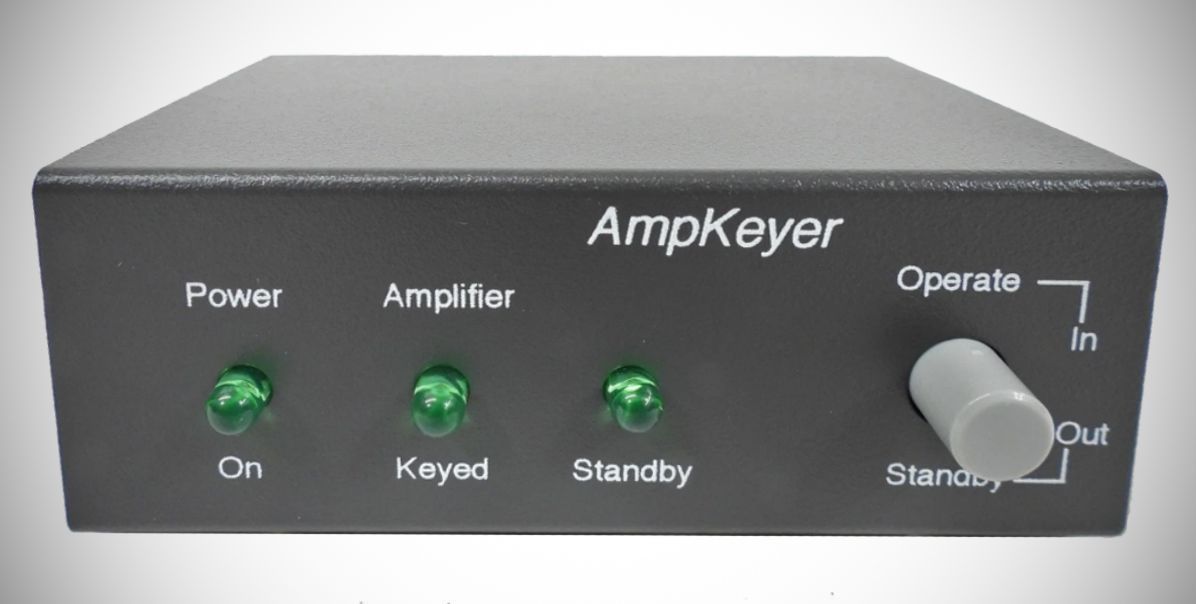
The AmpKeyer, produced by Sunlight Energy Systems, is a specialized interface designed to bridge the gap between modern amateur radio transceivers and vintage linear amplifiers.
Its primary function is to protect the delicate switching circuitry of a modern radio from the high-voltage or high-current loads often found in the relay circuits of older amplifiers. It allows operators to use a modern Icom, Yaesu, or Kenwood radio to trigger a classic 1960s-era amplifier without the risk of an expensive "arc-over" or "blown" switching circuit in the radio.
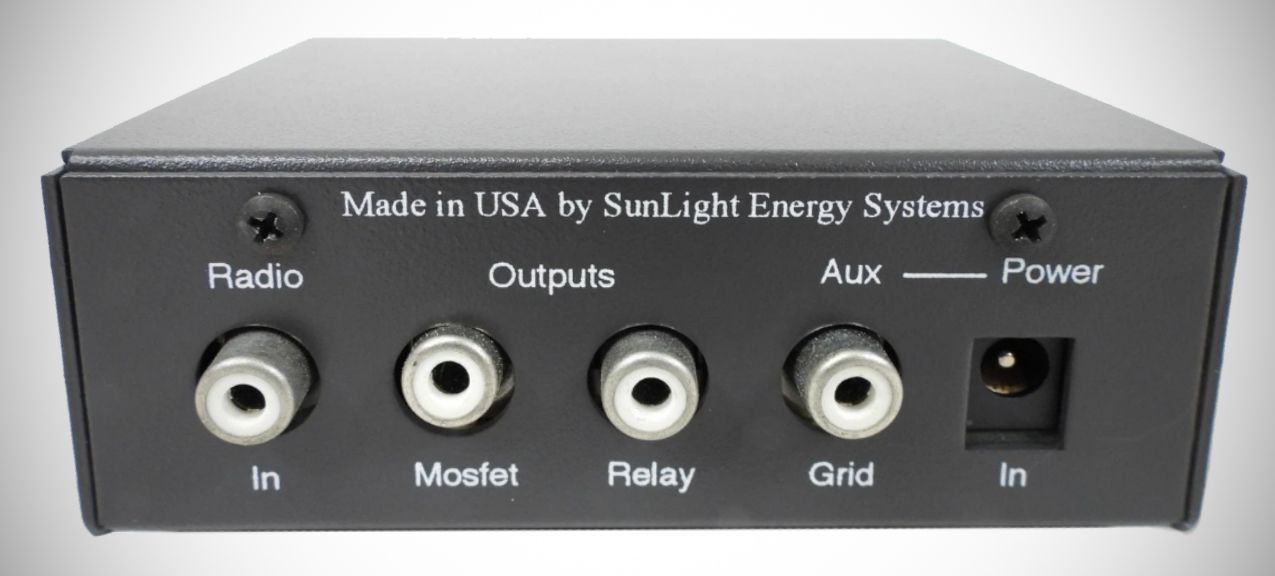
The device is a small "inline" box. One side connects to the Remote or Linear jack of the transceiver, and the other side connects to the Relay or Antenna Relay jack on the back of the vintage amplifier.
This device is often preferred over internal "soft key" modifications because it includes a built-in Stand-by switch, allowing you to disable the amplifier without turning it off or disconnecting cables..
The AmpKeyer was featured on page 100 in the "Short Takes" column of May 2006, QST, While the QST mention in marks its formal introduction to the wider ARRL membership, the device was actually available slightly earlier through Sunlight Energy's web storefront by late 2005.
Technical Functions
High-Voltage Isolation: Many vintage amplifiers (like those from Heathkit, Collins, or Hammarlund) use a "keying" circuit where the transceiver must ground a line to trigger the amplifier's internal relay. In older gear, this line can carry +100V to +150V DC, or even AC voltage, which would immediately destroy the low-voltage switching transistors in a modern solid-state radio.
Current Buffering: Even if the voltage is relatively low, the current draw required to throw a large mechanical relay in an old amplifier can exceed the milliamperage rating of a modern radio’s "TX GND" or "Accessory" port.
Opto-Isolation: Most AmpKeyer models utilize an opto-isolator. This component uses a beam of light to transfer the "transmit" signal across an internal gap, ensuring there is no electrical path between the high-voltage amplifier and the low-voltage transceiver.
Switching Capabilities
– Maximum Current: It is rated to switch up to 10 Amps to ground.
– Voltage Handling: Standard Keying: Switches 12V DC to ground.
– Dry Contacts: Features "dry" (isolated) relay contacts for amplifiers requiring negative bias voltages, such as the -130V found in some vintage Heathkit gear.
– Grid Block Support: The circuitry includes a specific output for grid-block keying systems if required by the amplifier.
Power & Input Requirements
– Operating Voltage: The unit is highly flexible, operating on any power source between 8V and 18V (AC or DC).
– Auto-Polarity: It automatically sets the internal polarity and voltage based on the input, making it difficult to wire incorrectly.
– Isolation Method: Uses an optical interface (opto-isolator) to ensure the radio's keying line is physically and electrically separated from the amplifier's high-voltage relay circuit.