Note
QST, Oct 1961, p. 166.
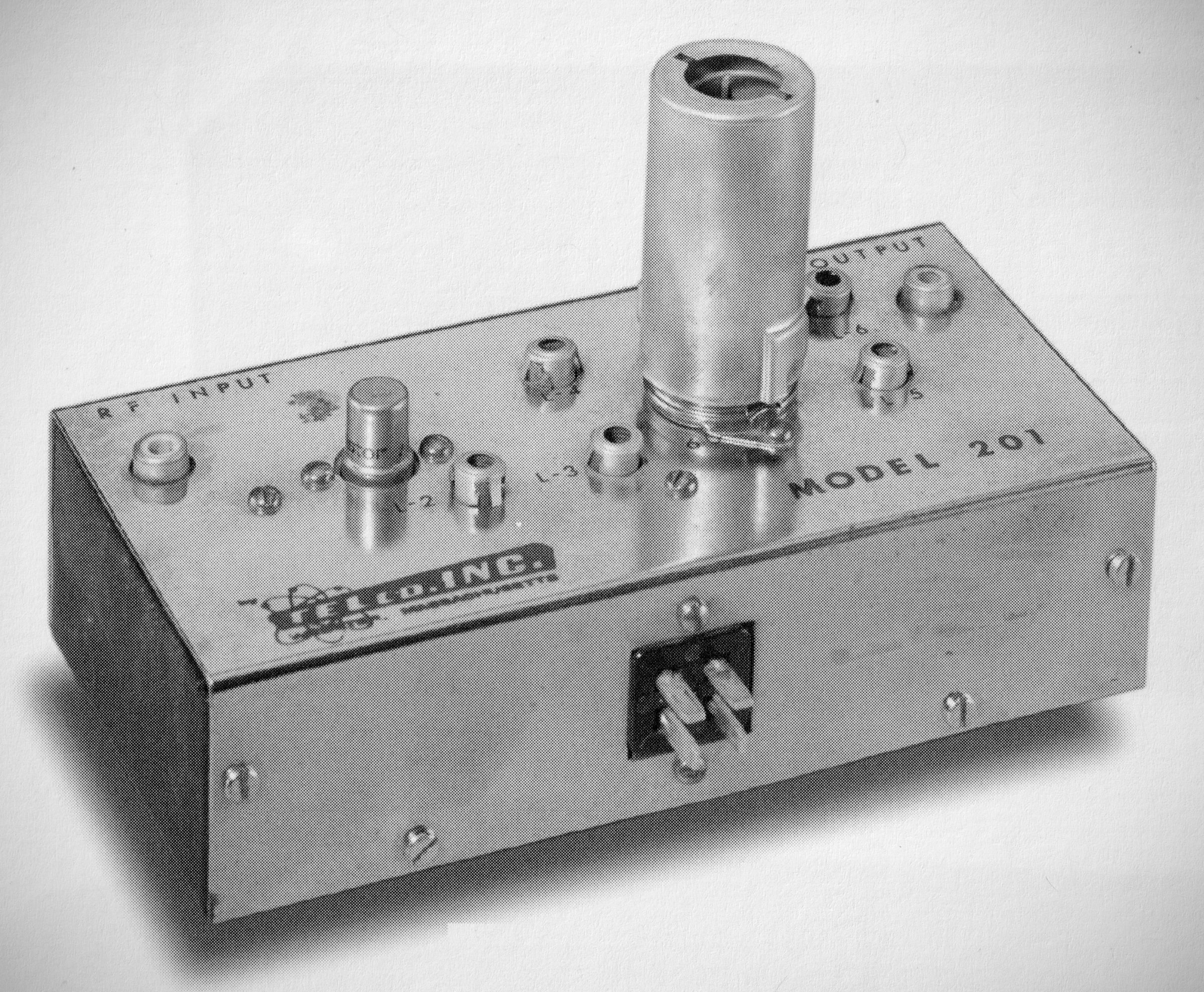
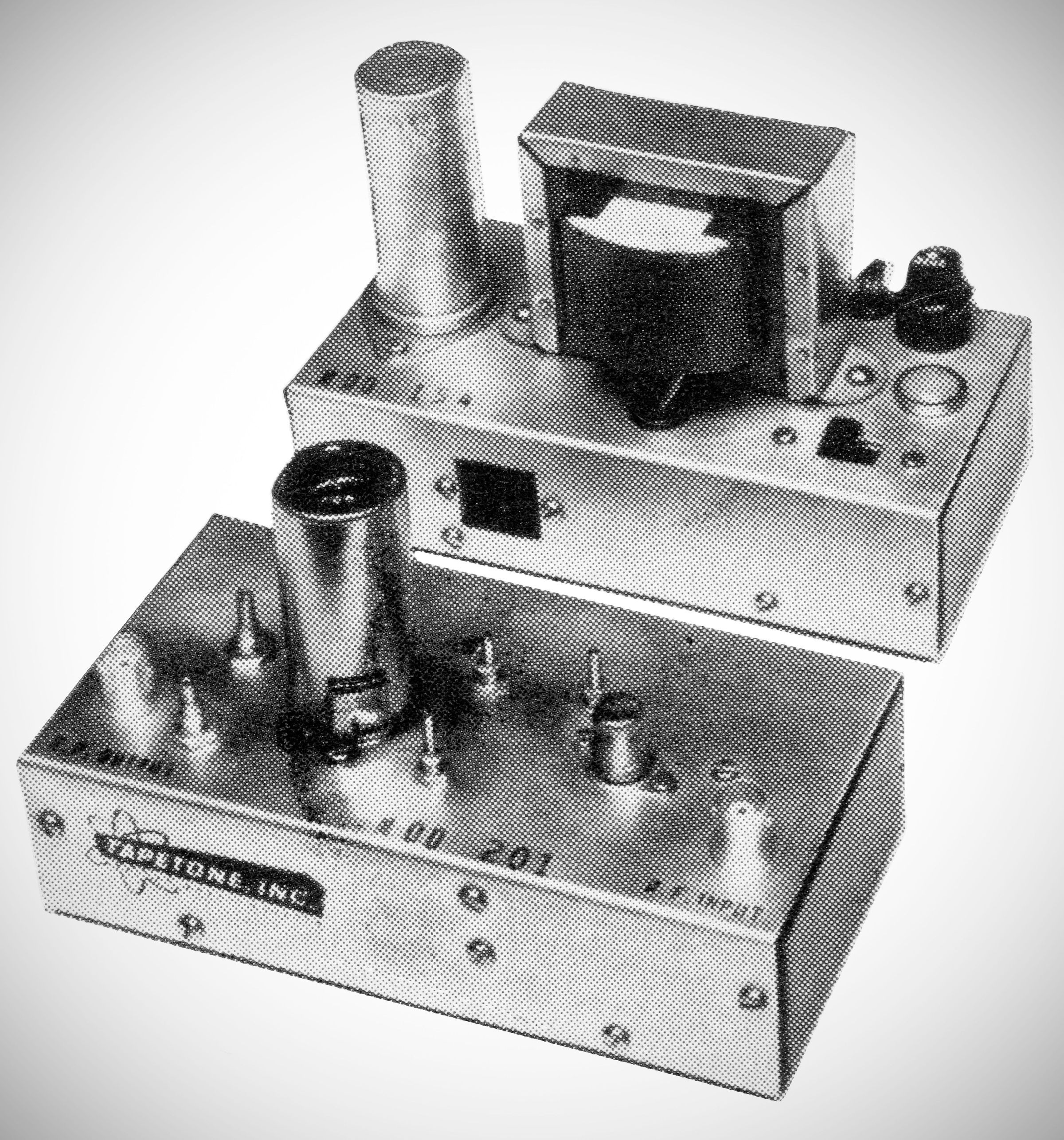
Manufactured by Tapetone, the Telco 201 is a compact, low-noise 6-meter receiving converter designed specifically to solve overload and cross-modulation problems in crowded band environments without sacrificing noise performance.
Specifications & Tube Lineup
RF Stage: Features a 6CW4 nuvistor running in a grounded-grid RF amplifier configuration. The cathode input circuit uses a tapped coil tuned to match a flat 50-ohm unbalanced line.
Mixer Stage: Utilizes one section of a 6U8 tube. The local oscillator signal is injected into the mixer cathode.
Intermediate Frequency (IF): Supplied strictly with an IF output of 14–18 MHz to preserve high image rejection.
Noise Figure: Conservatively rated by Tapetone at better than 3 dB, with review testing showing performance around 2.0 to 2.5 dB.
Rather than using a single tuned output coil, the Telco 201 incorporates a double-tuned, bandpass output circuit featuring two coils (L5 and L6) coupled via capacitor C15.
Bandwidth: Provides a flat, 4 MHz wide passband across the entire 6-meter band (50–54 MHz) as well as the 14–18 MHz IF output range.
Selectivity: The dual sets of bandpass circuits provide sharp skirt selectivity, resulting in high image rejection and suppression of signal feedthrough.
Matching: Tapped off L6 through a resistor network (R7 and R8) to provide a constant 50-ohm output impedance to the companion receiver.
Overload & Cross-Modulation Resistance: By tailoring the RF stage to deliver only as much gain as necessary, the mixer is kept from drawing grid current and acting as a detector under heavy local RF fields.
Review: QST, Apr 1962, p. 52.