Note
QST, Feb 1960, p. 47.
QST, Dec 1979, p. 212.
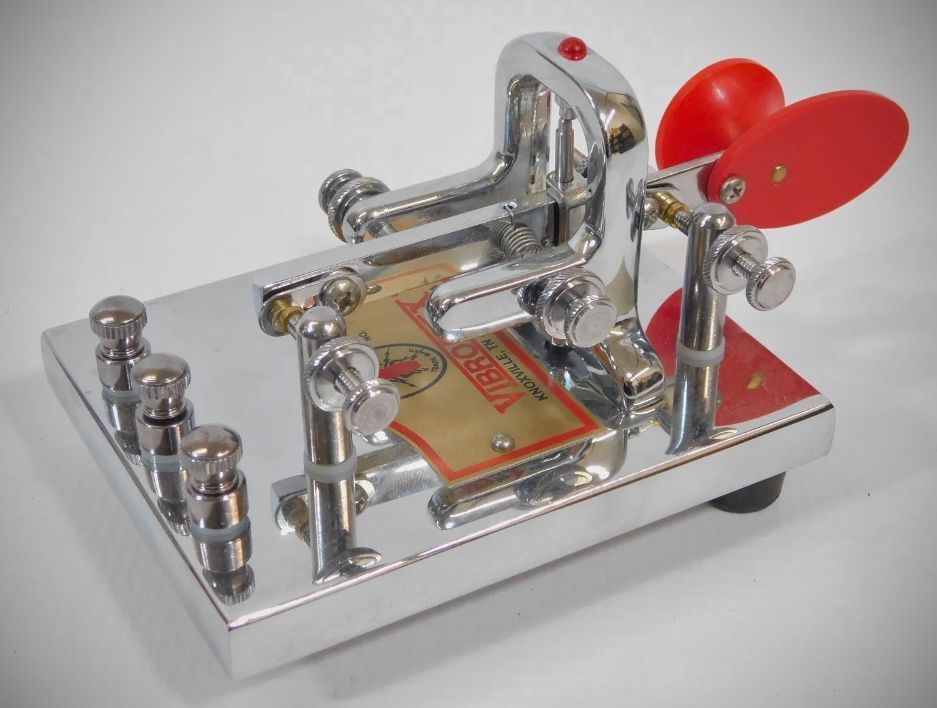
Introduced in January 1960, the Vibro-Keyer (later spelled Vibrokeyer) was the Vibroplex Company’s first dedicated product designed for use with external electronic keying equipment. It was created by John La Hiff, who was then the General Manager and Vice President of Vibroplex.
The key was designed to satisfy a growing demand from amateur radio operators who wanted commercial, high-quality hardware to pair with emerging electronic keyers (such as the famous Hallicrafters HA-1 "T.O. Keyer"), moving away from home-brewed or heavily modified bug levers.
Design and Physical Characteristics
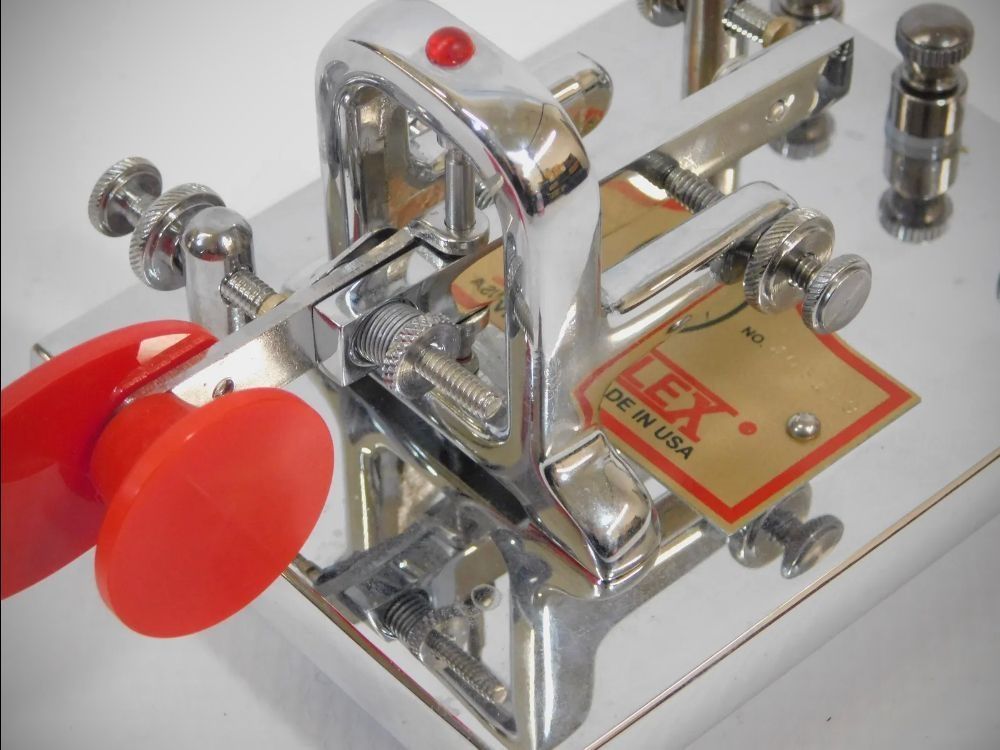
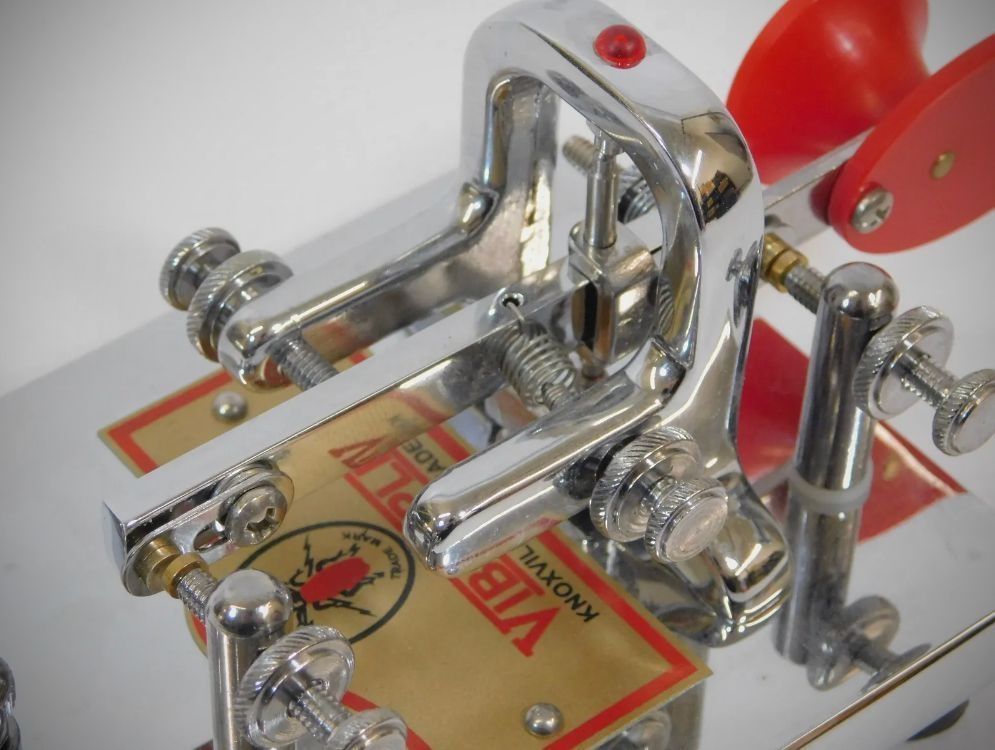
Frame and Components: The design utilized the "Deluxe" mainframe structure of the classic Vibroplex Original bug. It features 3/16" silver contacts and the signature red thumb piece and finger paddle.
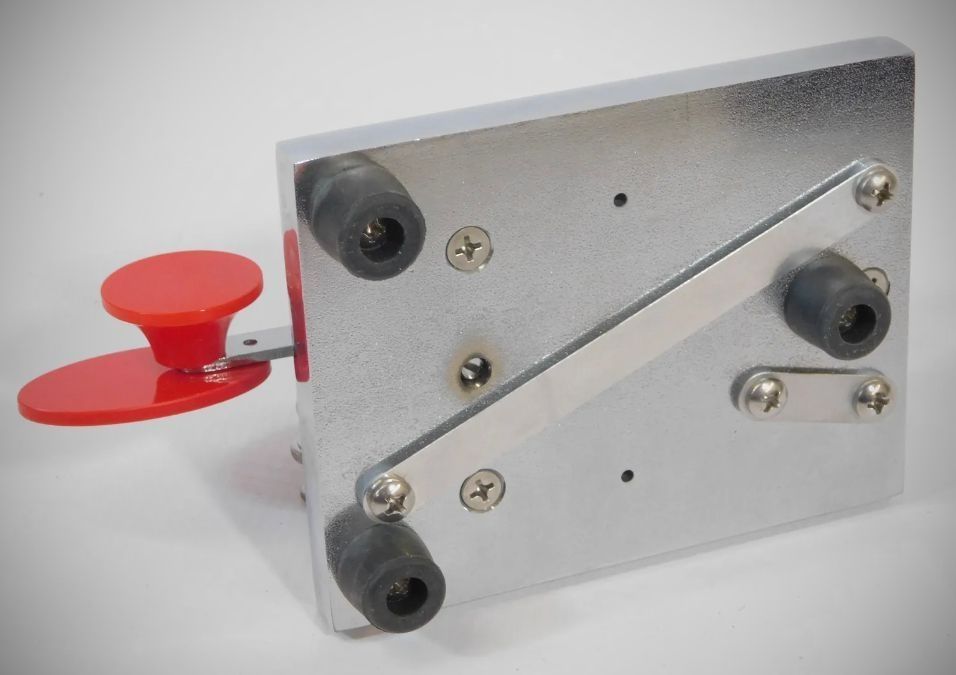
Base: The original 1960 model featured a small beige-painted base measuring 3 1/2 4 1/2 and weighing 2 pounds 14 ounces.
Evolution of Variations: Over the years, several physical variants emerged:
– Beige Base: The standard initial release, originally priced at $15.95.
– Gray Base: A special variant to perfectly match the gray paint scheme of the Hallicrafters HA-1 keyer unit.
– Deluxe Chrome: Introduced in April 1961 featuring a fully chrome-plated base.
– Special Editions (2010): Included texturized black bases with standard bearings, a Collins Collectors Association gray base, deluxe versions with jewel bearings (in chrome or 24K brushed gold), and a 50th Anniversary model sporting a "japanned-like" black finish with gold pin striping.
Unlike a traditional semi-automatic bug which mechanically generates its own dots via a vibrating pendulum, the Vibro-Keyer functions as a single-lever paddle meant to actuate an electronic keyer circuit. Pressing the paddle in one direction closes the circuit for automatic dots, while pressing it the opposite way closes the circuit for automatic dashes.
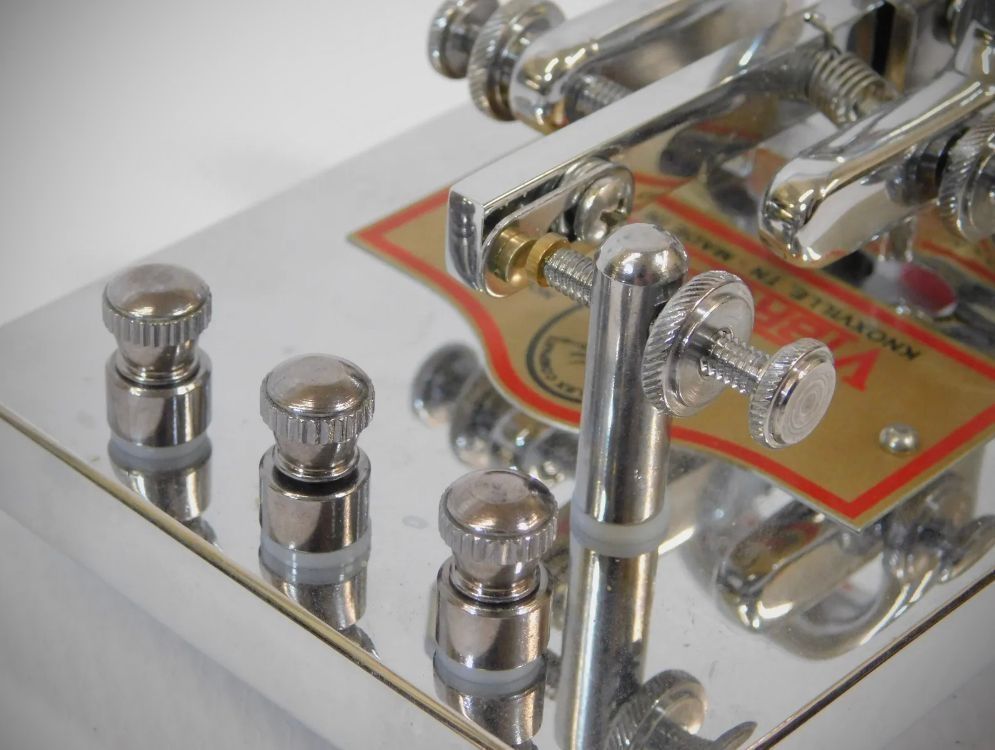
Because it retained the mechanical feel and spacing configuration of a traditional bug mainframe, it allowed operators accustomed to older telegraph keys to transition seamlessly into using modern electronic keying. Additionally, operators could short out the dot and dash binding posts to use the Vibro-Keyer as a stand-alone, manual "side-swiper" key.