Note
Wired only.
CQ, Feb 1963, p. 6.
QST, Mar 1963, p. 159.
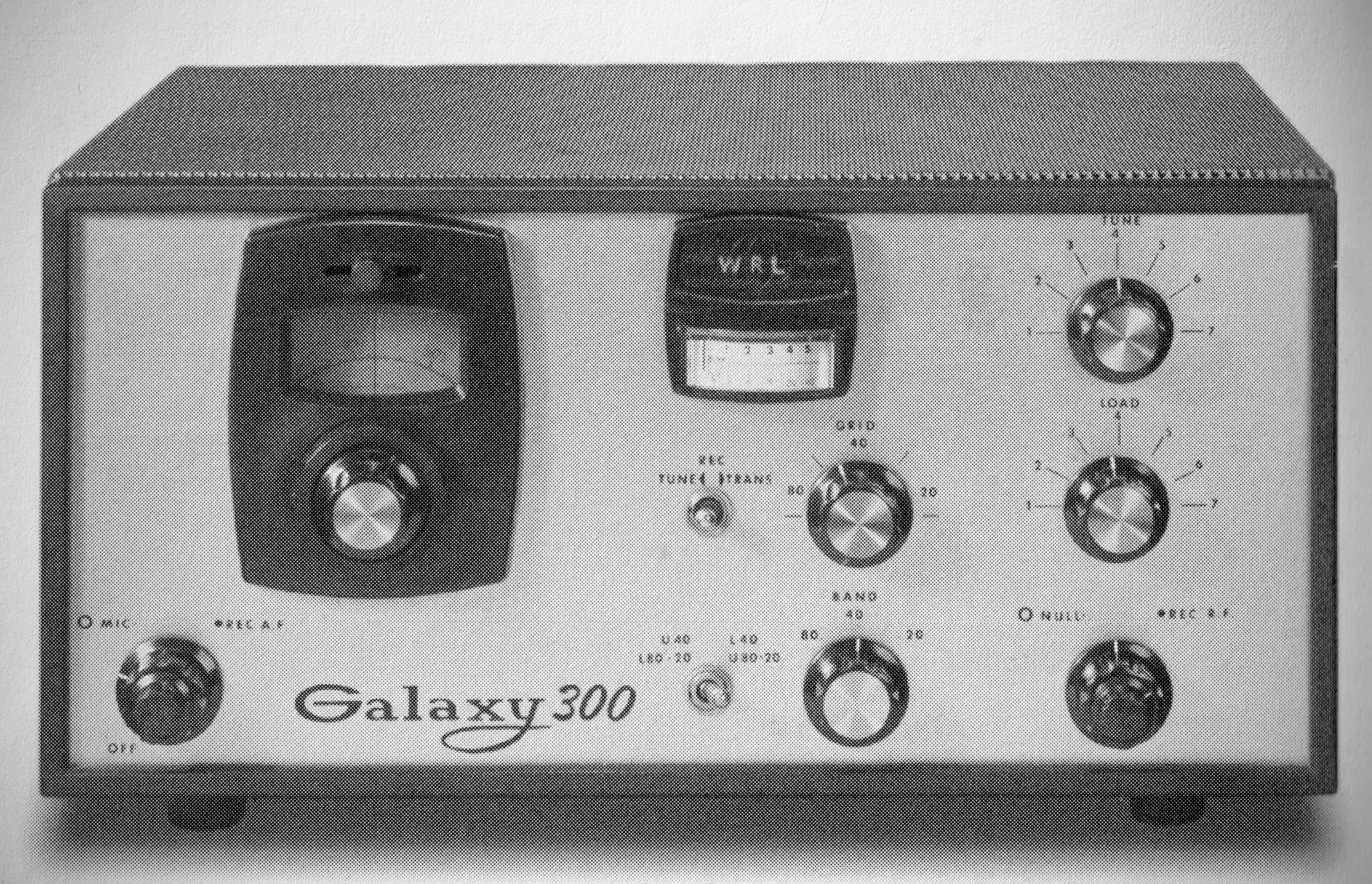
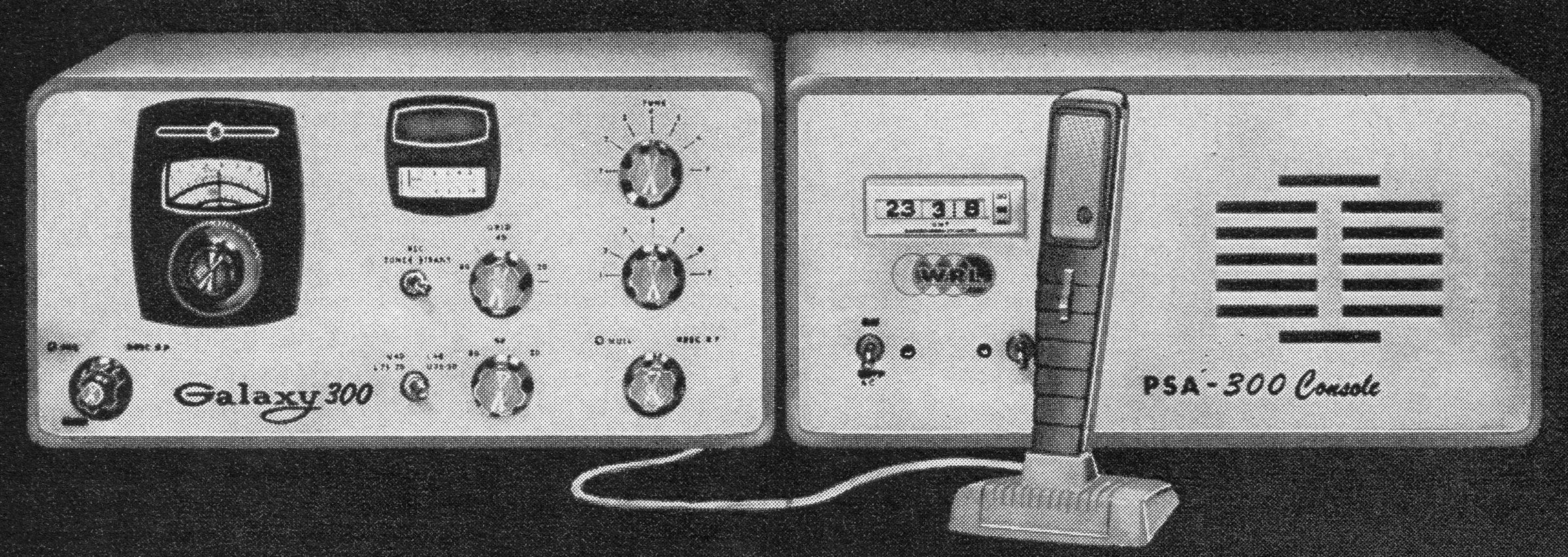
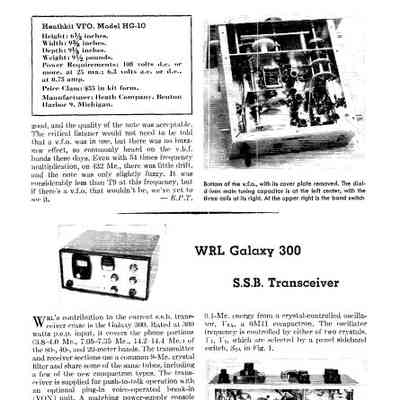
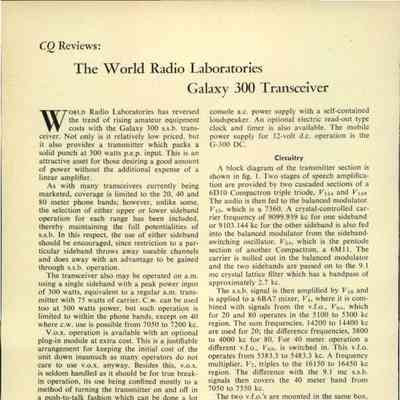
The Galaxy 300 transceiver covered the phone portions of 80, 40, and 20 rneters. It ran 300 watts PEP input on SSB and 175 watts on AM. It used a 9.1 MHz crystal filter and offered selectable sideband operation. PTT was standard and VOX was available as an option.
Features a dual-speed tuning dial mechanism with 12:1 and 72:1 reduction gear ratios, calibrated in 5 kHz increments across all three bands.
– Power Ratings:
SSB: 300 Watts PEP input.
CW: Up to 400 mA input, producing over 200 Watts RF output.
AM: Single-sideband plus inserted carrier operating at reduced plate current (190 mA).
– Frequency Bands: Covers the 80, 40, and 20-meter amateur radio bands (3.5–4.0 MHz, 7.0–7.3 MHz, and 14.0–14.35 MHz), with additional out-of-band tuning range allowed at the band edges.
– Operating Modes: Single Sideband (SSB), Continuous Wave (CW), and Amplitude Modulation (AM).
– Sideband Selection: Selectable upper sideband (USB) or lower sideband (LSB) on all three bands via a front-panel toggle switch.
VX-1 VOX Unit: An optional internal plug-in voice-operated transmit board provide hands-free voice keying and anti-vox receiver muting.
Rear Panel Connections: Coaxial antenna jack (SO-239), 12-pin power cable connector, 1/4-inch CW key jack, external speaker/headphone jack, microphone jack (3-circuit PTT), linear amplifier relay control jack, S-meter zero adjust, and final amplifier bias adjust.
Specifications
–Modes: SSB (Selectable LSB/USB), CW, and AM.
– Tuning Ratio: Dual-speed VFO reduction drive (12:1 and 72:1 ratios).
– Frequency Stability: Less than 100 Hz drift in any 15-minute period following initial warmup.
– Carrier Suppression: Better than 45 dB.
– Unwanted Sideband Suppression: Better than 40 dB at 1 kHz.
– Receiver Type: Single-conversion superheterodyne.
– Intermediate Frequency (IF): 9.1 MHz (using a 6-crystal filter system).
– Sensitivity: 1.0 microvolt for a 10 dB Signal-to-Noise (S/N) ratio.
– Selectivity: 2.7 kHz nominal bandwidth.
– Audio Output: Designed to drive an external 4 to 8-ohm speaker or headphones (no internal speaker in cabinet).
Tube Lineup
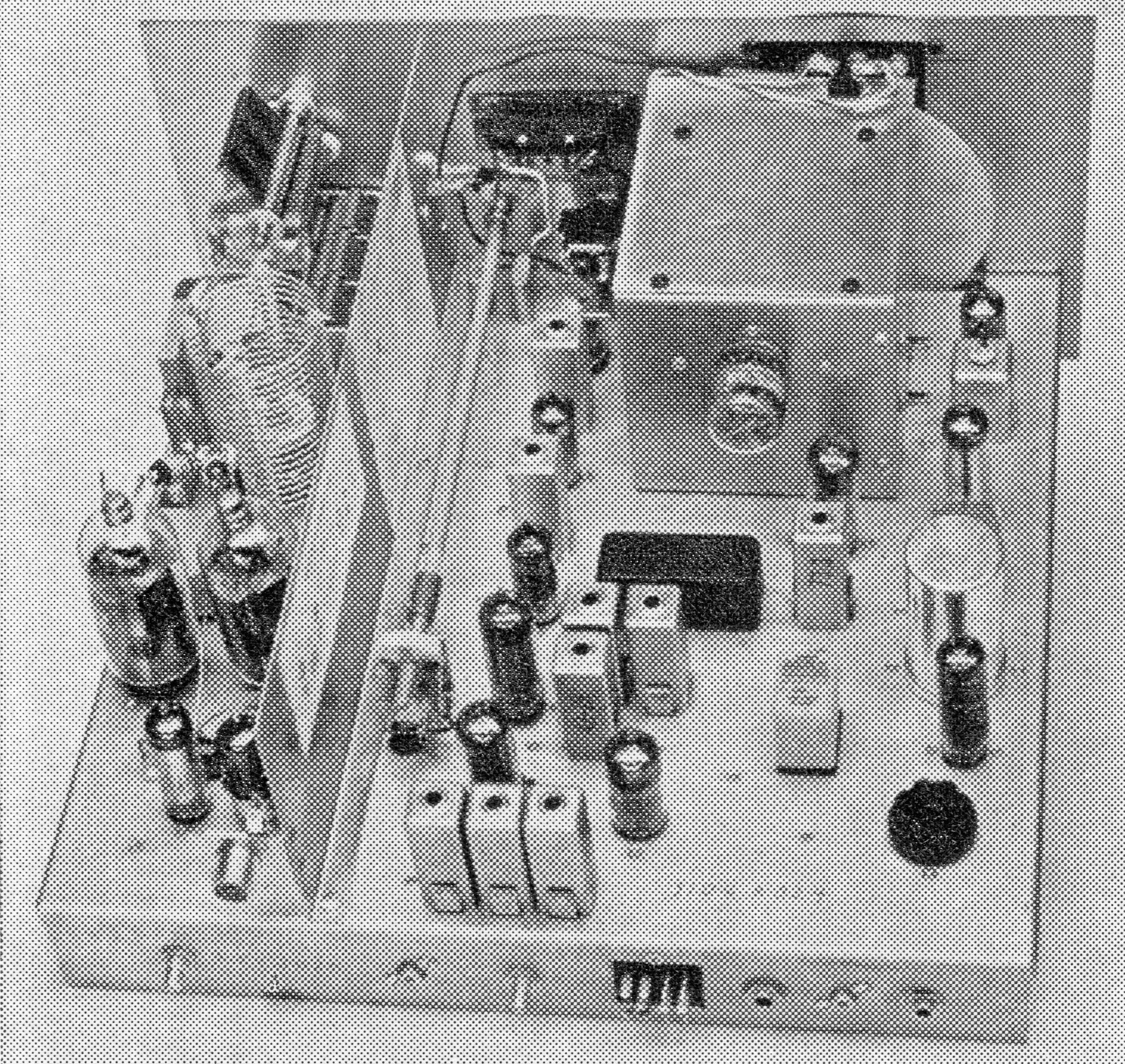
– (2) 6HF5 Final amp
– 6CL6: Transmitter driver stage.
– 6BA7: Transmit mixer.
– 6M11: Compactron Crystal oscillator, product detector, and first receive audio stage.
– 6J11 Compactron
– 6CB6
– 0A2 VFO voltage regulator
– 6AL5: ALC/AGC rectifier.
– 6BZ6: RF receiver amplifier.
– 6X8: Receiver mixer and VFO buffer.
– 0A2 Final screen voltage regulator
– 6AQ5: Receiver audio output.
– 6D10: Compactron Speech amplification and receive audio pre-amplification.
– 7360: Balanced modulator.
– 6AH6: IF amplifier.
– 6BZ6
Optional Accessory Tubes
– 6U8A & 6BJ8: VX-1 VOX board for VOX switching and anti-VOX muting.
Power Requirements
The transceiver requires an external power supply to provide high-voltage B+, low-voltage B+, bias, and filament power:
– PSA-300 AC Power Supply: A stationary AC power supply utilizing silicon diode bridge rectifiers, providing 800V DC high B+, 315V DC low B+, and -100V DC bias. It includes a built-in station loudspeaker and had an optional electric clock accessory.
– G-300DC Mobile Power Supply: A 12V DC transistorized inverter supply using a 1000 Hz toroidal transformer to deliver all necessary operating voltages for vehicle installation.
References
Review: QST, Oct 1963, p. 55.
Review: CQ, Dec 1963, p. 44.