Note
QST, Nov 1975, inside back cover.
QST, Apr 1976, inside back cover.
QST, Feb 1977, p. 163.
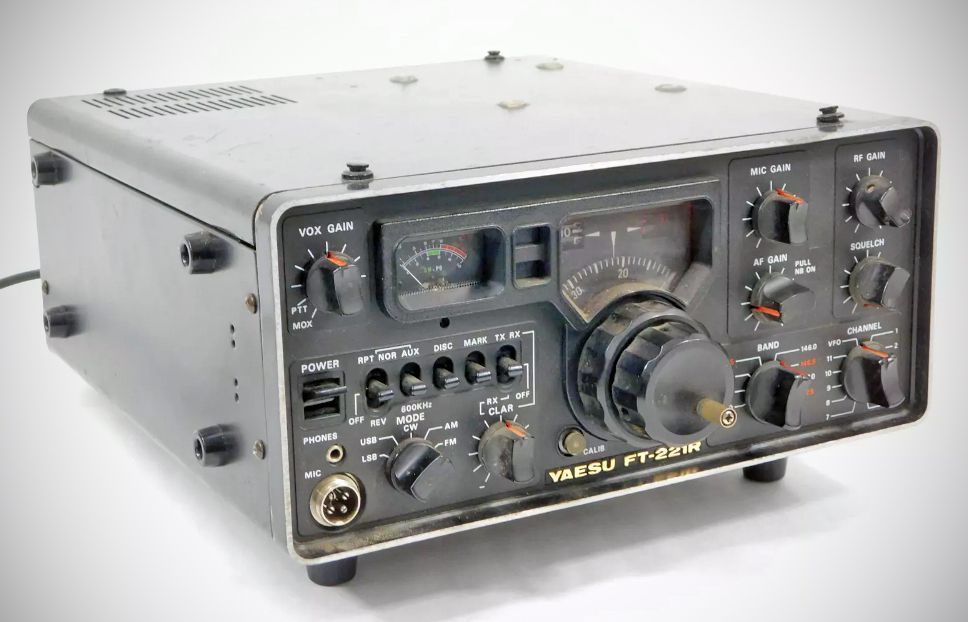
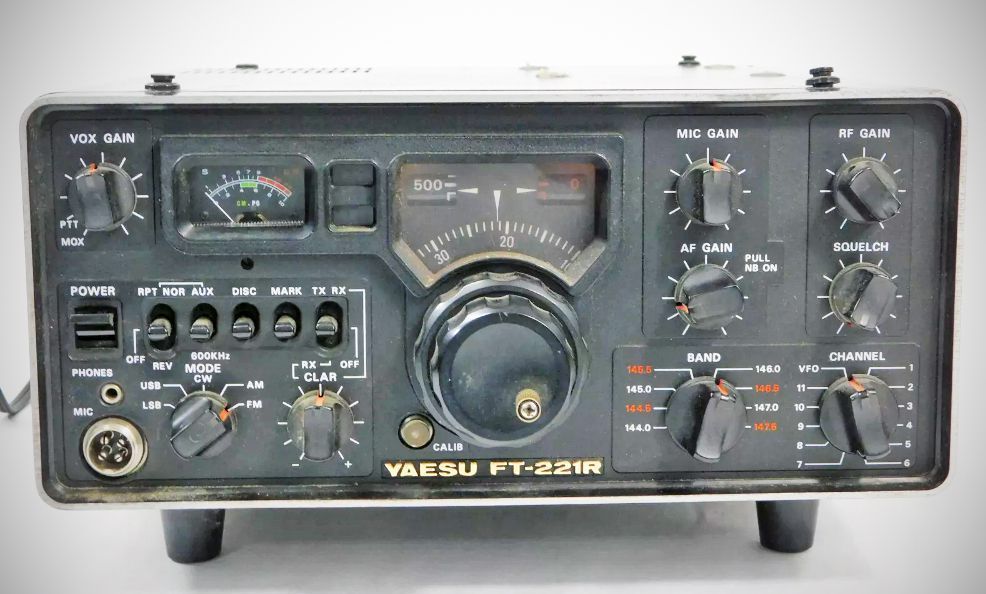
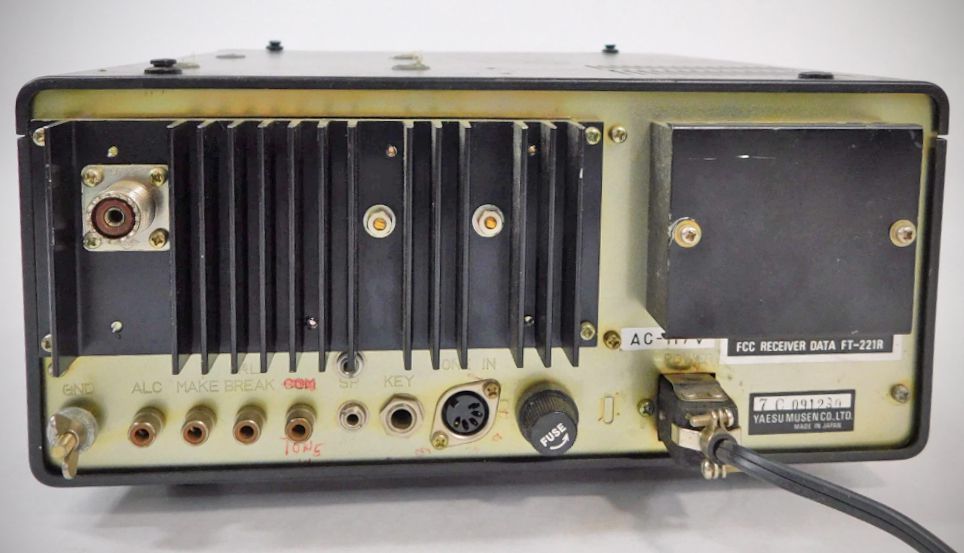
FT-221R
QST, Jul 1977, p. inside back cover. (probably earlier)
### Overview & Operational Modes
A 2-meter VHF transceiver featuring complete band coverage. Supports FM, SSB, CW, and AM.
– Tuning System:– Operates via VFO or crystal control, with the band tuned as eight 500 kHz segments .
– Frequency Handling: Automatically provides a 600 kHz offset on repeater segments (146.5 to 147.5 MHz) and includes a reverse switch.
Power Output & Performance
– SSB Output: 20 Watts PEP.
– FM & CW Output: 10 to 14 Watts.
– Broadbanded Design: All circuits are internally compensated by the band switch or broadbanded, providing full output across the entire band.
– Intermod Immunity: Demonstrates exceptional immunity to intermodulation distortion (intermod) even in high RF zones.
Internal Architecture & Circuitry
– Receiver: Uses an FET preamp and mixer feeding a 10.7 MHz crystal filter.
– Filters: Features an effective noise blanker and sharp lattice filter for SSB, along with a separate FM IF (converting to 455 kHz with a Murata ceramic filter).
– Local Injection & VFO: Utilizes a Phase-Locked Loop (PLL) mixing the crystal band segment oscillator with the VFO or channel crystal (8 MHz) to minimize drift, spurs, and images.
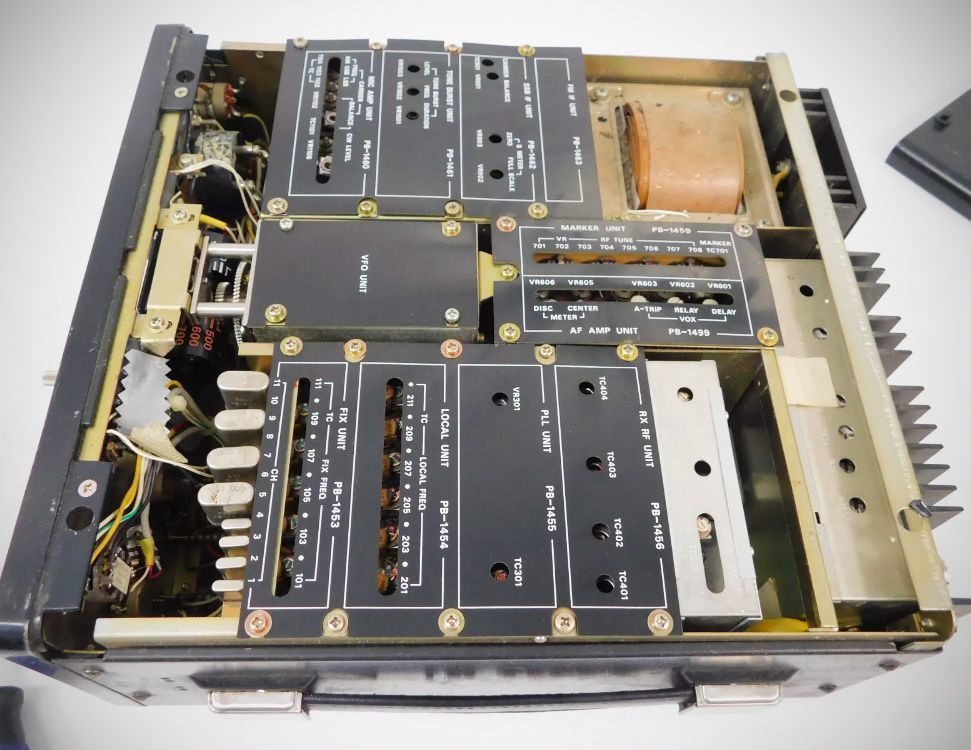
– Modular Construction: Built using computer-style plug-in cards with accessible adjustment points on top for easy maintenance and repair.
Features & Ergonomics
– Front-panel microphone gain control.
– Built-in tone burst capability.
– Smooth dual-speed dial drive.
– S-meter tied to the SSB IF (indicating carrier signal strength) with a switchable center-tune function.