Fragmented Plaque Depicting a Satyr
Name/Title
Fragmented Plaque Depicting a SatyrEntry/Object ID
RC.AC.06.44Tags
Terracotta, Terracotta VotivesDescription
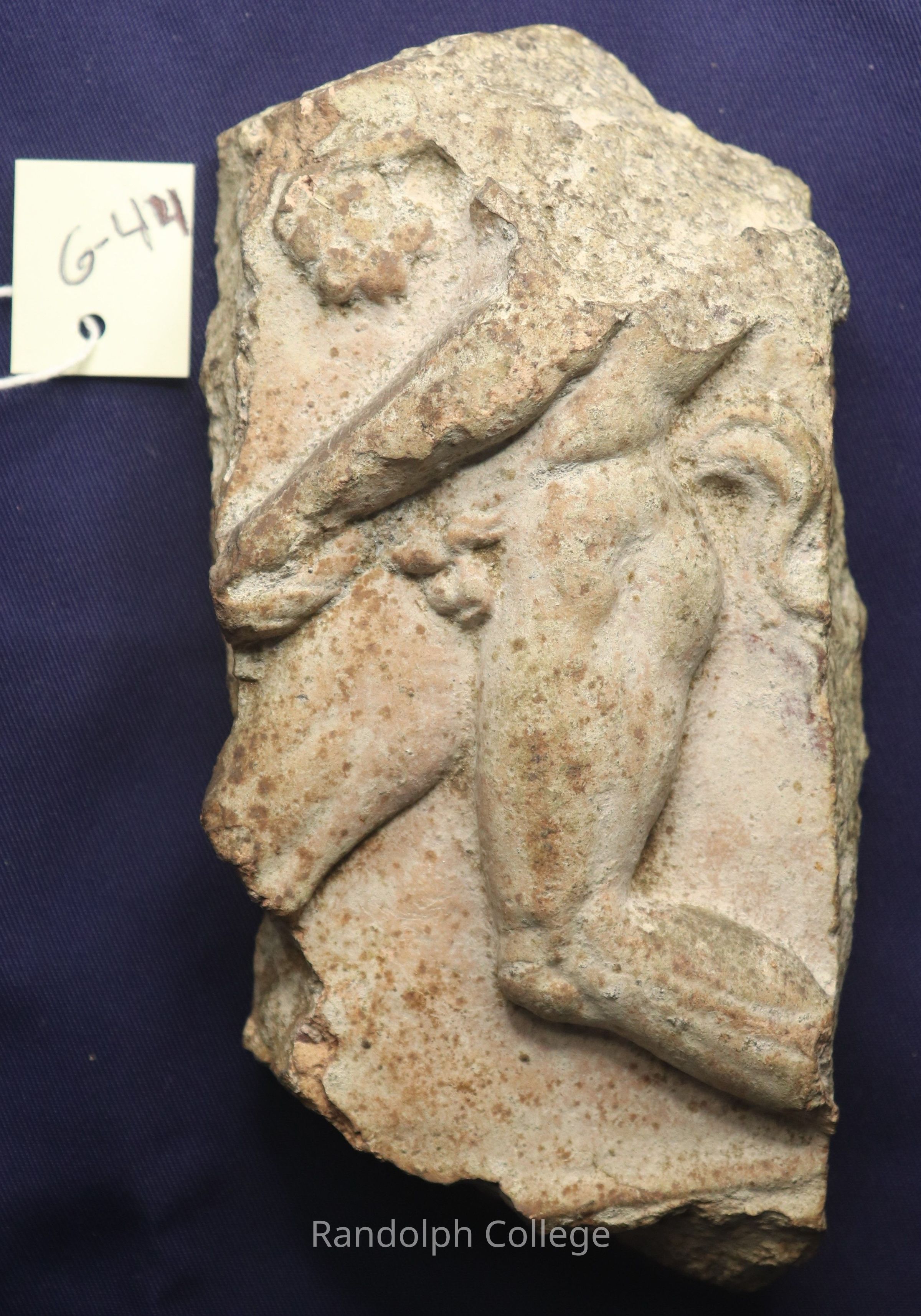
This press-molded terracotta relief fragment depicts a mythological figure—likely a satyr or faun—rendered in dynamic low-to-medium relief. The relief preserves a muscular, nude torso shown in partial profile, with a raised arm crossing diagonally over the chest or shoulder line, possibly holding a pedum (shepherd's crook), lagobolon, or musical instrument. Tail is visible to the right. Composed of a warm, sandy buff-to-tan earthenware clay matrix, the piece retains an irregular rectangular outline with heavy fracture lines along the top, left, and bottom boundaries. Made using a single front mold, plaques of this type served as architectural revetment panels, decorative architectural reliefs (Campana relief style), or votive dedications in sanctuary contexts associated with Dionysiac cult practices.Collection
Randolph College's Ancient CollectionsCategory
Terracotta Architectural; Religious
Randolph College Ancient Collections