Label Type
Cultural/Historical ContextLabel
Nathaniel Boulter III (1737-1824)
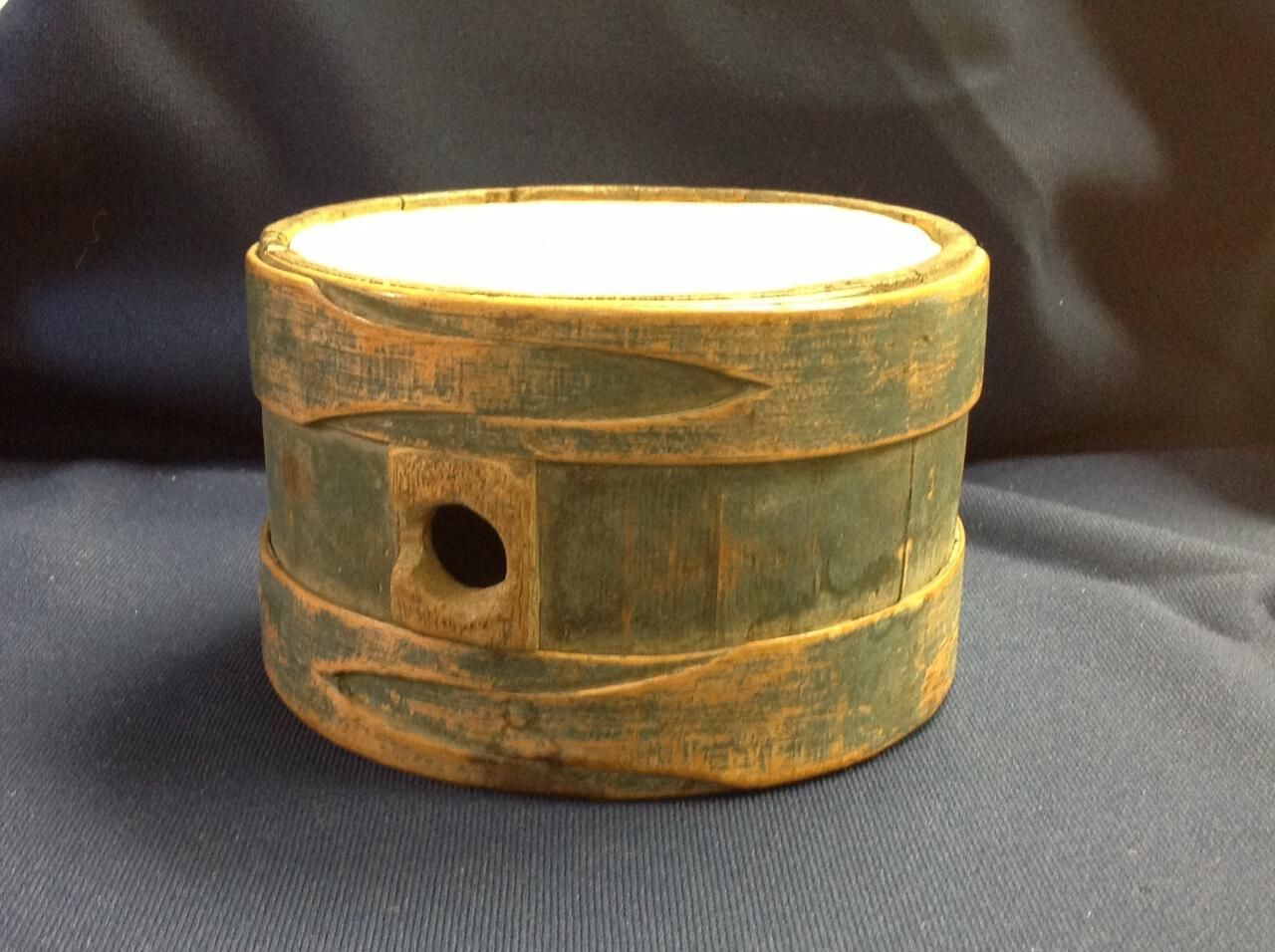
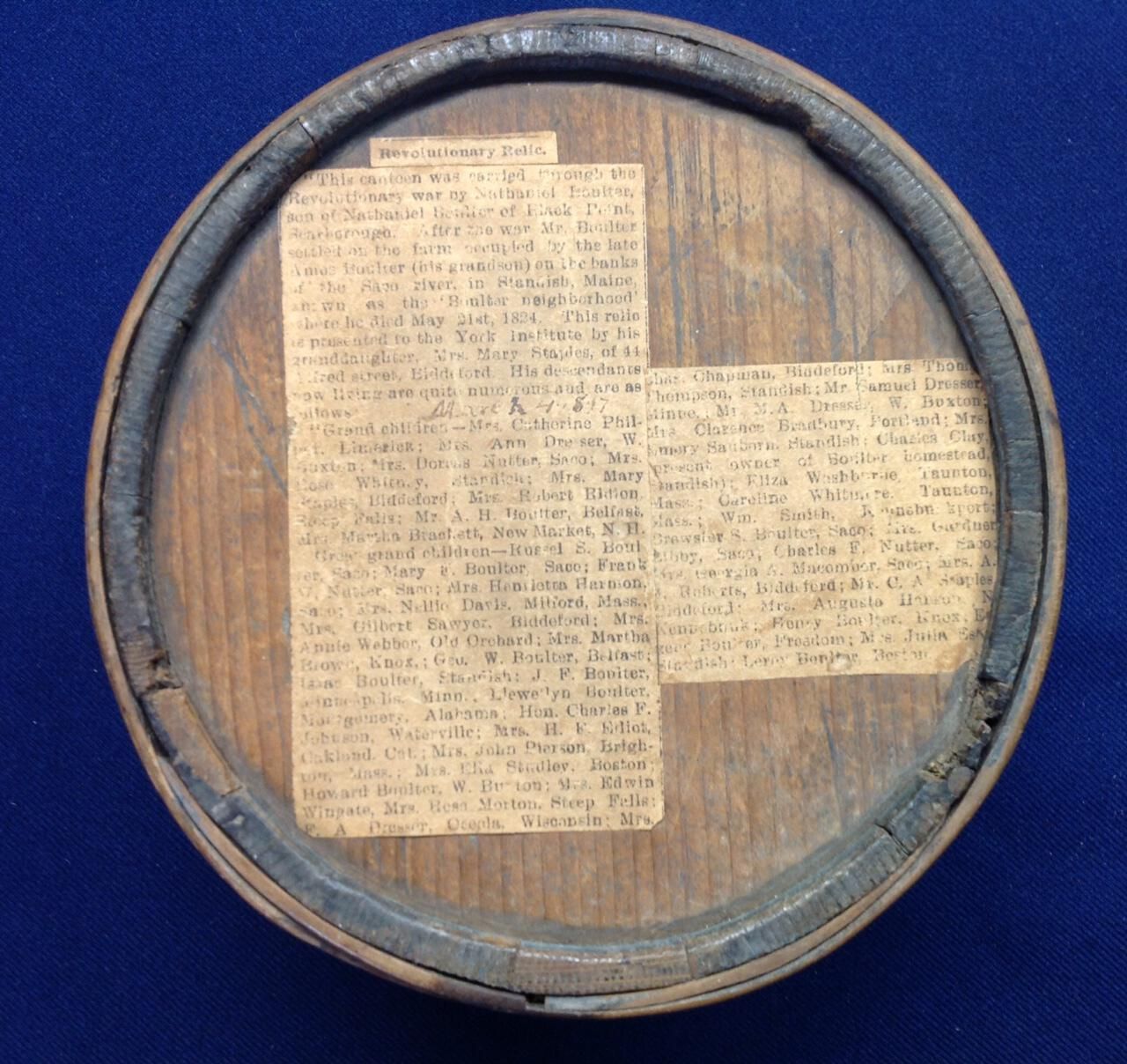
This canteen was carried by Nathaniel Boulter III (1737-1824), a member of Colonel Edmund Phinney’s 31st Regiment of Foot, the first infantry regiment raised in Cumberland County, Maine in the spring of 1775. In July the regiment arrived in Cambridge and joined Continental forces surrounding the British in Boston. The following year, Boulter served as a private in the regiment commanded by Colonel Joshua Wingate, which was stationed at Mount Independence, the fortification directly across from Fort Ticonderoga in New York. Boulter served throughout the New York campaign of 1776 and then returned home and settled in Standish. His son, Nathaniel IV (c. 1760-1840) also served in the war. He enlisted in 1781 and spent the next year stationed in the Highland Department of New York, before he returned home in early 1782 to take care of his ailing wife.
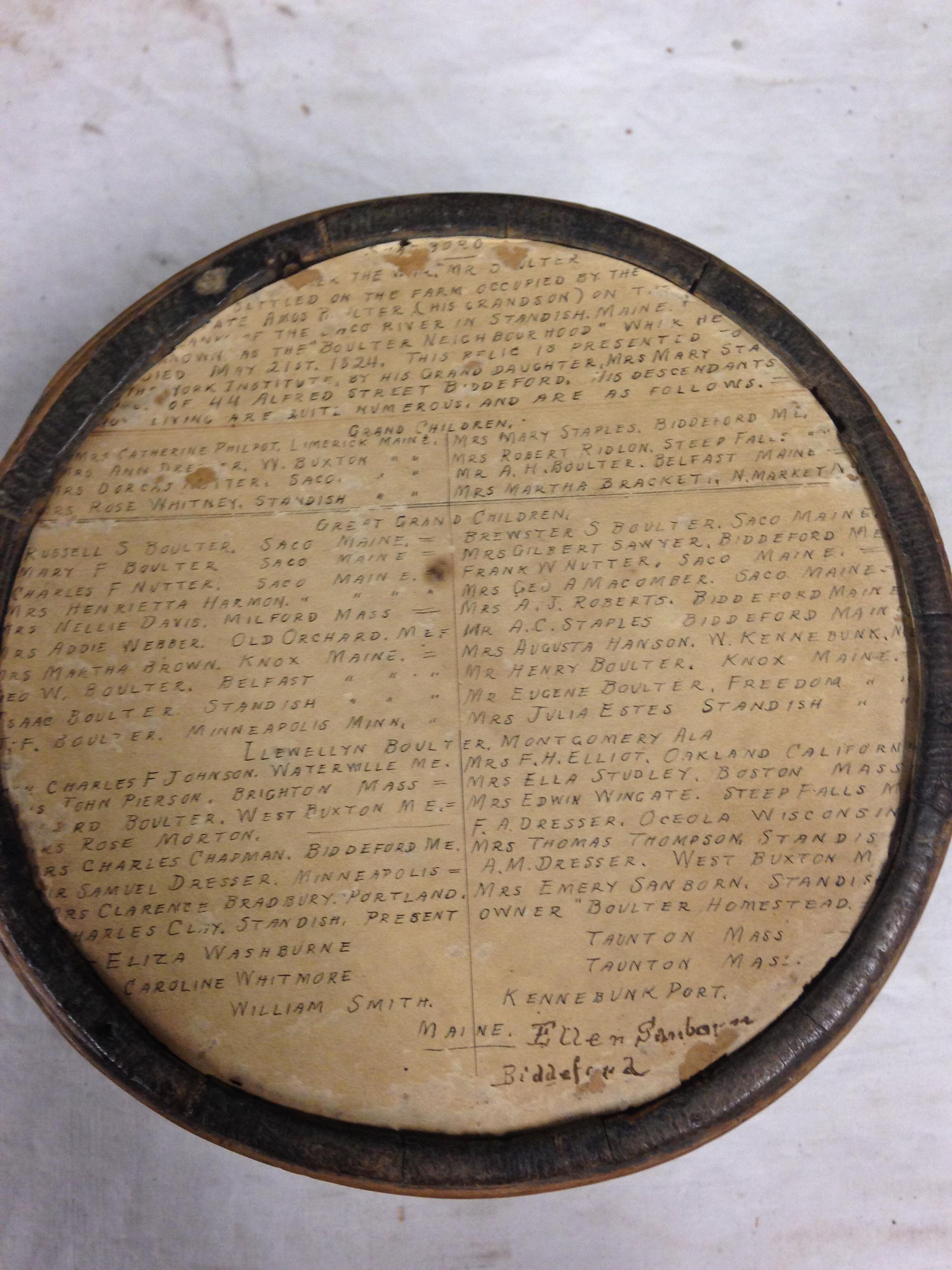
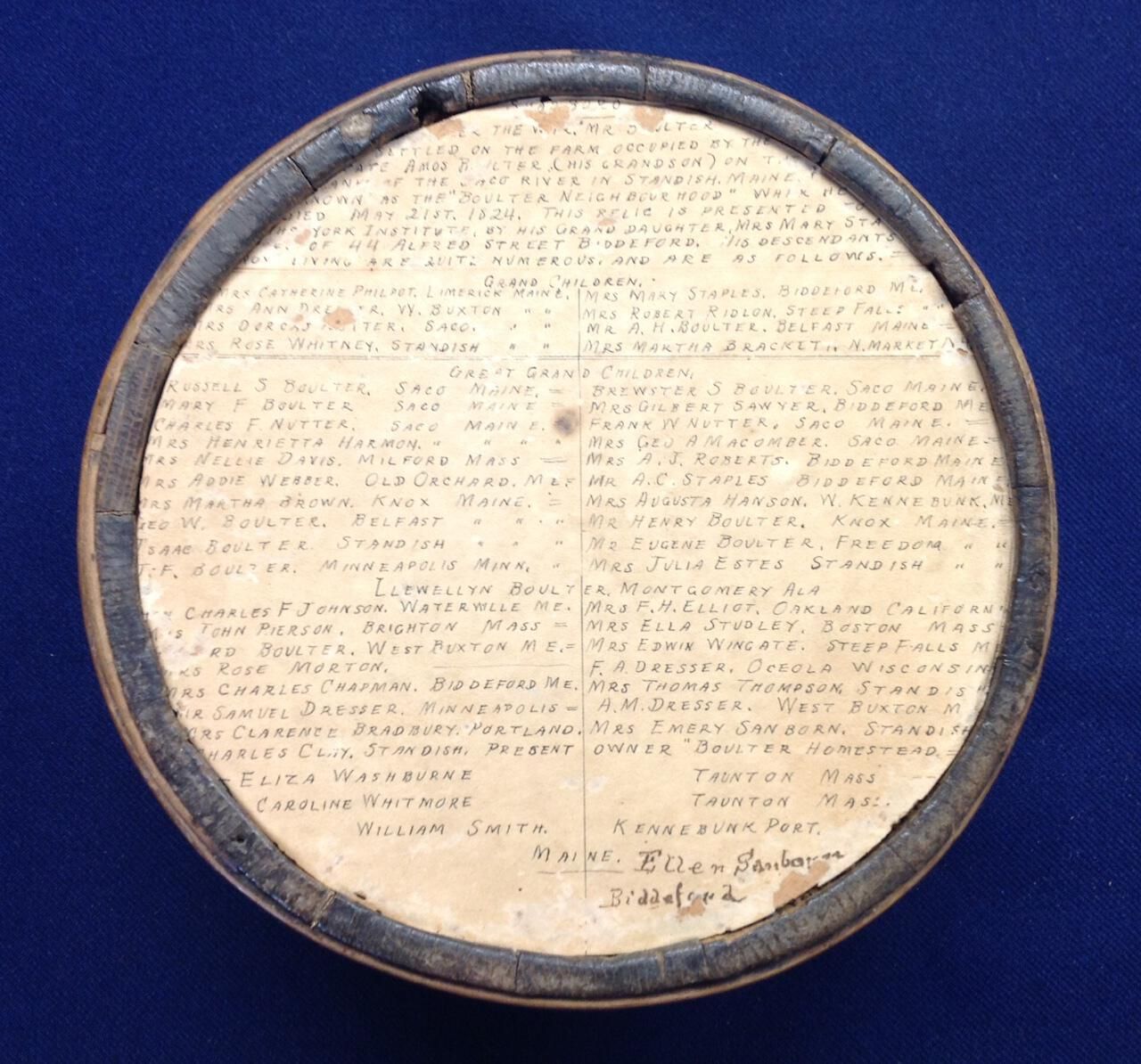
The canteen was donated to the York Institute (now the Saco Museum) by Mary Staples, the granddaughter of Nathaniel III. Mary moved from Standish to Biddeford in the late 19th century. Although it is not known exactly when the canteen entered the museum’s collection, it must have been before 1912, when Mary died.